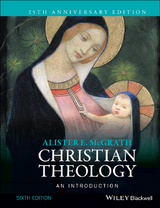
Christian Theology (eBook)
John Wiley & Sons (Verlag)
978-1-118-87443-1 (ISBN)
'The genius of Alister E. McGrath is his remarkable ability to write in a clear, concise, and lucid manner that draws both teachers and students to participate with the great thinkers of the Christian tradition, past and present. Education and illumination are the abundant fruits of this massive, well-organized text, which is sure to appeal to a wide range of Protestant, Catholic, and Orthodox audiences. For this we are indebted to the author.'
Dennis Ngien, Professor of Systematic Theology, Tyndale University College and Seminary, Toronto, Canada
'For sheer comprehensiveness, clarity, and coherence, Alister McGrath has produced the definitive textbook. Always accurate and engaging, students are gently introduced to the gift of Theology in a memorable way.'
Ian S. Markham, Dean and President of Virginia Theological Seminary
Praise for the fifth edition
'Alister McGrath has proven himself a master at engagingly and simply introducing Christian theology in all of its contested complexity. All who work at the critical appropriation of the theological tradition stand in debt to McGrath.'
M. Douglas Meeks, Cal Turner Chancellor Professor of Theology and Wesleyan Studies, Vanderbilt University Divinity School
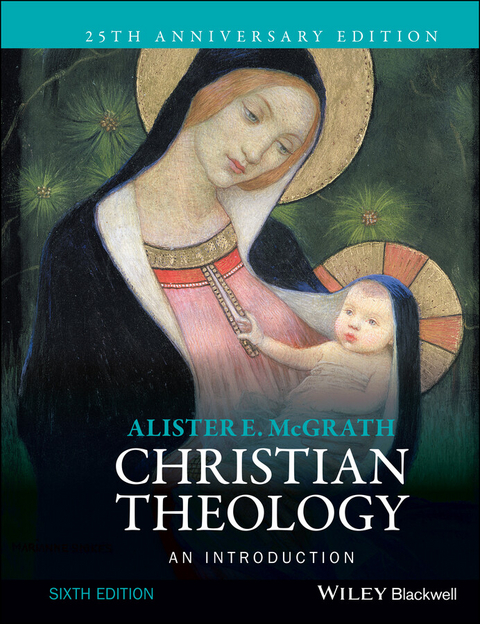
Now celebrating its 25th year of publication, Christian Theology is one of the most internationally acclaimed textbooks in this area today. Completely rewritten for the sixth edition, it remains the ideal introduction to the beliefs and interpretation of Christianity. It is specifically designed for students with no prior knowledge, presenting the primary themes and debates of Christian theology with clarity and historical context.
This new edition retains all the elements that have made it so successful while also including significant additions and developments. There is an increased discussion of contemporary theology to complement the excellent coverage of historical material. Important new information has also been added, in areas such as the Holy Spirit, contemporary non-Western theologies, and feminist voices in Christian theology. The text is rich in pedagogy to encourage student learning, featuring a two colour design, glossary, end-of-chapter discussion questions, and much more. Written by renowned theologian Alister E. McGrath, this classic text is a clear, lively and concise introduction that provides instructors with the tools they need to engage with their students on Christian theology.
ALISTER E. McGRATH is currently Andreas Idreos Professor of Science and Religion at the University of Oxford; he was previously Professor of Theology and Education at King's College, London. He is regarded as one of the world's leading Protestant theologians and is the author of some of the world's most widely used theological textbooks, including the bestselling The Christian Theology Reader (5th edition, Wiley Blackwell, 2016), Christianity (Wiley Blackwell, 2015), and Science and Religion (Wiley Blackwell, 2010). He is in constant demand as a speaker at conferences throughout the world.
CHRISTIAN THEOLOGY The genius of Alister E. McGrath is his remarkable ability to write in a clear, concise, and lucid manner that draws both teachers and students to participate with the great thinkers of the Christian tradition, past and present. Education and illumination are the abundant fruits of this massive, well-organized text, which is sure to appeal to a wide range of Protestant, Catholic, and Orthodox audiences. For this we are indebted to the author. Dennis Ngien, Professor of Systematic Theology, Tyndale University College and Seminary, Toronto, Canada For sheer comprehensiveness, clarity, and coherence, Alister McGrath has produced the definitive textbook. Always accurate and engaging, students are gently introduced to the gift of Theology in a memorable way. Ian S. Markham, Dean and President of Virginia Theological Seminary Praise for the fifth edition Alister McGrath has proven himself a master at engagingly and simply introducing Christian theology in all of its contested complexity. All who work at the critical appropriation of the theological tradition stand in debt to McGrath. M. Douglas Meeks, Cal Turner Chancellor Professor of Theology and Wesleyan Studies, Vanderbilt University Divinity School Now celebrating its 25th year of publication, Christian Theology is one of the most internationally acclaimed textbooks in this area today. Completely rewritten for the sixth edition, it remains the ideal introduction to the beliefs and interpretation of Christianity. It is specifically designed for students with no prior knowledge, presenting the primary themes and debates of Christian theology with clarity and historical context. This new edition retains all the elements that have made it so successful while also including significant additions and developments. There is an increased discussion of contemporary theology to complement the excellent coverage of historical material. Important new information has also been added, in areas such as the Holy Spirit, contemporary non-Western theologies, and feminist voices in Christian theology. The text is rich in pedagogy to encourage student learning, featuring a two colour design, glossary, end-of-chapter discussion questions, and much more. Written by renowned theologian Alister E. McGrath, this classic text is a clear, lively and concise introduction that provides instructors with the tools they need to engage with their students on Christian theology.
ALISTER E. McGRATH is currently Andreas Idreos Professor of Science and Religion at the University of Oxford; he was previously Professor of Theology and Education at King's College, London. He is regarded as one of the world's leading Protestant theologians and is the author of some of the world's most widely used theological textbooks, including the bestselling The Christian Theology Reader (5th edition, Wiley Blackwell, 2016), Christianity (Wiley Blackwell, 2015), and Science and Religion (Wiley Blackwell, 2010). He is in constant demand as a speaker at conferences throughout the world.
Christian Theology: An Introduction 1
Brief Contents 7
Contents 9
List of Illustrations 23
Preface 25
To the Student: How to Use This Book 29
To the Teacher: How to Use This Book 31
The Structure of the Book: The Fifth and Sixth Editions Compared 35
Video and Audio Resources 37
Part I: Landmarks: Periods, Themes, and Personalities of Christian Theology 39
Introduction 41
1: The Patristic Period, c.100–c.700 43
The Early Centers of Theological Activity 43
An Overview of the Patristic Period 45
A clarification of terms 46
The theological agenda of the period 46
Key Theologians 48
Justin Martyr (c.100–c.165) 48
Irenaeus of Lyons (c.130–c.202) 48
Tertullian (c.160–c.220) 48
Origen (c.185–c.254) 48
Cyprian of Carthage (died 258) 49
Athanasius (c.293–373) 49
The Cappadocian fathers 49
Augustine of Hippo (354–430) 49
Key Theological Debates and Developments 50
The extent of the New Testament canon 50
The role of tradition: the Gnostic controversies 51
The fixing of the ecumenical creeds 52
The two natures of Jesus Christ: the Arian controversy 53
The doctrine of the Trinity 55
The doctrine of the church: the Donatist controversy 56
The doctrine of grace: the Pelagian controversy 56
Key Names, Words, and Phrases 57
Questions for Chapter 1 57
2: The Middle Ages and the Renaissance, c.700–c.1500 59
On Defining the “Middle Ages” 60
Theological Landmarks in Western Europe 62
The rise of medieval schools of theology 62
The founding of the universities 63
A theological textbook: the Four Books of the Sentences 64
“Cathedrals of the Mind”: scholasticism 64
The Italian Renaissance and the rise of humanism 64
Byzantine Theology: Major Themes 65
Key Theologians 67
John of Damascus (c.676–749) 67
Simeon the New Theologian (949–1022) 68
Anselm of Canterbury (c.1033–1109) 68
Thomas Aquinas (c.1225–74) 69
Duns Scotus (c.1266–1308) 70
William of Ockham (c.1285–1347) 70
Erasmus of Rotterdam (1466–1536) 71
Key Theological Debates and Developments 72
The consolidation of the patristic heritage 72
The exploration of the role of reason in theology 72
Scholasticism: the development of theological systems 73
The development of sacramental theology 73
The development of the theology of grace 73
The role of Mary in the scheme of salvation 74
The Renaissance: returning to the original sources of theology 74
Key Names, Words, and Phrases 75
Questions for Chapter 2 75
3: The Age of Reformation, c.1500–c.1750 76
The Main Movements of the Age of Reformation 76
The German Reformation: Lutheranism 77
The Swiss Reformation: the Reformed church 78
The radical Reformation: Anabaptism 79
The English Reformation: Anglicanism 80
The Catholic Reformation 80
The Second Reformation: confessionalization 81
Post-Reformation Movements 81
The consolidation of Catholicism 82
Puritanism 82
Pietism 83
The Copernican and Galilean Controversies 84
Key Theologians 85
Martin Luther (1483–1546) 85
Huldrych Zwingli (1484–1531) 86
John Calvin (1509–64) 86
Teresa of Avilà (1515–82) 86
Theodore Beza (1519–1605) 87
Robert Bellarmine (1542–1621) 87
Johann Gerhard (1582–1637) 87
Jonathan Edwards (1703–58) 87
Key Theological Debates and Developments 87
The sources of theology 88
The doctrine of grace 88
The doctrine of the sacraments 89
The doctrine of the church 89
Developments in Theological Literature 89
Catechisms 90
Confessions of faith 90
Works of systematic theology 91
Key Names, Words, and Phrases 93
Questions for Chapter 3 94
4: The Modern Period, c.1750 to the Present 95
Theology and Cultural Developments in the West 95
The wars of religion and disinterest in religion 96
The rise of the Enlightenment 96
The Enlightenment critique of Christian theology: some case studies 97
Marxism: an intellectual rival to Christianity 99
Darwinism: a new theory of human origins 100
The First World War: a theology of crisis 100
Postmodernism: beyond the modern theological agenda 101
Globalization: world Christianity and world religions 103
Key Theologians 105
F. D. E. Schleiermacher (1768–1834) 105
John Henry Newman (1801–90) 105
Karl Barth (1886–1968) 106
Paul Tillich (1886–1965) 106
Karl Rahner (1904–84) 106
Hans Urs von Balthasar (1905–88) 107
Jürgen Moltmann (born 1926) 107
Wolfhart Pannenberg (1928–2014) 107
Major Modern Theological Movements 108
Liberal Protestantism 108
Modernism 109
Neo-orthodoxy 110
Liberation theologies 112
Feminism 113
Black and “womanist” theology 115
Postliberalism 116
Radical orthodoxy 117
Key Names, Words, and Phrases 118
Questions for Chapter 4 118
Part II: Sources and Methods 119
5: Getting Started: Preliminaries 121
What Is Faith? 121
Defining Theology 123
A working definition of theology 123
The historical development of the idea of theology 124
The development of theology as an academic discipline 125
The Architecture of Theology 127
Biblical studies 127
Systematic theology 127
Philosophical theology 128
Historical theology 129
Practical, or pastoral, theology 130
Spirituality, or mystical theology 131
Apologetics 132
The Question of Prolegomena 132
Commitment and Neutrality in Theology 133
Orthodoxy and Heresy 135
Historical aspects 135
Theological aspects 136
The Theology of the Relationship Between Christianity and Secular Culture 137
Justin Martyr (c.100–c.165) 137
Tertullian (c.160–c.220) 138
Augustine of Hippo (354–430) 138
The twentieth century: H. Richard Niebuhr (1894–1962) 140
Questions for Chapter 5 141
6: The Sources of Theology 142
Scripture 142
The Old Testament 143
The New Testament 143
Other works: deutero-canonical and apocryphal writings 145
The relationship between the Old and New Testaments 147
The canon of Scripture: historical and theological issues 149
The Word of God 150
Narrative theology 151
Methods of interpretation of Scripture 153
Theories of the inspiration of Scripture 158
Tradition 160
A single-source theory of tradition 163
A dual-source theory of tradition 163
The total rejection of tradition 164
Theology and worship: the importance of liturgical tradition 164
Reason 165
Reason and revelation: three models 165
Enlightenment rationalism 167
Criticisms of Enlightenment rationalism 168
Religious Experience 168
Experience as the basis of Christian theology 169
Theology connects with human experience 170
Theology as the interpreter of human experience 170
God as a misinterpretation of human experience 171
Questions for Chapter 6 172
7: Knowledge of God: Natural and Revealed 173
The Idea of Revelation 174
Models of Revelation 175
Revelation as doctrine 175
Revelation as presence 176
Revelation as experience 177
Revelation as history 178
Natural Theology: Its Scope and Limits 179
Thomas Aquinas (c.1225–74) on natural theology 180
John Calvin (1509–64) on natural theology 181
The Renaissance: God’s two books 182
Eastern Orthodoxy on natural theology 183
The Barth–Brunner debate (1934) 184
Approaches to Discerning God in Nature 185
Human reason 185
The ordering of the world 185
The beauty of the world 186
The Natural Sciences and Christian Theology: Models of Interaction 186
Warfare: the “conflict” thesis 187
Isolation: the “non-overlapping” thesis 188
Enrichment: the complementarity thesis 188
Questions for Chapter 7 189
8: Philosophy and Theology: Dialogue and Debate 190
Philosophy and Theology: The Notion of the “Handmaid” 191
Can God’s Existence be Proved? Four Approaches 193
The ontological argument of Anselm of Canterbury (c.1033–1109) 194
The “Five Ways” of Thomas Aquinas (c.1225–74) 196
The kalam argument 198
A classic argument from design: William Paley (1743–1805) 199
The Nature of Theological Language 201
Does theological language refer to anything? 202
Apophatic and kataphatic approaches 202
Questions for Chapter 8 209
Part III: Christian Theology 211
9: The Doctrine of God 213
Is God Male? 213
A Personal God 215
Defining “person” 216
Dialogical personalism: Martin Buber (1878–1965) 217
Can God Suffer? 219
The classical view: the impassibility of God 220
The twentieth century: a paradigm shift? 221
A suffering God: Jürgen Moltmann (born 1926) 222
The death of God? 223
The Omnipotence of God 225
Defining omnipotence 225
The two powers of God 226
The notion of divine self-limitation 227
God’s Action in the World 228
“Special” and “general” divine action 228
Deism: God acts through the laws of nature 229
Thomism: God acts through secondary causes 230
Process theology: God acts through persuasion 231
God as Creator 232
Development of the doctrine of creation 232
Creation and the rejection of dualism 234
The doctrine of creation of Augustine of Hippo (354–430) 235
The doctrine of creation ex nihilo 236
Implications of the doctrine of creation 237
Models of God as creator 238
Creation and Christian approaches to ecology 239
Theodicies: The Problem of Evil 240
Irenaeus of Lyons (c.130–c.202) 241
Augustine of Hippo (354–430) 241
Karl Barth (1886–1968) 242
Alvin Plantinga (born 1932) 243
Other recent contributions 243
Questions for Chapter 9 244
10: The Person of Jesus Christ 245
The Place of Jesus Christ in Christian Theology 246
Jesus Christ is the historical point of departure for Christianity 246
Jesus Christ reveals God 246
Jesus Christ is the bearer of salvation 247
Jesus Christ defines the shape of the redeemed life 247
New Testament Christological Titles 247
Messiah 247
Son of God 248
Son of Man 249
Lord 249
Savior 250
God 251
The Patristic Debate Over the Person of Christ 252
Early explorations: Ebionitism and Docetism 252
Justin Martyr (c.100–c.165): the Logos Christology 254
Arius (c.260–336): Jesus Christ as “supreme among the creatures” 255
Athanasius (c.293–373): Jesus Christ as God incarnate 256
The Alexandrian school: Apollinarianism and its critics 258
The Antiochene school: Theodore of Mopsuestia (c.350–428) 259
The “communication of attributes” 261
The Council of Chalcedon (451) 262
Medieval Christology: The Relationship Between the Incarnation and the Fall 262
The Relationship Between the Person and Work of Christ 263
Christological Models: Classical and Contemporary 265
The substantial presence of God in Christ 265
Christ as mediator between God and humanity 267
The revelational presence of God in Christ 268
Christ as a symbolic presence of God 269
Christ as the bearer of the Holy Spirit 270
Christ as the example of a godly life 271
Christ as a hero 272
Kenotic approaches to Christology 273
The Quest for the Historical Jesus 274
The original quest for the historical Jesus 275
The quest for the religious personality of Jesus 275
The critique of the quest, 1890–1910 276
The quest suspended: Rudolf Bultmann (1884–1976) 277
The new quest for the historical Jesus 278
The third quest for the historical Jesus 279
The Resurrection of Christ: History and Interpretation 280
The Enlightenment: resurrection as nonevent 280
David Friedrich Strauss (1808–74): resurrection as myth 280
Rudolf Bultmann (1884–1976): resurrection as an event in the experience of the disciples 281
Karl Barth (1886–1968): resurrection as an historical event beyond critical inquiry 281
Wolfhart Pannenberg (1928–2014): resurrection as an historical event open to critical inquiry 282
Questions for Chapter 10 283
11: The Nature and Basis of Salvation 284
Christian Approaches to Salvation 286
Salvation is linked with Jesus Christ 286
Salvation is shaped by Jesus Christ 287
The eschatological dimension of salvation 288
The Foundations of Salvation: The Cross of Christ 289
The cross as a sacrifice 289
The cross as a victory 293
The cross and forgiveness 297
The cross as a demonstration of God’s love 302
Violence and the cross: the theory of René Girard (1923–2015) 306
“Can a Male Savior Save Women?” Feminists on Atonement 307
Models of Salvation in Christ: Classical and Contemporary 308
Some Pauline images of salvation 308
Deification: being made divine 309
Righteousness in the sight of God 310
Personal holiness 311
Authentic human existence 311
Political liberation 312
Spiritual freedom 312
The Appropriation of Salvation in Christ 313
The church as the means of salvation 313
Christ as a representative 314
Participation in Christ 314
Christ as a substitute 315
The Scope of Salvation in Christ 315
Universalism: all will be saved 315
Only believers will be saved 316
Particular redemption: only the elect will be saved 316
Questions for Chapter 11 317
12: The Holy Spirit 318
The Biblical Witness 318
The Patristic Period 319
Early patristic reflections: Irenaeus of Lyons (c.130–c.202) 320
Athanasius (c.293–373): the debate over the divinity of the Holy Spirit 320
The Council of Constantinople (381) 322
Augustine of Hippo (354–430): the spirit as a bond of unity 323
Symbols of the Spirit: a dove, fire, and oil 323
The Filioque Controversy 325
The Holy Spirit: Recent Discussions 328
The Great Awakening: Jonathan Edwards (1703–58) 328
The Second Vatican Council on the Holy Spirit 329
Liberation theology: the Spirit and empowerment 330
Feminism: the Spirit and relationality 331
The Functions of the Spirit 332
God’s active presence in the world 333
The illumination of revelation 333
The appropriation of salvation 334
The renewal of the Christian life 335
Questions for Chapter 12 336
13: The Trinity 337
Approaching the Christian Doctrine of the Trinity 337
The apparent illogicality of the doctrine 337
The Trinity as a statement about Jesus Christ 339
The Trinity as a statement about the Christian God 339
Islamic critiques of the doctrine of the Trinity 339
The Biblical Foundations of the Doctrine of the Trinity 340
The Historical Development of the Doctrine 341
The emergence of the trinitarian vocabulary 342
The emergence of trinitarian concepts 342
Rationalist critiques of trinitarianism: the eclipse of the Trinity, 1700–1900 344
The problem of visualization: analogies of the Trinity 345
“Economic” and “essential” approaches to the Trinity 346
Two Trinitarian Heresies 346
Modalism: chronological and functional 346
Tritheism 348
The Trinity: Six Classic and Contemporary Approaches 349
The Cappadocian fathers 349
Augustine of Hippo (354–430) 350
Karl Barth (1886–1968) 351
Karl Rahner (1904–84) 353
John Macquarrie (1919–2007) 354
Robert Jenson (born 1930) 355
Some Discussions of the Trinity in Recent Theology 356
F. D. E. Schleiermacher (1768–1834) on the dogmatic location of the Trinity 356
Jürgen Moltmann (born 1926) on the social Trinity 357
Eberhard Jüngel (born 1934) on the Trinity and metaphysics 358
Catherine Mowry LaCugna (1952–97) on the Trinity and salvation 359
Sarah Coakley (born 1951) on feminism and the Trinity 359
The Trinitarian Renaissance: Some Examples 361
A trinitarian theology of mission 361
A trinitarian theology of worship 362
A trinitarian theology of atonement 362
A trinitarian ecclesiology 363
Questions for Chapter 13 364
14: Human Nature, Sin, and Grace 365
The Place of Humanity within Creation: Early Reflections 365
The image of God 365
The concept of sin 367
Augustine of Hippo (354–430) and the Pelagian Controversy 368
The “freedom of the will” 368
The nature of sin 369
The nature of grace 370
The basis of salvation 371
The Medieval Synthesis of the Doctrine of Grace 372
The Augustinian legacy 372
The medieval distinction between actual and habitual grace 373
The late medieval critique of habitual grace 374
The medieval debate over the nature and grounds of merit 374
The Reformation Debates Over the Doctrine of Grace 375
From “salvation by grace” to “justification by faith” 375
The theological breakthrough of Martin Luther (1483–1546) 376
Luther on justifying faith 377
The concept of forensic justification 377
John Calvin (1509–64) on justification 379
The Council of Trent on justification 379
The Doctrine of Predestination 382
Augustine of Hippo (354–430) 382
Catholic debates: Thomism, Molinism, and Jansenism 383
Protestant debates: Calvinism and Arminianism 384
Karl Barth (1886–1968) 386
Predestination and economics: the Weber thesis 387
The Darwinian Controversy and the Nature of Humanity 388
Young-earth creationism 389
Old-earth creationism 389
Intelligent design 389
Evolutionary theism 390
Questions for Chapter 14 391
15: The Church 392
Biblical Models of the Church 392
The Old Testament 392
The New Testament 393
The Early Development of Ecclesiology 394
The Donatist Controversy 396
Early Protestant Doctrines of the Church 398
Martin Luther (1483–1546) 398
John Calvin (1509–64) 399
The radical Reformation 401
Christ and the Church: Some Twentieth-Century Themes 402
Christ is present sacramentally 402
Christ is present through the word 404
Christ is present through the Spirit 405
The Second Vatican Council on the Church 405
The church as communion 406
The church as the people of God 407
The church as a charismatic community 407
The “Notes” of the Church 408
One 408
Holy 411
Catholic 412
Apostolic 415
Priesthood and Ministry: Some Major Themes 416
Questions for Chapter 15 418
16: The Sacraments 419
The Early Development of Sacramental Theology 420
The Definition of a Sacrament 421
The Donatist Controversy: Sacramental Efficacy 424
The Multiple Functions of the Sacraments 426
Sacraments convey grace 426
Sacraments strengthen faith 427
Sacraments enhance unity and commitment within the church 428
Sacraments reassure us of God’s promises toward us 429
A case study in complexity: the functions of the Eucharist 430
The Eucharist: The Question of the Real Presence 433
The ninth-century debates over the real presence 433
Medieval views on the relationship between “sign” and “sacrament” 434
Transubstantiation 435
Transignification and transfinalization 437
Consubstantiation 438
A real absence: memorialism 438
The Debate Concerning Infant Baptism 439
Infant baptism remits the guilt of original sin 440
Infant baptism is grounded in God’s covenant with the church 441
Infant baptism is unjustified 441
Questions for Chapter 16 442
17: Christianity and the World Religions 443
Western Pluralism and the Question of Other Religions 444
The detached approach 445
The committed approach 445
Approaches to Religions 445
The Enlightenment: religions as a corruption of the original religion of nature 446
Ludwig Feuerbach (1804–72): religion as an objectification of human feeling 447
Karl Marx: religion as the product of socioeconomic alienation 448
Sigmund Freud (1856–1939): religion as wish fulfillment 449
Emile Durkheim (1858–1917): religion and ritual 450
Mircea Eliade (1907–86): religion and the sacred 451
J. R. R. Tolkien (1892–1973) and C. S. Lewis (1898–1963): religion as myth 451
Karl Barth (1886–1968) and Dietrich Bonhoeffer (1906–45): religion as a human invention 452
Trinitarian theologies of religion 454
Christian Approaches to Other Religions 454
Exclusivism 455
Inclusivism 457
Pluralism 460
Questions for Chapter 17 463
18: Last Things: The Christian Hope 464
Developments in the Doctrine of the Last Things 465
The New Testament 465
Early Christianity and Roman beliefs about reunion after death 466
Augustine of Hippo (354–430): the two cities 467
Joachim of Fiore (c.1132–1202): the three ages 468
Dante Alighieri (1265–1321): the Divine Comedy 468
The Enlightenment: eschatology as superstition 470
The twentieth century: the rediscovery of eschatology 470
Rudolf Bultmann (1884–1976): the demythologization of eschatology 471
Jürgen Moltmann (born 1926): the theology of hope 472
Helmut Thielicke (1908–86): ethics and eschatology 473
Dispensationalism: the structures of eschatology 474
Spe salvi: Benedict XVI (born 1927) on the Christian hope 475
N. T. Wright (born 1948) on (not) going to heaven 476
The Last Things 477
Hell 477
Purgatory 479
The millennium 480
Heaven 481
Questions for Chapter 18 484
Jargon-Busting: A Glossary of Theological Terms 487
Sources of Citations 494
Acknowledgments 503
Index 504
End User License Agreement 519
"The genius of Alister E. McGrath is his remarkable ability to write in a clear, concise, and lucid manner that draws both teachers and students to participate with the great thinkers of the Christian tradition, past and present. Education and illumination are the abundant fruits of this massive, well-organised text, which is sure to appeal to a wide range of Protestant, Caholic, and Orthodox audiences. For this we are indebted to the author."
Denis Ngien, Tyndale University College Seminary
"For sheer comprehensiveness, clarity, and coherence, Alister McGrath has procuded the definitive textbook. Always accurate and engaging, students are gently introduced to the gift of Theology in a memorable way."
Ian S Markham, Deand and President of Virginia Theological Seminary
"Alister McGrath has proven himself a master at engagingly and simply introducing Christian theology in all of its contested complexity. All who work at the criical appropriation of the theological tradion stand in debt to McGrath."
M. Douglas Meeks, Vanderbilt University Divinity School
| Erscheint lt. Verlag | 4.8.2016 |
|---|---|
| Sprache | englisch |
| Themenwelt | Religion / Theologie ► Christentum ► Kirchengeschichte |
| Schlagworte | Christentum • Christianity • Religion & Theology • Religion u. Theologie • Theologie • Theology |
| ISBN-10 | 1-118-87443-9 / 1118874439 |
| ISBN-13 | 978-1-118-87443-1 / 9781118874431 |
| Informationen gemäß Produktsicherheitsverordnung (GPSR) | |
| Haben Sie eine Frage zum Produkt? |
 PDF (Adobe DRM)
Kopierschutz: Adobe-DRM
Adobe-DRM ist ein Kopierschutz, der das eBook vor Mißbrauch schützen soll. Dabei wird das eBook bereits beim Download auf Ihre persönliche Adobe-ID autorisiert. Lesen können Sie das eBook dann nur auf den Geräten, welche ebenfalls auf Ihre Adobe-ID registriert sind.
Details zum Adobe-DRM
Dateiformat: PDF (Portable Document Format)
Mit einem festen Seitenlayout eignet sich die PDF besonders für Fachbücher mit Spalten, Tabellen und Abbildungen. Eine PDF kann auf fast allen Geräten angezeigt werden, ist aber für kleine Displays (Smartphone, eReader) nur eingeschränkt geeignet.
Systemvoraussetzungen:
PC/Mac: Mit einem PC oder Mac können Sie dieses eBook lesen. Sie benötigen eine
eReader: Dieses eBook kann mit (fast) allen eBook-Readern gelesen werden. Mit dem amazon-Kindle ist es aber nicht kompatibel.
Smartphone/Tablet: Egal ob Apple oder Android, dieses eBook können Sie lesen. Sie benötigen eine
Geräteliste und zusätzliche Hinweise
Buying eBooks from abroad
For tax law reasons we can sell eBooks just within Germany and Switzerland. Regrettably we cannot fulfill eBook-orders from other countries.
aus dem Bereich