Paleoecology (eBook)
John Wiley & Sons (Verlag)
978-1-118-45582-1 (ISBN)
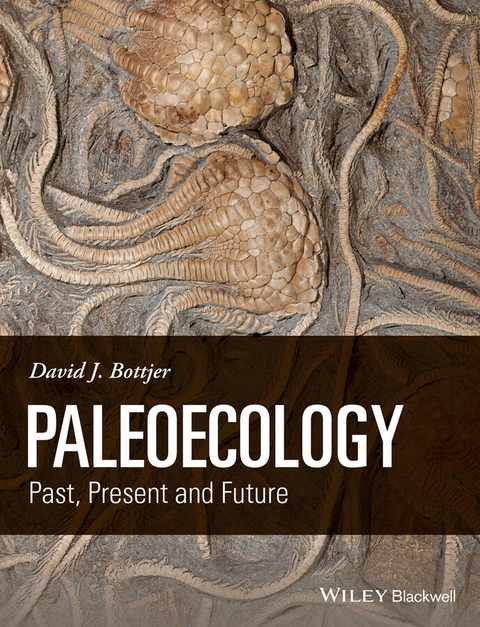
Paleoecology is a discipline that uses evidence from fossils to provide an understanding of ancient environments and the ecological history of life through geological time. This text covers the fundamental approaches that have provided the foundation for present paleoecological understanding, and outlines new research areas in paleoecology for managing future environmental and ecological change. Topics include the use of actualism in paleoecology, development of paleoecological models for paleoenvironmental reconstruction, taphonomy and exceptional fossil preservation, evolutionary paleoecology and ecological change through time, and conservation paleoecology. Data from studies of invertebrates, vertebrates, plants and microfossils, with added emphasis on bioturbation and microbial sedimentary structures, are discussed. Examples from marine and terrestrial environments are covered, with a particular focus on periods of great ecological change, such as the Precambrian-Cambrian transition and intervals of mass extinction.
Readership: This book is designed for advanced undergraduates and beginning graduate students in the earth and biological sciences, as well as researchers and applied scientists in a range of related disciplines.
David J. Bottjer is Professor of Earth Sciences, Biological Sciences, and Environmental Studies at the University of Southern California. He is a Fellow of The Paleontological Society, the Geological Society of America, and the American Association for the Advancement of Science, and is an Editor-in-Chief for the journal, Palaeogeogaphy, Palaeoclimatology, Palaeoecology. In 2014 he was awarded the Raymond C. Moore Medal for excellence in paleontology by the SEPM Society for Sedimentary Geology.
PALEOECOLOGY PALEOECOLOGYPast, Present and Future Paleoecology is a discipline that uses evidence from fossils to provide an understanding of ancient environments and the ecological history of life through geological time. This text covers the fundamental approaches that have provided the foundation for present paleoecological understanding, and outlines new research areas in paleoecology for managing future environmental and ecological change. Topics include the use of actualism in paleoecology, development of paleoecological models for paleoenvironmental reconstruction, taphonomy and exceptional fossil preservation, evolutionary paleoecology and ecological change through time, and conservation paleoecology. Data from studies of invertebrates, vertebrates, plants and microfossils, with added emphasis on bioturbation and microbial sedimentary structures, are discussed. Examples from marine and terrestrial environments are covered, with a particular focus on periods of great ecological change, such as the Precambrian-Cambrian transition and intervals of mass extinction. Readership: This book is designed for advanced undergraduates and beginning graduate students in the earth and biological sciences, as well as researchers and applied scientists in a range of related disciplines.
DAVID J. BOTTJER is Professor of Earth Sciences, Biological Sciences, and Environmental Studies at the University of Southern California. He is a Fellow of The Paleontological Society, the Geological Society of America, and the American Association for the Advancement of Science, and is an Editor-in-Chief for the journal, Palaeogeogaphy, Palaeoclimatology, Palaeoecology. In 2014 he was awarded the Raymond C. Moore Medal for excellence in paleontology by the SEPM Society for Sedimentary Geology.
Cover 1
Title Page 5
Copyright 6
Contents 7
Preface 9
Chapter 1 Overview 11
Introduction 11
History of study 11
Paleoecology and the future 13
Summary 19
Chapter 2 Deep time and actualism in paleoecological reconstruction 20
Introduction 20
Perceptions of time 20
Geological time 22
Uniformitarianism and actualism 22
Summary 26
Chapter 3 Ecology, paleoecology, and evolutionary paleoecology 27
Introduction 27
Ecology and paleoecology 27
Functional morphology 28
Paleoecological models for paleoenvironmental reconstruction 33
Paleoecology and paleoclimate 36
Evolutionary paleoecology 39
Summary 41
Chapter 4 Taphonomy 43
Introduction 43
Magnitude of taphonomic processes 43
Normal preservation 44
Exceptional preservation 49
Taphofacies and time averaging 58
Summary 60
Chapter 5 Bioturbation and trace fossils 62
Introduction 62
Trace fossils 62
Marine environments 62
Terrestrial environments 69
Summary 73
Chapter 6 Microbial structures 74
Introduction 74
Biofilms 74
Carbonate environments 74
Siliciclastic environments 78
Summary 83
Chapter 7 Across the great divide: Precambrian to Phanerozoic paleoecology 86
Introduction 86
Precambrian microbial paleoecology 86
Early animals 88
Paleoecology of the Cambrian fauna 91
Summary 100
Chapter 8 Phanerozoic level-bottom marine environments 105
Introduction 105
Data collection and analysis 105
Nearshore and shelf-depth environments 109
Low-oxygen environments 111
Summary 121
Chapter 9 Reefs, shell beds, cold seeps, and hydrothermal vents 124
Introduction 124
Reefs 124
Shell beds 133
Cold seeps and hydrothermal vents 134
Summary 136
Chapter 10 Pelagic ecosystems 138
Introduction 138
Microfossils 138
Integrated studies 141
Macrofossils 143
Summary 147
Chapter 11 Terrestrial ecosystems 149
Introduction 149
Development of ecosystems on land 149
Post-Paleozoic terrestrial ecosystems 151
Summary 160
Chapter 12 Ecological change through time 163
Introduction 163
Diverse approaches for analyzing Phanerozoic trends from marine environments 163
Summary 184
Chapter 13 Ecological consequences of mass extinctions 185
Introduction 185
End-Permian mass extinction 185
End-Cretaceous mass extinction 207
Comparative ecological change of mass extinctions 207
Summary 211
Chapter 14 Conservation paleoecology 213
Introduction 213
Shifting baselines 213
Nonanalog communities and exotic species 215
Ancient hyperthermal events 219
Summary 221
Index 227
Supplemental Images 233
EULA 275
| Erscheint lt. Verlag | 10.2.2016 |
|---|---|
| Sprache | englisch |
| Themenwelt | Geisteswissenschaften ► Archäologie |
| Geschichte ► Allgemeine Geschichte ► Vor- und Frühgeschichte | |
| Naturwissenschaften ► Biologie ► Ökologie / Naturschutz | |
| Naturwissenschaften ► Geowissenschaften ► Mineralogie / Paläontologie | |
| Technik | |
| Schlagworte | Biowissenschaften • earth sciences • evolutionary biology • Evolutionsbiologie • Geowissenschaften • Life Sciences • Paläontologie • Paläontologie, Paläobiologie u. Geobiologie • Paläontologie • Paläontologie, Paläobiologie u. Geobiologie • Paleontology, Paleobiology & Geobiology |
| ISBN-10 | 1-118-45582-7 / 1118455827 |
| ISBN-13 | 978-1-118-45582-1 / 9781118455821 |
| Informationen gemäß Produktsicherheitsverordnung (GPSR) | |
| Haben Sie eine Frage zum Produkt? |
 PDF (Adobe DRM)
Kopierschutz: Adobe-DRM
Adobe-DRM ist ein Kopierschutz, der das eBook vor Mißbrauch schützen soll. Dabei wird das eBook bereits beim Download auf Ihre persönliche Adobe-ID autorisiert. Lesen können Sie das eBook dann nur auf den Geräten, welche ebenfalls auf Ihre Adobe-ID registriert sind.
Details zum Adobe-DRM
Dateiformat: PDF (Portable Document Format)
Mit einem festen Seitenlayout eignet sich die PDF besonders für Fachbücher mit Spalten, Tabellen und Abbildungen. Eine PDF kann auf fast allen Geräten angezeigt werden, ist aber für kleine Displays (Smartphone, eReader) nur eingeschränkt geeignet.
Systemvoraussetzungen:
PC/Mac: Mit einem PC oder Mac können Sie dieses eBook lesen. Sie benötigen eine
eReader: Dieses eBook kann mit (fast) allen eBook-Readern gelesen werden. Mit dem amazon-Kindle ist es aber nicht kompatibel.
Smartphone/Tablet: Egal ob Apple oder Android, dieses eBook können Sie lesen. Sie benötigen eine
Geräteliste und zusätzliche Hinweise
Buying eBooks from abroad
For tax law reasons we can sell eBooks just within Germany and Switzerland. Regrettably we cannot fulfill eBook-orders from other countries.
aus dem Bereich