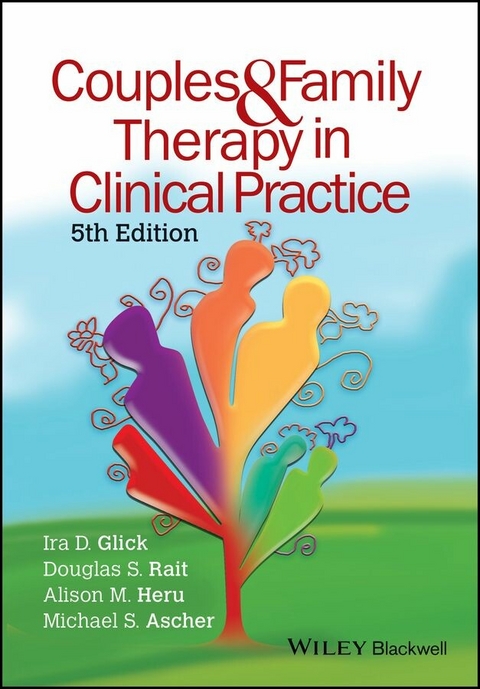
Couples and Family Therapy in Clinical Practice (eBook)
480 Seiten
Wiley-Blackwell (Verlag)
978-1-118-89723-2 (ISBN)
Couples and Family Therapy in Clinical Practice has been the psychiatric and mental health clinician's trusted companion for over four decades. This new fifth edition delivers the essential information that clinicians of all disciplines need to provide effective family-centered interventions for couples and families. A practical clinical guide, it helps clinicians integrate family-systems approaches with pharmacotherapies for individual patients and their families. Couples and Family Therapy in Clinical Practice draws on the authors' extensive clinical experience as well as on the scientific literature in the family-systems, psychiatry, psychotherapy, and neuroscience fields.
Ira D. Glick is Professor Emeritus of Psychiatry and Behavioral Sciences and formerly Chief of the Schizophrenia Clinic at Stanford University School of Medicine, USA.
Douglas S. Rait is Clinical Professor of Psychiatry and Behavioral Sciences and Chief of the Couples and Family Therapy Clinic at Stanford University School of Medicine, USA.
Alison M. Heru is Associate Professor of Psychiatry at the University of Colorado, USA.
Michael S. Ascher is Clinical Associate in Psychiatry at the Perelman School of Medicine, University of Pennsylvania, USA.
Ira D. Glick is Professor Emeritus of Psychiatry and Behavioral Sciences and formerly Chief of the Schizophrenia Clinic at Stanford University School of Medicine, USA. Douglas S. Rait is Clinical Professor of Psychiatry and Behavioral Sciences and Chief of the Couples and Family Therapy Clinic at Stanford University School of Medicine, USA. Alison M. Heru is Associate Professor of Psychiatry at the University of Colorado, USA. Michael S. Ascher is Clinical Associate in Psychiatry at the Perelman School of Medicine, University of Pennsylvania, USA.
Couples and Family Therapy in Clinical Practice 5
Contents 11
Foreword 21
Foreword 25
Preface 29
Acknowledgments 33
A Guide for Using the Text 35
List of Tables 39
List of Figures 41
SECTION I Family Therapy in Context 43
Chapter 1 The Field of Couples and Family Therapy: Development and Definition 47
Objectives for the Reader 47
Introduction 47
Development of the Family Therapy Field 48
Definition of Couples and Family Therapy 51
Core Concepts 52
General Systems Theory 52
Family Systems Theory and Homeostasis Over Time 56
An Integrative Interpersonal Model 58
Differentiation of Family Therapy From Other Psychotherapies 58
Clinical Practice Implications 61
Suggested Reading 61
References 61
Chapter 2 Family Life in Historical and Sociological Perspective 65
Objectives for the Reader 65
Introduction 65
Structure and Function of the American Family 65
Immigration 66
Ethnicity 66
Secular View of Marriage 67
Structures of Marriage 68
Divorce 68
The Functional Single-Parent Family 69
Stepfamilies 69
LGBTQ (Lesbian, Gay, Bisexual, Transgender, Queer) Couples 70
Parenting in Post-modern Relationships 71
Family Types 72
Multiracial Families 72
African-American Families 73
Latino Families 73
Asian Families 73
Social Class 74
Aging of the Population 75
The Changing Family Life Cycle 75
Clinical Practice Implications 76
Suggested Reading 76
References 76
SECTION II Functional and Dysfunctional Families 79
Chapter 3 Understanding the Functional Family 83
Objectives for the Reader 83
Introduction 83
The Family as a System 84
The Couples/Marital and Family Life Cycle 86
The Individual Life Cycle 86
The Couples/Marital Life Cycle 88
Phase of Relationship and Tasks 88
Marital Coalition 89
Sex, Intimacy, and Companionship 91
The Family Life Cycle 91
Family Tasks 94
Provision of Basic Needs 94
Rearing and Socialization of Children 95
Family Belief Systems 97
Family Resilience 97
Clinical Practice Implications 97
Suggested Readings 98
References 98
Chapter 4 Understanding the Functional Family in a Variety of Family Forms 101
Objectives for the Reader 101
Introduction 101
Impact of an Extended Individual Life Cycle 101
Marriage 102
Divorce 102
Marital Separation 103
Divorce 103
Children and Divorce 104
Binuclear Families 104
The Functional Single-Parent Family 105
Mother-Headed Single-Parent Families 106
Father-Headed Single-Parent Families 107
Remarriage and Blended Families 107
Remarried Couple 108
Stepfamilies (Blended Families) 108
Grandparent-Headed Families 109
Lesbian, Gay, or Transgendered Families 109
Parents with a Gender Non-conforming Child 110
Multiple-Partner Fertility Families 111
Adoption and Families 111
Interracial Families 111
Trends in Parenting 112
Clinical Practice Implications 112
Suggested Reading 112
References 113
Chapter 5 Problems and Dysfunction from an Integrated Family Systems Perspective 117
Objectives for the Reader 117
Introduction: The Dysfunctional Family System 117
A Systems Approach to Problems and Dysfunction 118
Historical Perspectives 118
Current Perspectives 119
Structural Problems 120
The Solution as the Problem 121
Family Beliefs and Myths 122
The Larger Social System and Dysfunction 126
Implications for Treatment—The Development of Symptoms in a Particular Person 127
Life Cycle Problems and Dysfunction 128
Unresolved Grief 129
Toxic Secrets 129
Task Performance in the Dysfunctional Family 129
Providing for the Familys Basic Needs 130
Maintaining a Functional Marriage: Issues of Sex, Intimacy, and Commitment 130
Rearing and Socializing of Children 130
Clinical Practice Implications 131
Suggested Reading 131
References 131
SECTION III Family Evaluation 133
Chapter 6 The Process of Evaluation 137
Objectives for the Reader 137
Introduction 137
Who to Include in the Family Evaluation 137
Progression of the Family Evaluation Interview 138
Dimensions of Couple and Family Assessment 139
Joining with the Couple or Family 139
Seeing Systemic Patterns 140
Recognizing Family Developmental Stage, History, and Culture 140
Identifying Family Structure 141
Working with a Systemic Model of Change 142
Role of Historical Material 143
Role of Individual and Family Diagnoses 144
Clinical Practice Implications 144
References 145
Chapter 7 The Content of Evaluation 149
Objectives for the Reader 149
Introduction 149
Dimensions of Family Function 149
Family Evaluation Outline 149
Gathering Identifying Data and Establishing Current Phase of Family Life Cycle 150
Gathering Explicit Interview Data 151
What is the Background of the Family Problem? 152
What is the History of Past Treatment Attempts? 153
What are the Families Goals and Expectations of the Treatment? 154
The Family Genogram 156
Clinical Practice Implications 156
References 156
Chapter 8 Formulating an Understanding of the Family Problem Areas 159
Objectives for the Reader 159
Introduction 159
Rating Important Dimensions of Family Functioning 159
Communication 159
Problem Solving 160
Roles and Coalitions 160
Affective Responsiveness and Involvement 160
Operative Family Beliefs and Stories 161
Recent Family Events and Stresses 161
Family Classification and Diagnosis 161
Planning the Therapeutic Approach and Establishing the Treatment Contract 166
Case Example Illustrating Evaluation and Case Formulation 168
Suggested Reading 174
References 174
SECTION IV Family Treatment 175
Chapter 9 Major Family Therapy Schools and Their Treatment Strategies 179
Objectives for the Reader 179
Introduction 179
Insight-Awareness Model 179
Family of Origin Model 182
Systemic-Strategic Model 183
Structural Model 183
Cognitive–Behavioral Model 184
Experiential Model 185
Narrative Model 185
Psychoeducational Model 185
Clinical Practice Implications 186
Recommended Readings 186
References 186
Chapter 10 Goals 189
Objectives for the Reader 189
Introduction 189
Mediating and Final Goals as They Relate to Schools 189
The Most Common Mediating Goals 189
The Most Common Final Goals 190
Individualizing Goals With the Family 191
Goals and Their Relation to Process and Content Issues 193
Mediating Goals and Their Related Strategies 193
Goals and Related Strategies Common to All Family Therapy Schools 194
Clinical Practice Implications 195
Reference 195
Chapter 11 Family Treatment: Integrated Strategies and Techniques 199
Objectives for the Reader 199
Introduction 199
General Elements of Psychotherapy and Their Relationship to Family Therapy 199
Basic Strategies of Family Intervention 200
Techniques for Supporting Adaptive Mechanisms and Strengths: The Psychoeducational Approach 200
Techniques for Expanding Emotional Experience 202
Techniques for Developing Interpersonal Skills 203
Techniques for Reorganizing the Family Structure 205
Techniques for Increasing Insight and Conflict Resolution 209
Techniques for a More Effective Construction of Family Reality 211
Treatment Packages 212
Indications for Differential Use of the Basic Strategies 212
Clinical Practice Implications 213
References 213
Chapter 12 The Course of Family Treatment 217
Objectives for the Reader 217
Introduction 217
Early Phase 217
Identifying Objectives of the Early Phase 217
Choosing Strategies to Get Started 217
Distributing the Available Time 218
Gathering History and Simultaneously Building a Treatment Alliance with the Family 218
Distinguishing Evaluation from Treatment 220
Middle Phase 220
Termination Phase 221
Conducting Brief Family Therapy: Treatment as It Is Influenced by Time Constraints 222
Indications for Brief Family or Couples Intervention 223
Course of Brief Therapy 223
Techniques 224
Setting Limited Goals and a Definite End Point 224
Active Focus: Reinforcement of Family Strengths, Reconceptualization 225
Active Exploration of Alternatives: Behavioral and Emotional Rehearsal 225
Homework and Family Tasks 226
The Problem-Oriented School of Brief Therapy 226
Crisis Intervention 227
Clinical Practice Implications 227
Suggested Reading 227
References 227
Chapter 13 Promoting Change in Family Treatment: Issues of Alliance and Resistance 231
Objectives for the Reader 231
Introduction 231
The Therapeutic Alliance 231
Models for Dealing with Families That Have Trouble Forming an Alliance 233
Medical Model 233
Coaching Model 233
Conflict Model 233
Strategic Systems Model 234
Problems in Creating Change: Resistance and Disconnection 234
Problems in Creating Change: Emanating from the Family 235
Problems in Creating Change: Emanating from the Therapist 235
Problems in Creating Change: From the Therapist–Family System 236
Problems in Creating Change: Stages of Treatment: At Evaluation and Early in Treatment 236
Problems in Creating Change: In Ongoing Treatment 238
Problems in Creating Change: At the Termination Phase of Therapy 239
Problems in Creating Change: Family Secrets 239
Techniques to Deal with Resistances or Stalled Therapy 240
Assume Nothing 241
Collaboration 241
Emphasizing family responsibility 241
Focus on the present 241
Clinical Practice Implications 241
Suggested Reading 242
References 242
Chapter 14 Family Therapy: General Considerations 245
Objectives for the Reader 245
Introduction 245
Family Participants 245
Extended Family and Significant Others 247
Caregivers 247
Including Children and Adolescents in Family Therapy 248
Diagnostic Family Evaluation 248
Treatment 249
Therapist Combinations 250
Co-Therapy 250
Working as a Team 251
Setting 252
Time, Scheduling, and Fees 252
Keeping a Record of Treatment 253
Family Therapy in Combination with Other Psychosocial Therapies 253
Practical Guidelines 255
Effective Family Intervention 256
Comparison of Therapy Formats and Strategies 256
Clinical Practice Implications 257
References 257
SECTION V Couples Therapy 259
Chapter 15 Dysfunctional Couples and Couples Therapy 263
Objectives for the Reader 263
Introduction 263
Marriage in Its Historical Context 263
Couples Difficulties, Problems, and Dysfunction 264
From a Dynamic Point of View 265
From a Behavioral Point of View 265
From a Systems Point of View 266
From a Psychiatric Illness Point of View 266
Couples Development Dysfunction 266
Couples Therapy 267
The Issue of Commitment—The Problem of Affairs 267
Evaluation of Partners 268
Goals 269
Strategies and Techniques of Intervention 269
A Model for Intervention Based on Patterns of Interaction 269
Individual Models 270
Strategies and Techniques 271
Clinical Practice Implications 273
References 273
Chapter 16 Sex, Couples, and Sex Therapy 277
Objectives for the Reader 277
Introduction 277
Diagnosis—Systems Issues 278
Some Parameters of Sexual Function 278
Assessment of Sexual Disorder 279
Treatment 282
Lack of Desire 282
Erectile Disorder 282
Premature (Early) Ejaculation 282
Painful Intercourse/Female Orgasmic Disorder 282
Other Issues Related to Sexuality and Couples 284
The Spectrum of Sexuality 284
Sexual Functioning After Rape or Sexual Abuse 285
Sexual Problems After Medical Illness 285
Sexual Problems in the Elderly 286
Clinical Practice Implications 286
Suggested Reading 286
References 286
Chapter 17 Couples and Families Breaking Apart: Separation and Divorce 291
Objectives for the Reader 291
Introduction 291
Separation 291
Separation Leading to Divorce 292
Communicating the Issue of Divorce to Children 293
Immediate Issues 294
Therapy for Families Facing Divorce 295
Divorce and Post-divorce Treatment 296
Single-Parent and Binuclear Families 297
Blended Families (Stepfamilies) 297
Goals 298
Evaluation and Treatment 298
Cohabiting Couples 301
Serial Relationships 302
Clinical Practice Implications 302
Suggested Reading 303
References 303
SECTION VI Family Treatment When One Member Has a Psychiatric Disorder or Other Special Problem 305
Chapter 18 Family Treatment in the Context of Individual Psychiatric Disorders 309
Objectives for the Reader 309
Introduction 309
The Family Model and Individual Diagnosis 309
Schizophrenia 310
Rationale 310
Treatment Considerations 311
Patients with Schizophrenia Living with or Supported by Families of Origin 314
Mood Disorders: Bipolar Disorder 316
Rationale 316
Treatment Considerations 318
Mood Disorders: Persistent Depressive Disorder and Major Depressive Disorder 319
Rationale 319
Treatment Considerations 321
Borderline Personality Disorder (BPD) 323
Rationale 323
Treatment Considerations 324
Anxiety Disorders 325
Rationale 325
Panic Disorder and Agoraphobia 326
Treatment 326
Obsessive-Compulsive Disorder 327
Rationale 327
Treatment 327
Post-traumatic Stress Disorder 327
Rationale 327
Treatment 328
Dementia, Amnesia, and Other Cognitive Disorders 328
Rationale 328
Treatment Considerations 329
Eating Disorders 330
Rationale 330
Treatment Considerations 330
Substance-Related Disorders 331
Rationale 331
Assessment and Treatment Guidelines 332
Children of Alcoholic Parents 333
Psychiatric Disorders of Childhood 333
Intellectual Disability 333
Treatment 333
Autism Spectrum Disorder 334
Attention-Deficit/Hyperactivity Disorder 334
Oppositional Defiant Disorder and Conduct Disorder 336
Anxiety Disorders 336
Mood Disorders 336
Childhood Obesity 337
Clinical Practice Implications 337
Suggested Reading 337
References 337
Chapter 19 Family Treatment in the Context of Other Special Problems—Violence to Self and Others 343
Objectives for the Reader 343
Introduction 343
The Family Model and Violence 344
Description of the Problem 344
How Violent Acts Occur: The Cycle of Violence 345
Assessment of Individual and Family Systems Issues 346
Physical and Psychological Consequences of Violence 347
Treatment 348
Clinical Issues for Therapists 351
Intrafamilial Child Sexual Abuse 352
Individual Issues 352
Family Issues 352
Larger System Issues 353
Assessment 353
Treatment 354
Outcomes 354
The Family Model and Child Abuse 354
The Suicidal Patient and the Family 356
Acute Management 356
Evaluating the Family 357
Involving the Family 357
Treating the Family 358
Discharging the Hospitalized Patient 358
Clinical Practice Implications 358
Suggested Reading 358
References 359
Chapter 20 The Family and Treatment of Acute and Chronic Psychiatric Illness 363
Objectives for the Reader 363
Introduction 363
Background 364
Acute Treatment 364
The Function of the Acute Team for the Family 364
Family Responses to Mental Illness of a Family Member 365
The Family Burden in Psychotic Illness 365
Rationale for Acute Treatment of Families 366
Process of Family Treatment in Acute Care 367
Common Goals of Acute Family Intervention 368
Particular Decisions in Acute Care and Family Intervention 370
Family Techniques 371
A Working Model of Acute Family Intervention 372
Guidelines for Recommending Family Intervention in an Acute Care Setting 373
Empirical Studies 374
Families of the Chronically Ill 375
Community-Based Support Groups 377
Controversies in the Treatment of Acute and Chronic Psychiatric Illness 378
Clinical Practice Implications 379
References 379
Chapter 21 Working with Families in the Medical Setting 385
Objectives for the Reader 385
Introduction 385
How Family Functioning Impacts Illness 385
Gender Matters 386
Family Health Beliefs 386
Family Adherence 386
How Illness Impacts Family Functioning 387
Family Coping and Adaptation to Illness 387
Learning to Cope and Adapt 388
Providing a Therapeutic Space 389
Caregiving 389
A Family Systems Interview for Families with Medical Illness 389
1. Problem Solving 390
2. Communication 390
3. Roles 390
4. Affective responsiveness 391
5. Affective involvement 391
6. Behavior control 392
Family Interventions 392
Family Support 392
Family Psychoeducation 392
Family Systemic Interventions 393
Multifamily Groups 394
Clinical Practice Implications 394
Suggested Reading 394
References 394
SECTION VII Results of and Guidelines for Recommending Family Therapy 397
Chapter 22 Indications for and the Sequence of Family Therapy Evaluation and Treatment 401
Objectives for the Reader 401
Introduction 401
Sequence of Evaluation and Treatment Planning 401
Step 1: Is Family Evaluation Indicated? 402
Step 2: Is Family Treatment Indicated? 403
Family Therapy Versus Individual Therapy 403
Managed Care 406
Individual, Couples, or Sex Therapy for Sexual Problems 406
Family Crisis Therapy Versus Hospitalization 407
Step 3: What Shall Be the Duration and Intensity of Family Therapy? 407
Family Crisis Therapy 408
Brief Family Therapy 408
Long-Term Family Therapy 408
Step 4: What Model of Family Intervention Is Indicated? 409
Clinical Practice Implications 409
References 409
Chapter 23 Controversies, Relative Contraindications, and the Use and Misuse of Couples and Family Therapy 413
Objectives for the Reader 413
Introduction 413
Couples Therapy 413
Couples Conflict and Dissatisfaction 413
Sexual Issues 415
Families in the Process of Divorce 415
Unmarried Couples 415
The Child as the Identified Patient 415
The Adolescent as the Identified Patient 416
Family of Origin Issues 417
Situations in Which Family Therapy Is Difficult and Perhaps Contraindicated 417
When Psychopathology in One Family Member Makes Family Therapy Ineffective 417
When the Family or Therapist Thinks the Risks of Therapy Outweigh the Advantages 418
When the Family as a Whole Denies Having Family Problems 419
When Cultural or Religious Prejudices Are Present 419
Skills and Attributes of the Therapist as They Affect Family Work 419
Clinical Practice Implications 419
References 420
Chapter 24 Results: The Outcomes of Couples and Family Therapy 423
Objectives for the Reader 423
Introduction 423
Overview of Psychotherapy Outcome Research 423
1. Specificity 423
2. The Difference Between Efficacy and Effectiveness 424
3. The Difference Between Qualitative and Quantitative, or Exploratory and Confirmatory, Research 424
4. The Difference Between Process and Outcome Research 425
What the Studies Show? 425
Couples Treatments for Adult Disorders 426
Insight-Oriented Marital Therapy for Marital Distress 426
Integrative Behavioral Couple Therapy for Marital Distress 426
Emotionally Focused Couples Therapy for Marital Distress 427
Behavioral Marital Therapy for Depression 427
Behavioral Couples Therapy for Alcoholism 427
Couples Therapy for Posttraumatic Stress Disorder 428
Family Treatments for Adult Disorders 428
Schizophrenia and Major Mental Illness 428
Focused Family Therapy for Bipolar Disorder 428
Family Treatments for Child and Adolescent Disorders 429
Brief Strategic Family Therapy for Children and Adolescents with Externalizing Disorders 429
Functional Family Therapy for Delinquent Adolescents 430
Multidimensional Family Therapy for Adolescent Substance Abuse 430
Multisystemic Therapy for Youth at Risk 430
Functional Family Therapy for Adolescents with Bipolar Disorder 430
Family-Based Treatment for Anorexia Nervosa 431
Family Interventions for Medical Illnesses 431
The Effectiveness of Combining Medication and Family Therapy 431
Limitations of Family Therapy 432
Negative Effects of Family Therapy 433
Inability to Engage and Premature Termination of Family Therapy 436
Clinical Implications of Data from Couples and Family Therapy Outcome Studies 437
Clinical Practice Implications 438
References 438
SECTION VIII Ethical, Professional, and Training Issues 443
Chapter 25 Ethical and Professional Issues in Couples and Family Therapy 447
Objectives for the Reader 447
Introduction 447
Ethical Issues Inherent in Family Therapy 447
Conflicting Interests of Family Members 448
Understanding HIPPA 448
Secrets and Confidentiality 449
Issues Involving Gender, Gender Roles, and Sexuality 451
Ethics in a Managed Care World 451
Informed Consent 452
Financial Issues 452
Professional Issues 453
The Problem of Boundaries and Dual Relationships 453
Competencies 453
Training Issues 456
Clinical Experiences 458
Training Programs in Family Psychiatry 459
A Multidisciplinary Field 459
Family Therapy Fellowships 460
Training and Licensure 460
Clinical Practice Implications 460
Suggested Reading 461
References 461
Index 463
EULA 478
"This superb text on couples and family therapy should be on every psychiatrist's bookshelf. We now view the individual patient as embedded in a family system that must be taken into account to provide state-of-the-art diagnosis and treatment."
--Glen O. Gabbard, MD, Clinical Professor of Psychiatry, Baylor College
"Substance use disorders (SUD) almost always involve family problems. Thus good practice always includes a family evaluation and often a period of family therapy. At the University of Pennsylvania we have conducted and published clinical trials that include medications and family therapy for SUD. Based on our research, we consider family therapy to be an essential component of good practice for the management of SUD."
- Charles P. O'Brien, MD, Ph.D., Kenneth Appel Professor of Psychiatry, University of Pennsylvania School of Medicine
"An essential part of becoming a psychiatrist is learning to work with families to help patients recover. Regardless of whether the intent is to become a family therapist, this key book should be a "must read" for psychiatric residents and clinical fellows alike."
- Maria A. Oquendo, MD, APA President, Chair of the Department of Psychiatry, Perelman School of Medicine, University of Pennsylvania
"Up to date, culturally sensitive, concise, organized, practical; I cannot imagine a more useful book for any therapist working with families. Therapists working in medical or psychiatric settings will find excellent chapters to guide them in bridging the gaps between a family systems and a medical model. EVERY FAMILY THERAPIST SHOULD HAVE THIS BOOK AT THEIR SIDE. It is a wonderful addition to the family therapy literature."
--Ellen Berman, MD, Clinical Professor of Psychiatry, University of Pennsylvania
| Erscheint lt. Verlag | 15.10.2015 |
|---|---|
| Sprache | englisch |
| Themenwelt | Geisteswissenschaften ► Psychologie ► Familien- / Systemische Therapie |
| Medizin / Pharmazie ► Gesundheitsfachberufe | |
| Medizin / Pharmazie ► Medizinische Fachgebiete ► Psychiatrie / Psychotherapie | |
| Schlagworte | Biopsychosocial • Case Studies • Clinical • Concepts • couples • cultural competency • ethics • Evidence • Family • History • Interventions • Medical Science • Medizin • Practice • Principles • Psychiatric • Psychiatrie • Psychiatry • Research • Social Psychiatry • Sozialpsychiatrie • techniques • Textbook • therapy • Training |
| ISBN-10 | 1-118-89723-4 / 1118897234 |
| ISBN-13 | 978-1-118-89723-2 / 9781118897232 |
| Informationen gemäß Produktsicherheitsverordnung (GPSR) | |
| Haben Sie eine Frage zum Produkt? |
 PDF (Adobe DRM)
Kopierschutz: Adobe-DRM
Adobe-DRM ist ein Kopierschutz, der das eBook vor Mißbrauch schützen soll. Dabei wird das eBook bereits beim Download auf Ihre persönliche Adobe-ID autorisiert. Lesen können Sie das eBook dann nur auf den Geräten, welche ebenfalls auf Ihre Adobe-ID registriert sind.
Details zum Adobe-DRM
Dateiformat: PDF (Portable Document Format)
Mit einem festen Seitenlayout eignet sich die PDF besonders für Fachbücher mit Spalten, Tabellen und Abbildungen. Eine PDF kann auf fast allen Geräten angezeigt werden, ist aber für kleine Displays (Smartphone, eReader) nur eingeschränkt geeignet.
Systemvoraussetzungen:
PC/Mac: Mit einem PC oder Mac können Sie dieses eBook lesen. Sie benötigen eine
eReader: Dieses eBook kann mit (fast) allen eBook-Readern gelesen werden. Mit dem amazon-Kindle ist es aber nicht kompatibel.
Smartphone/Tablet: Egal ob Apple oder Android, dieses eBook können Sie lesen. Sie benötigen eine
Geräteliste und zusätzliche Hinweise
Buying eBooks from abroad
For tax law reasons we can sell eBooks just within Germany and Switzerland. Regrettably we cannot fulfill eBook-orders from other countries.
aus dem Bereich