Zum Hauptinhalt springen
Nicht aus der Schweiz? Besuchen Sie lehmanns.de
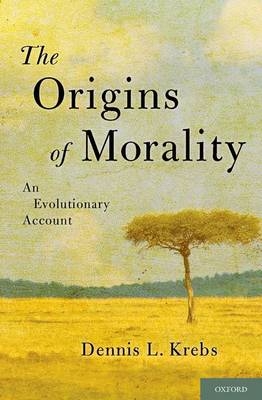
Origins of Morality -  Dennis Krebs

Origins of Morality (eBook)

An Evolutionary Account

(Autor)

eBook Download: PDF
2011
352 Seiten
Oxford University Press (Verlag)
978-0-19-977847-8 (ISBN)
Systemvoraussetzungen
49,09 inkl. MwSt
(CHF 47,95)
Der eBook-Verkauf erfolgt durch die Lehmanns Media GmbH (Berlin) zum Preis in Euro inkl. MwSt.
  • Download sofort lieferbar
  • Zahlungsarten anzeigen
Why do people behave in moral ways in some circumstances, but not in others? In order to account fully for morality, Dennis Krebs departs from traditional approaches to morality that suggest that children acquire morals through socialization, cultural indoctrination, and moral reasoning. He suggests that such approaches can be subsumed, refined, and revised gainfully within an evolutionary framework. Relying on evolutionary theory, Krebs offers an account of how notions of morality originated in the human species. He updates Darwin's early ideas about how dispositions to obey authority, to control antisocial urges, and to behave in altruistic and cooperative ways originated and evolved, then goes on to update Darwin's account of how humans acquired a moral sense. Krebs explains why the theory of evolution does not dictate that all animals are selfish and immoral by nature. On the contrary, he argues that moral behaviors and moral judgments evolved to serve certain functions. Krebs examines theory and research on the evolution of primitive forms of prosocial conduct displayed by humans and other animals, then discusses the evolution of uniquely human prosocial behaviors. He describes how a sense of morality originated during the course of human evolution through strategic social interactions among members of small groups, and how it was expanded and refined in modern societies, explaining how this sense gives rise to culturally universal and culturally relative moral norms. Krebs argues that although humans' unique cognitive abilities endow them with the capacity to engage in sophisticated forms of moral reasoning, people rarely live up their potential in their everyday lives. Four conceptions of what it means to be a moral person are identified, with the conclusion that people are naturally inclined to meet the standards of each conception under certain conditions. The key to making the world a more moral place lies in creating environments in which good guys finish first and cheaters fail to prosper.
PDFPDF (Adobe DRM)

Kopierschutz: Adobe-DRM
Adobe-DRM ist ein Kopierschutz, der das eBook vor Mißbrauch schützen soll. Dabei wird das eBook bereits beim Download auf Ihre persönliche Adobe-ID autorisiert. Lesen können Sie das eBook dann nur auf den Geräten, welche ebenfalls auf Ihre Adobe-ID registriert sind.
Details zum Adobe-DRM

Dateiformat: PDF (Portable Document Format)
Mit einem festen Seiten­layout eignet sich die PDF besonders für Fach­bücher mit Spalten, Tabellen und Abbild­ungen. Eine PDF kann auf fast allen Geräten ange­zeigt werden, ist aber für kleine Displays (Smart­phone, eReader) nur einge­schränkt geeignet.

Systemvoraussetzungen:
PC/Mac: Mit einem PC oder Mac können Sie dieses eBook lesen. Sie benötigen eine Adobe-ID und die Software Adobe Digital Editions (kostenlos). Von der Benutzung der OverDrive Media Console raten wir Ihnen ab. Erfahrungsgemäß treten hier gehäuft Probleme mit dem Adobe DRM auf.
eReader: Dieses eBook kann mit (fast) allen eBook-Readern gelesen werden. Mit dem amazon-Kindle ist es aber nicht kompatibel.
Smartphone/Tablet: Egal ob Apple oder Android, dieses eBook können Sie lesen. Sie benötigen eine Adobe-ID sowie eine kostenlose App.
Geräteliste und zusätzliche Hinweise

Buying eBooks from abroad
For tax law reasons we can sell eBooks just within Germany and Switzerland. Regrettably we cannot fulfill eBook-orders from other countries.

Mehr entdecken
aus dem Bereich