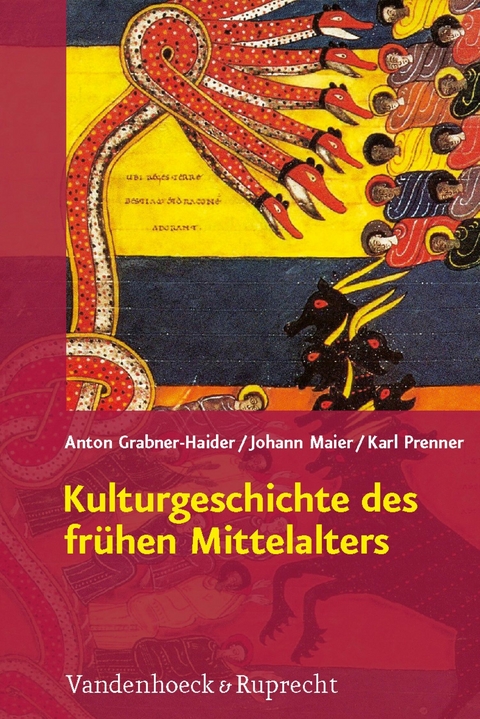
Kulturgeschichte des frühen Mittelalters (eBook)
304 Seiten
Vandenhoeck & Ruprecht Unipress (Verlag)
978-3-647-54006-1 (ISBN)

Dr. theol. Dr. phil. Anton Grabner-Haider ist Professor für Religionsphilosophie an der Universität Graz.
Dr. theol. Dr. phil. Anton Grabner-Haider ist Professor für Religionsphilosophie an der Universität Graz.
Cover 1
Title Page
4
Copyright
5
Table of Contents
6
Body
10
Einleitung 10
1. Die neue politische Situation 12
Herrschaft in Italien und Gallien 12
Germanische Reiche und Herrschaften 16
Das Reich der Franken 18
Die Lebenswelt in Irland 22
Die Lebenswelt in England 25
Die Slawen in Osteuropa 28
Das oströmische Reich 29
2. Lebenswelt und Sozialstruktur 34
Soziale Strukturen und Prozesse 34
Entwicklung der Burgen und Städte 37
Das Feudalsystem der Wirtschaft 40
Frühe Lebensordnungen 42
3. Mythologie der Stammeskulturen 46
Keltische Weltdeutungen 46
Germanische Deutungen des Daseins 48
Die Mythologie der Slawen 50
Die Mythologie der Balten 52
Die Mythologie der Finn-Ugrier 54
Folgen der Christianisierung 57
4. Christliche Weltdeutungen 60
Das christliche Evangelium 60
Der monopolhafte Glaube 64
Neuplatonische Lehren der Theologen 67
Frühe Schulen der lateinischen Bildung 74
Neuanfänge des philosophischen Denkens 76
Lernprozesse in der Karolingischen Renaissance 78
Fragen der Philosophie und Religion 80
Weiterentwicklung der klösterlichen Lebens 87
Das keltische Mönchtum 89
Die Lebenswelt und Kultur der Klöster 91
Die großen Ordensgründer 95
Reformen der Klöster 98
Die Anfänge der Ritterorden 100
6. Religion, Lebenswelt und Politik 104
Der Glaube des Volkes 104
Veränderungen in der Lebenswelt 108
Die Karolingische Kultur und Lebenswelt 111
Soziale Entwicklungen und Umbrüche 118
7. Die Byzantinische Lebenswelt 124
Die politischen Entwicklungen 124
Politische Umwälzungen und Kriege 129
Die moslemischen Eroberungen 132
Lebenswelt und Kultur 133
Der lange Streit um die Bilder 135
Die Verteidigung des Imperiums 138
8. Entwicklungen der westlichen Kultur 140
Politische Entwicklungen und Brüche 140
Die gesellschaftlichen Veränderungen 143
Die religiösen Lebenswelten 145
Lehren der Philosophen 148
Islamische und jüdische Philosophie 154
9. Herrschaft und Religion 160
Die Verbindung von Religion und Politik 160
Die politischen Ansprüche der Kleriker 161
Die politischen Konflikte mit den Klerikern 164
Entwicklungen der Lebenswelt und Gesellschaft 166
10. Anfänge der Dichtkunst 170
Latein als Literatursprache 170
Anfänge der volkssprachlichen Dichtung 172
Literatur im ostfränkischen Reich 176
Angelsächsische und skandinavische Dichtung 178
Anfänge der romanischen Dichtungen 181
Die Entwicklung des geistlichen Dramas 183
5. Die Kultur der Klöster 84
Anfänge des christlichen Mönchtums 84
11. Baukunst, Malerei und Musik 186
Entfaltung der byzantinischen Kunst 186
Kunst in der Karolingischen Zeit 191
Christliche Kunst in Süd-, West- und Nordeuropa 192
Strukturen der romanischen Kunst 195
Die Entwicklung der Musik 201
12. Die jüdische Kultur (Johann Maier) 206
Die Diaspora 206
Israel und die Weltvölker 211
Unter der Herrschaft Ismaels 215
Unter der Herrschaft Edoms 217
Formierung der Traditionen und Riten 220
Jüdisches Recht 220
Brauch und Liturgie 223
Erbauungsliteratur 226
Die Opposition der Karäer 227
Bibeltext und Bibelkommentare 228
Medizin, Wissenschaft, Philosophie und Theologie 230
Tendenzen und Zeugnisse 233
Hauptproblemfelder 240
Mystik und Kabbala 241
Profane Literatur und Bildung 244
Ausklang einer Blüteperiode 246
13. Islamische Kultur (Karl Prenner) 250
Vorislamisches Arabien 250
Muhammad in Mekka und Medina 252
Der Koran 255
Die Spaltung der muslimischen Gemeinde 257
Eroberungen und gesellschaftliche Strukturen 258
Die Regionalisierung des Reiches 261
Die islamische Kultur als Integrationsfaktor 262
Die islamische Stadt 264
Die islamische Tradition (sunna / hadith) 266
Sunniten und Schiiten 267
Koranexegese 269
Die islamische Rechtswissenschaft (fiqh) und das „göttliche Gesetz“ (scharia) 270
Die Übersetzung des antiken Erbes ins Arabische 273
Theologie 274
Philosophie 278
Philosophische Ethik 280
Der Weg nach Innen: Islamische Mystik 281
Traditionelle Frömmigkeit 283
Das Verhältnis der Geschlechter 285
Arabisches Literaturschaffen 286
Islamisches Kunstschaffen: Moschee und Madrasa 289
ANHANG Zeittabelle 293
Weiterführende Literatur 299
Personenregister 303
| Erscheint lt. Verlag | 18.2.2010 |
|---|---|
| Verlagsort | Göttingen |
| Sprache | deutsch |
| Themenwelt | Geisteswissenschaften ► Religion / Theologie ► Christentum |
| Schlagworte | Christentum • Geistes- und Kulturgeschichte • Kulturgeschichte |
| ISBN-10 | 3-647-54006-4 / 3647540064 |
| ISBN-13 | 978-3-647-54006-1 / 9783647540061 |
| Informationen gemäß Produktsicherheitsverordnung (GPSR) | |
| Haben Sie eine Frage zum Produkt? |
 PDF (Ohne DRM)
Digital Rights Management: ohne DRM
Dieses eBook enthält kein DRM oder Kopierschutz. Eine Weitergabe an Dritte ist jedoch rechtlich nicht zulässig, weil Sie beim Kauf nur die Rechte an der persönlichen Nutzung erwerben.
Dateiformat: PDF (Portable Document Format)
Mit einem festen Seitenlayout eignet sich die PDF besonders für Fachbücher mit Spalten, Tabellen und Abbildungen. Eine PDF kann auf fast allen Geräten angezeigt werden, ist aber für kleine Displays (Smartphone, eReader) nur eingeschränkt geeignet.
Systemvoraussetzungen:
PC/Mac: Mit einem PC oder Mac können Sie dieses eBook lesen. Sie benötigen dafür einen PDF-Viewer - z.B. den Adobe Reader oder Adobe Digital Editions.
eReader: Dieses eBook kann mit (fast) allen eBook-Readern gelesen werden. Mit dem amazon-Kindle ist es aber nicht kompatibel.
Smartphone/Tablet: Egal ob Apple oder Android, dieses eBook können Sie lesen. Sie benötigen dafür einen PDF-Viewer - z.B. die kostenlose Adobe Digital Editions-App.
Buying eBooks from abroad
For tax law reasons we can sell eBooks just within Germany and Switzerland. Regrettably we cannot fulfill eBook-orders from other countries.
aus dem Bereich