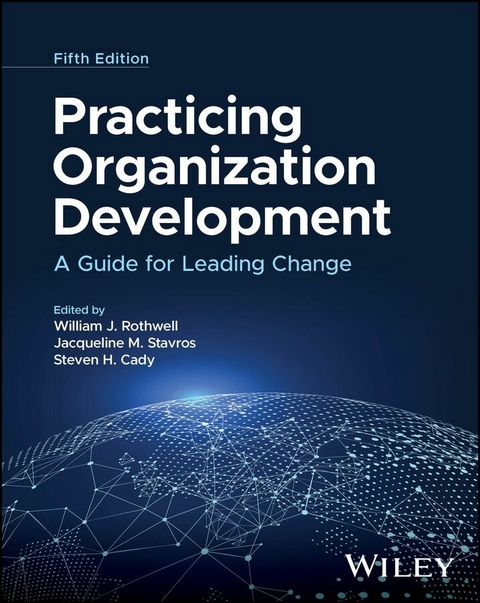
Practicing Organization Development (eBook)
496 Seiten
Wiley (Verlag)
978-1-394-25228-2 (ISBN)
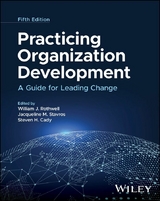
Explore contemporary organization development theory to advance your research agenda or implement transformational change at your organization.
In the newly revised fifth edition of Practicing Organization Development: A Guide for Leading Change, a team of renowned experts in the field of organization development (OD) delivers an invaluable new look at how OD theories, models, frameworks, and whole systems interventions can effect positive transformation and change. The book covers classical and newer theories, process, and practices for transformational change, closely examines system dynamics, and identifies contemporary themes in OD, transformation, and change.
Readers will find:
- Strategies for implementing OD approaches into leading, managing, consulting, and coaching
- Ways to elevate and extend their research agendas into new theories and models for impacting positive change
- Techniques for expanding OD from human resources and talent management silos into the areas of management and leadership
Perfect for managers, executives, directors, and other business leaders interested in implementing transformational change, Practicing Organization Development is also an essential read for organization development theorists and researchers and other business academics seeking modern insights into an exciting and dynamic field of study.
William J. Rothwell is a Distinguished Professor Emeritus in the Workforce Education and Development program in the Department of Learning and Performance Systems, College of Education at The Pennsylvania State University. He is also Academy Professor at Penn State University.
Jacqueline M. Stavros is Professor of Management for the College of Business and IT at Lawrence Technological University and a management consultant. She is founder of SOAR Institute and co-founder of CWH Institute.
Steven H. Cady is a Professor of Management and the founding Director of the Doctoral Program in Organization Development & Change at the Schmidthorst College of Business at Bowling Green State University. He is also founder of NEXUS4change, a global community and consultancy.
Introduction: Getting the Most from This Edited Volume
William J. Rothwell, Jacqueline M. Stavros, and Steven H. Cady
The fourth edition of Practicing Organization Development, subtitled Leading Transformation and Change, was about facilitating transformational and incremental changes. The edition recognized that organization development (OD) is both a field and a profession and that there are diverse frameworks, models, and approaches to handling organizational issues. The book was about the power and possibilities of OD, which place human conversation and behaviors at the heart of change, leading to enhanced performance.
There are many popular definitions of OD. However, it is best understood as facilitating system-wide growth and human systems’ evolution. Change is messy and complicated because our organizations are living systems. For this reason, it is best managed by applying complexity theory and tapping complex adaptive systems (Church et al. 2018). OD must adopt an open systems perspective (Gopinath and Kendall 2021).
The fifth edition of Practicing Organization Development is subtitled A Guide for Leading Change. The word transformation has been dropped. It has grown to be a controversial word. Some people think it implies ordinary change. For other people, the word transformation suggests an abrupt change that is neither well-planned nor well-accepted by those affected by the change. Neither way of understanding that word is helpful. For that reason, it has been removed from the subtitles of this new edition.
AUDIENCE FOR THE BOOK
Practicing Organization Development: A Guide for Leading Change (fifth edition) is written for established internal or external OD practitioners and those new to the field. It is also written for scholars and line managers who wish to grow more familiar with OD. Those new to the field will find the book foundational, a place to begin building their knowledge and skills about OD. Experienced practitioners, scholars, and operating managers will find this book a compendium of useful information about how to formulate, implement, and evaluate change using a humanistic approach that places people first rather than placing primary emphasis on change project goals or budgets while ignoring or de-emphasizing human involvement in change (Anderson 2021).
The primary audience is OD professionals, and this book provides helpful information to lead change efforts. Undergraduate students can use it in multiple courses, and more advanced students will find it valuable as a repository of the latest thinking on OD.
Our secondary audience consists of human resource (HR) generalists and talent development practitioners, previously called training and development (T&D) or human resource development (HRD) practitioners. Some talent development practitioners train employees. They equip workers with the knowledge, skills, and attitudes needed to qualify for their jobs, maintain their skills as times change, and prepare for future advancement opportunities. However, many talent development practitioners go beyond individually focused change efforts like training to ensure that identified individuals are supported in their work settings by a corporate culture that supports the application of new knowledge, skills, and attitudes. Individual performance improvement can only occur when the surrounding work environment supports it (Rothwell et al. 2024). The theory and practice of changing organization and work-group cultures are OD topics. To do their jobs and achieve results, talent development practitioners often demonstrate competencies associated with OD.
Our third audience consists of others looking for ways to transform whole organizations and communities to thrive in the 21st century. Today’s leaders must know how to introduce and consolidate change successfully to bring visions into reality or leverage organizational strengths to their advantage. Executives or managers often lack training in OD methods, and that may be one reason why so few organizational change efforts are entirely successful and meet the expectations established for them. We hope senior managers (such as those in the C-Suite) are also reading this book.
PURPOSE AND OBJECTIVES OF THE BOOK
The purpose of Practicing Organization Development: A Guide for Leading Change (fifth edition) is to build the reader’s competencies to assess the need for change, manage change, and facilitate the implementation of change in organization settings while also remaining in alignment with the values of OD as a field and the values of organizations in which OD is practiced.
After completing this book, the reader should be able to:
- Define OD and change and how these relate to each other.
- Describe various change models.
- Understand the importance of effective leadership in leading self and then others.
- Describe and apply the competencies and values needed to conduct planned change.
- Understand the phases of OD work and levels of change.
- Work through each step of an OD project and collaborate successfully with key stakeholders to plan and implement facilitated change.
- List and summarize various OD interventions used in the OD field.
- Explain the importance of strengthening and shaping the organization’s culture and design.
- Understand the impact of special issues on OD.
This guide supports the ongoing development of leaders, managers, practitioners, and consultants in leading change. It provides basic concepts and foundational models and then goes beyond that to review the state-of-the-art and best practices in OD. The book has been designed so that each chapter can stand alone and be used to build OD competencies in alignment with OD values. The contributors are leaders in the areas they wrote about.
WHAT’S NEW IN THE FIFTH EDITION
The convergence of OD with transformation, change management, organizational behavior, ethics, and human resource management is more prevalent today than ever, given the changes in our global business environment. Practicing Organization Development: A Guide for Leading Change (fifth edition) expands and updates the fourth edition to reflect current best practices in OD. The fifth edition, like its predecessors, is comprehensive and provides the essentials: foundations and principles, OD phases, present state, and future challenges, and implications of the OD field with the latest and most widely used models, frameworks, strategies, and methods to improve human and organizational well-being and performance. However, this edition reflects the growing importance and emphasis of a dialogic approach in OD (Marshak and Bushe 2020).
Readers will note unique similarities and differences between the fourth and fifth editions of this book. The editions are similar in that both share the foundations and phases of planned change in OD. That is perennial and does not change, though the chapters describing them have been updated. The fifth edition is different because it has been rewritten and updated by the previous contributors from the fourth edition. It also includes many new contributors who bring OD frameworks and approaches into leading, managing, consulting, and coaching while also increasing the sensitivity to transformation and positive change, as well as their aptitudes in facilitating generative dialogues and learning exchanges.
The fifth edition includes new chapters and many new contributors. They are drawn from various leading OD scholars and practitioners who share the theory and practice of OD as it relates to the whole system, strengths-based, and positive change methods, transformation, and the importance of practicing OD at the five levels of individual, organizational, inter-organizational, trans organizational, and global. Each chapter has discussion questions and additional online resources for you to review. This new edition of Practicing Organization Development will help any organization build its capabilities to operate efficiently and effectively and improve its whole system while operating in its current environment.
Based on the contributions in this fifth edition, we realize that OD has been transitioning from primarily focusing on “organizations” to being more inclusive of how the “human systems” transform the organization and its environment. OD is also uniquely positioned to help humans deal with the change wrought by technological change—such as artificial intelligence.
All chapter contributions in the fifth edition will feature 21st-century challenges for individuals, groups, organizations, and regions of the world for those who seek to understand what OD is and how to apply it to do developmental, transitional, and transformational change.
The fifth edition will illuminate how appreciative, strengths-based OD theories, models, frameworks, and whole systems interventions can facilitate more profound understanding and influence positive transformation and change. This edition generates relevant insights for OD scholars (theories) and practitioners (practice), including those who seek to:
- Understand classic and new theories and practices for change.
- Examine diversity and inclusive whole system dynamics in greater depth.
- Identify contemporary themes in OD and change, such as examining current issues through a positive organizational scholarship (POS) lens, understanding sustainability, and leveraging technology,...
| Erscheint lt. Verlag | 13.1.2026 |
|---|---|
| Sprache | englisch |
| Themenwelt | Wirtschaft ► Betriebswirtschaft / Management ► Personalwesen |
| Schlagworte | Change Management • Organizational change • Organizational change management • organizational scholarship • Organization Change • Organization development theory • Positive Organizational Scholarship • transformational change |
| ISBN-10 | 1-394-25228-5 / 1394252285 |
| ISBN-13 | 978-1-394-25228-2 / 9781394252282 |
| Informationen gemäß Produktsicherheitsverordnung (GPSR) | |
| Haben Sie eine Frage zum Produkt? |
 EPUB (Adobe DRM)
Kopierschutz: Adobe-DRM
Adobe-DRM ist ein Kopierschutz, der das eBook vor Mißbrauch schützen soll. Dabei wird das eBook bereits beim Download auf Ihre persönliche Adobe-ID autorisiert. Lesen können Sie das eBook dann nur auf den Geräten, welche ebenfalls auf Ihre Adobe-ID registriert sind.
Details zum Adobe-DRM
Dateiformat: EPUB (Electronic Publication)
EPUB ist ein offener Standard für eBooks und eignet sich besonders zur Darstellung von Belletristik und Sachbüchern. Der Fließtext wird dynamisch an die Display- und Schriftgröße angepasst. Auch für mobile Lesegeräte ist EPUB daher gut geeignet.
Systemvoraussetzungen:
PC/Mac: Mit einem PC oder Mac können Sie dieses eBook lesen. Sie benötigen eine
eReader: Dieses eBook kann mit (fast) allen eBook-Readern gelesen werden. Mit dem amazon-Kindle ist es aber nicht kompatibel.
Smartphone/Tablet: Egal ob Apple oder Android, dieses eBook können Sie lesen. Sie benötigen eine
Geräteliste und zusätzliche Hinweise
Buying eBooks from abroad
For tax law reasons we can sell eBooks just within Germany and Switzerland. Regrettably we cannot fulfill eBook-orders from other countries.
aus dem Bereich