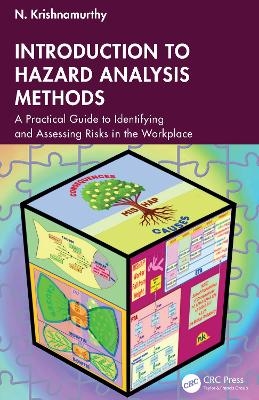
Introduction to Hazard Analysis Methods
CRC Press (Verlag)
978-1-041-16232-2 (ISBN)
- Noch nicht erschienen (ca. Mai 2026)
- Versandkostenfrei
- Auch auf Rechnung
- Artikel merken
Risk management begins with the critical ability to identify and assess hazards before they manifest as accidents. This concise guide presents simple proven methodologies for hazard identification and assessment, equipping professionals with practical tools to anticipate potential dangers in their workplace. From HAZOP and "What if...?" Analysis, to Fault Tree and Event Tree Analyses and the Bowtie method, each technique is thoroughly explained with real-world applications drawn from the author's experience in accident investigation and consultancy.
The book explores both qualitative and quantitative hazard assessment techniques through a structured framework for evaluating the causes and consequences of workplace mishaps. By understanding these essential preliminary stages of Enterprise Risk Management, professionals gain the diagnostic tools necessary to implement effective controls and create safer work environments.
“Introduction to Hazard Analysis Methods: A Practical Guide to Identifying and Assess Risks in the Workplace”, is for safety professionals, risk analysts, engineers, project managers, teachers and students of occupational safety and health.
Natarajan Krishnamurthy (‘Prof Krishna’ as he is known to students and colleagues) is an international consultant in safety, structures, and computer applications. Now based in Singapore, he has had significant roles in teaching and training, research and consultancy, in India, the USA, and Singapore, underpinning the breadth and depth of his experience in occupational health and safety. He has published more than 100 papers and 8 books in his technical specialties. He has three inventions patented in Singapore. He is the author of “Safety at Height — A Holistic View of Fall Management”, published by Routledge in 2024. He continues to lecture online to organisations in Singapore, and to Auburn University in Alabama, USA, and is involved in safety committee work in Singapore and India.
1. Introduction. 2. Causes and Consequences. 3. Hazop method. 4. 'What if ...?' method. 5. Fishbone/ishikawa method. 6. Fault tree analysis. 7. Mishap consequences. 8. Event tree analysis. 9. Cause-consequence analysis. 10. Bowtie/butterfly diagram. 11. Quantified bowtie method. 12. Evolving technology hazards. 13. Conclusion. 14. Answers to exercises.
| Erscheint lt. Verlag | 21.5.2026 |
|---|---|
| Zusatzinfo | 9 Tables, black and white; 38 Line drawings, black and white; 11 Halftones, black and white; 49 Illustrations, black and white |
| Verlagsort | London |
| Sprache | englisch |
| Maße | 138 x 216 mm |
| Themenwelt | Technik ► Bauwesen |
| Wirtschaft | |
| ISBN-10 | 1-041-16232-4 / 1041162324 |
| ISBN-13 | 978-1-041-16232-2 / 9781041162322 |
| Zustand | Neuware |
| Informationen gemäß Produktsicherheitsverordnung (GPSR) | |
| Haben Sie eine Frage zum Produkt? |
aus dem Bereich