The Certified Information Systems Auditor (eBook)
186 Seiten
Azhar Sario Hungary (Verlag)
978-3-384-74524-8 (ISBN)
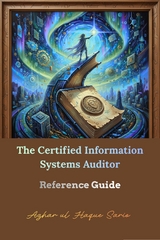
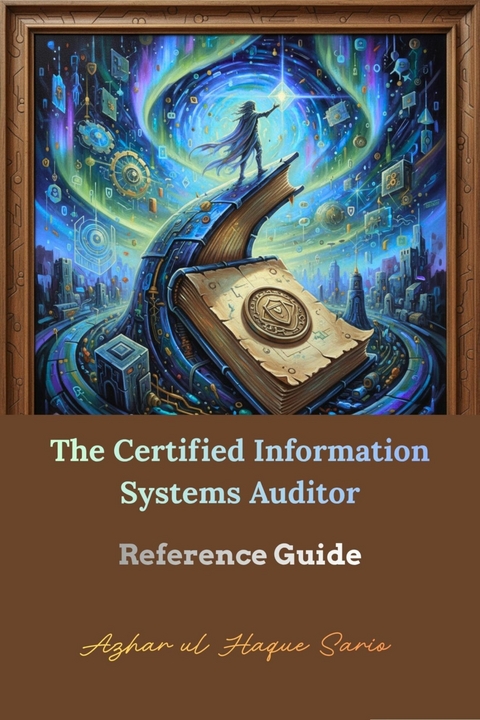
The Certified Information Systems Auditor: Reference Guide is a masterfully written, practitioner-focused roadmap for professionals seeking clarity, precision, and real-world depth in the world of information systems auditing. It simplifies the complexity of IT governance, risk, and control into practical lessons learned from high-stakes environments-where technology meets accountability. The book is not just a theoretical manual; it unfolds like a conversation between a seasoned auditor and an aspiring professional, walking through domains from audit planning and execution to governance, system acquisition, implementation, and information protection. Every section is built on authentic experience, not recycled knowledge, turning abstract frameworks into tangible business intelligence. It helps readers see how audit principles safeguard financial integrity, protect enterprise data, and reinforce governance at the highest corporate levels.
What sets this reference guide apart is its depth and voice-it speaks from lived experience rather than textbook repetition. Unlike many exam-oriented resources that focus solely on memorization, this guide reveals the real economic and strategic reasoning behind each audit practice. It connects IT control testing with financial assurance, risk-based decision-making, and enterprise value protection-offering a rare fusion of audit methodology and corporate strategy. Where other books stop at 'what' to learn, this one teaches 'why' it matters and 'how' it works in practice. Each domain is enriched with case studies, finance-based analogies, and insight drawn from real-world engagements in banking, governance, and regulatory environments. That authenticity makes it indispensable not only for CISA aspirants but also for auditors, risk managers, and executives seeking to elevate their professional understanding beyond compliance checklists.
This independently authored work stands as a comprehensive bridge between the technical and the financial, the theoretical and the operational. It empowers professionals to think like business leaders-strategically, ethically, and analytically-while remaining grounded in internationally recognized audit standards. Readers will not just pass an exam; they will emerge with a sharpened sense of professional judgment and organizational foresight.
Disclaimer: This publication is independently produced by the author under nominative fair use. It is not affiliated with, endorsed by, or sponsored by ISACA® or the Certified Information Systems Auditor (CISA) certification board in any form. All rights reserved © 2025 by Azhar ul Haque Sario.
DOMAIN 4 – INFORMATION SYSTEMS OPERATIONS & BUSINESS RESILIENCE
Information Systems Operations & Business Resilience: A Financial Perspective
In today's hyper-connected financial landscape, the line between technology and business is gone. Information Systems (IS) operations are not merely a support function; they are the active enabler of business strategy and the primary guardian of its resilience. Demonstrating competency in this area requires a dual-minded approach: the precision of an engineer and the strategic foresight of a financial analyst.
This document offers proof of that competency. We will explore the critical subtopics of IS operations, moving beyond technical definitions to assess their direct, material impact on financial performance, regulatory compliance, operational risk, and long-term business resilience.
1. IT Components
From a financial perspective, IT components—the servers, network switches, storage arrays, and workstations—are not just expenses. They are capital assets (CapEx) that form the very foundation of service delivery. Their performance, reliability, and lifecycle are directly correlated with the firm's ability to generate revenue. A slow server isn't an IT problem; it's a bottleneck in the sales pipeline. A failed network switch isn't a technical glitch; it's a halt in financial transactions.
Business resilience is built upon this foundation. Recent industry analysis shows that a single IT outage can cost an organization well over $100,000, with many incidents running into the millions. The control framework here, therefore, is about asset stewardship. We must implement physical security controls (to protect the asset itself) and, more importantly, lifecycle management. Running critical operations on end-of-life hardware is not "sweating the asset"; it is actively accepting an unmitigated, high-probability risk.
Consider a high-frequency trading firm. The "component" in question might be a specialized, low-latency network card. That small piece of hardware is not just an item on an inventory list; it is the direct enabler of the firm's entire business model. The IT control here isn't just "does it work?" but "is it monitored for a nanosecond-level performance dip?" and "do we have an automated failover to a hot-spare?" This is how component-level controls translate directly to protecting millions in daily revenue.
2. IT Asset Management (ITAM)
IT Asset Management (ITAM) is the practice of financial and operational stewardship over the IT environment. It is the business process for knowing exactly what you own, where it is, who is using it, how it's configured, and what it costs. Without a robust ITAM program, a company is, from a financial perspective, flying blind. Industry data often suggests that 20-30% of IT budgets can be wasted on unused software, "ghost" servers (assets that are running but serve no purpose), and redundant contracts.
The business impact is twofold. First, it's a massive operational expense (OpEx) leak. We see this constantly in our fieldwork: companies paying for thousands of software licenses that are completely unassigned. An effective ITAM program reclaims these costs, driving immediate, measurable savings to the bottom line. Second, it's a profound source of risk. An unmanaged, untracked laptop or cloud instance is a wide-open door for a data breach, creating a massive, unquantified liability.
A classic case study is the software audit. A client of ours, a mid-sized regional bank, was audited by a major software vendor. Because their ITAM was a simple, outdated spreadsheet, they could not prove their license compliance. They faced a potential seven-figure, unbudgeted liability for "true-up" fees. We implemented a modern ITAM system that automatically discovers all hardware and software, reconciling this data against purchase orders. This system turned chaos into control, satisfied the auditors, and gave the CFO, for the first time, a true picture of their IT spend and risk exposure.
3. Job Scheduling and Production Process Automation
Production automation and job scheduling are the silent, digital engines of the modern financial firm. These are the automated "batch" processes that run overnight to close the books, generate customer invoices, process payroll, run risk calculations, and deliver regulatory reports. When they work, they are invisible. When they fail, the business stops.
The business resilience link is direct and severe. If the automated invoicing job fails, cash flow is immediately impacted. The "Days Sales Outstanding" (DSO) metric ticks up, and working capital tightens. If the "End-of-Day" (EOD) financial reconciliation job fails, the firm's trading desks start the next morning blind, unable to trust their cash positions. This isn't an IT inconvenience; it's a fundamental failure of operational control.
The key IT controls for job scheduling are not just about "making the job run." They are about dependency and error handling. We must have controls to ensure Job B (calculating interest) cannot run if Job A (posting transactions) fails. We must have automated, intelligent alerting. A job failing silently is a disaster. The control is to have that failure immediately trigger a ticket and escalate to the right team. In my experience, the most mature firms treat their job schedulers with the same seriousness as their core trading systems, with full change-control, dependency mapping, and business-owner sign-off for any modifications.
4. System Interfaces
System interfaces are the digital "handshakes" between your critical applications. It's the API connecting your e-commerce website to your inventory system, the file transfer from your HR system to your payroll provider, and the data feed from your trading platform to your General Ledger (GL). The integrity of the entire business process relies on the integrity of these handshakes.
From a finance and audit perspective, interfaces are a major point of risk. This is where "garbage in, garbage out" becomes a corporate nightmare. A faulty interface can corrupt data, leading to misstated financials, bad business decisions, and massive man-hour costs for manual reconciliation. For any public company, this is a material Sarbanes-Oxley (SOX) compliance issue. If you cannot prove that the data sent from your sales system is complete and accurate when it arrives in your GL, your financial reports are fundamentally untrustworthy.
The primary control here is reconciliation. We must build automated controls to validate the data at both ends. This can be a "completeness" check (e.g., 1,000 records sent = 1,000 records received) or a "financial" check (e.g., the total dollar value of invoices sent = the total dollar value of debits posted). When an error is found, the interface control should automatically reject the bad data into an error queue for human review, before it pollutes the downstream system.
5. Shadow IT and End-User Computing (EUC)
Shadow IT refers to any technology, software, or service used by business units without official IT approval. End-User Computing (EUC) is its close cousin, typically referring to complex, business-critical tools built by users themselves, most famously, the "magic Excel spreadsheet" that an entire department relies on.
From a financial and resilience standpoint, Shadow IT is one of the largest hidden risks in any organization. We see it in finance teams that use an unapproved cloud service to share sensitive budget files. We see it in trading desks that build complex, un-audited pricing models in Excel (an EUC). The business thinks it's being agile; the firm is actually exposed to massive data loss, compliance violations (like SOX or GDPR), and "stranded financial data." What happens when the one person who built that magic spreadsheet quits? The business process vaporizes.
You cannot simply block Shadow IT; the business needs to move fast. The control framework is one of discovery and governance. We must use tools to discover these unsanctioned apps. Then, we risk-rate them. A marketing team using a new a project management tool is a low risk. The finance team using a non-approved file-sharing app is a high risk and must be migrated to a sanctioned, secure solution. For critical EUCs, like that pricing model, the control is to bring it into governance—forcing it to be stored on a backed-up, access-controlled server, with version control and mandatory model validation by a second pair of eyes.
6. Systems Availability and Capacity Management
These two concepts are the core of business resilience. Availability is simple: is the system "on" and accessible? Capacity is more strategic: can the system handle the load the business requires of it?
The financial link is obvious: downtime is lost revenue. An e-commerce site that is "available" but so slow that customers abandon their carts is a failure of capacity management. The goal of this discipline is to balance cost and resilience. It is financially wasteful to build a system that can handle 100x your normal traffic (over-provisioning OpEx and CapEx). It is financially disastrous to build a system that crashes during your busiest sales period (under-provisioning).
The controls for availability are technical: redundancy (N+1 servers), automated failover, and disaster recovery plans. The controls for capacity are more about business analysis. We must monitor performance...
| Erscheint lt. Verlag | 2.11.2025 |
|---|---|
| Sprache | englisch |
| Themenwelt | Wirtschaft |
| Schlagworte | Audit Assurance • CISA exam guide • Information Security • Information systems Audit • ISACA Standards • IT Governance • Risk Management |
| ISBN-10 | 3-384-74524-8 / 3384745248 |
| ISBN-13 | 978-3-384-74524-8 / 9783384745248 |
| Informationen gemäß Produktsicherheitsverordnung (GPSR) | |
| Haben Sie eine Frage zum Produkt? |
 EPUB (Ohne DRM)
Digital Rights Management: ohne DRM
Dieses eBook enthält kein DRM oder Kopierschutz. Eine Weitergabe an Dritte ist jedoch rechtlich nicht zulässig, weil Sie beim Kauf nur die Rechte an der persönlichen Nutzung erwerben.
Dateiformat: EPUB (Electronic Publication)
EPUB ist ein offener Standard für eBooks und eignet sich besonders zur Darstellung von Belletristik und Sachbüchern. Der Fließtext wird dynamisch an die Display- und Schriftgröße angepasst. Auch für mobile Lesegeräte ist EPUB daher gut geeignet.
Systemvoraussetzungen:
PC/Mac: Mit einem PC oder Mac können Sie dieses eBook lesen. Sie benötigen dafür die kostenlose Software Adobe Digital Editions.
eReader: Dieses eBook kann mit (fast) allen eBook-Readern gelesen werden. Mit dem amazon-Kindle ist es aber nicht kompatibel.
Smartphone/Tablet: Egal ob Apple oder Android, dieses eBook können Sie lesen. Sie benötigen dafür eine kostenlose App.
Geräteliste und zusätzliche Hinweise
Buying eBooks from abroad
For tax law reasons we can sell eBooks just within Germany and Switzerland. Regrettably we cannot fulfill eBook-orders from other countries.
aus dem Bereich