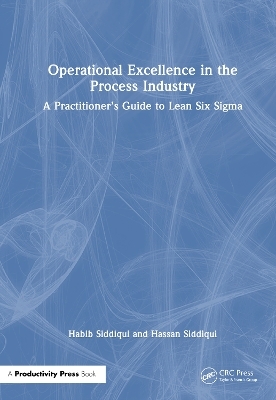
Operational Excellence in the Process Industry
Productivity Press (Verlag)
978-1-041-24450-9 (ISBN)
- Noch nicht erschienen (ca. April 2026)
- Versandkostenfrei
- Auch auf Rechnung
- Artikel merken
A key technical contribution lies in the detailed application of SMED (Single-Minute Exchange of Dies) principles. The methodology involves breaking down changeover activities into internal and external tasks, conducting cost-benefit analyses, and systematically converting internal tasks to external ones. Supported by standardized work instructions and visual management systems, this approach leads to reduced changeover times, improved equipment availability, and increased throughput—critical performance metrics in high-capital, highly regulated environments.
Another standout feature is the structured adaptation of production leveling (Heijunka) for batch production systems. The book demonstrates how to implement Heijunka boxes and takt-time-based scheduling to manage demand variability, reduce inventory, and smooth production flow. This is particularly beneficial in facilities with shared assets and frequent product changeovers, where conventional scheduling methods often fall short. The integration of these tools enhances responsiveness to customer demand, optimizes asset utilization, and minimizes waste.
The book also underscores the strategic value of Visual Management Systems (VMS) across the value stream. Tools such as Andon signals, shadow boards, and visual display boards are used to monitor deviations from standard operating conditions, enabling timely corrective actions. This fosters a culture of transparency, accountability, and continuous improvement. Unlike theoretical texts, this book is grounded in decades of hands-on experience and enriched with case-based insights, making it a practical guide for professionals at all levels—from plant managers to operational excellence leaders.
Ultimately, this work fills a critical gap in Lean Six Sigma literature by offering a tailored, experience-based approach for process industries. It empowers organizations to move beyond generic frameworks and implement LSS in ways that align with their operational realities and strategic objectives. With its unique blend of technical rigor, practical relevance, and industry-specific focus, this book is an essential resource for professionals seeking to drive sustainable performance improvements in complex, regulated environments.
Habib Siddiqui is a globally recognized authority on Lean Six Sigma (LSS), with a distinguished track record of successful deployments across four major corporations: BASF, Rohm and Haas (now Dow Chemical), Merck & Co., and Witco (now Chemtura). A certified Six Sigma Master Black Belt and Lean Master, Dr. Siddiqui holds a Ph.D. in Chemical Engineering from the University of Southern California, Los Angeles. As Senior Expert in Global Business Management and Operational Excellence at BASF, he has led enterprise-wide initiatives that have translated corporate strategy into measurable business outcomes, delivering billions of dollars in value. His work spans manufacturing and non-manufacturing sectors, combining technical rigor with strategic insight to foster cultures of continuous improvement. Dr. Siddiqui’s thought leadership and hands-on experience make him a leading voice in operational excellence, particularly within the chemical and pharmaceutical industries. Hassan Siddiqui is an expert in manufacturing and sustainable operations, currently working at BCG (Boston Consulting Group). He has supported operational efficiency and sustainability improvement measures across many sectors, including chemicals, pharmaceuticals, and retail. He is a Six Sigma Master Black Belt, with a BSc degree in Chemical and Biomolecular Engineering from the University of Pennsylvania and an MBA degree from the Fuqua School of Business at Duke University. His current work focuses on helping clients transition toward a Net Zero emissions future by driving efficiency, rethinking business design, and implementing decarbonization strategies.
Chapter 1: Introduction – A Case for Change Chapter 2: The What and Why of Lean and Six Sigma Chapter 3: How Important is Quality? Chapter 4: Lean Principles Chapter 6: Summary of The Lean Principles And Strategic outcomes Chapter 7: Advice for the Leaders Chapter 8: Sustainability and Operational Excellence: Aligning Lean with ESG Goals Chapter 9: Digital Transformation in Operational Excellence Chapter 10: Lessons from the Pioneers Appendix 1: DPMO vs. Sigma Level Appendix 2: Safety Factor Appendix 3: Batch and Continuous processes Appendix 4: Chemical & Pharmaceutical Manufacturing – Similarities and Differences Appendix 5: Commonly Used VSM/MIFA Icons Glossary
| Erscheint lt. Verlag | 23.4.2026 |
|---|---|
| Zusatzinfo | 38 Tables, black and white; 48 Line drawings, black and white; 48 Illustrations, black and white |
| Verlagsort | London |
| Sprache | englisch |
| Maße | 178 x 254 mm |
| Themenwelt | Technik |
| Wirtschaft ► Betriebswirtschaft / Management ► Logistik / Produktion | |
| ISBN-10 | 1-041-24450-9 / 1041244509 |
| ISBN-13 | 978-1-041-24450-9 / 9781041244509 |
| Zustand | Neuware |
| Informationen gemäß Produktsicherheitsverordnung (GPSR) | |
| Haben Sie eine Frage zum Produkt? |
aus dem Bereich