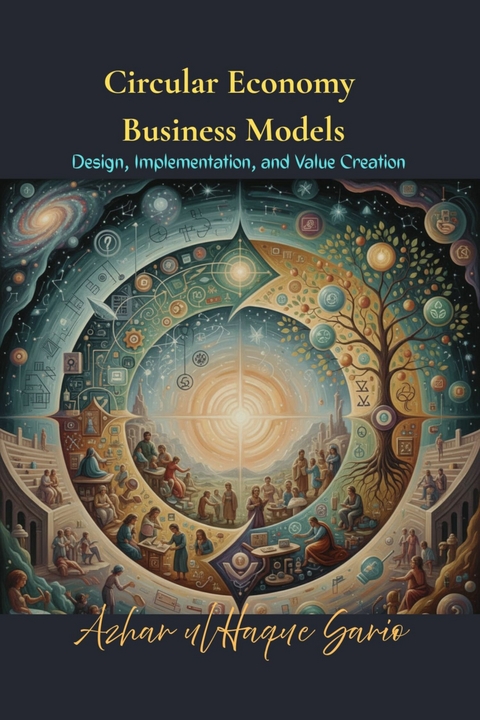
Circular Economy Business Models (eBook)
200 Seiten
Azhar Sario Hungary (Verlag)
978-3-384-72469-4 (ISBN)
Ready to move beyond the take-make-waste economy? This book is your definitive guide to the circular revolution. It shows why our current linear model is failing our planet and businesses. We explore core circular principles from the ground up. You will learn how to design better products using frameworks like Cradle to Cradle®. Discover innovative business models that prioritize performance over ownership, like Product-as-a-Service. See how to extend value through repair and remanufacturing. The book provides a deep dive into critical sectors. We show how to build circular cities , create a regenerative food system , and transform the fashion industry. We also tackle the waste challenges in packaging and renewable energy. Finally, we explore how digital technology and reverse logistics provide the essential backbone for this new, regenerative economy.
What sets this book apart is its practical, holistic approach. It moves beyond abstract theory to connect the dots between design, business models, and systemic enablers. Where other books may focus on one aspect, this guide provides a comprehensive journey. It links foundational design choices, like separating biological and technical materials , directly to the portfolio of business models they unlock, such as leasing and remanufacturing. By using detailed, real-world case studies from Kalundborg's industrial symbiosis to Singapore's green building policies and South Korea's food waste system, it provides a tangible, actionable playbook. This isn't just about why we need a circular economy; it's a strategic manual on how to design it, implement it across major industries, and create lasting economic and environmental value.
Disclaimer: This publication is an independently produced work. The author is not affiliated with, endorsed by, or in any way officially connected with any of the companies, organizations, or certification boards mentioned herein. All trademarks and registered trademarks are the property of their respective owners, and their use is for identification purposes only, falling under nominative fair use.
Fashion and Textiles: Weaving a Circular Narrative
The Future of Fashion is Circular
The fashion world is waking up to a powerful new idea. For decades, the industry has run on a linear model: we take resources, make clothes, wear them for a short time, and then throw them away. This "take-make-waste" system has created mountains of textile waste and placed a heavy burden on our planet. But a change is underway, a shift towards something much smarter and more sustainable: a circular economy for fashion.
This new approach isn't just about recycling. It’s a complete rethinking of the entire lifecycle of our clothes, starting from the very first sketch. It’s about creating a system where garments are designed to last, to be reused, repaired, and eventually reborn as something new. This transformation rests on two foundational pillars: redesigning the products themselves and reinventing the way we do business. By focusing on durability, smarter material choices, and innovative models like renting and repairing, the fashion industry can finally begin to close the loop, turning waste into opportunity and creating a system that works for both people and the planet.
1. Designing for a New Beginning: Durability, Mono-materials, and Recyclability
It all starts at the drawing board. Circular design is a philosophy that challenges designers to think beyond the next season's trends. Instead of creating disposable items, the goal is to create cherished pieces with a future. This requires a radical shift in priorities, where longevity, repairability, and end-of-life possibilities are just as important as aesthetics. This is not about limiting creativity; it's about channeling it towards a more meaningful and responsible purpose.
The Cornerstone: Designing for Durability
The most effective way to reduce fashion's environmental impact is surprisingly simple: make clothes that last. Durability is the absolute bedrock of circular fashion. When a garment can be worn 50 times instead of just five, its environmental footprint is dramatically reduced. This concept of durability has two sides.
First, there's physical durability. This is about the tangible quality of a garment. It means selecting robust fabrics that don’t thin out after a few washes and using strong construction techniques, like reinforced seams and high-quality stitching, that can withstand the rigors of daily life. It’s a return to the kind of craftsmanship that was once the norm, where clothes were seen as an investment. Brands committed to this principle will rigorously test their materials for things like pilling, colorfastness, and tear strength, ensuring the product they sell is built to endure.
But just as important is "emotional durability." This is the invisible thread that connects us to our clothes. It’s about designing styles that are timeless and versatile, pieces that you’ll love and want to wear for years, not just for a single season. A classic trench coat or a perfectly cut pair of jeans has emotional durability. They transcend fleeting trends and become trusted companions in our wardrobe. Designers foster this connection by creating pieces with a unique story, impeccable fit, and a style that feels personal and authentic, making it much harder for us to simply discard them. When we love our clothes, we take better care of them, we repair them when they break, and we hold onto them for longer.
The Building Blocks: Smart Material Selection
A garment is only as circular as the materials it's made from. The choice of fabric is one of the most critical decisions a designer makes, profoundly affecting how easily a piece can be repaired, reused, and ultimately recycled.
One of the biggest culprits in today's recycling crisis is the prevalence of blended fabrics. That common 60% cotton, 40% polyester t-shirt is incredibly difficult to recycle because the technologies to separate these intertwined fibers at scale are still nascent and expensive. This is where mono-materials become so important. A garment made from 100% organic cotton or 100% post-consumer recycled polyester is a recycler's dream. The material is pure, making it straightforward to break down and spin into new yarn without a significant loss of quality. Designers are now actively choosing these single-fiber fabrics, even if it means rethinking a certain texture or drape, because they understand that it makes true, high-quality recycling possible.
Beyond this, there is a growing movement towards using recycled and regenerative inputs. Recycled fibers, like rPET made from plastic bottles or recycled cotton from manufacturing scraps, are a fantastic way to lessen the industry's thirst for virgin resources. They give a second life to materials that would otherwise end up in a landfill or an incinerator. Looking even further, regenerative inputs represent the gold standard. These are natural fibers, like cotton, linen, or wool, that come from farms practicing regenerative agriculture. These farming methods go beyond simply being organic; they actively restore the ecosystem by improving soil health, capturing carbon from the atmosphere, and enhancing biodiversity. Sourcing from these systems means that fashion can play a role in healing the planet, rather than just extracting from it.
The Blueprint: Design for Disassembly
Finally, a truly circular garment is designed with its own end in mind. "Design for Disassembly" is the practice of creating clothing in a way that allows it to be easily taken apart. Think of it like building with LEGOs instead of using super glue. In practical terms, this means making it simple to remove components that could contaminate the recycling process.
For instance, instead of sewing in a zipper with heavy-duty polyester thread, a designer might attach it in a way that it can be unstitched or unclipped. Metal buttons and rivets, which can damage recycling machinery, could be designed to be screwed on and off. Any electronic components, like those found in "smart" clothing, must be housed in removable modules. This foresight makes the sorting and pre-processing stages of recycling vastly more efficient and less costly. It ensures that the primary textile—the valuable part—can be easily isolated and recovered, ready to be transformed into a new garment and begin the cycle all over again.
2. A New Way of Doing Business: Rental, Resale, and Repair
A circular product needs a circular system to support it. Even the most durable, recyclable garment is useless if it's treated within a linear business model that only values selling new things. To truly slow down the fashion cycle and maximize the value of every item, brands are pioneering innovative business models that shift the focus from volume to service. These models are not just about being green; they represent some of the most exciting commercial opportunities in the industry today. They build deeper customer relationships and create new, resilient revenue streams that don't depend on relentless production.
Access Over Ownership: Rental and Subscription Models
The desire for newness is a powerful driver in fashion. Rental and subscription models brilliantly cater to this desire without creating waste. Instead of buying an outfit for a special occasion and wearing it only once, you can rent it. For a recurring fee, subscription services offer access to a rotating closet of clothes, allowing customers to experiment with styles and brands guilt-free.
This model fundamentally changes the relationship between a brand and its products. The brand retains ownership of the garment, transforming it from a one-time sale into a long-term asset. This creates a powerful incentive for the brand to design for durability, because the more times a dress can be rented out, the more profitable it becomes. They become experts in maintenance, cleaning, and repair to keep their "fleet" of clothing in circulation for as long as possible. The Dutch company MUD Jeans is a trailblazer in this space with its "Lease A Jeans" program. Customers pay a monthly fee to lease a pair of organic jeans. When they are done with them, or simply want a new style, they send them back. MUD Jeans then repairs them for resale on their second-hand platform or, if they are beyond repair, recycles them into new denim. This closed-loop system ensures they are responsible for the product's entire lifecycle.
The Power of a Second Life: Resale and Recommerce
The stigma once associated with second-hand clothing has vanished. Today, recommerce is the fastest-growing segment of the fashion market, propelled by a new generation of consumers who value sustainability, individuality, and a good deal. This circular business model is all about extending the life of a garment by finding it a new home.
For years, this market was dominated by independent platforms and local thrift stores. Now, brands are getting directly involved. Many are launching their own curated resale platforms, creating a trusted space for customers to buy and sell pre-loved items from that specific brand. This is a win-win. The brand gains control over its second-hand market, protecting its image and ensuring authenticity. It also provides a new source of revenue and a powerful way to engage with its customers, bringing them back into the brand's ecosystem. By facilitating resale, brands are acknowledging that their products have a value that extends far beyond the initial purchase, encouraging a culture of appreciation and...
| Erscheint lt. Verlag | 7.10.2025 |
|---|---|
| Sprache | englisch |
| Themenwelt | Wirtschaft ► Betriebswirtschaft / Management |
| Schlagworte | Business models • circular economy • Cradle to Cradle • Industrial Symbiosis • Product as a Service PaaS • remanufacturing • sustainability |
| ISBN-10 | 3-384-72469-0 / 3384724690 |
| ISBN-13 | 978-3-384-72469-4 / 9783384724694 |
| Informationen gemäß Produktsicherheitsverordnung (GPSR) | |
| Haben Sie eine Frage zum Produkt? |
 EPUB (Ohne DRM)
Digital Rights Management: ohne DRM
Dieses eBook enthält kein DRM oder Kopierschutz. Eine Weitergabe an Dritte ist jedoch rechtlich nicht zulässig, weil Sie beim Kauf nur die Rechte an der persönlichen Nutzung erwerben.
Dateiformat: EPUB (Electronic Publication)
EPUB ist ein offener Standard für eBooks und eignet sich besonders zur Darstellung von Belletristik und Sachbüchern. Der Fließtext wird dynamisch an die Display- und Schriftgröße angepasst. Auch für mobile Lesegeräte ist EPUB daher gut geeignet.
Systemvoraussetzungen:
PC/Mac: Mit einem PC oder Mac können Sie dieses eBook lesen. Sie benötigen dafür die kostenlose Software Adobe Digital Editions.
eReader: Dieses eBook kann mit (fast) allen eBook-Readern gelesen werden. Mit dem amazon-Kindle ist es aber nicht kompatibel.
Smartphone/Tablet: Egal ob Apple oder Android, dieses eBook können Sie lesen. Sie benötigen dafür eine kostenlose App.
Geräteliste und zusätzliche Hinweise
Buying eBooks from abroad
For tax law reasons we can sell eBooks just within Germany and Switzerland. Regrettably we cannot fulfill eBook-orders from other countries.
aus dem Bereich