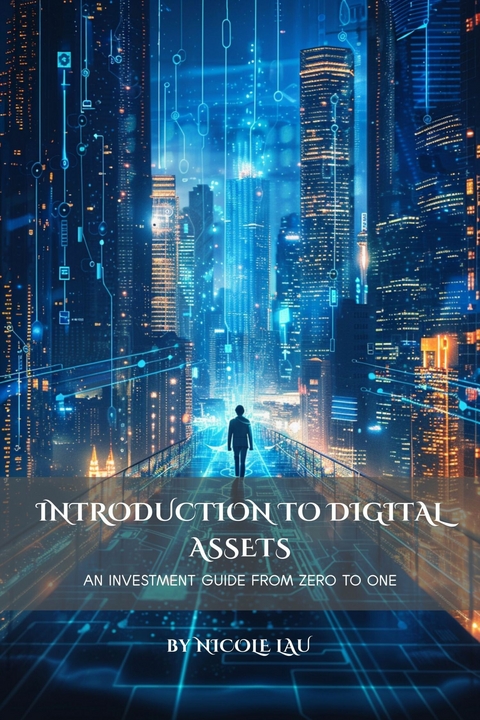
Introduction to Digital Assets (eBook)
480 Seiten
Publishdrive (Verlag)
978-0-00-106928-2 (ISBN)
The world of finance is changing - and digital assets are at the center of the revolution.
Introduction to Digital Assets: An Investment Guide from Zero to One is a clear, structured, and practical roadmap for anyone who wants to understand and invest in digital assets with confidence. Drawing from years of financial expertise and cutting-edge Web3 insights, Nicole Lau guides readers step by step through the foundations, strategies, and future of this rapidly evolving space.
This book is not about hype. It's about clarity, structure, and smart investing in the new financial frontier.
Inside this book, you will discover:
Chapter 1 Understanding Digital Assets
1.1 Definition and Characteristics of Digital Assets
The concept of digital assets has been popping up frequently in recent years. It refers to more than just data or information stored online. In the context of blockchain technology, digital assets specifically refer to assets secured by encryption. These assets, powered by blockchain or distributed ledger technology, are units of value that can be identified, transferred, and traded. Digital assets are essentially "programmable value" and are not limited to currency or securities. They can also be rights certificates, collectibles, and even virtual items, such as in-game props or equipment.
To fully understand digital assets, we must not only recognize their differences from traditional assets but also delve into their core characteristics and analyze their place and role in the modern financial system. The emergence of digital assets has revolutionized asset management and trading, transforming not only our understanding of assets but also profoundly impacting the way financial markets operate.
1.1.1 The Difference between Digital Assets and Traditional Assets
In the traditional financial system, assets are generally divided into two categories: physical assets and financial assets. Physical assets include real estate, gold, commodities, etc. They have a physical form and can be touched and felt. Financial assets include stocks, bonds, funds, etc., which represent a portion of ownership of an asset or company. These assets have the following common characteristics:
- Their ownership and transfer rely on centralized institutions such as banks, stock exchanges, and notary offices, which play an indispensable role in the management and trading of assets.
- Their value determination depends on national sovereignty or legal system. The country's legal framework provides a legal basis and guarantee for the value of assets.
- Their transactions are often subject to time, space and cost constraints. The completion of transactions needs to be carried out at a specific time and place, and may involve various fees.
However, the emergence of digital assets has broken these traditional boundaries:
- Different ways of confirming ownership:
Traditional asset ownership records are kept in centralized locations like bank ledgers and government registries. These records are susceptible to human influence and tampering. Digital asset ownership, on the other hand, is recorded on the blockchain and maintained by the entire network. Every node maintains the same record, and any unilateral tampering cannot be recognized by the entire network, thus ensuring the authenticity and immutability of the record.
For example, Bitcoin, as a representative digital asset, has its ownership recorded on the blockchain, which can be viewed by anyone but cannot be altered. This transparent and tamper-proof feature provides a solid guarantee for the security of digital assets.
- Different transaction methods:
Traditional stock transfers require brokerage firms and exchanges to match transactions. This process involves multiple steps, cumbersome procedures, and relatively long transaction times. Digital assets, however, can be transferred directly through peer-to-peer (P2P) transactions, free from geographical or time constraints. Even across borders, transactions can be completed in just minutes, significantly improving transaction efficiency.
For example, using Bitcoin for cross-border payments can bypass the traditional banking system, avoid high fees and long settlement times, and bring great convenience to global trade.
- Different value anchors:
The value of traditional financial assets typically relies on legal backing, company earnings, or physical assets. Legal guarantees legitimize the value of assets, company earnings are a key source of value for assets like stocks, and physical assets provide tangible support for some assets. Digital assets, on the other hand, rely more heavily on code rules, algorithms, and network consensus. For example, Bitcoin lacks company backing; its value stems primarily from its scarcity and widespread network consensus. It's precisely because of this scarcity and widespread recognition that Bitcoin is considered "digital gold."
In addition, the value of tokens on smart contract platforms such as Ethereum comes not only from market consensus, but also from the smart contract functions behind them. These functions give the tokens more usage scenarios and value.
- Blurred boundaries:
Digital assets break down the distinction between "financial assets" and "non-financial assets." An NFT (non-fungible token) can be a work of art with artistic value, a sought-after collector's item; it can also serve as an "entry ticket" granting special privileges, such as access to a specific virtual community or participation in an event. A token can represent a means of payment, used to purchase goods or services, or it can serve as a governance token for an ecosystem, allowing holders to participate in its decision-making and management.
For example, the emergence of NFT artworks allows artists to sell their works directly through blockchain technology, bypassing traditional galleries and auction houses, which not only reduces transaction costs but also increases artists' income.
Therefore, digital assets are more than just "stocks or currencies on the internet." They represent a completely new method of ownership confirmation and transaction logic, bringing new vitality and possibilities to the financial sector. The emergence of digital assets heralds a more open, efficient, and decentralized financial future.
1.1.2 Core Characteristics of Digital Assets: Decentralization, Scarcity, and Programmability
As an emerging form of asset, the uniqueness of digital assets is mainly reflected in three extremely critical aspects, which make digital assets show unique charm and value in the financial field.
- Decentralization
In the traditional financial system, banks and clearing houses play a crucial role as trust intermediaries. When conducting various financial transactions, users must have unconditional confidence that the information recorded in bank ledgers is accurate. This is because banks, as centralized institutions, hold the power to record and verify transactions, leaving users with no direct way to ensure the authenticity and reliability of transaction information.
However, in a blockchain system, the source of trust has fundamentally changed. It no longer relies on a centralized institution, but rather on advanced algorithms and scientific consensus mechanisms. For example, the Bitcoin network doesn't require the endorsement of a central bank to guarantee its credibility and stability. In this network, every node in the network participates in the verification and recording of transactions. Each node maintains a complete copy of the ledger, and complex algorithms and consensus mechanisms ensure the consistency and accuracy of transaction information. This achieves what is known as "decentralized trust."
The implications of this feature are profound. It means that in the world of digital assets, anyone willing to adhere to established protocols can freely participate in the network's operations. No longer relying on a single authority to verify and manage transactions, everyone can become part of the network, enjoying equal rights and opportunities. This decentralized model breaks the monopoly and restrictions of the traditional financial system, creating a more open, fair, and free development environment for the financial sector.
- Scarcity
In the real world, gold's immense value stems largely from its inherent scarcity. Gold reserves are limited and mining is difficult, making its supply relatively stable and difficult to increase significantly. Bitcoin, on the other hand, achieves this "artificial scarcity" through sophisticated algorithms. The total supply of Bitcoin is strictly capped at 21 million, and its issuance is completely transparent and verifiable to anyone through publicly available algorithms and data. This precise control ensures that Bitcoin's scarcity is effectively maintained.
Scarcity endows digital assets with a crucial quality: "inflation resistance." In traditional monetary systems, since currency issuance is often influenced by government policies and economic conditions, inflation is prone to occur, leading to a decline in the actual value of currency. However, due to their scarcity, digital assets have a relatively stable value, which can, to a certain extent, hedge the risk of currency devaluation. This mathematically based scarcity complements traditional natural scarcity while being more controllable. It can be adjusted and managed through precise algorithms and rules, avoiding the uncertainties that natural scarcity may face, such as geological conditions and mining techniques.
- Programmability
Traditional currencies have relatively simple functions, primarily used for payment transactions. Digital assets, on the other hand, have a significant advantage: they can be "ruled." This means digital assets are more than just a simple value carrier; they can also be programmed to implement a variety of complex functions and logic.
- Smart contracts play a crucial role on the well-known Ethereum blockchain platform. These are code-based contracts that automatically execute pre-defined transaction logic. For example, when condition A is met, a...
| Erscheint lt. Verlag | 27.9.2025 |
|---|---|
| Sprache | englisch |
| Themenwelt | Wirtschaft |
| ISBN-10 | 0-00-106928-4 / 0001069284 |
| ISBN-13 | 978-0-00-106928-2 / 9780001069282 |
| Informationen gemäß Produktsicherheitsverordnung (GPSR) | |
| Haben Sie eine Frage zum Produkt? |
 EPUB (Adobe DRM)
Größe: 1,3 MB
Kopierschutz: Adobe-DRM
Adobe-DRM ist ein Kopierschutz, der das eBook vor Mißbrauch schützen soll. Dabei wird das eBook bereits beim Download auf Ihre persönliche Adobe-ID autorisiert. Lesen können Sie das eBook dann nur auf den Geräten, welche ebenfalls auf Ihre Adobe-ID registriert sind.
Details zum Adobe-DRM
Dateiformat: EPUB (Electronic Publication)
EPUB ist ein offener Standard für eBooks und eignet sich besonders zur Darstellung von Belletristik und Sachbüchern. Der Fließtext wird dynamisch an die Display- und Schriftgröße angepasst. Auch für mobile Lesegeräte ist EPUB daher gut geeignet.
Systemvoraussetzungen:
PC/Mac: Mit einem PC oder Mac können Sie dieses eBook lesen. Sie benötigen eine
eReader: Dieses eBook kann mit (fast) allen eBook-Readern gelesen werden. Mit dem amazon-Kindle ist es aber nicht kompatibel.
Smartphone/Tablet: Egal ob Apple oder Android, dieses eBook können Sie lesen. Sie benötigen eine
Geräteliste und zusätzliche Hinweise
Buying eBooks from abroad
For tax law reasons we can sell eBooks just within Germany and Switzerland. Regrettably we cannot fulfill eBook-orders from other countries.
aus dem Bereich