Sustainable Fashion Management (eBook)
200 Seiten
Azhar Sario Hungary (Verlag)
978-3-384-72298-0 (ISBN)
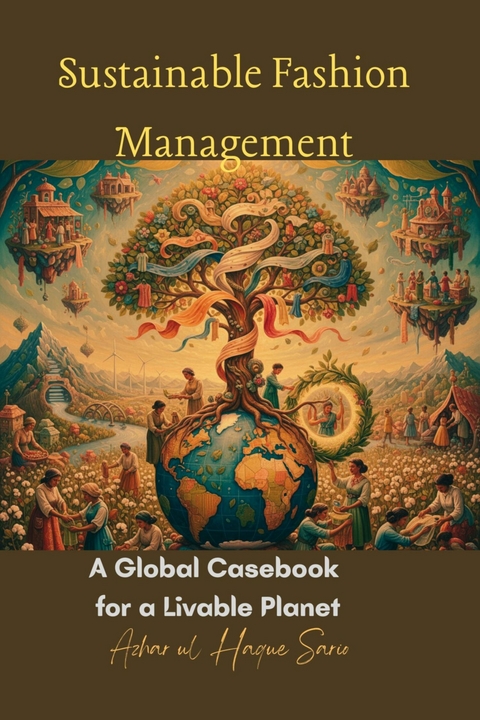
The global fashion industry is broken, but this book provides a roadmap to fix it. Valued at $2.4 trillion, the fashion industry is a major economic engine, yet its 'take-make-waste' model has made it a significant source of pollution and inequality. It is responsible for up to 10% of global carbon emissions and 20% of global wastewater. This book,
Sustainable Fashion Management: A Global Casebook for a Livable Planet, offers a practical, evidence-based curriculum for the next generation of leaders who will tackle these profound challenges.
Through fifteen distinct country case studies, this text explores the real-world solutions and strategies shaping a new, sustainable fashion system. The journey begins in Europe, examining how The Netherlands is building a circular textile ecosystem and how Germany is mandating supply chain transparency. It then moves to the heart of global manufacturing in Asia, investigating China's pathways to decarbonization, Bangladesh's efforts in water stewardship, and Vietnam's pursuit of ethical manufacturing. The book also explores diverse pathways to sustainability, from linking fashion to biodiversity in Brazil to valuing indigenous craftsmanship in Peru and tackling the living wage gap in Ethiopia. Finally, it analyzes the powerful influence of technology and consumer behavior in major markets like the United States and Japan. Each analysis is grounded in the latest research from 2024 and 2025, providing a comprehensive and up-to-the-minute guide for building an industry that is economically viable, socially just, and environmentally regenerative.
This book offers a complete description of the sustainable fashion challenge. It is titled 'Sustainable Fashion Management: A Global Casebook for a Livable Planet'. The book examines the fashion industry's massive environmental and social problems. The industry contributes up to 10% of global carbon emissions. It is also responsible for 20% of global wastewater. Social inequality is a major issue. A very small percentage of garment workers earn a living wage. This book presents a practical, advanced curriculum to solve these issues. It uses a unique case-study methodology. Fifteen chapters each focus on a specific country and a distinct theme. We see European models of regulation and circularity. We explore decarbonization in China and water stewardship in Bangladesh. The book covers diverse pathways, from biodiversity in Brazil to social equity in Ethiopia. It ends by analyzing technology and consumption in the US and Japan.
Unlike other texts that remain purely theoretical, this casebook provides a practical, evidence-based analysis of the challenges and solutions emerging right now. Its unique country-by-country methodology allows for a detailed look at how different economic and cultural contexts shape the path to sustainability. The book's core competitive advantage is its unique analytical framework, which explicitly connects every case study back to the strategic priorities of the World Bank's 2024 report, 'a world free of poverty on a livable planet'. This approach bridges the critical gap between industry practice and global development goals, demonstrating how decisions on the factory floor have direct implications for climate change, poverty reduction, and private sector development. By using the most recent data from 2024 and 2025, it provides a timely and comprehensive roadmap that other books fail to deliver.
Disclaimer: This book is an independent publication and has not been authorized, sponsored, or otherwise approved by the World Bank Group. The use of the 'World Bank Annual Report 2024' is for analytical and educational purposes under the principles of nominative fair use.
Part II: Re-engineering the Global Manufacturing Core
China - Pathways to Decarbonizing Textile Manufacturing
China's "Dual Carbon" Strategy and its Impact on the Textile Industry
China's ambition to reshape its industrial landscape is monumental. The "dual carbon" strategy isn't just a piece of policy; it's a national declaration of a new economic era. This grand vision, which aims to hit peak carbon emissions before 2030 and achieve complete carbon neutrality by 2060, is the powerful current pulling every sector of the economy in a new direction. For the colossal Chinese textile industry, a sector that has long been the engine of global fashion and a cornerstone of the country's manufacturing might, this is nothing short of a revolution. The strategy, firmly anchored in the nation's 14th Five-Year Plan, is a clear signal that the old ways of doing business are over.
For decades, the mantra of the textile industry was simple: produce more, faster, and cheaper. This model fueled incredible growth but came at a steep environmental cost. Now, the government is systematically dismantling that old paradigm. The "dual carbon" goals are being translated from high-level ambitions into tangible, on-the-ground policies. Think of it as a top-down directive that cascades through government ministries, provincial authorities, and finally lands on the factory floor. Sector-specific roadmaps are being designed, creating a clear, albeit challenging, path forward. These plans are meticulously detailed, focusing on critical areas like boosting energy efficiency across production lines, championing the use of sustainable and recycled fibers, and building robust systems to manage and repurpose textile waste.
This policy push is creating immense pressure on factories, forcing them to modernize or risk being left behind. The government isn't just using sticks; it's also offering carrots. There is a strong encouragement for investment in cleaner technologies and a smarter, more efficient use of resources. These aren't just suggestions; they are becoming central pillars of survival and future success. For instance, the government has set aggressive targets to slash energy consumption by millions of tonnes of oil equivalent by 2025. This isn't a vague aspiration; it's a measurable goal that requires concrete action from every player in the industry.
This profound shift is forcing a fundamental change in mindset. What was once a relentless focus on minimizing production costs is now evolving into a complex equation where sustainability and emissions reduction are key variables for competitiveness. A factory's carbon footprint is no longer an externality to be ignored; it's becoming a critical business metric. International brands, facing pressure from their own consumers and investors, are increasingly scrutinizing the environmental performance of their suppliers. A Chinese textile manufacturer that can prove it uses green energy, conserves water, and minimizes waste is no longer just a low-cost option; it's a strategic partner for the future.
This transformation is being watched closely by the rest of the world. It’s a critical chapter in the global fight against the climate crisis, a theme heavily emphasized in recent reports from institutions like the World Bank. The Bank’s work in East Asia directly supports countries like China, helping them navigate the complex journey of industrial decarbonization. China's textile sector, with its massive scale and intricate global supply chains, serves as the ultimate real-world laboratory. The successes and failures here will provide invaluable lessons for industrial transformation worldwide. It’s a test case that will answer a crucial question: can one of the world's most traditional and resource-intensive industries reinvent itself to become a model of green manufacturing? The journey is just beginning, but the direction is clear, and the stakes could not be higher.
Technological Interventions for Energy Efficiency and Fuel Switching
To turn the ambitious goals of the "dual carbon" strategy into reality, China's textile industry must fundamentally re-engineer its relationship with energy. The heart of the problem lies in the very processes that bring our clothes to life. The dyeing and finishing stages, where fabrics get their color and feel, are notoriously thirsty for energy. Imagine massive vats of water being heated to high temperatures for hours on end, and then powerful machines using even more energy to dry the heavy, wet textiles. These steps are the biggest energy consumers in the entire production chain, making them the primary target for decarbonization efforts. Luckily, a suite of proven technologies is available to tackle this challenge head-on.
The transition begins with the basics. Many factories still rely on old, inefficient coal-fired boilers. Upgrading to modern, high-efficiency boilers that run on cleaner fuels like natural gas can immediately slash emissions and cut fuel costs. The next level of innovation involves smarter energy systems. Technologies like Combined Heat and Power (CHP) are game-changers. A traditional power plant generates electricity but wastes a huge amount of energy as heat that simply dissipates into the atmosphere. A CHP system, installed right inside the factory, generates electricity on-site and captures that waste heat, redirecting it to heat the water needed for dyeing. It’s a brilliant two-for-one solution that dramatically boosts overall energy efficiency. Similarly, Waste Heat Recovery (WHR) systems act like energy scavengers, capturing heat from sources like hot wastewater or the exhaust from air compressors—a process that can recover an impressive 50-60% of otherwise lost energy.
Beyond these general upgrades, process-specific innovations hold enormous potential. A standout example is cold-pad batch dyeing. This technique turns conventional wisdom on its head. Instead of boiling textiles in dye, the fabric is saturated with a special dye formula and then left to cure at room temperature over several hours. The results are astounding: it can slash energy consumption, cut water use by up to 50%, and reduce greenhouse gas emissions by a significant 13% compared to traditional high-temperature methods.
Looking further ahead, even more revolutionary technologies are on the horizon. Ozone bleaching uses electricity and oxygen to create ozone, a powerful bleaching agent that works without the need for vast amounts of hot water and harsh chemicals. Perhaps the most futuristic is waterless dyeing, which uses supercritical carbon dioxide. Under immense pressure, CO2 transforms into a state that is part-liquid, part-gas, and acts as a perfect solvent for dyes. It permeates the fabric completely, and once the process is finished, the pressure is released, the CO2 turns back into a gas to be captured and reused, leaving behind perfectly dyed, dry fabric. The hurdle, for now, is the very high initial investment for such cutting-edge equipment, placing it out of reach for many smaller companies.
This technological roadmap is precisely what institutions like the World Bank advocate for in their global climate strategy. The goal is to encourage the adoption of these lower-carbon options now to avoid being locked into decades of high-emissions infrastructure. The financial case is strong; these investments often pay for themselves through energy and resource savings. However, the biggest challenge isn't the technology itself, but the human element. The Chinese textile industry is dominated by a vast number of small and medium-sized enterprises (SMEs). For a small family-owned factory operating on razor-thin margins, the idea of a massive capital outlay for a new boiler or a waterless dyeing machine can seem impossible. Often, there's a simple lack of awareness or technical knowledge about what options are available and how to implement them. Overcoming these barriers—through government subsidies, green financing, and accessible technical training—is the critical next step in ensuring that this technological revolution reaches every corner of the industry.
Weaving a Greener Future: How Collaboration and Circularity are Reshaping China's Textile Industry
The global fashion industry, with its sprawling and complex supply chains, stands at a critical crossroads. At the heart of this network is China, the world's undisputed manufacturing powerhouse for textiles and apparel. For decades, the industry has operated on a model of rapid production fueled by cheap, carbon-intensive energy. The environmental cost of this model is now impossible to ignore. China's textile sector is a massive contributor to global carbon emissions, but a profound transformation is underway. Driven by a combination of ambitious government policy and mounting pressure from international markets, the industry is beginning to unravel its dependence on fossil fuels and weave a new, more sustainable future. This journey is not a simple one; it requires a fundamental reinvention of how energy is sourced, how materials are used, and how partners across the supply chain work together. It’s a story of two powerful forces—renewable energy and circular economics—converging to tackle one of the planet’s biggest climate challenges.
The Energy Overhaul: Shifting from Coal to Collaboration
At its core, the textile industry's enormous carbon footprint comes down to one thing: heat. The process of turning raw fiber into finished fabric—dyeing, washing, finishing—requires immense amounts of thermal energy. For years,...
| Erscheint lt. Verlag | 5.10.2025 |
|---|---|
| Sprache | englisch |
| Themenwelt | Wirtschaft |
| Schlagworte | circular economy • Corporate Social Responsibility • Global case studies • Green Business • Supply Chain Management • sustainable development • Sustainable fashion |
| ISBN-10 | 3-384-72298-1 / 3384722981 |
| ISBN-13 | 978-3-384-72298-0 / 9783384722980 |
| Informationen gemäß Produktsicherheitsverordnung (GPSR) | |
| Haben Sie eine Frage zum Produkt? |
 EPUB (Ohne DRM)
Digital Rights Management: ohne DRM
Dieses eBook enthält kein DRM oder Kopierschutz. Eine Weitergabe an Dritte ist jedoch rechtlich nicht zulässig, weil Sie beim Kauf nur die Rechte an der persönlichen Nutzung erwerben.
Dateiformat: EPUB (Electronic Publication)
EPUB ist ein offener Standard für eBooks und eignet sich besonders zur Darstellung von Belletristik und Sachbüchern. Der Fließtext wird dynamisch an die Display- und Schriftgröße angepasst. Auch für mobile Lesegeräte ist EPUB daher gut geeignet.
Systemvoraussetzungen:
PC/Mac: Mit einem PC oder Mac können Sie dieses eBook lesen. Sie benötigen dafür die kostenlose Software Adobe Digital Editions.
eReader: Dieses eBook kann mit (fast) allen eBook-Readern gelesen werden. Mit dem amazon-Kindle ist es aber nicht kompatibel.
Smartphone/Tablet: Egal ob Apple oder Android, dieses eBook können Sie lesen. Sie benötigen dafür eine kostenlose App.
Geräteliste und zusätzliche Hinweise
Buying eBooks from abroad
For tax law reasons we can sell eBooks just within Germany and Switzerland. Regrettably we cannot fulfill eBook-orders from other countries.
aus dem Bereich