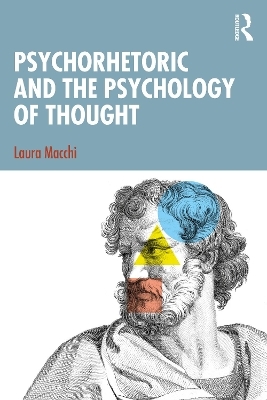
Psychorhetoric and the Psychology of Thought
Routledge (Verlag)
978-1-041-15648-2 (ISBN)
- Noch nicht erschienen (ca. März 2026)
- Versandkostenfrei
- Auch auf Rechnung
- Artikel merken
How can a particular way of argumenting direct our thinking? How does the formulation of a question influence the answer, producing a bias or an insight? And finally, what effect does public communication have on public behaviour?
Psychorhetoric and the Psychology of Thought illustrates the role played by rhetoric and communicative heuristics in the psychology of thinking and decision-making, and its effect on many areas of our daily life. It gives voice to a new and unconventional approach to the contemporary debate within the psychology of thought that has wide implications for key behavioural phenomena, including biases, creativity, decision making and public policy. This innovative work challenges conventional wisdom by proposing that cognitive biases are not inherent flaws in human cognition but rather outcomes of misleading communication patterns that influence our thinking processes.
This unconventional approach to the psychology of thought has significant implications for creativity, decision-making, economic behaviour, and public policy development. Essential reading for students and researchers in cognitive psychology, communication studies, and behavioural economics, this volume promises to reshape our understanding of human rationality and the communicative forces that guide it.
Laura Macchi is Full Professor of Psychology of Thinking, Decision Making and Communication and of General Psychology in the Department of Psychology at the University of Milano-Bicocca, Italy. Her main co-edited publications include Thinking: Psychological Perspectives on Reasoning, Judgment and Decision Making (2003), Cognitive Unconscious and Human rationality (2016), Insight and Creative Problem Solving (2018).
Acknowledgement. Chapter 1. Introduction. Psychorhetoric, the interpretative function and the enigma of thought. Bias versus insight. Chapter 2. The interpretative function and the emergence of unconscious analytic thought. Chapter 3. Solving insight problems. The cognitive unconscious and the “mystery” of the creative solution. Chapter 4. Critical thought beyond biases. Demonstrate, draw a conclusion, falsify. Chapter 5. Thinking uncertainty across possible worlds: statistical illiteracy or misleading communication? Chapter 6. Challenging the incoherence of disjunctive and framing effects in decision-making. Chapter 7. Promoting action by discourse. The power of psychorhetoric in behavioural insight and public communications. References. Index
| Erscheint lt. Verlag | 27.3.2026 |
|---|---|
| Zusatzinfo | 3 Tables, black and white; 33 Line drawings, black and white; 5 Halftones, black and white; 38 Illustrations, black and white |
| Verlagsort | London |
| Sprache | englisch |
| Maße | 156 x 234 mm |
| Themenwelt | Geisteswissenschaften ► Psychologie ► Allgemeine Psychologie |
| Wirtschaft ► Allgemeines / Lexika | |
| Wirtschaft ► Volkswirtschaftslehre | |
| ISBN-10 | 1-041-15648-0 / 1041156480 |
| ISBN-13 | 978-1-041-15648-2 / 9781041156482 |
| Zustand | Neuware |
| Informationen gemäß Produktsicherheitsverordnung (GPSR) | |
| Haben Sie eine Frage zum Produkt? |
aus dem Bereich