
Personal Finance After 50 For Dummies (eBook)
543 Seiten
For Dummies (Verlag)
978-1-394-35049-0 (ISBN)
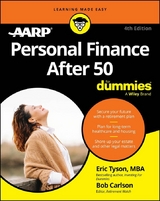
Move confidently into your retirement planning years with financial advice from a bestselling personal finance advisor
Retirement is lasting longer than it ever has. And a little bit of careful planning can ensure that you spend your retirement-and the years leading up to it-in comfort and financial security.
In the latest edition of Personal Finance After 50 For Dummies, trusted personal finance author and advisor Eric Tyson delivers an up-to-date and expert take on how to enter your fifties in the best financial health possible. The book offers advice designed to help regardless of your income or living situation. You'll find sound and crystal-clear advice you can apply immediately on everything from investing to managing when to take Social Security, securing long-term insurance, navigating taxes, and establishing an estate plan.
You'll also get actionable guidance on the latest financial trends, including no-nonsense strategies regarding alternative investments and how to navigate financial products aimed at those nearing or in retirement, like reverse mortgages. Inside the book:
- Effective, step-by-step guides to building a financial plan that works for you, saving for the long-term, and creating a realistic budget
- Strategies for managing and reducing financial risk without missing out on sound investment opportunities that keep pace with inflation
- Explanations of how to blend government programs like Social Security and Medicare into your plan
Perfect for anyone interested in taking a serious look at planning for middle age and beyond, Personal Finance After 50 For Dummies covers the topics of unique interest to those looking to build a comfortable life in their golden years.
Eric Tyson is a bestselling personal finance author committed to making financial management accessible to all. He is the author of five national bestselling financial books in the For Dummies series, including books on personal finance, investing, mutual funds, home buying, and real estate investing.
Bob Carlson is the editor of the monthly newsletter, Retirement Watch, the monthly video series, Retirement Watch Spotlight, and a weekly free e-letter, Retirement Watch Weekly. Bob served three decades on the Board of Trustees of the Fairfax County Employees' Retirement System.
Move confidently into your retirement planning years with financial advice from a bestselling personal finance advisor Retirement is lasting longer than it ever has. And a little bit of careful planning can ensure that you spend your retirement and the years leading up to it in comfort and financial security. In the latest edition of Personal Finance After 50 For Dummies, trusted personal finance author and advisor Eric Tyson delivers an up-to-date and expert take on how to enter your fifties in the best financial health possible. The book offers advice designed to help regardless of your income or living situation. You'll find sound and crystal-clear advice you can apply immediately on everything from investing to managing when to take Social Security, securing long-term insurance, navigating taxes, and establishing an estate plan. You'll also get actionable guidance on the latest financial trends, including no-nonsense strategies regarding alternative investments and how to navigate financial products aimed at those nearing or in retirement, like reverse mortgages. Inside the book: Effective, step-by-step guides to building a financial plan that works for you, saving for the long-term, and creating a realistic budget Strategies for managing and reducing financial risk without missing out on sound investment opportunities that keep pace with inflation Explanations of how to blend government programs like Social Security and Medicare into your plan Perfect for anyone interested in taking a serious look at planning for middle age and beyond, Personal Finance After 50 For Dummies covers the topics of unique interest to those looking to build a comfortable life in their golden years.
Chapter 1
Looking Ahead to Your Future
IN THIS CHAPTER
Taking charge of your long-term plans
Implementing retirement planning strategies
From a young age, various adults in our lives tell us to plan ahead. Although it may be sunny and clear outside this morning, they tell us to take rain gear for this afternoon’s forecasted heavy rain. When packing for a day at the beach, they suggest sunscreen. And do your best in high school, they say, because your transcript will in part determine which colleges accept you.
Although some parents provide guidance to their children on the topic of long-term financial planning, most don’t because they aren’t sufficiently knowledgeable or are reluctant to explain these things to their kids. And therein lies a pretty significant problem concerning finances for your adult and especially later adult years.
And retirement has its own set of trials. Unexpected life events (such as a loss of a job, the death of a loved one, or a major medical problem) and economic challenges can throw a wrench in the best plans. The severe recession and stock market decline in the late 2000s — both of which were the worst in decades, and then the 2020 COVID-19 pandemic — highlight other potential planning obstacles. Many near-retirees and recent retirees caught off guard face the possible need to keep on working beyond typical retirement age, the need to reduce spending and make do with less (for example, one car rather than two), and the need to cope with the loss of jobs, diminished investment portfolios, and reduced home values.
These challenges can occur at any time during life, but they’re especially challenging when they happen in or near retirement. You have less time to make up for setbacks (and any mistakes you make) as you age. At some point in most folks’ lives, working longer or going back to work no longer are viable options. That’s why planning and regularly reviewing and reevaluating your financial plans is essential.
We know many of you are reading this book having done little or no planning to this point. Don’t worry, though. It’s not too late to start planning. Studies of retirees show those who are most content in retirement are those who did some planning, even if it was a small amount. Planning is how you match your resources with your goals and expectations and identify where adjustments need to be made. Even if you’re already retired, planning now can improve the rest of your retirement.
This chapter discusses important themes that run throughout the book: the value of planning ahead and getting on the best path as soon as possible, the importance of taking personal responsibility, and the significance of taking a long-term perspective to make the most of your older years. We also discuss how to keep the right focus to optimize your retirement planning.
Planning for the Longer Term
Planning doesn’t sound fun, and for many people, it isn’t one of life’s most enjoyable activities. But nearly everyone values the benefits of proper planning: peace of mind, financial security, more options and choices, improved health, and a better lifestyle.
During your later adult years you have many choices about different financial issues. You can change some of the decisions after you make them, but others can’t be altered. If you do decide to make adjustments, you have fewer years to benefit from the new choices. That’s why as you approach your older years, planning your finances is more important than it was earlier in life.
In this section, we discuss the important issues that warrant your planning attention, explain why you should be the person to take the most responsibility for making that happen (even if you hire some help), and quantify the value of your taking our advice.
Identifying long-term planning issues
What’s on your mind (or should be on your mind) regarding your financial future? Consider how many of the issues in the following sections require long-term planning.
Choosing among an employer’s pension options
You need to look not just years but decades into the future to determine which pension option (see Chapter 3) may best meet your needs and those of your loved ones. A pension is an employer-provided retirement benefit from money that your employer puts away on your behalf, wherein you receive a monthly payment based on your years of service and earnings. A pension typically is just one of several sources of retirement income you may have (the others typically being Social Security and personal savings including retirement accounts), so you must consider how these will fit together over many years.
Pensions (check out Chapter 7 for more info) differ from other sources of income, such as 401(k)s, individual retirement accounts (IRAs), profit-sharing plans, and employee stock ownership plans (ESOPs), mainly in that only pensions guarantee you a fixed monthly payment backed by your employer. With other types of retirement savings, the amount you receive in retirement depends on the amount you contribute and how you invest the account. (See Chapter 5 for more info on other retirement accounts.) Pension plans are on the decline, especially in the private sector where retirement savings plans dominate.
Leaving an employer and deciding what to do with your retirement account money
When you change jobs, get laid off, or retire, you often are faced with choices about when and how to withdraw money from retirement accounts — such as 401(k)s or 403(b)s — and minimize the tax hit from doing so. Moving money is a decision you may have to make today, but don’t make light of this decision because it affects how much money you’ll have in the decades to come.
Some employer plans allow you to keep retirement money in place even if you’re no longer employed with the company. You may choose to accept the offer to keep money in place if it’s a plan with good investment options and low costs. Planning retirement account withdrawals requires long-term tax planning if you want to make the withdrawals in the best way possible. For more information on handling retirement accounts, see Chapter 5.
Determining whether you can afford to retire and how much you can safely spend per year
To assess whether you can afford to retire and how much you’ll be able to spend after you do retire, you have to do some analysis relating to your spending habits, temperament, and investment holdings. And, to be sure that you don’t run out of money or come close to running out of money, you also need to consider a wide range of scenarios for how your investments may perform in the years ahead. You can’t assume investments will return their historic averages each year. In fact, we’ve seen some stock indexes generate low returns or even negative returns over periods of a decade or more. See Part 2 for more information on each of these issues.
As with other aspects in life, differentiate between the things you can control and the things you can’t. The economy will go through recessions, and the stock market will decline. Predicting their timing, depth, and duration is beyond anyone’s control. Although you can’t control these events, you can be prepared for them. Your plan should reflect that by having some flexibility and, if possible, a cushion. For example, you can control some of your spending and how much risk you take investing.
Deciding when to begin collecting Social Security
Deciding when to begin collecting your Social Security is a complicated decision that’s impacted by many factors, including tax laws, your earnings and your spouse’s earnings, your marital status, and your health, among others. As we discuss in Chapter 10, you have to look years and decades ahead to make an appropriate and successful decision.
Considering a reverse mortgage
Reverse mortgages provide supplemental retirement income to cash-poor (and relatively house-rich) people. With a reverse mortgage, you receive payments (or a lump sum) from the lender. Interest on the loan (and fees) compounds, but the debt doesn’t have to be paid until the home is sold. When you consider taking out this type of mortgage, you should do plenty of long-term analysis to compare your options and be sure you’re getting the right one for your situation and that you understand the risks associated with doing one. See Chapter 8 for the details.
Contemplating additional medical insurance
Health insurance is always a prickly issue to deal with because it’s difficult to know what medical issues you may be facing 5, 10, 20, or more years from now. Sure, you can gain a general sense from your parents and from the types of medical issues that aging adults deal with, but only time will tell what unique issues you’ll confront. Different options you have to consider pre- and post-retirement are long-term care insurance (see Chapter 9 for more info) and Medicare supplements (refer to Chapter 11).
Weighing the option to buy more or different life insurance
When others are dependent on your employment income, you may need some life insurance coverage. And, depending on your specific assets, the type of life insurance you may most benefit from may change over the...
| Erscheint lt. Verlag | 22.9.2025 |
|---|---|
| Sprache | englisch |
| Themenwelt | Sachbuch/Ratgeber ► Beruf / Finanzen / Recht / Wirtschaft ► Geld / Bank / Börse |
| Wirtschaft ► Betriebswirtschaft / Management | |
| Schlagworte | am I ready for retirement? • investing for retirement • personal finance for seniors • retirement planning • retirement planning guide • retirement planning handbook • Saving for retirement • us medicare • us retirement planning • us social security |
| ISBN-10 | 1-394-35049-X / 139435049X |
| ISBN-13 | 978-1-394-35049-0 / 9781394350490 |
| Informationen gemäß Produktsicherheitsverordnung (GPSR) | |
| Haben Sie eine Frage zum Produkt? |
 EPUB (Adobe DRM)
Kopierschutz: Adobe-DRM
Adobe-DRM ist ein Kopierschutz, der das eBook vor Mißbrauch schützen soll. Dabei wird das eBook bereits beim Download auf Ihre persönliche Adobe-ID autorisiert. Lesen können Sie das eBook dann nur auf den Geräten, welche ebenfalls auf Ihre Adobe-ID registriert sind.
Details zum Adobe-DRM
Dateiformat: EPUB (Electronic Publication)
EPUB ist ein offener Standard für eBooks und eignet sich besonders zur Darstellung von Belletristik und Sachbüchern. Der Fließtext wird dynamisch an die Display- und Schriftgröße angepasst. Auch für mobile Lesegeräte ist EPUB daher gut geeignet.
Systemvoraussetzungen:
PC/Mac: Mit einem PC oder Mac können Sie dieses eBook lesen. Sie benötigen eine
eReader: Dieses eBook kann mit (fast) allen eBook-Readern gelesen werden. Mit dem amazon-Kindle ist es aber nicht kompatibel.
Smartphone/Tablet: Egal ob Apple oder Android, dieses eBook können Sie lesen. Sie benötigen eine
Geräteliste und zusätzliche Hinweise
Buying eBooks from abroad
For tax law reasons we can sell eBooks just within Germany and Switzerland. Regrettably we cannot fulfill eBook-orders from other countries.
aus dem Bereich