


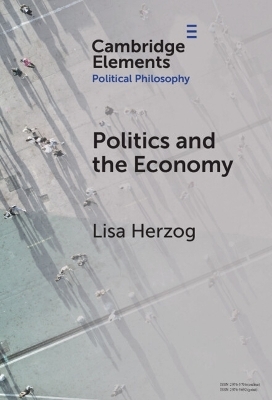
Politics and the Economy
Seiten
2026
Cambridge University Press (Verlag)
978-1-009-59246-8 (ISBN)
Cambridge University Press (Verlag)
978-1-009-59246-8 (ISBN)
- Noch nicht erschienen (ca. Januar 2026)
- Versandkostenfrei
- Auch auf Rechnung
- Artikel merken
This Element explores core questions in economic philosophy, including the relation between political and economic power, market regulation, and value systems. It examines liberal egalitarianism, neorepublicanism, and critical theory, focusing on the future of work and outlining implications for research strategies.
In today's societies, political and economic issues are closely intertwined, and political philosophy has turned more and more to economic issues. This Element introduces some key questions of economic philosophy: How to think about the relation between political and economic power? Can markets be 'tamed'? Which values are embedded in the economy and how do those relate to political values? It answers these questions by considering arguments from three theoretical perspectives – liberal egalitarian approaches, neorepublicanism, and critical theory or socialist thought – explaining their different background assumptions but also shared grounds. To illustrate these topics, it zooms in on the future of work: How could work be made more just, democratic, and sustainable? In the conclusion, some implications for research strategies in economic philosophy are explored.
In today's societies, political and economic issues are closely intertwined, and political philosophy has turned more and more to economic issues. This Element introduces some key questions of economic philosophy: How to think about the relation between political and economic power? Can markets be 'tamed'? Which values are embedded in the economy and how do those relate to political values? It answers these questions by considering arguments from three theoretical perspectives – liberal egalitarian approaches, neorepublicanism, and critical theory or socialist thought – explaining their different background assumptions but also shared grounds. To illustrate these topics, it zooms in on the future of work: How could work be made more just, democratic, and sustainable? In the conclusion, some implications for research strategies in economic philosophy are explored.
1. Introduction; 2. Economic and Political Power; 3. Work between Politics and Democracy; 4. Conclusion; References.
| Erscheinungsdatum | 04.11.2025 |
|---|---|
| Reihe/Serie | Elements in Political Philosophy |
| Zusatzinfo | Worked examples or Exercises |
| Verlagsort | Cambridge |
| Sprache | englisch |
| Gewicht | 500 g |
| Themenwelt | Geisteswissenschaften ► Philosophie ► Philosophie Altertum / Antike |
| Wirtschaft ► Allgemeines / Lexika | |
| Wirtschaft ► Volkswirtschaftslehre ► Wirtschaftspolitik | |
| ISBN-10 | 1-009-59246-7 / 1009592467 |
| ISBN-13 | 978-1-009-59246-8 / 9781009592468 |
| Zustand | Neuware |
| Informationen gemäß Produktsicherheitsverordnung (GPSR) | |
| Haben Sie eine Frage zum Produkt? |
Mehr entdecken
aus dem Bereich

aus dem Bereich
Anleitung zu einer Lektüre Mark Aurels
Buch | Hardcover (2025)
FinanzBuch Verlag
CHF 27,95
Die Philosophie der Antike als Lebensweise in der modernen Welt
Buch | Hardcover (2025)
FinanzBuch Verlag
CHF 25,20


