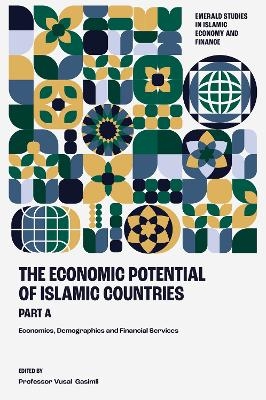
The Economic Potential of Islamic Countries, Part A
Emerald Publishing Limited (Verlag)
978-1-83708-001-4 (ISBN)
The Economic Potential of Islamic Countries, Part A delves into the multifaceted economic landscape of Islamic nations, providing a comprehensive analysis of their strengths, opportunities, and challenges. In an era of rapid globalization and shifting economic paradigms, this book arrives at a crucial juncture, offering fresh insights and strategic recommendations for leveraging the collective potential of these countries. The data-driven analysis also provides case studies from countries such as Malaysia, Turkey, Saudi Arabia and others, offering a comparative analysis of economic policies and outcomes in various Islamic countries, drawing lessons from both successes and failures.
Readers will benefit from the interdisciplinary insights, providing a holistic view that addresses the multifaceted challenges and opportunities in Islamic economies. In addition, it provides practical policy recommendations grounded in empirical research, guiding policymakers, business leaders, and academics towards effective strategies for sustainable economic development.
Vusal Gasimli is a distinguished Azerbaijani economist renowned for his expertise in economic reforms and development. He holds a Postgraduate Diploma from the University of Oxford and has completed the Leading Economic Growth program at the Harvard Kennedy School. As the Executive Director of the Center for Analysis of Economic Reforms and Communication of Azerbaijan, he has played a pivotal role in shaping reform strategies and has published extensively on macroeconomic dynamics, as well as fiscal and monetary policy.
Introduction; Vusal Gasimli
SECTION 1. ECONOMIC AND TRADE COOPERATION
Chapter 1. Economic Cooperation and Integration among OIC Member Countries; Kenan Bağcı and Esat Bakımlı
Chapter 2. The Structure and Functıonıng of The Organızatıon of Islamıc Cooperatıon (OIC); Mehmet Yüce, Hüseyin Akkaya, and Mehmet Fatih Aslantaş
Chapter 3. Economic Integration and Cooperation from Systems Thinking Perspective: The European Union and the Organisation of Islamic Cooperation; Mohammad Omar Farooq
SECTION 2. DEMOGRAPHY AND LABOR MARKET
Chapter 4. Future Demographic Dynamics: An Overview of the Islamic World’s Projections; Kais Hammami, Ouiam Chafik, and Youssef Lazaare
SECTION 3. FISCAL POLICY AND PUBLIC DEBT MANAGEMENT
Chapter 5. Enhancing economic stability: Fiscal choices and their implications on external balance in OIC and OPEC nations; Tsegaye Assayew
Chapter 6. Fiscal policies in İslamic countries: An evaluation with a focus on the pandemic era; Mehmet Yüce, Mehmet Fatih Aslantaş, and Hüseyin Akkaya
SECTION 4. STATE OF GLOBAL ISLAMIC FINANCIAL SERVICES INDUSTRY
Chapter 7. Central Bank Digital Currencies and their Prospects for the OIC Countries; Faruk Aysan and Muhammad Fazlurrahman Syarif
Chapter 8. Enhancing Financial Inclusion through Fintech in OIC Member Economies; Shabeer Khan
SECTION 5. ENERGY TRANSITION AND COOPERATION
Chapter 9. Challenges and opportunities associated with energy transition in Islamic countries; Benuka Ferdousi
Chapter 10. Renewable Energy Investments: Azerbaijan's Cooperation with the Islamic World; Vusala Jafarova
Chapter 11. Egypt and Carbon Reduction: Transitioning to Renewable and Clean Energy; Alshaymaa Alsadek and Hager Elsayed
Chapter 12. Investments in Green Infrastructure: Challenges and Opportunities; Gehad Omar Elkhateeb
| Erscheinungsdatum | 22.11.2025 |
|---|---|
| Reihe/Serie | Emerald Studies in Islamic Economy and Finance |
| Verlagsort | Bingley |
| Sprache | englisch |
| Maße | 152 x 229 mm |
| Gewicht | 520 g |
| Themenwelt | Wirtschaft ► Allgemeines / Lexika |
| Wirtschaft ► Volkswirtschaftslehre ► Makroökonomie | |
| ISBN-10 | 1-83708-001-1 / 1837080011 |
| ISBN-13 | 978-1-83708-001-4 / 9781837080014 |
| Zustand | Neuware |
| Informationen gemäß Produktsicherheitsverordnung (GPSR) | |
| Haben Sie eine Frage zum Produkt? |
aus dem Bereich