Oral Interpretation
Routledge (Verlag)
978-0-205-55524-6 (ISBN)
- Titel erscheint in neuer Auflage
- Artikel merken
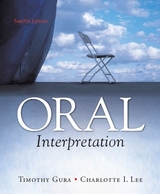
Practical features include a discussion of performance ethics; suggestions for a student's first performance; special insights on maximizing the use of the voice and body; Analyzing the Performance sections; and Rehearsal Tips.
I. Basic Principles
1. A Beginning and an End
Interpretation Requires Communicating
Interpretation Engages an Audience
Interpretation Involves a Literary Work in Its Intellectual and Emotional Entirety
Interpretation Celebrates a Literary Work in Its Aesthetic Entirety
Important Early Questions: Why Perform? Is this Acting?
Sources of Material
Intertextuality
Choosing Your Selection: Three Touchstones. The Sense of Death, Helen Hoyt. I Felt a Funeral, Emily Dickinson. Dulce, Deborah Sherman
Preliminary Analysis: Hoyt's Poem
Preliminary Analysis: Dickinson's Poem
Preliminary Analysis: Sherman's Story
2. Analyzing the Selection
Preparing the First Performance
Major Structural Components: New Words, Maury Yeston
Major Aesthetic Components
Using the Tools: The Story of an Hour, Kate Chopin. I Felt a Funeral, Emily Dickinson
Synthesis
Analyzing the Rehearsal and the Performance
Selections for Analysis and Oral Interpretation: When I Heard the Learn'd Astronomer, Walt Whitman. Sonnet, John Keats. The Starlight Night, Gerard Manley Hopkins. Desert Places, Robert Frost. From A Christmas Memory, Truman Capote. Ringing the Bells, Anne Sexton. Dreaming, Amanda McBroom. Homework, Peter Cameron. Upon Learning That a Junior High School Acquaintance Has Been Nominated for an Academy Award, Joanne Gilbert. How to Watch Your Brother Die, Michael Lassell. From Harry Potter and the Sorcerer's Stone, J. K. Rowling
3. Voice Development for Oral Interpretation
Relaxation Technique
Breath Control
Volume and Projection
Pitch and Quality: The Wild Honeysuckle, Philip Freneau. From I Hear America Singing, Walt Whitman
Rate and Pause
Intelligibility of Speech
Dialect
Selections for Analysis and Oral Interpretation: A Night at the Opera, William Matthews. From A Very Rigid Search, Jonathan Safran Foer. Confess, Early and Often, Jane Smiley. Jabberwocky, Lewis Carroll. From The Little Girls, Elizabeth Bowen. DoverBeach, Matthew Arnold. Back at the Ranch, Jay Allison. Her Story, Naomi Long Madgett. The Lesson, Toni Cade Bambara. From The Night Chant, Navajo Ceremonial Chant, Translated by Washington Matthews. From Blue Highways, William Least Heat Moon. The Voice You Hear When You Read Silently, Thomas Lux
4. Use of the Body in Oral Interpretation
Technique
Posture
Kinesics
Sense Imagery
Empathy
Using Your Body in Rehearsal
Eye Contact
Analyzing the Rehearsal and the Performance
Selections for Analysis and Oral Interpretation: The Second Coming, William Butler Yeats. Flying Finish, Bill Hayes. Ulysses, Alfred, Lord Tennyson. Autumn Begins in Martins Ferry, Ohio, James Wright. From Friday Night Lights, H. G. Bissinger. The .38, Ted Joans. Still Life, Diane Ackerman. Girl, Jamaica Kincaid. Affirmative Action, Lucille Clifton. The Race, Sharon Olds. The Negro Speaks of Rivers, Langston Hughes. Old Lady's Winter Words, Theodore Roethke. From Jarheads, Anthony Swofford. From As You Like It, William Shakespeare. Admission of Failure, Phyllis Koestenbaum
II. Interpretation of Prose
5. Style and Types in Fiction and Nonfiction
Style
Types of Prose
Selections for Analysis and Oral Interpretation: From June Recital, Eudora Welty. From The Joy Luck Club, Amy Tan. From The Revolution Remembered, John C. Dann, Editor. From Everything We Had, Al Santoli, Editor. From The Seacoast of Despair, Joan Didion. From I Know Why the Caged Bird Sings, Maya Angelou. From Women's Diaries of the Westward Journey, Lillian Schlissel, Editor. The Makeup Artist, Dana Tierney. To Austin Dickinson, Emily Dickinson. From Working, Studs Terkel. KEEP OUT! (A Boy's Bedroom), Lynda Barry
6. Narration
Who Is Telling the Story? Point of View
What Is Going on Here? Action and Plot
What Sort of People Live in This Story? Character
What Are They Saying to Each Other? Dialogue
Creating Character
Where Is All This Taking Place? Setting
Cutting and Excerpting
Analyzing the Rehearsal and the Performance
Selections for Analysis and Oral Interpretation: The Prison, Bernard Malamud. A&P, John Updike. Snow, Ann Beattie. From Sula, Toni Morrison. From The Lost Language of Cranes, David Leavitt. Popular Mechanics, Raymond Carver. Jacob's Chicken, Milos Macourek. The Key to My Father, Harlan Coben. From The Conversion of the Jews, Philip Roth
III. Interpretation of Drama
7. Solo Performance of Drama
The Nature of Drama
Why Perform Drama?
What Is the Difference Between Acting and Interpretation?
Structural Elements of a Play
Analyzing a Scene
Working a Scene
Rhythm
Style
Scenography
Putting It Together
Selections for Analysis and Oral Interpretation: From Fifth of July, Lanford Wilson. From Fires in the Mirror, Anna Deavere Smith. From Othello, William Shakespeare. From She Stoops to Conquer, Oliver Goldsmith. From Flyin' West, Pearl Cleage
8. Technique in Drama
Technique in Interpretation
Properties
Embodying Characters
Coordinating Bodies and Voices of Characters
Physical Contact
Interplay of Characters
Physical Focus
The Reading Stand
Cutting and Excerpting
Analyzing the Rehearsal and the Performance
Selections for Analysis and Oral Interpretation: From Sunday in the Park with George, Stephen Sondheim. From Curse of the Starving Class, Sam Shepard. From Romeo and Juliet, William Shakespeare. From Betrayal, Scene Five, Harold Pinter. From Death and the King's Horseman, Wole Soyinka
IV. Interpretation of Poetry
9. Language of Poetry
Poetic Content
Classification of Poetry
Figurative Language: To Autumn, John Keats
Poetic Syntax
Tone Color
Titles
Analysis and Poems
Selections for Analysis and Oral Interpretation: Power, Corrine Hales. The Windhover, Gerard Manley Hopkins. The Toast, Susan Minot. Wild Grapes, Robert Frost. Spring is like a perhaps hand, e. e. cummings. The House Was Quiet and the World Was Calm, Wallace Stevens. Nikki-Rosa, Nikki Giovanni. Saving Memory, Mary Stewart Hammond. Mid-Term Break, Seamus Heaney. On Sleeping Together, Barbara Howes. Talking in Bed, Philip Larkin. The Hospital Window, James Dickey. Most Like an Arch This Marriage, John Ciardi. First Grade, William Stafford. Preface to a Twenty Volume Suicide Note, Imamu Amiri Baraka
10. Structure of Poetry
Why Study Prosody?
Kinds of Verse
The Stanza
The Line
Cadences
Rhyme
Intention and Performance
Analyzing the Rehearsal and the Performance
Selections for Analysis and Oral Interpretation: One Art, Elizabeth Bishop. The Walking, Theodore Roethke. Do Not Go Gentle into That Good Night, Dylan Thomas. Journey of the Magi, T. S. Eliot. The Magi, Louise Glück. A Blessing, James Wright. Heartbeats, Melvin Dixon. Who Among You Knows the Essence of Garlic? Garrett Kaoru Hongo. My Last Duchess, Robert Browning. The Kilgore Rangerette Whose Life Was Ruined, Cynthia MacDonald. From Fatal Interview, Edna St. Vincent Millay. Cinderella, Anne Sexton. Cinderella's Story, Mona Van Duyn. Today Is a Day of Great Joy, Victor Hernandez Cruz. From Horses Make a Landscape Look More Beautiful, Alice Walker.
V. Group Performance
11. Group Performance of Literature
Readers Theater
Chamber Theater
Group Performance of Compiled Scripts
Other Kinds of Literature
Directing the Group Performance of Literature
Some Concluding Cautions
Analyzing the Rehearsal and the Performance
Selections for Analysis and Oral Interpretation: From The Metamorphoses, Ovid. From The Caucasian Chalk Circle, Section III, Bertolt Brecht. 40-Love, Roger McGough. Forsythia, Mary Ellen Solt. Apfel, Reinhard Döhl. From Oedipus the King, Sophocles. Unforgiven, David Ray. After the Overdose, Robin Robertson. From Sunday Bloody Sunday, Penelope Gilliatt
Appendix A. Building and Presenting a Program
Selecting Material
Unifying the Program: A Traditional Method
Using Multiple Readers, Different Types of Literature, and Multimedia
Staging the New York Times
Other Options
Adapting to the Audience
| Erscheint lt. Verlag | 2.5.2007 |
|---|---|
| Verlagsort | New York |
| Sprache | englisch |
| Maße | 230 x 189 mm |
| Gewicht | 862 g |
| Themenwelt | Wirtschaft ► Betriebswirtschaft / Management |
| ISBN-10 | 0-205-55524-1 / 0205555241 |
| ISBN-13 | 978-0-205-55524-6 / 9780205555246 |
| Zustand | Neuware |
| Informationen gemäß Produktsicherheitsverordnung (GPSR) | |
| Haben Sie eine Frage zum Produkt? |
aus dem Bereich