


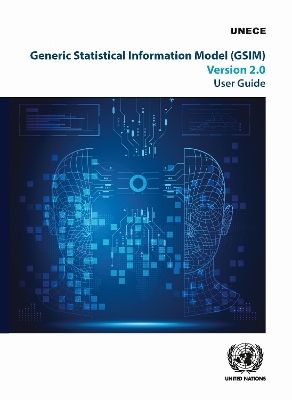
Generic Statistical Information Model (GSIM) Version 2.0: User Guide
Seiten
2025
United Nations (Verlag)
978-92-1-003357-2 (ISBN)
United Nations (Verlag)
978-92-1-003357-2 (ISBN)
- Titel nicht im Sortiment
- Artikel merken
GSIM is a reference framework that unifies diverse processes used by statistical organizations worldwide. It standardizes information classes and clarifies relationships between statistical entities, fostering collaboration, streamlining production, and modernizing practices at both national and international levels.
Across the world, statistical organisations undertake similar activities, albeit with variations in the processes that they use. Each of those activities uses and produces similar information. Although the information used by statistical organisations is at its core the same, all organisations tend to describe it slightly differently and sometimes in different ways within each organisation. The Generic Statistical Information Model (GSIM) is a reference framework for statistical information. It provides a set of standardised, consistentl described information classes, which can be used as inputs and outputs in the design and the production of statistics. As a reference framework, GSIM explains significant relationships among the entities involved in statistical production and can be used to guide the development and use of consistent implementation standards or specifications. As a common language to describe statistical information, GSIM can facilitate communication within and between statistical organisations. It can provide the foundation for in-depth collaboration, standardisation, or sharing of tools and methods, and thereby plays an important role in modernising, streamlining and, aligning standards and production associated with official statistics at both national and international levels. The modernisation of statistical production is needed for statistical organisations to remain relevant and flexible in a dynamic and competitive information environment. It is hoped that this User Guide for version 2.0 of GSIM will enable statistical organisations to realise the full benefits from its adoption and implementation.
Across the world, statistical organisations undertake similar activities, albeit with variations in the processes that they use. Each of those activities uses and produces similar information. Although the information used by statistical organisations is at its core the same, all organisations tend to describe it slightly differently and sometimes in different ways within each organisation. The Generic Statistical Information Model (GSIM) is a reference framework for statistical information. It provides a set of standardised, consistentl described information classes, which can be used as inputs and outputs in the design and the production of statistics. As a reference framework, GSIM explains significant relationships among the entities involved in statistical production and can be used to guide the development and use of consistent implementation standards or specifications. As a common language to describe statistical information, GSIM can facilitate communication within and between statistical organisations. It can provide the foundation for in-depth collaboration, standardisation, or sharing of tools and methods, and thereby plays an important role in modernising, streamlining and, aligning standards and production associated with official statistics at both national and international levels. The modernisation of statistical production is needed for statistical organisations to remain relevant and flexible in a dynamic and competitive information environment. It is hoped that this User Guide for version 2.0 of GSIM will enable statistical organisations to realise the full benefits from its adoption and implementation.
| Erscheinungsdatum | 03.06.2025 |
|---|---|
| Reihe/Serie | Conference of European Statisticians Statistical Standards and Studies |
| Verlagsort | New York |
| Sprache | englisch |
| Maße | 210 x 297 mm |
| Gewicht | 570 g |
| Themenwelt | Sozialwissenschaften ► Soziologie ► Empirische Sozialforschung |
| Wirtschaft ► Volkswirtschaftslehre ► Ökonometrie | |
| ISBN-10 | 92-1-003357-4 / 9210033574 |
| ISBN-13 | 978-92-1-003357-2 / 9789210033572 |
| Zustand | Neuware |
| Informationen gemäß Produktsicherheitsverordnung (GPSR) | |
| Haben Sie eine Frage zum Produkt? |
Mehr entdecken
aus dem Bereich

aus dem Bereich
Buch | Hardcover (2023)
De Gruyter Oldenbourg (Verlag)
CHF 48,90
ein Arbeitsbuch
Buch | Softcover (2021)
De Gruyter Oldenbourg (Verlag)
CHF 48,90
Buch | Hardcover (2022)
Springer VS (Verlag)
CHF 209,95


