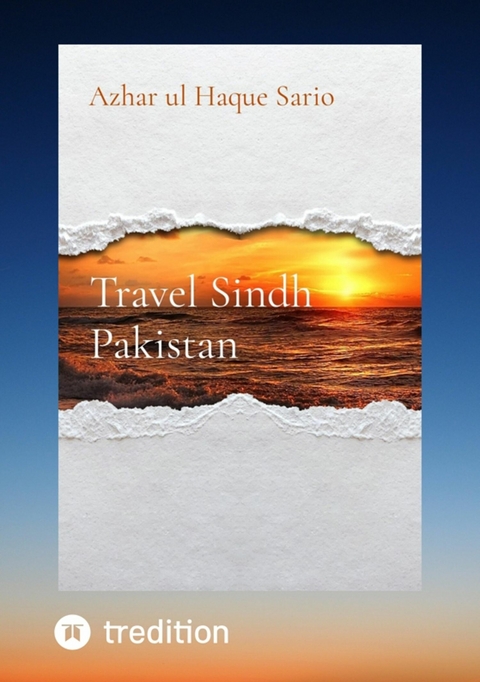
Travel Sindh Pakistan (eBook)
126 Seiten
Azhar Sario Authorship and Publishing (Verlag)
978-3-384-44226-0 (ISBN)
I am bestselling author. Data scientist. I have proven technical skills (MBA, ACCA (Knowledge Level), BBA, several Google certifications) to deliver insightful books with ten years of business experience. I have written and published 400 books as per Goodreads record. ORCID: https://orcid.org/0009-0004-8629-830X Azhar.sario@hotmail.co.uk
I am bestselling author. Data scientist. I have proven technical skills (MBA, ACCA (Knowledge Level), BBA, several Google certifications) to deliver insightful books with ten years of business experience. I have written and published 400 books as per Goodreads record. ORCID: https://orcid.org/0009-0004-8629-830X Azhar.sario@hotmail.co.uk
1
Stepping off the rickety bus, the heat of Sindh hit me like a wall. It wasn't just heat; it was a dry, ancient warmth, radiating from the parched earth and whispering of forgotten civilizations. I was here, in the heart of Pakistan, on the doorstep of Mohenjo-daro, a city older than the pyramids.
At first glance, it wasn't much to look at. Just mounds of faded brick, scattered across the dusty plain like forgotten toys. But as I walked closer, something shifted. The air itself seemed to thicken, heavy with untold stories. I could almost hear the murmur of voices, the echo of footsteps from thousands of years ago.
The entrance was unassuming, a simple gateway leading into a world lost to time. Suddenly, I was standing on a wide, brick-paved street, so well-preserved it could have been laid yesterday. It stretched straight ahead, lined with the ghostly outlines of houses and shops. I could almost see the bustling marketplace, the vibrant colors of fabrics and spices, the children darting between the stalls.
Wandering through the labyrinthine ruins, I was struck by the sheer scale of the place. This wasn't just a village; it was a metropolis, a meticulously planned city with distinct neighborhoods, public squares, and even a complex drainage system. The "Great Bath," a massive, brick-lined pool, was particularly awe-inspiring. It must have been a focal point of the community, a place for sacred rituals or joyous celebrations.
Questions crowded my mind like curious children. Who were these people who built such a magnificent city? What were their lives like? What songs did they sing? What gods did they worship? And why did they vanish so abruptly? The answers, buried deep beneath the sands of time, remained tantalizingly elusive.
As the sun dipped towards the horizon, it painted the ruins in a warm, golden glow. Shadows stretched across the brickwork, deepening the mystery and enchantment of the place. I realized I had only scratched the surface of Mohenjo-daro's secrets.
This city, a silent sentinel guarding a vanished civilization, had cast its spell on me. It was a reminder that the past is never truly gone, that it lingers in the stones and whispers to those who listen. Mohenjo-daro, a place of wonder and whispers, had ignited a spark in me, a thirst for knowledge that would linger long after I left.
Descending the worn steps, the Great Bath of Mohenjo-daro stretched out before me like a mirage. It wasn't just a pool, but a sunken amphitheater where life played out five thousand years ago. The sun-baked bricks seemed to hold the warmth of countless bodies, the echoes of laughter and prayer mingling in the desert air.
Close your eyes and listen. Hear the gentle splash of water, the tinkling laughter of children chasing each other around the edges. Picture women adorned with bangles and beads, their voices weaving tales as ancient as the city itself. Imagine priests chanting hymns, their voices rising with the smoke of incense, filling the air with a mystical aura.
Was this a place of purification, where souls were washed clean before sacred rites? Or perhaps a grand social club, a meeting place where laughter mingled with the murmur of gossip? It could have been a healing sanctuary, its mineral-rich waters soothing tired bodies and weary souls.
The scene unfolds: vendors hawking sweet treats, musicians strumming melodies that danced on the water's surface, artisans displaying their intricate crafts. The air buzzes with a vibrant energy, a symphony of human connection.
This wasn't just a bath, but a beating heart. A place where rich and poor, young and old, came together to share stories, hopes, and dreams. A testament to a civilization that understood the power of community, a place where the lines of social status blurred in the warm embrace of shared water.
The sun beats down, a connection across millennia. The past whispers through the cracks in the ancient bricks, reminding me that we're not so different from those who came before. The need for connection, for shared experiences, is woven into the fabric of our being.
Tips for Experiencing the Great Bath:
Breathe it in: Close your eyes, feel the sun on your face, and let the echoes of the past wash over you.
Tread lightly: This is a sacred space, a window into a world long gone. Treat it with reverence.
Ask and wonder: Let your curiosity guide you. Ask your guide questions, let your imagination wander.
Capture the moment: Take photos, not just of the bath, but of the feelings it evokes.
Dive deeper: After your visit, delve into the history of this incredible place. Let it spark a lifelong fascination with the Indus Valley Civilization.
Mohenjo-daro is more than just ruins; it's a song of the past, waiting for you to hear its melody.
Ali, a man whose face was a map of the sun-baked Sindhi landscape, held up a small clay seal. It was no bigger than my thumbnail, yet it felt as heavy as history itself. Etched into its surface were mysterious symbols, the language of a people lost to time.
"This," Ali whispered, his eyes sparkling with the wisdom of generations, "is the key to unlocking Mohenjo-daro's secrets."
We stood in the dappled shade of the museum, the midday sun painting intricate patterns on the ancient walls. Ali traced the markings on the seal, his voice a gentle breeze whispering stories of the Indus Valley civilization. He explained the competing theories surrounding the script, each more tantalizing than the last. Was it a symbolic language, a visual tapestry of ideas and concepts? Or did each mark represent a sound, a forgotten song echoing through the ages?
The mystery deepened as we pondered the meaning behind the symbols. Animals, both familiar and fantastical, danced across the clay, hinting at a rich spiritual life. Geometric patterns suggested a deep understanding of the cosmos, a wisdom that rivaled that of the ancient Greeks. Yet, the true meaning of the script remained locked away, a tantalizing enigma that beckoned us further into the labyrinth of the past.
Ali's voice grew hushed as he turned to the topic of Mohenjo-daro's sudden demise. He gestured towards the vast, empty plain where the Indus River once flowed, now a distant ribbon shimmering in the heat haze. Did the river change course, abandoning the city to a slow death by thirst? Or was it a catastrophic flood, a watery apocalypse that swept away the teeming metropolis?
Theories abounded, each a thread in a tangled tapestry of possibilities. A decline in trade, a devastating earthquake, a mysterious plague – all were whispered in the wind that swept through the ruins. The most chilling scenario, however, was that of a brutal invasion, leaving behind a city of ghosts, its secrets buried beneath the rubble of time.
As we wandered through the skeletal remains of the city, the silence seemed to deepen. Empty streets echoed with the whispers of forgotten footsteps, the crumbling walls bearing witness to a life that once teemed with vitality. It was as if the city had breathed its last, leaving behind only a faint echo of its former grandeur.
The enigma of Mohenjo-daro's fate clung to the air like a shroud. It was a question mark carved into every brick, a riddle waiting to be solved. But amidst the desolation, I felt a spark of excitement. The answers were out there, waiting to be unearthed, and I was determined to be a part of the quest to unravel the mysteries of this ancient city.
Tips for Embarking on Your Own Quest:
Find your Ali: A knowledgeable guide is your passport to understanding the complexities of Mohenjo-daro.
Delve into the museum's treasures: The artifacts on display offer glimpses into the daily lives, beliefs, and artistic expressions of the Indus Valley people.
Stay informed: Follow the latest archaeological research and discoveries, as new clues are constantly emerging.
Engage with the unknown: Ask questions, share theories, and embrace the thrill of the unsolved puzzle.
Open your mind to the possibilities: The truth of Mohenjo-daro may forever remain shrouded in mystery, but the journey of exploration is a reward in itself.
Mohenjo-daro, a city born of dust and dreams, can easily leave you feeling like an outsider peering through a foggy window. It's a sprawling puzzle of sun-baked ruins, whispering secrets of a civilization swallowed by time. Without a guide, it's easy to feel lost, adrift in a sea of ancient brick and crumbling walls.
I remember my first solo foray into those sun-drenched streets, armed with nothing but a crumpled map and a thirst for adventure. It was like trying to read a book in a language I didn't understand. Sure, the grand buildings and intricate layout were impressive, but they remained just that – impressive structures devoid of meaning.
Then I met Fatima, a local guide whose eyes sparkled with the wisdom of generations. She wasn't just a guide, she was a time traveler, a conjurer of stories that breathed life into the...
| Erscheint lt. Verlag | 2.12.2024 |
|---|---|
| Verlagsort | Ahrensburg |
| Sprache | englisch |
| Themenwelt | Sozialwissenschaften ► Politik / Verwaltung |
| Wirtschaft | |
| Schlagworte | archaeological sites • cultural heritage • indus valley civilization • Mohenjo-daro • Pakistan travel • Sindh • Sufism |
| ISBN-10 | 3-384-44226-1 / 3384442261 |
| ISBN-13 | 978-3-384-44226-0 / 9783384442260 |
| Informationen gemäß Produktsicherheitsverordnung (GPSR) | |
| Haben Sie eine Frage zum Produkt? |
 EPUB (Wasserzeichen)
DRM: Digitales Wasserzeichen
Dieses eBook enthält ein digitales Wasserzeichen und ist damit für Sie personalisiert. Bei einer missbräuchlichen Weitergabe des eBooks an Dritte ist eine Rückverfolgung an die Quelle möglich.
Dateiformat: EPUB (Electronic Publication)
EPUB ist ein offener Standard für eBooks und eignet sich besonders zur Darstellung von Belletristik und Sachbüchern. Der Fließtext wird dynamisch an die Display- und Schriftgröße angepasst. Auch für mobile Lesegeräte ist EPUB daher gut geeignet.
Systemvoraussetzungen:
PC/Mac: Mit einem PC oder Mac können Sie dieses eBook lesen. Sie benötigen dafür die kostenlose Software Adobe Digital Editions.
eReader: Dieses eBook kann mit (fast) allen eBook-Readern gelesen werden. Mit dem amazon-Kindle ist es aber nicht kompatibel.
Smartphone/Tablet: Egal ob Apple oder Android, dieses eBook können Sie lesen. Sie benötigen dafür eine kostenlose App.
Geräteliste und zusätzliche Hinweise
Buying eBooks from abroad
For tax law reasons we can sell eBooks just within Germany and Switzerland. Regrettably we cannot fulfill eBook-orders from other countries.
aus dem Bereich