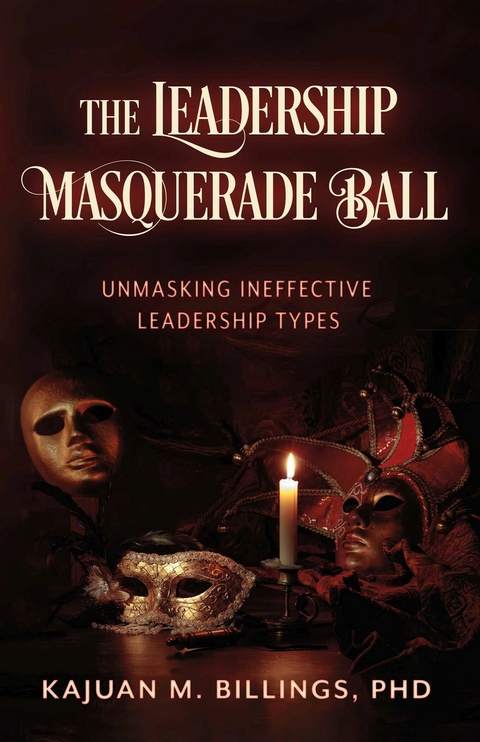
Leadership Masquerade Ball (eBook)
124 Seiten
Bookbaby (Verlag)
979-8-3509-7319-8 (ISBN)
KaJuan M. Billings, PhD, is a Corporate Executive Leader and Leadership Coach with extensive experience leading teams at global organizations. Dr. Billings is passionate about effective leadership and has researched and written extensively on topics such as leadership development, leadership styles and philosophies, performance management, and creating a positive workplace culture. Renowned as a visionary, he positions organizations for success while prioritizing the development and empowerment of the individuals and teams he leads. His dedication to fostering talent and creating inclusive environments has made a lasting impact on the industry, demonstrating that true leadership goes beyond business success to uplift and inspire those around him.
The Leadership Masquerade Ball: Unmasking Ineffective Leadership Types by KaJuan M. Billings, PhD, is a thought-provoking exploration into the often-concealed world of ineffective leadership. In this eye-opening book, Dr. Billings invites readers to a figurative grand ballroom, where leaders don elaborate masks, each representing a different facade that conceals their true nature. These masks, while seemingly harmless, hide behaviors that can be detrimental to teams, organizations, and overall leadership effectiveness. The book is structured around the metaphor of a masquerade ball, where each chapter introduces readers to a different ineffective leadership type, unmasking the destructive traits that lie beneath the surface. From "e;The Credit Crook"e; who steals the limelight from their team, to "e;The Befuddled Visionary"e; who is full of grand ideas but lacks the practical know-how to bring them to life, Dr. Billings meticulously dissects the characteristics of each archetype, offering insights into how these leaders operate and the impact they have on those they lead. In Chapter 1: Welcome to the Masquerade, readers are introduced to the concept of leadership as a masquerade, where appearances can be deceiving and where understanding the masks leaders wear is crucial to uncovering the truth. Dr. Billings sets the stage for a journey of discovery, urging leaders to reflect on their own behaviors and consider the masks they might be wearing. As the book progresses, readers meet "e;The Usual Suspects"e; leaders whose ineffective styles are well-known yet often tolerated within organizations. These include "e;The Bully,"e; who rules through fear and intimidation; "e;The Control-Thirsty Micromanager,"e; who stifles creativity and autonomy; and "e;The Nitpicker,"e; whose obsessive focus on minor details can cripple a team's morale and innovation. The exploration continues with "e;The Subtle Saboteurs,"e; a group of leaders whose masks are less obvious but equally damaging. These include "e;The Temporary, 'Fly By Night', People Leader,"e; who views their role as a mere steppingstone and lacks true commitment to their team, and "e;The Leader with Main Character Syndrome,"e; who craves the spotlight and makes everything about themselves, often at the expense of their team's success. In Chapter 4: Introducing the Royal Court: The Executive Masqueraders, the focus shifts to the most powerful and influential leaders within an organization the C-Suite executives and senior leaders. Dr. Billings unravels the masks worn by these high-level leaders, whose ineffective styles can have far-reaching and disastrous consequences. These include "e;The Compass-less Navigator,"e; a leader who lacks direction and knowledge, and "e;The Humble Inquisitor,"e; who uses feigned humility as a tool to gather information for personal gain. Throughout the book, Dr. Billings not only identifies these harmful leadership types but also offers practical guidance on how to recognize and address these behaviors. He encourages readers to engage in self-reflection, develop self-awareness, and take proactive steps to remove their own masks, fostering authenticity and effective leadership. The Leadership Masquerade Ball is more than just a critique of poor leadership; it is a call to action for leaders at all levels to unmask themselves and embrace authenticity. By understanding the detrimental effects of these leadership styles, readers are empowered to transform their approach, leading with integrity, purpose, and a genuine connection to their teams. Whether you are a seasoned executive, an emerging leader, or simply interested in understanding the dynamics of leadership, this book offers valuable insights and actionable strategies. Dr. Billings' engaging writing style, combined with his deep expertise in leadership, makes this a must-read for anyone committed to personal growth and organizational excellence. Join the unmasking at The Leadership Masquerade Ball and discover how to navigate the complexities o
Chapter 2:
The Usual Suspects
As we walk into the ballroom, the first group we will encounter are the Usual Suspects, those classic ineffective leaders whose masks are so clear that we all recognize them. You can easily see right through their masks. These are the leaders that everyone knows to stay away from. Let’s unmask the basic masked crew.
First, we see “The Bully”. At the right side of the ballroom, we catch this leader making their way over to the long food line, but instead of walking back to the end of the line behind all of the other employees, we notice that the bully leverages their role as a leader to cut the line so they can get their plate of food first, disregarding those who have been waiting patiently for several minutes. The Bully’s mask has a fixed scowl painted on it, designed specifically for tyrant behavior.
The Bully is a leader who rules through fear and intimidation. You’ve probably encountered this type at some point in your career. The Bully uses threats, humiliation, and coercion to maintain control. This leadership style is not just ineffective but also toxic. The environment created by a Bully is one of fear and anxiety, where employees are constantly on edge, worried about the next outburst or punitive action.
The root causes of bullying behavior in leaders often stem from their own insecurities and a need to assert dominance. They might have been raised in environments where aggressive behavior was normalized, or they may have experienced bullying themselves. As a result, they adopt these behaviors as a way to cope and exert control.
The impact on those you lead can be devastating. Employees subjected to bullying are likely to experience high levels of stress, which can lead to burnout, decreased productivity, and even physical health issues. The team’s morale will plummet, and trust in leadership will erode. People will be less likely to take risks or innovate, fearing retribution if they make mistakes. In the long run, this toxic environment can lead to high turnover rates and a damaged organizational culture.
If you recognize that you might have some Bully tendencies in your leadership style, it’s crucial to take immediate and concrete steps to address and transform those behaviors. Bullying can create a toxic work environment, erode trust, and significantly damage your team’s morale and productivity. Here are some practical steps you can take to improve and help you become a more effective and compassionate leader:
- Self-Awareness and Honest Reflection
- Commit to Self-Reflection: Begin by setting aside time to honestly reflect on your recent interactions with your team. Ask yourself tough questions: Have you raised your voice, made threats, or belittled anyone? Have your actions been driven by frustration or a need to assert control? Consider keeping a journal where you record these reflections daily to track patterns in your behavior.
- Identify Triggers: Pay close attention to situations that trigger your bully-like behavior. Is it during times of high stress, tight deadlines, or when you feel your authority is being challenged? Understanding what prompts your behavior is the first step in controlling it.
- Seeking Feedback from Your Team
- Create a Safe Environment for Feedback: Approach your team and invite them to give you honest feedback. However, it’s crucial that this invitation is sincere, and that your team feels safe to speak openly without fear of retaliation. You might say something like, “I’m working on improving how I interact with the team, and I would really value your honest feedback on how I can do better.”
- Use Anonymous Surveys: If your team may be hesitant to provide direct feedback, consider using anonymous surveys or third-party facilitators to gather honest insights. This can help them feel more comfortable sharing their true thoughts.
- Ask Specific Questions: Instead of general inquiries like, “How am I doing as a leader?” ask more targeted questions such as, “Can you share a time when you felt intimidated or unsupported by me?” or “What can I do differently to make our work environment more positive?”
- Behavioral Change Techniques
- Adopt the “Pause” Technique: Before responding in a high-stress situation, practice pausing. Count to ten, take a few deep breaths, and consider the impact of your words before speaking. This simple technique can prevent you from reacting impulsively and saying something harmful.
- Set Clear Boundaries for Yourself: Identify specific behaviors you want to avoid (e.g., raising your voice, making sarcastic remarks) and set boundaries for yourself. For example, commit to stepping out of the room or taking a break if you feel anger building up.
- Positive Reinforcement: Reward yourself for positive behavior changes. For example, if you successfully navigate a difficult situation without resorting to intimidation, acknowledge that achievement and use it as motivation to continue improving.
By following this improvement plan, you can change from a leader who intimidates to one who inspires. This journey requires patience, dedication, and a willingness to face uncomfortable truths about yourself, but the rewards, (a more engaged, motivated, and loyal team) are well worth the effort.
Now, we recognize “The Control-Thirsty Micromanager”. Surprise! This is the leader that volunteered to set up and run the entire event. Constant worry and anxiety are the expressions painted on the micromanager’s mask. We see this leader frantically moving about the ballroom directing every single aspect of the evening, making everyone around them just as frantic. You have to wonder if this leader is even enjoying the evening.
The Control-Thirsty Micromanager is a classic character who longs to control everything. This leader believes that they need to oversee every detail of their team’s work, often stepping in to make decisions and solve problems that should be handled by team members. The Control-Thirsty Micromanager lacks trust in their team and feels that only they can do the job correctly.
The root causes of micromanagement are often a lack of trust and confidence, either in oneself or in the abilities of others. The Control-Thirsty Micromanager may fear that delegating tasks will lead to mistakes or failures, so they prefer to keep everything within their control. This behavior can also stem from perfectionism, where the leader feels that nothing can meet their high standards unless they are directly involved.
The impact on the team can be suffocating. Team members feel their autonomy is being stifled, and their creativity and initiative are crushed. This can lead to frustration and disengagement, as employees feel they are not trusted to do their jobs. It can also result in decreased productivity, as the leader’s constant interference slows down processes and decision-making.
If you recognize micromanaging tendencies in yourself, it’s crucial to address them proactively to foster a more empowering and productive work environment. Micromanaging can stifle creativity, reduce morale, and create an atmosphere of distrust. Here’s a detailed, practical improvement plan to help you develop trust in your team, delegate effectively, and shift your focus to more strategic leadership.
- Self-Awareness and Honest Reflection
- Identify Triggers: Begin by reflecting on situations where you feel compelled to micromanage. Is it when deadlines are tight, or when the task is critical to the organization’s success? Understanding the specific triggers that cause you to micromanage is the first step toward change.
- Assess the Impact: Consider how your micromanaging behavior affects your team. Do they seem disengaged or less motivated? Are they hesitant to take initiative or make decisions without your approval? Write down these observations to make the consequences of micromanaging more tangible.
- Building Trust with Your Team
- Start with Honest Conversations: Initiate open and honest conversations with your team about your leadership style. Acknowledge your micromanaging tendencies and express your commitment to change. Invite them to share how your behavior has impacted their work and what they need from you to feel more empowered.
- Focus on Strengths: Take the time to understand each team member’s strengths, skills, and areas of expertise. This knowledge will help you feel more confident in delegating tasks, knowing that you are assigning them to the right people.
- Set Clear Expectations: Clearly define the outcomes you expect for each task or project. Instead of dictating how something should be done, focus on what needs to be achieved. Trust your team to find the best way to reach those goals.
- Effective Delegation Strategies
- Delegate Small Tasks First: Begin by delegating smaller, less critical tasks to your team members. For example, ask them to handle a routine report or manage a minor project. Gradually increase the complexity and importance of the tasks as you build trust in their abilities.
- Use the “What, Why,...
| Erscheint lt. Verlag | 1.12.2024 |
|---|---|
| Sprache | englisch |
| Themenwelt | Wirtschaft ► Betriebswirtschaft / Management ► Unternehmensführung / Management |
| ISBN-13 | 979-8-3509-7319-8 / 9798350973198 |
| Informationen gemäß Produktsicherheitsverordnung (GPSR) | |
| Haben Sie eine Frage zum Produkt? |
 EPUB (Ohne DRM)
Größe: 860 KB
Digital Rights Management: ohne DRM
Dieses eBook enthält kein DRM oder Kopierschutz. Eine Weitergabe an Dritte ist jedoch rechtlich nicht zulässig, weil Sie beim Kauf nur die Rechte an der persönlichen Nutzung erwerben.
Dateiformat: EPUB (Electronic Publication)
EPUB ist ein offener Standard für eBooks und eignet sich besonders zur Darstellung von Belletristik und Sachbüchern. Der Fließtext wird dynamisch an die Display- und Schriftgröße angepasst. Auch für mobile Lesegeräte ist EPUB daher gut geeignet.
Systemvoraussetzungen:
PC/Mac: Mit einem PC oder Mac können Sie dieses eBook lesen. Sie benötigen dafür die kostenlose Software Adobe Digital Editions.
eReader: Dieses eBook kann mit (fast) allen eBook-Readern gelesen werden. Mit dem amazon-Kindle ist es aber nicht kompatibel.
Smartphone/Tablet: Egal ob Apple oder Android, dieses eBook können Sie lesen. Sie benötigen dafür eine kostenlose App.
Geräteliste und zusätzliche Hinweise
Buying eBooks from abroad
For tax law reasons we can sell eBooks just within Germany and Switzerland. Regrettably we cannot fulfill eBook-orders from other countries.
aus dem Bereich