INTRODUCTION
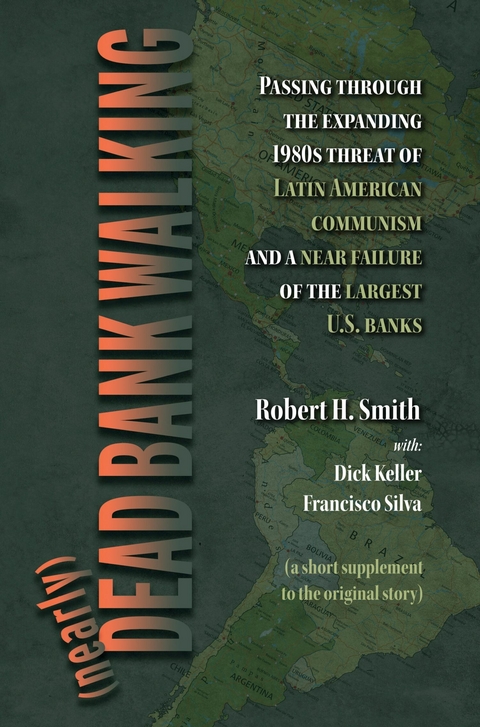
This short story explores the actions of Security Pacific Bank, the U.S. Government, politicians, regulatory officials, and many major U.S. banks and bankers in the 1970s and 80s as they dealt with economic disruptions in Latin America (Mexico, Central America, and South America). The threatening matters, actions and decisions of this period seriously impacted economic stability throughout the Americas and nearly collapsed the U.S. Banking System. Of specific note is what took place at Security Pacific, and its efforts to avoid collapse.
These troubles resulted from U.S. bank financing, including Security Pacific, of numerous growth and infrastructure projects throughout Latin American. This was a time in which the environment and leadership in many of these countries began drifting toward Communist or Socialist leadership and policies. Of particular concern during this period were the political change and events taking place in Latin America and the longstanding and ongoing threats and influence emerging from communist Cuba.
For years, Communist Cuba had been a continuing annoyance to the United States and was a conflicting neighboring country that often threatened the economic and political thinking in the U.S. Fidel Castro had taken control of this island country in a 1952 coup d’état, removing President Fulgencio Batista from power. Castro led the country as it established communist and Marxist-Leninist dominated political policies and leadership. In the early years, Cuba affiliated closely with other communist countries around the world, most particularly the Soviet Union which was engaged in a continuing Cold War with the United States. This specific connection introduced conflict and concern within the United States. Castro was considered a serious threat to the welfare and stability of the U.S., which feared that Cuba would be a model and base for potential Communist/Socialist expansion in the Americas.
One of the broader concerns of the U.S. government during the 70s was the growing impact of global communist/socialist leaders on the existence and development of democratic forms of leadership not just at home, but around the world. The specific concern in the U.S. was that more countries in Latin America would seek to model the communist experience during this Cold War period.
Experiences from the early 70s in Salvador Allende’s communist-led Chile and leftist activities in other Latin American countries only expanded these fears. If the Communist or Socialist interests in Latin America grew further, this occurrence would be considered a serious threat to continuing peace, stability, and freedom in the United States.
The ongoing influence of the Soviet Union in the Western Hemisphere and their growing involvement with the communist regime of Fidel Castro also caused fears of a potentially broader military involvement on behalf of the Soviets. The U.S. was committed to protecting democracy and freedom not only at home but across in the Americas. These concerns were openly expressed by many U.S. political leaders, including concerning comments in the 1970s by Presidents Richard Nixon and later Ronald Reagan.
Adding support to the U.S.’s effort to restrict Communism’s growth in the West were U.S. counteractions to expand Capitalism’s role in Latin America. In his early years as U.S. president, Ronald Reagan openly expressed his concern for the growth of communism in the Americas. To quell this growth, he identified the necessity of direct U.S. support for the growth of capitalism in Latin America.
In 1981, Reagan made one of his most noteworthy and influential comments when he said, “The West will not contain communism; it will transcend communism. We will not bother to renounce it. We will dismiss it as a bizarre chapter in human history for which the last pages are even now being written.” Communism, he felt, was the devil, his evil enemy, and a serious risk to the U.S., especially if it grew within the Americans.
In 1982, addressing the Organization of American States, he added to his concerns when he said, “We must stand together against those who would destroy the hopes of democracy in this hemisphere. We must continue to support the democratic processes in our sister nations and oppose the Marxist-Leninist ideology that exploits the natural aspirations of so many for a better life.”
These concerns had a deep impact on the United States policy toward the countries of Latin America. Rooted in the apprehension towards Communism, policies emerged to reflect an open willingness to accept and support the development and growth of the capitalist structures of these countries. This included the encouragement of U.S. banks to grant loans in Latin America, providing the necessary capital for infrastructure improvements and project development.
As a result of this welcoming philosophy, many Latin American countries eagerly sought funding from the largest U.S. banks for their various projects and growth. With this willingness to borrow and the U.S. government’s push to lend, banks were enthusiastic and supportive of such needs. Considering troubling economic conditions in the U.S. and a lack of internal growth, banks aggressively sought participation in these new, high yielding Latin American loans, thought to be safe transactions.
Following a period of economic disruption in the late 70s, and extensive bank lending to Latin American countries, an ongoing series of difficulties began to impact the U.S. banking system. These troubles positioned the U.S. financial system in the footsteps of a massive monetary crisis.
Most relevant and impactful in this environment were the domestic conditions which caused the U.S. economy to experience double-digit inflation with bank prime-interest rates reaching 21.5%. Further, domestic loan losses reached historical levels. Thus, an economic recession emerged in 1980 and continued through 1983, introducing deep economic uncertainty and stress.
During this same period, U.S. banking also experienced industry-wide financial events, resulting in pervasive bank troubles. These industry focused events were experienced through failing loans related to the Agriculture, Energy, Real Estate, and Savings and Loan industries. Such situations were so severe that several of the nation’s largest regional banks suffered extensive losses and ultimately failed. Included in this were nine of the ten largest banks in Texas, all of which failed between 1980 and 1989 due to an energy crisis. In addition, an extensive real estate loan collapse saw over 3000 of the 4500 total Saving Banks and Savings and Loan institutions fail, all at an extensive cost to the U.S. government.
In this troubling U.S. environment of the 70s and early 80s, many of infrastructure and project loans made to Latin American countries risked failure as the country’s economic conditions worsened. These troubles were compounded by increases in the world price of crude oil. Ultimately, Latin American debtor countries declared a formal payment moratorium on their project and infrastructure loans during 1982 and 1983. As a result, these countries confirmed they were unable to make any payment on either principal or interest as the result of their lack of U.S. dollars.
U.S. dollars were the currency specific to the payment of principal and interest on these loans as well as the currency of world crude oil sales. The total Latin American loans included under the moratorium were so significant that the implications of the moratorium seriously threatened the viability of the U.S. banking system, fearing multiple large bank failures.
Some initially considered the loan moratorium to be of lesser concern due to the size and strength of the U.S banks, but a deeper investigation suggested a potentially catastrophic impact on the U.S. financial system. This would have been the case if either the banks, their accountants, regulators, or all recognized the current collectable value of the loans given that non-payment would most likely continue over an extended period. In the early years of the moratorium, the underlying and implicit loss of loan values was not fully recognized. In addition, there were no acceptable plans developed for either the service or ultimate collection of the loans.
As awareness grew, particularly among regulatory authorities, the situation worsened to the point where U.S. authorities established a formal, non-public contingency plan for taking over troubled banks. If the situation continued and no acceptable long-term solutions were developed, the plan would have needed to be enacted. This government plan was structured to nationalize the largest U.S. banks, in the event of a mass regulatory failure or if banks experienced liquidity issues involving extensive deposit runs.
After a period of consideration, and to help preserve the banking system, U.S. regulatory authorities declared it acceptable for the resolution or servicing of the Latin American loans to occur over an extended period. As part of this decision, and to maintain U.S. economic and financial stability, the regulators also concluded that it would be in the U.S.’s best interests for the banks to continue recognizing the face value of the loans. This decision became policy regarding the troubled loans and was important in maintaining, for the time being, the stature and public...


 EPUB (Ohne DRM)