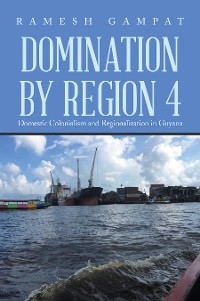
Domination by Region 4 (eBook)
630 Seiten
Xlibris Us (Verlag)
978-1-6698-6476-9 (ISBN)
PPP-I (last six years of its previous regime, 2009 to 2014) allocated an annual average of 11.1 percent of public funds to the regions, the APNU+AFC 14.1 percent from 2015 to 2020, and PPP-II, the current PPP administration, 12.5 percent during its first two years in office. Over the fourteen-years from 2009 to 2022, the four largest agencies consumed 42.5 percent of total Central Government expenditure. Under PPP-I, these agencies spent 15 percentage points more on capital costs than they did under APNU+AFC. However, under the latter government they spent more than 10 percentage points on the amorphous category “Other Charges.” These anomalies are hard to explain because there were no functional enhancements or reach of coverage by these agencies. Incredibly, the Ministry of Finance (MoF), the largest agency for all but one year, spent 46.1 percent of what the Ministry of Public Works incurred on public infrastructure for the entire country.
An important avenue of political patronage is the employment of contract and temporary workers, who are hired outside of the public service legislative framework. These workers comprised half of the MoF’s workforce over the fourteen-year period and the last six years of PPP-I; for the Ministry of Health, that figure is around 37.0 percent for both periods. Employment patronage rose during APNU+AFC’s term of office, to 53.8 percent in the MoF and to 41.8 percent in the MoH. Employment patronage at these two big agencies was lower during PPP-I than the six years of the APNU+AFC Government.
“Patronage employment” is considerably lower with the PPP-II than all previous regimes. The strategic deviation is explained by the rise of three separate categories of low- and unskilled workers, who account for 48.5 percent and 57.7 percent of workforce of the MoF and the MoH, respectively. These figures are more than 10 percentage points larger than those of all previous administrations. In effect, the PPP doles out patronage away from hiring outside of the public service legislative framework to hiring within it. Not only has the PPP “legalized” patronage, it has also increased it significantly.
| Erscheint lt. Verlag | 30.3.2023 |
|---|---|
| Sprache | englisch |
| Themenwelt | Sachbuch/Ratgeber ► Beruf / Finanzen / Recht / Wirtschaft ► Wirtschaft |
| Wirtschaft ► Volkswirtschaftslehre ► Wirtschaftspolitik | |
| Schlagworte | business • Economics • Guyana • Politics • Ramesh Gampat |
| ISBN-10 | 1-6698-6476-6 / 1669864766 |
| ISBN-13 | 978-1-6698-6476-9 / 9781669864769 |
| Informationen gemäß Produktsicherheitsverordnung (GPSR) | |
| Haben Sie eine Frage zum Produkt? |
 EPUB (Adobe DRM)
Kopierschutz: Adobe-DRM
Adobe-DRM ist ein Kopierschutz, der das eBook vor Mißbrauch schützen soll. Dabei wird das eBook bereits beim Download auf Ihre persönliche Adobe-ID autorisiert. Lesen können Sie das eBook dann nur auf den Geräten, welche ebenfalls auf Ihre Adobe-ID registriert sind.
Details zum Adobe-DRM
Dateiformat: EPUB (Electronic Publication)
EPUB ist ein offener Standard für eBooks und eignet sich besonders zur Darstellung von Belletristik und Sachbüchern. Der Fließtext wird dynamisch an die Display- und Schriftgröße angepasst. Auch für mobile Lesegeräte ist EPUB daher gut geeignet.
Systemvoraussetzungen:
PC/Mac: Mit einem PC oder Mac können Sie dieses eBook lesen. Sie benötigen eine
eReader: Dieses eBook kann mit (fast) allen eBook-Readern gelesen werden. Mit dem amazon-Kindle ist es aber nicht kompatibel.
Smartphone/Tablet: Egal ob Apple oder Android, dieses eBook können Sie lesen. Sie benötigen eine
Geräteliste und zusätzliche Hinweise
Buying eBooks from abroad
For tax law reasons we can sell eBooks just within Germany and Switzerland. Regrettably we cannot fulfill eBook-orders from other countries.
aus dem Bereich