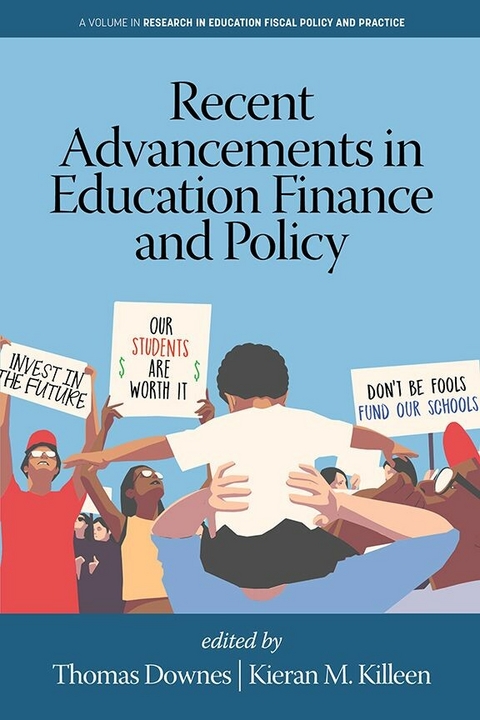
The past decade has seen a steady flow of important and innovative papers documenting the short- and long-term effects of finance reforms and the heterogeneity of the effects of reforms, exemplified by papers like Jackson, Johnson, & Persico (2016), Lafortune, Rothstein, & Schanzenbach (2018), Hyman (2017), and Candelaria and Shores (2019). Those papers have reinvigorated research on the effects of finance reforms, while raising important questions about how to best design a finance system and generate necessary revenues.The papers mentioned above, along with other papers too numerous to mention, have taken advantage of better data and better methods to address long-standing questions and generate provocative new answers. Since the landscape has changed quickly, policy makers and prospective researchers require a summary of the current state of the research on the effects of school finance reforms. Answers are also needed to such questions as: To what extent are lessons from the Great Recession applicable to the Covid-19 induced crisis. For example, how will states allocate cuts in grants and will those cuts undo state progress in equalizing educational access? Are there strategies for allocating resources that best preserve student learning? How do financing systems need to be modified to accommodate greater use of online education? How should school finance systems be designed to provide equal access (or, at a minimum, adequate access) to students with special needs? Why is there significant heterogeneity in the results of different finance reforms? What have been the effects of recent state efforts to reduce the role of the property tax in financing K-12 education? How should finance systems be designed to more effectively close persistent achievement gaps? How, if at all, should states integrate the financing of preschool education with the financing of elementary and secondary education?To help prepare the next generation of researchers and policy makers in the realm of school finance, this volume includes papers that summarize the current state of research on the questions above, as well as other pressing questions in education finance and policy.The book aims to bridge a space between comprehensive textbooks and journal articles in the field of education finance and policy. There are two main target audiences. The book is meant to serve professionals like school district administrators and education policy practitioners that desire a contemporary update to their previous study of education finance and policy issues. These audiences often have limited access to peer reviewed journals and knowledge of pertinent government and related policy reports in the field. The book is also meant to serve students and faculty from programs in public administration, public policy, community development and applied economics, education administration, educational leadership and policy studies that are studying content related to education policy, the economics of education, state and local public finance, and taxation. Some upper-level undergraduate students may also benefit from this resource.
| Erscheint lt. Verlag | 1.10.2022 |
|---|---|
| Sprache | englisch |
| Themenwelt | Schulbuch / Wörterbuch ► Lexikon / Chroniken |
| Sozialwissenschaften ► Pädagogik ► Allgemeines / Lexika | |
| Sozialwissenschaften ► Pädagogik ► Bildungstheorie | |
| Wirtschaft ► Betriebswirtschaft / Management ► Finanzierung | |
| ISBN-13 | 979-8-88730-068-9 / 9798887300689 |
| Informationen gemäß Produktsicherheitsverordnung (GPSR) | |
| Haben Sie eine Frage zum Produkt? |
 PDF (Adobe DRM)
Größe: 8,6 MB
Kopierschutz: Adobe-DRM
Adobe-DRM ist ein Kopierschutz, der das eBook vor Mißbrauch schützen soll. Dabei wird das eBook bereits beim Download auf Ihre persönliche Adobe-ID autorisiert. Lesen können Sie das eBook dann nur auf den Geräten, welche ebenfalls auf Ihre Adobe-ID registriert sind.
Details zum Adobe-DRM
Dateiformat: PDF (Portable Document Format)
Mit einem festen Seitenlayout eignet sich die PDF besonders für Fachbücher mit Spalten, Tabellen und Abbildungen. Eine PDF kann auf fast allen Geräten angezeigt werden, ist aber für kleine Displays (Smartphone, eReader) nur eingeschränkt geeignet.
Systemvoraussetzungen:
PC/Mac: Mit einem PC oder Mac können Sie dieses eBook lesen. Sie benötigen eine
eReader: Dieses eBook kann mit (fast) allen eBook-Readern gelesen werden. Mit dem amazon-Kindle ist es aber nicht kompatibel.
Smartphone/Tablet: Egal ob Apple oder Android, dieses eBook können Sie lesen. Sie benötigen eine
Geräteliste und zusätzliche Hinweise
Buying eBooks from abroad
For tax law reasons we can sell eBooks just within Germany and Switzerland. Regrettably we cannot fulfill eBook-orders from other countries.
 EPUB (Adobe DRM)
Kopierschutz: Adobe-DRM
Adobe-DRM ist ein Kopierschutz, der das eBook vor Mißbrauch schützen soll. Dabei wird das eBook bereits beim Download auf Ihre persönliche Adobe-ID autorisiert. Lesen können Sie das eBook dann nur auf den Geräten, welche ebenfalls auf Ihre Adobe-ID registriert sind.
Details zum Adobe-DRM
Dateiformat: EPUB (Electronic Publication)
EPUB ist ein offener Standard für eBooks und eignet sich besonders zur Darstellung von Belletristik und Sachbüchern. Der Fließtext wird dynamisch an die Display- und Schriftgröße angepasst. Auch für mobile Lesegeräte ist EPUB daher gut geeignet.
Systemvoraussetzungen:
PC/Mac: Mit einem PC oder Mac können Sie dieses eBook lesen. Sie benötigen eine
eReader: Dieses eBook kann mit (fast) allen eBook-Readern gelesen werden. Mit dem amazon-Kindle ist es aber nicht kompatibel.
Smartphone/Tablet: Egal ob Apple oder Android, dieses eBook können Sie lesen. Sie benötigen eine
Geräteliste und zusätzliche Hinweise
Buying eBooks from abroad
For tax law reasons we can sell eBooks just within Germany and Switzerland. Regrettably we cannot fulfill eBook-orders from other countries.
aus dem Bereich