Zum Hauptinhalt springen
Nicht aus der Schweiz? Besuchen Sie lehmanns.de

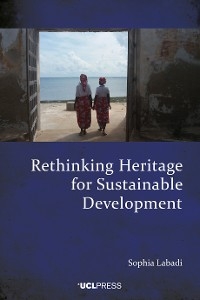
Rethinking Heritage for Sustainable Development (eBook)

eBook Download: EPUB
2022
UCL Press (Verlag)
978-1-80008-195-6 (ISBN)

Lese- und Medienproben

Rethinking Heritage for Sustainable Development -  Sophia Labadi
Systemvoraussetzungen
1,00 inkl. MwSt
(CHF 1,00)
Der eBook-Verkauf erfolgt durch die Lehmanns Media GmbH (Berlin) zum Preis in Euro inkl. MwSt.
  • Download sofort lieferbar
  • Zahlungsarten anzeigen
The Sustainable Development Goals (SDGs) adopted by the UN in 2015 have influenced the actions of international and intergovernmental organisations and governments around the world, and have dictated priorities for international aid spending. Culture, including heritage, is often presented as fundamental to addressing the SDGs: since 2010, the United Nations has adopted no fewer than five major policy recommendations that assert its importance as a driver and enabler of development. Yet, heritage is marginalized from the Sustainable Development Goals.Rethinking Heritage for Sustainable Development constitutes a substantial and original assessment of whether and how heritage has contributed to three key dimensions of sustainable development (namely poverty reduction, gender equality and environmental sustainability) within the context of its marginalisation from the Sustainable Development Goals and from previous international development agendas. Sophia Labadi adopts a novel, inclusive, large-scale and systematic approach, providing the first comprehensive history of the international approaches on culture (including heritage) for development, from 1970 to the present day. This book is also the first to assess the negative and positive impacts of all the international projects implemented in sub-Saharan Africa by a consortium of UN organisations that aimed to provide evidence for the contribution of heritage for development in time for the negotiation of the SDGs. The book's conclusions provide recommendations for rethinking heritage for development, while reflecting on the major shortcomings of the selected projects.Praise for Rethinking Heritage for Sustainable Development 'Sophia Labadi has delivered a detailed history of the relationship between heritage and economic development. Her project assessments put practical flesh on the well-recognized but under-documented shortcomings of heritage-based development programs to provide sustainable benefits to local people. Whether as institutional history, project ground-truthing or policy analysis, this book illuminates the challenges of heritage-driven development.' Peter G. Gould, Indiana University (Bloomington)'A vital contribution to the literature on culture for development. This book combines a critical examination of the discursive claims concerning the contribution of heritage to sustainable development goals with evaluation of projects on the ground using multi-scalar and interdisciplinary methods. Labadi's chapters address multidirectional power relations and issues of local resistance, the politicised uses of heritage by local stakeholders, which frustrate its instrumentalization as a tool of social transformation promoted by international actors, as well as critique of Western distinctions between culture and nature, which have led to environmental and social justice crises alike.' Paul Basu, University of Bonn'(Rethinking Heritage for Sustainable Development) demonstrates a clear way forward: challenging ourselves to critically examine real-world performance of projects, shine a light on failures and successes, and draw lessons from them of how to do better. The book opens with a discussion of how the potential of cultural heritage in development is under-recognized. But that recognition must be earned through demonstrating that the sector can consistently deliver effective projects that speak to real-world challenges and provide robust evidence of that, as this book does.' Public Archaeology'This book is essential reading for academics interested in the role of heritage for sustainable development and decolonization, as well as for those interested in implementing the SDGs in policy and practice.' Archaeological Journal'An excellent review of international sustainable development initiatives that aim to leverage heritage....This is critical reading for students, scholars, and practitioners.' Choice'Comprehensive and excellent look at recontextualising and rethinking heritage and sustainable development's interconnected role as the world steps forward into a new tomorrow.' EXARC Journal'Labadi's book is a powerful call for collaborative, intersectional approaches to development that would benefit scholars, UN staff, political officials, nonprofit professionals, and others working in a wide array of development fields.' Museum Anthropology'Labadi's book is an important contribution for practitioners and policy makers alike to ensure that investment in heritage is sustainably managed and critically evaluated, thereby reaffirming the need to address, poverty, gender and environment.' Built Heritage

Sophia Labadi is Professor of Heritage at the University of Kent, UK.

Erscheint lt. Verlag 6.6.2022
Verlagsort London
Sprache englisch
Themenwelt Kunst / Musik / Theater
Geisteswissenschaften Archäologie
Geisteswissenschaften Geschichte Hilfswissenschaften
Naturwissenschaften Biologie Ökologie / Naturschutz
Sozialwissenschaften Kommunikation / Medien Buchhandel / Bibliothekswesen
Sozialwissenschaften Soziologie Spezielle Soziologien
Wirtschaft Allgemeines / Lexika
Schlagworte Africa • African Studies • Anthropology • archaeology • climate change • community development • Cultural geography • Cultural Studies • Culture • Development • Development Studies • Economic Geography • environmental conservation • Environmental sustainability • Ethiopia • Gender equality • Gender Studies • Governance • Heritage • heritage studies • Humanitarian Studies • Identity • Identity politics • Illicit trade • intangible heritage • international aid • International Relations • Local Communities • Mozambique • Namibia • Neoliberalism • Politics • poverty reduction • SDG • Senegal • Social Geography • sustainability • sustainable development • Sustainable Development Goals • tourism studies • UNDP • UNESCO • World Bank • World Heritage
ISBN-10 1-80008-195-2 / 1800081952
ISBN-13 978-1-80008-195-6 / 9781800081956
Informationen gemäß Produktsicherheitsverordnung (GPSR)
Haben Sie eine Frage zum Produkt?
EPUBEPUB (Adobe DRM)

Kopierschutz: Adobe-DRM
Adobe-DRM ist ein Kopierschutz, der das eBook vor Mißbrauch schützen soll. Dabei wird das eBook bereits beim Download auf Ihre persönliche Adobe-ID autorisiert. Lesen können Sie das eBook dann nur auf den Geräten, welche ebenfalls auf Ihre Adobe-ID registriert sind.
Details zum Adobe-DRM

Dateiformat: EPUB (Electronic Publication)
EPUB ist ein offener Standard für eBooks und eignet sich besonders zur Darstellung von Belle­tristik und Sach­büchern. Der Fließ­text wird dynamisch an die Display- und Schrift­größe ange­passt. Auch für mobile Lese­geräte ist EPUB daher gut geeignet.

Systemvoraussetzungen:
PC/Mac: Mit einem PC oder Mac können Sie dieses eBook lesen. Sie benötigen eine Adobe-ID und die Software Adobe Digital Editions (kostenlos). Von der Benutzung der OverDrive Media Console raten wir Ihnen ab. Erfahrungsgemäß treten hier gehäuft Probleme mit dem Adobe DRM auf.
eReader: Dieses eBook kann mit (fast) allen eBook-Readern gelesen werden. Mit dem amazon-Kindle ist es aber nicht kompatibel.
Smartphone/Tablet: Egal ob Apple oder Android, dieses eBook können Sie lesen. Sie benötigen eine Adobe-ID sowie eine kostenlose App.
Geräteliste und zusätzliche Hinweise

Buying eBooks from abroad
For tax law reasons we can sell eBooks just within Germany and Switzerland. Regrettably we cannot fulfill eBook-orders from other countries.

Mehr entdecken
aus dem Bereich