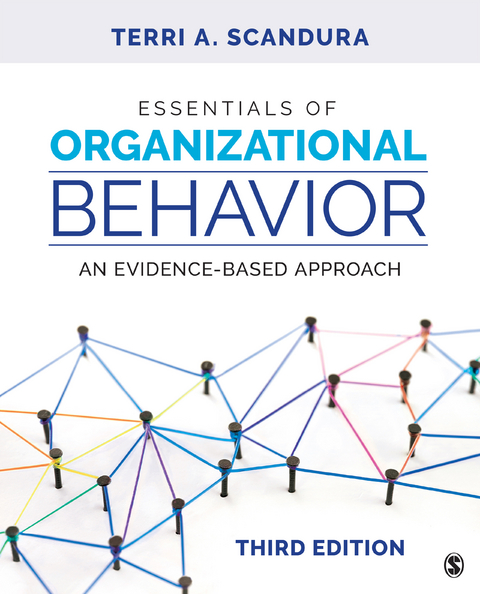
Essentials of Organizational Behavior (eBook)
616 Seiten
Sage Publications, Inc (Verlag)
978-1-5443-9680-4 (ISBN)
Preface
Acknowledgments
About the Author
SECTION I • INTRODUCTION
CHAPTER 1 • What Is Organizational Behavior?
What Is Organizational Behavior?
Evidence-Based Management
What Is Critical Thinking?
Outcomes in Organizational Behavior
Levels of Analysis in Organizational Behavior
How OB Research Increases Employee Performance
Plan for This Textbook
Leadership Implications: Thinking Critically
SECTION II • UNDERSTANDING INDIVIDUALS IN ORGANIZATIONS
CHAPTER 2 • Personality and Person–Environment Fit
What Is Personality?
Myers-Briggs Type Indicator
The Big Five
Personality Traits and Health Research
Other Relevant Personality Traits
Psychological Capital
Person–Environment Fit
Leadership Implications: Understanding Others
CHAPTER 3 • Emotions and Moods
Emotions and Moods at Work
Moods
Emotional Labor
Emotional Intelligence
Emotional Contagion
Leadership Implications: Mindful Coaching
CHAPTER 4 • Attitudes and Job Satisfaction
What Is an Attitude?
Job Satisfaction
Job Search Attitudes
Organizational Commitment
Perceived Organizational Support
Psychological Empowerment
Leadership Implications: Creating Meaning at Work
CHAPTER 5 • Perception, Decision-Making, and Problem-Solving
Understanding Why Perceptual Biases Exist
Employability: Self-Fulfilling Prophecies During the Application Process
Individual Decision-Making
The Rational Decision-Making Model
Prospect Theory
Intuition
Decision Traps
Creative Problem-Solving
Leadership Implications: Making Ethical Decisions
SECTION III • INFLUENCING AND MOTIVATING EMPLOYEES
CHAPTER 6 • Leadership
What Is Leadership?
Path–Goal Theory
Leader–Member Exchange
The Importance of Trust
Full-Range Leadership Development
Moral Approaches
Leadership Implications: Flexibility Matters
CHAPTER 7 • Power and Politics
The Difference Between Power and Influence
Power
Influence Strategies
Impression Management
Perceptions of Organizational Politics
Political Skill
Leadership Implications: Managing With Power
CHAPTER 8 • Motivation: Core Concepts
What Is Motivation?
Needs Theories
Goal Setting
Job Characteristics Theory
The Importance of Fairness
Expectancy Theory
The Pygmalion Effect
The Galatea Effect
The Golem Effect
Leadership Implications: Who Will Lead?
CHAPTER 9 • Motivation: Applications
Reinforcement Theory
Social Learning Theory
Intrinsic Versus Extrinsic Rewards
Self-Determination Theory
Performance Management
Problems With Performance Reviews
Feedback Seeking
Leadership Implications: Motivating With Rewards
SECTION IV • BUILDING RELATIONSHIPS
CHAPTER 10 • Group Processes and Teams
What Is a Team?
Team Purpose
Team Development
Team Effectiveness
Team Decision-Making
Team Challenges
Leadership Implications: Empowering the Team
CHAPTER 11 • Managing Conflict and Negotiation
What Is Conflict?
Conflict Resolution Styles
Team Conflict and Performance
Resolving Conflict Across Cultures
Third-Party Interventions
Negotiation
Leadership Implications: Perspective Taking
CHAPTER 12 • Organizational Communication
What Is Organizational Communication?
Barriers to Effective Communication
Communication Networks
Electronic Communication
Cross-Cultural Communication
Nonverbal Communication
Leadership Implications: The Management of Meaning
CHAPTER 13 • Diversity and Cross-Cultural Adjustments
Diversity
Generations at the Workplace
What Is Culture?
Developing Global Leaders
Culture Shock
Expatriate Adjustment
Leadership Implications: Becoming a Global Leader
SECTION V • LEADERS AS CHANGE AGENTS
CHAPTER 14 • Organizational Culture
What Is Organizational Culture?
Markets, Bureaucracies, and Clans
Strong Organizational Cultures
Socialization
Organizational Climate
Leadership Implications: Culture Change
CHAPTER 15 • Leading Change and Stress Management
Forces Driving Organizational Change
Planned Organizational Change
Resistance to Change
Leading Change
Stress in the Context of Organizational Change
What Is Stress?
Leadership Implications: Helping Employees Cope
Appendix 1: The Scientific Method in Organizational Behavior
Appendix 2: Organizational Structure
Glossary
Notes
Author Index
Subject Index
| Erscheint lt. Verlag | 5.1.2021 |
|---|---|
| Verlagsort | Thousand Oaks |
| Sprache | englisch |
| Themenwelt | Wirtschaft |
| Schlagworte | Courseware • Leaders • Managers • ob • SAGE vantage • Vantage |
| ISBN-10 | 1-5443-9680-5 / 1544396805 |
| ISBN-13 | 978-1-5443-9680-4 / 9781544396804 |
| Informationen gemäß Produktsicherheitsverordnung (GPSR) | |
| Haben Sie eine Frage zum Produkt? |
 EPUB (Adobe DRM)
Kopierschutz: Adobe-DRM
Adobe-DRM ist ein Kopierschutz, der das eBook vor Mißbrauch schützen soll. Dabei wird das eBook bereits beim Download auf Ihre persönliche Adobe-ID autorisiert. Lesen können Sie das eBook dann nur auf den Geräten, welche ebenfalls auf Ihre Adobe-ID registriert sind.
Details zum Adobe-DRM
Dateiformat: EPUB (Electronic Publication)
EPUB ist ein offener Standard für eBooks und eignet sich besonders zur Darstellung von Belletristik und Sachbüchern. Der Fließtext wird dynamisch an die Display- und Schriftgröße angepasst. Auch für mobile Lesegeräte ist EPUB daher gut geeignet.
Systemvoraussetzungen:
PC/Mac: Mit einem PC oder Mac können Sie dieses eBook lesen. Sie benötigen eine
eReader: Dieses eBook kann mit (fast) allen eBook-Readern gelesen werden. Mit dem amazon-Kindle ist es aber nicht kompatibel.
Smartphone/Tablet: Egal ob Apple oder Android, dieses eBook können Sie lesen. Sie benötigen eine
Geräteliste und zusätzliche Hinweise
Buying eBooks from abroad
For tax law reasons we can sell eBooks just within Germany and Switzerland. Regrettably we cannot fulfill eBook-orders from other countries.
aus dem Bereich