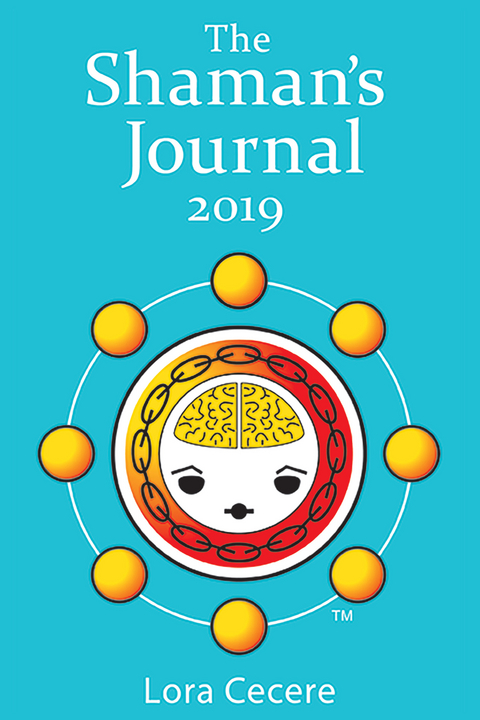
Shaman's Journal 2019 (eBook)
200 Seiten
Bookbaby (Verlag)
978-1-0983-0108-8 (ISBN)
This is the sixth consecutive year publishing the Shaman's Journal. It is a compilation of best-read blog posts from the prior twelve-month period. The Supply Chain Shaman blog, now in its tenth year, has over 19,000 readers. The focus is to help business leaders drive improvements in supply chain excellence.
Driving Digital Metamorphosis
| Metamorphosis, by definition, is a change of the form or nature of a thing or person into a completely different one, by natural or supernatural means. |
The best example of metamorphosis is a butterfly. The beautiful butterfly begins as an ugly larva. To grow into an adult, they go through four stages: egg, larva, pupa, and adult. Each stage has a different goal - for instance, caterpillars need to eat a lot, and adults need to reproduce.
“Can a company reinvent itself? “ asked Laura at a recent client meeting. “Seldom,” I responded. As I spoke and looked into her eyes, I wracked my brain for examples of companies’ metamorphosis.
We each talked out loud and struggled to find examples. Shortly, we admitted defeat. My examples, while showing promise were not a metamorphosis. Dow Corning built Xiameter. We spoke of Land O’Lake’s new vision for agriculture and Cisco System’s journey to move from products to software. I also referenced TSMC’s design network and its vision to transform its role in the semiconductor industry. In the end, we concluded that true disruption usually starts with a new business model from start-ups like Amazon, Google, and Tesla.
While companies speak of customer centricity and outside-in processes, traditional companies struggle to disintermediate channel relationships.
Reflections
Through the process, the group was quiet. Then Ralf, a leader from a large process company, commented, “We have been very focused on effectiveness and efficiency. We do not know what digital means. How do I change the basic paradigms in the human mind of my team?” Peter, at another company, stated, “We do not have a word in the German language for Digital Transformation. As a result, we are very focused on digitization. I think that we are trying to put today’s processes on steroids.”
The conversation went round-and-round. My observation is that many companies want to become digital, but they lack a clear definition. They confuse the term digitization, digitalization, and digital transformation. Here are the definitions that I use with clients:
Digitization: Conversion of data elements into digital workflows. Conversion of paper-based processes to bits and bytes.
Digitalization: The conversion of work processes into digital flows using the Internet of Things, Sensors, Wearables, Robotics, Open-Source Analytics, Cognitive Computing, and 3D Printing.
Digital Transformation: The transformation of the atoms and electrons of the supply chain to define/deliver new outcomes. This third stage uses the confluence of technology innovation, but the focus is on organizational transformation to deliver new value propositions. An example is a move from selling books to building an environment for writers to product online digital editions. Amazon did not just sell books online. Instead, they redefined processes for book creation. Apple did not just deliver a phone. The company redefined entertainment possibilities.
Start by Questioning Outcomes
While many companies speak of driving a supply chain digital transformation, few feel empowered to question the outcomes. Many get stuck in an analytic paradigm focusing only on improving data quality and analytics.
What is the outcome? In short, it is what is sold.
Traditionally, the focus of the supply chain was squarely focused on the mass customization of products. The desired outcome was the successful replenishment of an item sold at a location. What if this could change? Let me give you some examples. The traditional agricultural company sells seeds and additives to improve crop yields, but what if they sold a service to farmers guarantee crop yields? The automotive supply chain traditionally sold cars, but what if they shifted based on the dynamics of the market of the collaborative economy to selling rides? The post office delivered letters, but FEDEX built a new model on guaranteed delivery of overnight mail. The traditional automotive part distributor stocks parts, but what if they could print parts on demand? Hospitals focus on efficient sickness: check-in, bed management, and check-out. What if there could be a shift to wellness?
The first step in driving a digital transformation is to define the outcome and imagine what could be. Define the atoms and electrons of the supply chain and what it means for customers.
Driving Transformation
In driving the transformation, teams need to question existing paradigms.
A struggle for the supply chain group is that the term supply chain in many organizations is often defined as another function within a functional world. As a result, the team does not feel empowered to question the outcomes and redefine flows from the customer back.
Likewise, no function within the company feels empowered to drive this change. Change this by building a cross-functional team and empowering holistic thinking.
The worst place to start to drive digital innovation is with the Information Technology (IT) team. In the organizations where I do advisory work, these efforts struggle the most. Why? The steady march for IT standardization, along with the failed promises to deliver value is a problem in most organizations. To compound the issue, a common mistake is using the digital transformation platform to continue their work on IT standardization and ERP upgrades. This type of focus is doomed for failure. The answer to digital transformation will not come from a technology vendor or an IT organization.
Organizational Models
In several companies, I am working hand-in-hand with business teams trying to redefine outcomes. The companies are taking different approaches with more promise.
Industry 4.0? Industry 4.0 initiatives typically focus on driving digital manufacturing outcomes. The manufacturing process redesign combines the use of the Internet of Things from pumps, valves, motors, etc. along with analytics, robotics and 3-D printing to redefine manufacturing to improve uptime and drive capacity improvements and quality yields.
Normally, there is a redefinition of maintenance from a focus on the mean time between failure to equipment sensing and repair based on real-time information. I am also intrigued by the use of blockchain and open-source analytics to automate track and trace and improve quality. These initiatives —within the world of manufacturing —are usually well-funded and moving forward with few issues.
Newco? Spin-off Another Company? When craft beer became a threat to AB/INBEV, the Company formed Zx Ventures. The new start-up staff, composed of young innovators, was tasked to redesign the beer experience. The new company started in 2015. Now in its third year, I see the Newco actively questioning the status quo. I think that it is too early to judge the impact.
Digital Overlay Team? At Corning, there is a digital overlay team designed to help groups within the company drive digital initiatives. While there is always a tension between the layers of the traditional company structure and the digital overlay team, we are seeing progress in Corning’s thinking.
Sprints. Sandeep Dadlani moved from Infosys to Mars to drive digital innovation. His focus is on data science using design thinking through a series of sprints. A sprint is a small and focused effort to test a new approach. The focus is to solve business problems through new approaches based on business value.
Innovation Centers? In 2019, Dow opened the Dow Innovation Center. This work is championed by Jim Fitterling, the new CEO. The concept is experiential learning. The driver is fear. Jim is worried that Dow will be “Amazon’d” and face a new competitor that will redefine the chemical industry. He wants to be the first to innovate. At the innovation center, Dow employees can experience new technologies and ideate on the application in their business through hands-on use cases and team facilitation/ideation.
Recommendations
Which method works best? We don’t know. However, no matter the approach here is my guidance from observing the teams at work:
Build A Change Engine in the Business. Create an environment that embraces change. Reward change agents and unleash creativity through corporate programs like test and learn to fund shark tanks, lunch and learns and ideation days. Curtail funding on the status quo. Let the imagination and spirit flow.
Free the Team to Do Work. It is hard to do digital innovation as a second job. Fund it. Staff it and enable progress.
Have Fun! People like to have a good time. Stories, podcasts, songs, and events help to drive celebration and communal spirit. Celebrate success. I used to work for Dreyer’s Grand Ice Cream and we had a principle termed HOOPLA. As an...
| Erscheint lt. Verlag | 1.3.2020 |
|---|---|
| Sprache | englisch |
| Themenwelt | Wirtschaft ► Betriebswirtschaft / Management ► Unternehmensführung / Management |
| ISBN-10 | 1-0983-0108-0 / 1098301080 |
| ISBN-13 | 978-1-0983-0108-8 / 9781098301088 |
| Informationen gemäß Produktsicherheitsverordnung (GPSR) | |
| Haben Sie eine Frage zum Produkt? |
 EPUB (Ohne DRM)
Größe: 44,5 MB
Digital Rights Management: ohne DRM
Dieses eBook enthält kein DRM oder Kopierschutz. Eine Weitergabe an Dritte ist jedoch rechtlich nicht zulässig, weil Sie beim Kauf nur die Rechte an der persönlichen Nutzung erwerben.
Dateiformat: EPUB (Electronic Publication)
EPUB ist ein offener Standard für eBooks und eignet sich besonders zur Darstellung von Belletristik und Sachbüchern. Der Fließtext wird dynamisch an die Display- und Schriftgröße angepasst. Auch für mobile Lesegeräte ist EPUB daher gut geeignet.
Systemvoraussetzungen:
PC/Mac: Mit einem PC oder Mac können Sie dieses eBook lesen. Sie benötigen dafür die kostenlose Software Adobe Digital Editions.
eReader: Dieses eBook kann mit (fast) allen eBook-Readern gelesen werden. Mit dem amazon-Kindle ist es aber nicht kompatibel.
Smartphone/Tablet: Egal ob Apple oder Android, dieses eBook können Sie lesen. Sie benötigen dafür eine kostenlose App.
Geräteliste und zusätzliche Hinweise
Buying eBooks from abroad
For tax law reasons we can sell eBooks just within Germany and Switzerland. Regrettably we cannot fulfill eBook-orders from other countries.
aus dem Bereich