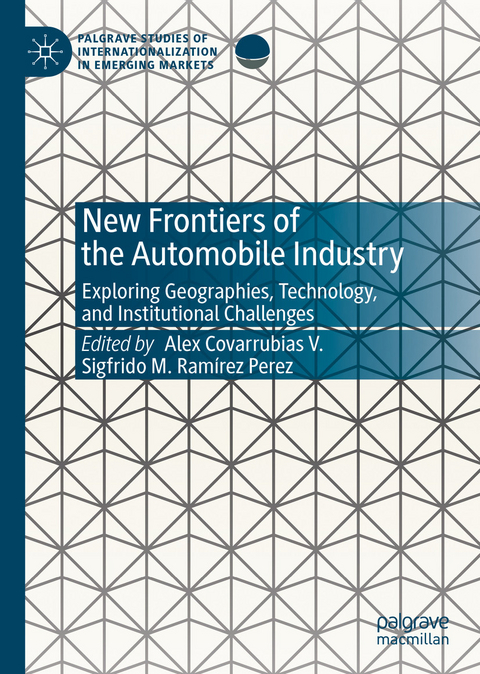
New Frontiers of the Automobile Industry (eBook)
XXVI, 504 Seiten
Springer International Publishing (Verlag)
978-3-030-18881-8 (ISBN)
Analysing developments in digital technologies and institutional changes, this book provides an overview of the current frenetic state of transformation within the global automobile industry. An ongoing transition brought about by the relocation of marketing, design and production centres to emerging economies, and experimentation with new mobility systems such as electrical, autonomous vehicles, this process poses the question as to how original equipment manufacturers (OEMs) and newcomers can remain competitive and ensure sustainability. With contributions from specialists in the automobile sector, this collection examines the shifts in power and geographical location occurring in the industry, and outlines the key role that public policy has in generating innovation in entrepreneurial states. Offering useful insights into the challenges facing emerging economies in their attempts to grow within the automobile industry, this book will provide valuable reading for those researching internationalization and emerging markets, business strategy and more specifically, the automotive industry.
Alex Covarrubias V. is Full Professor at the College of Sonora in Mexico, and Chairman of the Innovation and Labour Network of the Mexican Automobile Industry. He is a member of the Steering Committee in the Gerpisa International Network and a Research Associate of Canada's Automotive Policy Research Centre.
Acknowledgements 7
Contents 8
Notes on Contributors 12
List of Figures 18
List of Tables 23
1: Introduction: Changing Geographies and Frontiers of the Automotive Industry 25
The Large Legacies of the AI 27
Changing the AI’s Footprint 30
Analytical Framework and Propositions 35
The Post-Fordist Debate 36
The Crisis of the Old Paradigm and the Move to Alternative Mobilities 39
Another Analytic Model to Study the Industry Transition 42
Book Structure and Authors Proposals 47
References 56
Part I: Developed Countries: Old Geographies and New Frontiers 63
2: Overview of the U.S. Automobile Industry 64
Introduction 64
Three Disruptions 65
Electrification 65
Autonomy 66
Sharing 68
U.S. Sales 69
Market Share 69
Product Segments 72
U.S. Production 73
Geography of Production 75
Parts Suppliers 77
Trade 78
Government Role 82
Future Prospects 84
References 86
3: Canada’s Automotive Industry: Recession, Restructuring, and Future Prospects 90
Introduction 90
Production, Employment, and Industry Structure 93
Trade Patterns and Canada’s Role in the Global Automotive Industry 97
Employment Relations and Collective Bargaining 100
Public Policy and Investment Incentives 104
Future Prospects for Canada’s Automotive Industry 107
References 109
4: The 2015 Volkswagen ‘Diesel-Gate’ and Its Impact on German Carmakers 112
Introduction 112
Volkswagen Since the ‘Diesel-Gate’: Same Procedure as Every Year? 115
Volkswagen as a Scapegoat or Criminal Actor? 118
Almost All International Carmakers Faked Emission Information 123
Future Trends and Challenges 126
References 131
5: Searching for Industrial Policy: The Long Decline of the French Automotive Industry 135
Introduction 135
The Decline of the French Automotive Industry: Causes and Consequences 137
First Factor of Destabilization: The Hegemony of the Premium 138
Second Factor of Destabilization: The Integration of Central and Eastern European Countries 140
The Impact of the Crisis 141
Policy Responses to the Crisis 143
The “Pact Automobile” and the Creation of the Plateforme de la Filière Automobile 143
The National Plan for the Development of Clean Vehicles 147
From Industrial Policy to Damage Limitations: Restructuring and Competitive Agreements 150
Future Prospects and Challenges 151
“Dieselgate” and the Electrification Challenge 151
Autonomous Driving, Connected Cars and New Mobilities 153
Conclusion 155
References 156
6: Britain’s Car Industry: Policies, Positioning, and Perspectives 158
Introduction 158
Britain’s Car Industry Today 159
Why There Is No British-Owned Volume Car Manufacturing Industry 160
Current Industry Profile 161
Connected and Autonomous Vehicles and Digitalised Manufacture 165
Recent Policy Evolution in Britain 166
Low Carbon Industrial Strategy 167
Automotive Council for Britain 168
Sector Targeting Policies for the Car Industry 170
The New Industrial Strategy for Britain 171
Stress Points for Britain’s Car Industry 173
Brexit: A Maze of Uncertainties 173
The Environmental Crisis and Sustainable Business Models 175
Conclusions 178
References 179
7: The Italian Automotive Industry: Between Old and New Development Factors 183
Introduction 183
The Italian Automotive Market 185
The Italian Supply Chain 191
Driving Factors for the Italian Automotive Industry 197
Exporting, an Always Important Driver 197
Investing in Quality and Innovation 199
Towards Premium Models and Better Quality in FCA 202
New Industrial Relationships in FCA 205
An Almost Missing Driver: New Business Models for Sustainable Mobility 210
Conclusions: An Industrial Policy for Automotive Industry/Sector 213
References 218
8: The Japanese Automotive Industry Since 2000: Causes and Impacts of Growth Disparities 222
Introduction 222
Structural and Historical Legacy 223
Heterogeneity of Carmakers’ Trajectories and Performances 226
Inter-firm and Labour Relations Under Tension 233
The Polarization of the Supply Chain 234
The Evolution and Persistence of the Wage-Labour Nexus 237
Technological Changes and Product Policies Uncertainties 239
Conclusions 240
References 243
Part II: Making It to the Top: Failing from the Top 246
9: Catch-up to Lead in Korea’s Automobile Industry 247
Introduction 247
Korea’s Automobile Industry 247
Catch-up, Post Catch-up, and Lead 248
Rapid Catch-up in Korea’s Automobile Industry 249
New Entrance to the Automobile Industry 249
A Different Approach to Catch-up 250
The Catch-up Process of Korea’s Automobile Industry 250
Rapid Catch-up at Hyundai and Kia Motor 251
Korean Manufacturers 251
Rapid Catch-Up 251
Technical Performance 254
The Catch-up Process 254
Product Technology 255
Production Technology 255
Patent 255
Market Performance 256
Corporate Brand Value 256
Government Policy 258
Competition Policy 259
MNC Involvement 259
Technology Policy 260
Firm’s Strategy 260
R& D Strategy
Marketing Strategy 261
Actors 262
CEOs 262
Engineers and Managers 264
Hard Working Spirit 264
Firm’s Resources 265
Knowledge Base 266
R& D: Industry Cooperation
Parts Industry 267
Challenges Ahead 267
The Impacts of the Current Transformation on Labor 269
Conclusion 269
References 271
10: Who Killed the Australian Automotive Industry: The Employers, Government or Trade Unions? 273
Introduction 273
The Demise of the Australian Automotive Industry 275
Tariff Protection and Industry Assistance 277
Currency Fluctuations 282
Global Strategic Decisions by Parent Companies 285
Industrial Relations Arrangements 287
Conclusion 289
References 292
Part III: Emergent Countries: New Geographies Struggling for Trespassing Frontiers 295
11: The Automotive Industry in China: Past and Present 296
Introduction 296
Catching up and Taming Foreign OEMs: The 1980s and 1990s 298
Building National Brands and Finding a Niche for the Future: The Post-WTO Era 301
Production Process and Employment Relations 307
Conclusion 312
References 315
12: The Indian Automobile Industry: Technology Enablers Preparing for the Future 318
Introduction 318
Overview of Indian Automotive Industry 319
The Indian Auto Component Industry 324
The Changing Dynamics of Automobile Market 325
Technology Adoptions in Automobile Industry 329
Digitalising Factory Operations 329
Tracking of Assets and Products 330
Remote Monitoring of Production Processes 330
Predictive Maintenance 330
Flexible Manufacturing 330
Augmented Reality–Based Solutions for Training Workforces 331
Technology in Product and Customer Experience 331
Technology in Product Design and Prototyping 331
Virtual Reality and Augmented Reality in Product Development and Prototyping 331
Digital Twin 332
Rapid Prototyping using Additive Manufacturing 332
Government Facilitation for Technology Implementation 333
Labour Issues in Automobile Industry 334
Conclusion 336
References 337
13: The Boom of the Mexican Automotive Industry: From NAFTA to USMCA 339
Introduction 339
The Boom of the MAI 341
Pursuing and Changing the North America Market 343
Mexico Trapped in the ICE Era 345
Factors Explaining the MAI Boom 347
An Industrial Relations System to Please Management 351
From NAFTA to USMCA in the Trump Era 354
Discussion and Conclusions 357
References 361
14: The New Geography of the Automobile Industry: Trends and Challenges in Brazil 365
Introduction 365
Overview of the Automobile Industry in Brazil 366
Years 1950–1970: Industry Creation and Consolidation 366
Years 1980–2000: Crisis and Market Opening 367
Years 2000–2014: Market Expansion 370
Post 2014: Crisis and Perspectives 373
Public Policies to Support the Automobile Industry 375
Public Polices: 1950–2010 375
Automobile Industry Executive Group—GEIA 375
National Alcohol Programme—Pró-Álcool 375
Economic Opening 377
“Popular” Cars 377
Flex Fuel 378
Inovar Auto: Increasing Competitiveness 380
Key Initial Impressions of Inovar Auto Results 382
Electromobility in Brazil 384
Overview and Initiatives 384
Prospects for the Future in Electromobility 386
Final Considerations 387
References 390
15: Automotive Industry Dynamics in Central Europe 392
Introduction 392
Role of Central Europe in European Production Networks 394
Functional Upgrading and Growth of Local Automotive Producers 400
Factors Behind the Enhanced Role of Central European Automotive Producers 402
The Role of New Technologies, Business Innovations, and Labor Issues 404
Conclusions 408
References 410
Part IV: Institutional Constraints on Upgrading: The Case of Vocational Education and Training Systems 413
16: Skills on Wheels: Raising Industry Involvement in Vocational Training in the Czech Republic, Slovakia and Hungary 414
Introduction 414
Where Did All the Skills Go? The Successes and Failures of the ECE “Model” of Skill Production 418
Policy Experiments to Increase Employer Participation in VET Provision 423
Czech Republic: No Reform, No Problem 425
Slovakia: Industry in the Driving Seat 427
Hungary: Government-led Innovation 430
The Crisis and the Renewed Zeal for Vocational Training 431
Conclusion 434
References 437
17: Finding Skills: Strategies of Local Auto Parts Supplier Firms in Mexico and Turkey 442
Introduction 442
The Automotive Industry in Mexico and Turkey in a Comparative Perspective 444
The Start of the AAI and the Arrival of First OEMs in Mexico and Turkey 444
Current Situation and the Role of the Industry in the Mexican and Turkish Economies 445
Strategies of Skill Generation for Local Suppliers 450
Method and Data 450
Firms’ Strategies 451
Mexico 452
Institutional Environment for VET 452
Recruitment Patterns 454
At the Level of Operators 455
Production Workers with Higher Technical Skills 455
Links with the Public VET Programmes and Legal Requirements 456
Turkey 457
Institutional Environment for VET 457
Recruitment Patterns 458
At the Level of Operators 459
Production Workers with Higher Technical Skills 461
Links with the Public VET Programmes and Legal Requirements 461
Conclusion 462
References 463
Part V: Conclusions 466
18: Wrapping Up: The New Geographies and Frontiers of the AI have Arrived. Who is Taking the Lead? 467
Changing Geographies of the AI 468
Relocating Production Centres 468
Displacing Markets 470
From Maturity to Revitalization of Product Cycle 472
The Geometry of Power: The Strategies of Firms 475
The Fight for the Top 475
Old and New Leaders 480
Systems of Labour and Industrial Relations 483
Salaries and Labour Relations: Broadening Diversity 483
Transition of the Industry and Industrial Policies 491
Other Emerging Countries 493
Chinese, Indian and Japanese Cases 495
Transition in the United States and Canada 497
Transition in Western Europe 498
Last Remarks 500
References 504
Index 507
| Erscheint lt. Verlag | 28.11.2019 |
|---|---|
| Reihe/Serie | Palgrave Studies of Internationalization in Emerging Markets | Palgrave Studies of Internationalization in Emerging Markets |
| Zusatzinfo | XXVI, 504 p. 58 illus. |
| Sprache | englisch |
| Themenwelt | Wirtschaft ► Betriebswirtschaft / Management ► Unternehmensführung / Management |
| Schlagworte | Automobile industry transition • Digital technologies • Emergent countries • labor relations • Labour relations • Mature economies • OEM and new players |
| ISBN-10 | 3-030-18881-7 / 3030188817 |
| ISBN-13 | 978-3-030-18881-8 / 9783030188818 |
| Informationen gemäß Produktsicherheitsverordnung (GPSR) | |
| Haben Sie eine Frage zum Produkt? |
 PDF (Wasserzeichen)
DRM: Digitales Wasserzeichen
Dieses eBook enthält ein digitales Wasserzeichen und ist damit für Sie personalisiert. Bei einer missbräuchlichen Weitergabe des eBooks an Dritte ist eine Rückverfolgung an die Quelle möglich.
Dateiformat: PDF (Portable Document Format)
Mit einem festen Seitenlayout eignet sich die PDF besonders für Fachbücher mit Spalten, Tabellen und Abbildungen. Eine PDF kann auf fast allen Geräten angezeigt werden, ist aber für kleine Displays (Smartphone, eReader) nur eingeschränkt geeignet.
Systemvoraussetzungen:
PC/Mac: Mit einem PC oder Mac können Sie dieses eBook lesen. Sie benötigen dafür einen PDF-Viewer - z.B. den Adobe Reader oder Adobe Digital Editions.
eReader: Dieses eBook kann mit (fast) allen eBook-Readern gelesen werden. Mit dem amazon-Kindle ist es aber nicht kompatibel.
Smartphone/Tablet: Egal ob Apple oder Android, dieses eBook können Sie lesen. Sie benötigen dafür einen PDF-Viewer - z.B. die kostenlose Adobe Digital Editions-App.
Buying eBooks from abroad
For tax law reasons we can sell eBooks just within Germany and Switzerland. Regrettably we cannot fulfill eBook-orders from other countries.
aus dem Bereich