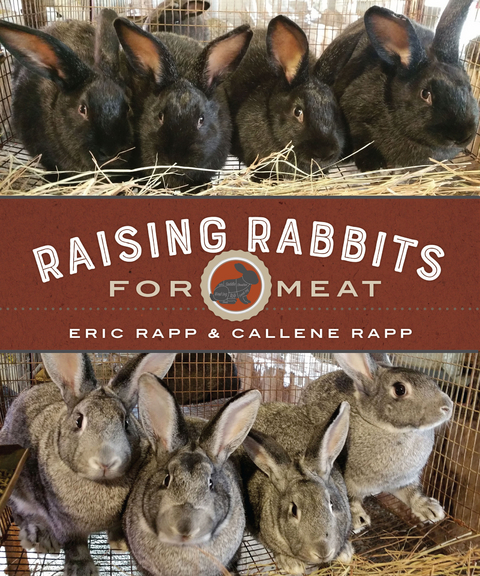
Raising Rabbits for Meat (eBook)
192 Seiten
New Society Publishers (Verlag)
9781771422789 (ISBN)
One of the most sustainable, nutritious, and economic sources of meat available, rabbits can be easily raised in a range of locations and climates. Raising Rabbits for Meat is the how-to guide to help you succeed in setting-up and running a home rabbitry for a steady source of meat or income.
Turn your backyard into a steady source of sustainable, homegrown meat no farm required. Learn how to raise rabbits confidently for food, profit, and self-reliance with expert guidance from America's leading heritage-breed rabbit farmers. Discover the most efficient, ethical way to produce your own meat. If you've ever wondered how to raise rabbits for meatwhether to feed your family or build a small-farm businessthis trusted guide gives you the confidence, systems, and know-how to succeed. Written by Eric and Callene Rapp, founders of Rare Hare Barnthe largest heritage-breed meat-rabbit enterprise in the USthis book blends time-tested methods with modern insight to help you raise rabbits humanely, profitably, and sustainably. WHAT YOU'LL LEARNStart and manage your own productive rabbitry Raise rabbits for meat on a homestead, small farm, or even a backyard setup with minimal space and cost. Choose the right breeds for success Focus on hardy, heritage meat breeds that thrive in diverse climates and produce high-quality, lean protein. Design efficient housing and feeding systems Keep your animals healthy and your operation simple with practical designs that minimize waste and stress. Breed, care for, and harvest ethically Step-by-step guidance on humane handling, processing, and storage everything you need to raise rabbits responsibly, from litter to harvest. Build resilience, income, and food security Create a sustainable supply of fresh meat for your family or explore small-scale marketing opportunities in your community. WHY THIS BOOK MATTERSRabbits are one of the most sustainable and space-efficient livestock species, producing lean, high-quality meat with minimal resources. Whether you're a beginner or an experienced farmer, Raising Rabbits for Meat gives you the knowledge, confidence, and systems designs to build a thriving, ethical rabbitry that supports your family and local food systems. ABOUT THE AUTHORSWith over 50 years of combined experience, Eric and Callene Rapp are trusted voices in sustainable animal husbandry. As owners of Rare Hare Barn, they've been featured in Grit Magazine and recognized by the Livestock Conservancy for leadership in rare-breed preservation. Build your self-sufficient future one hutch at a time. Start your rabbit-raising journey today and discover how simple, humane, and rewarding it can be to raise your own sustainable meat source.
lt;p> Since 2005, Eric and Callene Rapp have owned and operated the award-winning Rare Hare Barn, the largest heritage-breed meat-rabbit enterprise in the United States. What started as a simple desire to have more control over their own food supply quickly expanded into a unique business, supplying heritage breed fryers to local restaurants. Together they have over 50 years of combined experience handling nearly every species of domestic livestock, and are active members of The Livestock Conservancy. Callene is also a regular contributor to Grit magazine. They live and farm in Leon, Kansas.
Acknowledgments
1. The History of Rabbit Keeping
2. What's Your Plan?
3. Rabbit Biology
4. Rare Breeds and Conservation Breeding
5. Selecting and Handling Rabbits
6. Housing and Environment
7. Basic Rabbitry Equipment
8. Diet and Nutrition
9. Hands-On Evaluation of the Rabbit
10. Breeding and Reproduction
11. Kindling
12. Milestones and Management — Birth to Harvest
13. Processing, Storage and Distribution
14. Cooking with Rabbit Meat
15. Rabbit Ailments and Health Problems
Appendix: Rabbit Breeds
Endnotes
Index
About the Authors
About New Society Publishers
| Erscheint lt. Verlag | 13.11.2018 |
|---|---|
| Zusatzinfo | 45 halftones, black & white illustrations |
| Verlagsort | Gabriola Island |
| Sprache | englisch |
| Themenwelt | Technik |
| Wirtschaft ► Betriebswirtschaft / Management ► Planung / Organisation | |
| Weitere Fachgebiete ► Land- / Forstwirtschaft / Fischerei | |
| Schlagworte | air quality • ammonia • animal handling • Antibiotics • automatic watering system • backyard homestead protein • bedding for nest boxes • beginner rabbit care • best breeding matches • Breeding • breeding rabbits • Breeding strategies • bucks and breeding • care of bucks • children and raising rabbits • chilling and aging after processing • cleanliness in processing • climate and housing • coccidia • coccidiosis • colony settings • confirmation of pregnancy • conservation of heritage breeds • cooking with rabbit meat • cophrophagy • cost and profit • Culling • death of kits • Digestive System • Disinfection • does and breeding • does and housing • does and pregnancy • does and rebreeding • ear mites • Environment • evaluation of coats • evaluation of ears • evaluation of eyes • feed crocks • feeders • Feeding • fiber in diet • Fighting • fostering kits • freezing carcasses • general appearance of rabbits • growing rabbit food • growth and development • growth of kits • harvesting age • heat-checking • heritage breeds • historical accounts of rabbits • home meat production • homesteading • Housing • humane processing • Injuries • Kindling • kits and feeding • kits at birth • kits handling • Lactation • lighting and breeding • linebreeding • litters and housing • litter size • litter storage • Malocclusion • management and success • manure • Mastitis • misting systems • nest boxes • nesting boxes • new rabbits and transition • nutrition in diet • off feed as a symptom • outdoor pens • overfeeding • Pasturella multocida • pasture raising • pedigrees • pelleted feeds • Pens • processing rabbits • rabbit diseases • rabbit feeding • rabbit health problems • rabbit inbreeding • rabbit meat • rabbit meat rabbitry selecting stock slaughter nesting boxes cost profit breeding right breed health problems symptoms treatments diseases feeding growing food matches Hares commercial homesteading small livestock homestead set up how to animals • rabbitry • rabbitry guide • rabbits as prey animals • rabbits for meat • Record keeping • reproductive records • Sanitation • seasonal variation and breeding • selecting stock • selecting the right breed • sexing of kits • sexual maturity • shavings as bedding • show animals • skeletal system • slaughter • small farm livestock • sources of stress • Sustainable food • symptoms and treatments • The Livestock Conservancy (TLC) • United States Department of Agriculture (USDA) • ventilation • water in diet • Weaning • weighing • weights |
| ISBN-13 | 9781771422789 / 9781771422789 |
| Informationen gemäß Produktsicherheitsverordnung (GPSR) | |
| Haben Sie eine Frage zum Produkt? |
 EPUB (Adobe DRM)
Kopierschutz: Adobe-DRM
Adobe-DRM ist ein Kopierschutz, der das eBook vor Mißbrauch schützen soll. Dabei wird das eBook bereits beim Download auf Ihre persönliche Adobe-ID autorisiert. Lesen können Sie das eBook dann nur auf den Geräten, welche ebenfalls auf Ihre Adobe-ID registriert sind.
Details zum Adobe-DRM
Dateiformat: EPUB (Electronic Publication)
EPUB ist ein offener Standard für eBooks und eignet sich besonders zur Darstellung von Belletristik und Sachbüchern. Der Fließtext wird dynamisch an die Display- und Schriftgröße angepasst. Auch für mobile Lesegeräte ist EPUB daher gut geeignet.
Systemvoraussetzungen:
PC/Mac: Mit einem PC oder Mac können Sie dieses eBook lesen. Sie benötigen eine
eReader: Dieses eBook kann mit (fast) allen eBook-Readern gelesen werden. Mit dem amazon-Kindle ist es aber nicht kompatibel.
Smartphone/Tablet: Egal ob Apple oder Android, dieses eBook können Sie lesen. Sie benötigen eine
Geräteliste und zusätzliche Hinweise
Buying eBooks from abroad
For tax law reasons we can sell eBooks just within Germany and Switzerland. Regrettably we cannot fulfill eBook-orders from other countries.
aus dem Bereich