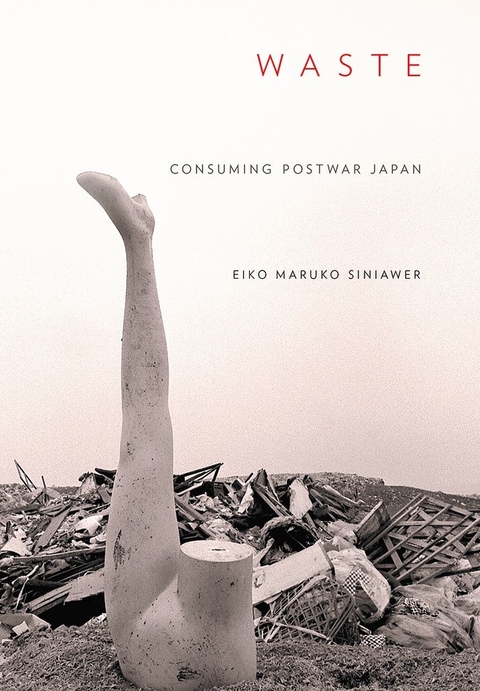
Waste (eBook)
414 Seiten
Cornell University Press (Verlag)
978-1-5017-2586-9 (ISBN)
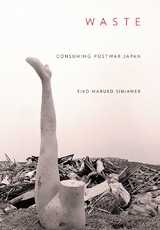
In Waste, Eiko Maruko Siniawer innovatively explores the many ways in which the Japanese have thought about waste—in terms of time, stuff, money, possessions, and resources—from the immediate aftermath of World War II to the present. She shows how questions about waste were deeply embedded in the decisions of everyday life, reflecting the priorities and aspirations of the historical moment, and revealing people's ever-changing concerns and hopes.
Over the course of the long postwar, Japanese society understood waste variously as backward and retrogressive, an impediment to progress, a pervasive outgrowth of mass consumption, incontrovertible proof of societal excess, the embodiment of resources squandered, and a hazard to the environment. Siniawer also shows how an encouragement of waste consciousness served as a civilizing and modernizing imperative, a moral good, an instrument for advancement, a path to self-satisfaction, an environmental commitment, an expression of identity, and more. From the late 1950s onward, a defining element of Japan's postwar experience emerged: the tension between the desire for the privileges of middle-class lifestyles made possible by affluence and dissatisfaction with the logics, costs, and consequences of that very prosperity. This tension complicated the persistent search for what might be called well-being, a good life, or a life well lived. Waste is an elegant history of how people lived—how they made sense of, gave meaning to, and found value in the acts of the everyday.
Eiko Maruko Siniawer is Class of 1955 Memorial Professor of History at Williams College. She is the author of Ruffians, Yakuza, Nationalists.
Introduction: Meaning and Value in the Everyday
Part One: Re-Civilization and Re-Enlightenment: Transitions of the Early Postwar Period, 1945-1971
1. The Imperatives of Waste
2. Better Living through Consumption
Part Two: Shocks, Shifts, and Safeguards: Defending the Middle-Class Lifestyles, 1971-1981
3. Wars against Waste
4. A Bright Stinginess
Part Three: Abundant Dualities: Wealth and its Discontents in the 1980s and Beyond
5. Consuming Desires
6. Living the Good Life?
7. Battling the Time Thieves
Part Four: Affluence of the Heart: Identities and Values in the Slow-Growth Era, 1991-Present
8. Greening Consciousness
9. We Are All Waste Conscious Now
10. Sorting Things Out
Afterword: Waste and Well-Being
Notes
Bibliography
Index
| Erscheint lt. Verlag | 15.10.2018 |
|---|---|
| Zusatzinfo | 18 b&w halftones |
| Verlagsort | Ithaca |
| Sprache | englisch |
| Maße | 150 x 150 mm |
| Themenwelt | Sachbuch/Ratgeber ► Freizeit / Hobby ► Sammeln / Sammlerkataloge |
| Geisteswissenschaften ► Geschichte ► Regional- / Ländergeschichte | |
| Geschichte ► Teilgebiete der Geschichte ► Kulturgeschichte | |
| Sozialwissenschaften ► Ethnologie | |
| Sozialwissenschaften ► Soziologie | |
| Wirtschaft ► Volkswirtschaftslehre ► Mikroökonomie | |
| Schlagworte | Anthropology • Asia • Asian Studies • Asian studies, critical discard studies, Japanese history, waste minimization, consumer behavior, mottainai, waste management, refuse disposal • Consumer Behavior • Consumer Behavior japan • consumption • Contemporary Japan • Critical Discard Studies • Cultural Anthropology • Cultural History • Discard studies • Japan’s postwar experience • japan consumerism • japan economic conditions • Japanese anthropology • japanese Consumer Behavior • Japanese culture • Japanese history • Japanese Studies • japan history • japan social conditions • Japan Studies • modern day japan • Mottainai • postwar history of Japan • postwar Japanese society • refuse disposal • Social History • Socio-cultural anthropology • Sociology japan • sociology japanese • wasteful japanese • waste management • Waste Minimization |
| ISBN-10 | 1-5017-2586-6 / 1501725866 |
| ISBN-13 | 978-1-5017-2586-9 / 9781501725869 |
| Informationen gemäß Produktsicherheitsverordnung (GPSR) | |
| Haben Sie eine Frage zum Produkt? |
 EPUB (Adobe DRM)
Kopierschutz: Adobe-DRM
Adobe-DRM ist ein Kopierschutz, der das eBook vor Mißbrauch schützen soll. Dabei wird das eBook bereits beim Download auf Ihre persönliche Adobe-ID autorisiert. Lesen können Sie das eBook dann nur auf den Geräten, welche ebenfalls auf Ihre Adobe-ID registriert sind.
Details zum Adobe-DRM
Dateiformat: EPUB (Electronic Publication)
EPUB ist ein offener Standard für eBooks und eignet sich besonders zur Darstellung von Belletristik und Sachbüchern. Der Fließtext wird dynamisch an die Display- und Schriftgröße angepasst. Auch für mobile Lesegeräte ist EPUB daher gut geeignet.
Systemvoraussetzungen:
PC/Mac: Mit einem PC oder Mac können Sie dieses eBook lesen. Sie benötigen eine
eReader: Dieses eBook kann mit (fast) allen eBook-Readern gelesen werden. Mit dem amazon-Kindle ist es aber nicht kompatibel.
Smartphone/Tablet: Egal ob Apple oder Android, dieses eBook können Sie lesen. Sie benötigen eine
Geräteliste und zusätzliche Hinweise
Buying eBooks from abroad
For tax law reasons we can sell eBooks just within Germany and Switzerland. Regrettably we cannot fulfill eBook-orders from other countries.
aus dem Bereich