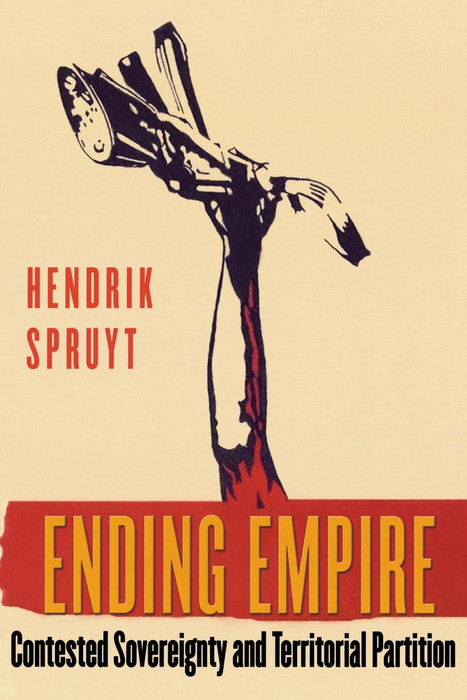
Ending Empire (eBook)
326 Seiten
Cornell University Press (Verlag)
978-1-5017-1787-1 (ISBN)

At the dawn of the twentieth century, imperial powers controlled most of the globe. Within a few decades after World War II, many of the great empires had dissolved, and more recently, multinational polities have similarly disbanded. This process of...
At the dawn of the twentieth century, imperial powers controlled most of the globe. Within a few decades after World War II, many of the great empires had dissolved, and more recently, multinational polities have similarly disbanded. This process of reallocating patterns of authority, from internal hierarchy to inter-state relations, proved far more contentious in some cases than in others. While some governments exited the colonial era without becoming embroiled in lengthy conflicts, others embarked on courses that drained their economies, compelled huge sacrifices, and caused domestic upheaval and revolution. What explains these variations in territorial policy? More specifically, why do some governments have greater latitude to alter existing territorial arrangements whereas others are constrained in their room for maneuver?
In Ending Empire, Hendrik Spruyt argues that the answer lies in the domestic institutional structures of the central governments. Fragmented polities provide more opportunities for hard-liners to veto concessions to nationalist and secessionist demands, thus making violent conflict more likely. Spruyt examines these dynamics in the democratic colonial empires of Britain, France, and the Netherlands. He then turns to the authoritarian Portuguese empire and the break-up of the Soviet Union. Finally, the author submits that this theory, which speaks to the political dynamics of partition, can be applied to other contested territories, including those at the heart of the Arab-Israeli conflict.
At the dawn of the twentieth century, imperial powers controlled most of the globe. Within a few decades after World War II, many of the great empires had dissolved, and more recently, multinational polities have similarly disbanded. This process of reallocating patterns of authority, from internal hierarchy to inter-state relations, proved far more contentious in some cases than in others. While some governments exited the colonial era without becoming embroiled in lengthy conflicts, others embarked on courses that drained their economies, compelled huge sacrifices, and caused domestic upheaval and revolution. What explains these variations in territorial policy? More specifically, why do some governments have greater latitude to alter existing territorial arrangements whereas others are constrained in their room for maneuver?
In Ending Empire, Hendrik Spruyt argues that the answer lies in the domestic institutional structures of the central governments. Fragmented polities provide more opportunities for hard-liners to veto concessions to nationalist and secessionist demands, thus making violent conflict more likely. Spruyt examines these dynamics in the democratic colonial empires of Britain, France, and the Netherlands. He then turns to the authoritarian Portuguese empire and the break-up of the Soviet Union. Finally, the author submits that this theory, which speaks to the political dynamics of partition, can be applied to other contested territories, including those at the heart of the Arab–Israeli conflict.
Hendrik Spruyt is Norman Dwight Harris Professor of International Relations and Chair of the Department of Political Science at Northwestern University. He is the author of The Sovereign State and Its Competitors, which won the J. David Greenstone Award given by the History and Politics Section of the American Political Science Association.
| Erscheint lt. Verlag | 31.5.2018 |
|---|---|
| Reihe/Serie | Cornell Studies in Political Economy | Cornell Studies in Political Economy |
| Verlagsort | Ithaca |
| Sprache | englisch |
| Maße | 160 x 160 mm |
| Themenwelt | Sachbuch/Ratgeber ► Beruf / Finanzen / Recht / Wirtschaft ► Wirtschaft |
| Sozialwissenschaften ► Politik / Verwaltung ► Europäische / Internationale Politik | |
| Wirtschaft ► Volkswirtschaftslehre ► Wirtschaftspolitik | |
| ISBN-10 | 1-5017-1787-1 / 1501717871 |
| ISBN-13 | 978-1-5017-1787-1 / 9781501717871 |
| Informationen gemäß Produktsicherheitsverordnung (GPSR) | |
| Haben Sie eine Frage zum Produkt? |
 PDF (Adobe DRM)
Kopierschutz: Adobe-DRM
Adobe-DRM ist ein Kopierschutz, der das eBook vor Mißbrauch schützen soll. Dabei wird das eBook bereits beim Download auf Ihre persönliche Adobe-ID autorisiert. Lesen können Sie das eBook dann nur auf den Geräten, welche ebenfalls auf Ihre Adobe-ID registriert sind.
Details zum Adobe-DRM
Dateiformat: PDF (Portable Document Format)
Mit einem festen Seitenlayout eignet sich die PDF besonders für Fachbücher mit Spalten, Tabellen und Abbildungen. Eine PDF kann auf fast allen Geräten angezeigt werden, ist aber für kleine Displays (Smartphone, eReader) nur eingeschränkt geeignet.
Systemvoraussetzungen:
PC/Mac: Mit einem PC oder Mac können Sie dieses eBook lesen. Sie benötigen eine
eReader: Dieses eBook kann mit (fast) allen eBook-Readern gelesen werden. Mit dem amazon-Kindle ist es aber nicht kompatibel.
Smartphone/Tablet: Egal ob Apple oder Android, dieses eBook können Sie lesen. Sie benötigen eine
Geräteliste und zusätzliche Hinweise
Buying eBooks from abroad
For tax law reasons we can sell eBooks just within Germany and Switzerland. Regrettably we cannot fulfill eBook-orders from other countries.
aus dem Bereich