
Magic of the Horseshoe (eBook)
Hesperus Press Ltd. (Verlag)
978-1-78094-458-6 (ISBN)
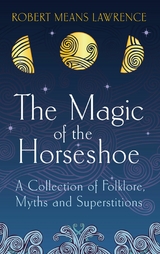
Superstitions still have a firm hold in cultures all across the world and have inspired countless books and films across the ages. But where did so many of them come from and how do myths and beliefs differ from country to country? Publishing on Friday 13th, discover this 1899 gem full of interesting facts and packed with titbits. Find out why people throw salt over their shoulder, why you should never open a theatre on Friday in France and whether it is luckier to sneeze towards the left or the right. And why the number thirteen is considered so unlucky. Lawrence's fascinating work traces the origins of common superstitions through time and civilisations, tracking how they evolved. Why not dip in and out and see how many have endured to the present day... You will finally be able to answer important questions such as whether a horseshoe on the door can protect you from plague. Why do people say 'bless you' when you sneeze? Or find out what condition can apparently be cured by putting salt in the hems of a young boy's trousers and making him look up the chimney... Or you could even finally settle the question about whether black cats are good or bad luck!
Jests, like salt, should be used sparingly.
– Similitudes of Democritus.
ORIGIN AND HISTORY
The origin of the use of common salt as a condiment is hidden in the mazes of antiquity. Although we have no evidence that this important article of diet was known to the antediluvians, there is still abundant proof that it was highly esteemed as a seasoner of food long before the Christian era. In a Greek translation of a curious fragment of the writings of the semi-fabulous Phoenician author, Sanchoniathon, who is said to have lived before the Trojan War, the discovery of the uses of salt is attributed to certain immediate descendants of Noah, one of whom was his son Shem.
From the mythical lore of Finland we learn that Ukko, the mighty god of the sky, struck fire in the heavens, a spark from which descending was received by the waves and became salt. The Chinese worship an Idol called Phelo, in honor of a mythological personage of that name, whom they believe to have been the discoverer of salt and the originator of its use. His ungrateful countrymen, however, were tardy in their recognition of Phelo’s merits, and that worthy thereupon left his native land and did not return. Then the Chinese declared him to be a deity, and in the month of June each year they hold a festival in his honor, during which he is everywhere eagerly sought, but in vain; he will not appear until he comes to announce the end of the world.
Among the Mexican Nahuas the women and girls employed in the preparation of salt were wont to dance at a yearly festival held in honor of the Goddess of salt, Huixtocihuatl, whose brothers the rain-gods are said, as the result of a quarrel, to have driven her into the sea, where she invented the art of making the precious substance.
The earliest Biblical mention of salt appears to be in reference to the destruction of Sodom and Gomorrah. When King Abimelech destroyed the city of Shechem, an event which is believed to have occurred in the thirteenth century BC, he is said to have ‘sowed salt on it’, this phrase expressing the completeness of its ruin. It is certain that the use of salt as a relish was known to the Jewish people at a comparatively early period of their history. For in the sixth chapter of the Book of Job occurs this passage: ‘Can that which is unsavoury be eaten without salt?’
In Eastern countries it is a time-honored custom to place salt before strangers as a token and pledge of friendship and good-will. The phrase ‘to eat someone’s salt’ formerly signified being in that person’s service, and in this sense it is used in the Book of Ezra, iv. 14, where the expression, ‘we have maintenance from the king’s palace’, means literally, ‘we are salted with the salt of the palace’, which implies being in the service of the king. And from the idea of being in the employment of a master, and eating his salt, the phrase in question came to denote faithfulness and loyalty.
As an instance of the superstitious reverence with which salt is regarded in the East, it is related that Yacoub ben Laith, who founded the dynasty of Persian princes known as the Saffarides, was of very humble origin, and in his youth gained a livelihood as a free-booter. Yet so chivalrous was he that he never stripped his victims of all their belongings, but always left them something to begin life with anew.
On one occasion this gallant robber had forcibly and by stealth entered the palace of a prince, and was about departing with considerable spoil, when he stumbled over an object which his sense of taste revealed to be a lump of salt. Having thus involuntarily partaken of a pledge of hospitality in another man’s house, his honor overcame his greed of gain and he departed without his booty.
Owing to its antiseptic and preservative qualities, salt was emblematic of durability and permanence; hence the expression ‘Covenant of Salt’. It was also a symbol of wisdom, and in this sense was doubtless used by St Paul when he told the Colossians that their speech should be seasoned with salt.
Homer called salt divine, and Plato described it as a substance dear to the gods.
Perhaps the belief in its divine attributes may have been a reason for the employment of salt as a sacrificial offering by the Hebrews, Greeks, and Romans, all of whom, moreover, regarded it as an indispensable relish.
Plutarch said that without salt nothing was savory or toothsome, and that this substance even imparted an additional flavor to wines, thus causing them ‘to go down the throat merrily’. And the same writer remarked that, as bread and salt were commonly eaten together, therefore Ceres and Neptune were sometimes worshiped together in the same temple.
SALT UNCONGENIAL TO WITCHES AND DEVILS
Grimm remarks that salt is not found in witches’ kitchens, nor at devils’ feasts, because the Roman Catholic Church has taken upon herself the hallowing and dedication of this substance. Moreover, inasmuch as Christians recognize salt as a wholesome and essential article of diet, it seems plausible enough that they should regard it as unsuitable for the use of devils and witches, two classes of beings with whom they have no particular sympathy. Hence perhaps the familiar saying that ‘the Devil loveth no salt in his meat’.
Once upon a time, according to tradition, there lived a German peasant whose wife was a witch, and the Devil invited them both to supper one fine evening. All the dishes lacked seasoning, and the peasant, in spite of his wife’s remonstrances, kept asking for salt; and when after a while it was brought, he remarked with fervor, ‘Thank God, here is salt at last,’ whereupon the whole scene vanished.
The abbot Richalmus, who lived in the old German duchy of Franconia in the twelfth century, claimed, by the exercise of a special and extraordinary faculty, to be able to baffle the machinations of certain evil spirits who took special delight in playing impish tricks upon churchmen. They appear, indeed, to have sorely tried the patience of the good abbot in many ways, as, for example, by distracting his thoughts during Mass and interfering with his digestion, promoting discords in the church music, and causing annoyance by inciting the congregation to cough in sermon time. Fortunately he possessed three efficient weapons against these troublesome creatures, namely, the sign of the cross, holy water, and salt.
‘Evil spirits,’ wrote the abbot, ‘cannot bear salt.’ When he was at dinner, and the Devil had maliciously taken away his appetite, he simply tasted a little salt, and at once became hungry. Then, if soon afterwards his appetite again failed him, he took some more salt, and his relish for food speedily returned.
In Hungarian folklore, contrary to the usual opinion, evil personages are fond of salt, for at those festive gatherings described in old legends and fairy tales, where witches and the Devil met, they were wont to cook in large kettles a stew of horse-flesh seasoned with salt, upon which they eagerly feasted.
Hence appears to have originated the popular notion current among the Magyars that a woman who experiences a craving for salt in the early morning must be a witch, and on no account should her taste be gratified.
Once upon a time, says tradition, a man crept into a witch’s tub in order to spy upon the proceedings at a meeting of the uncanny sisterhood. Shortly thereafter the witch appeared, saddled the tub, and rode it to the place of rendezvous, and on arriving there the man contrived to empty a quantity of salt into the tub. After the revels he was conveyed homewards in the same manner, and showed the salt to his neighbors as proof positive that he had really been present at the meeting. Sometimes, however, salt is used in Hungary as a protection against witches. The threshold of a new house is sprinkled with it, and the door- hinges are smeared with garlic, so that no witch may enter.
The peasants of Russian Estonia are aware of the potency of salt against witches and their craft. They believe that on St John’s Eve witch-butter is maliciously smeared on the doors of their farm buildings in order to spread sickness among the cattle. When, therefore, an Estonian farmer finds this obnoxious butter on his barn door or elsewhere, he loads his gun with salt and shoots the witch germs away.
The Hindus have a theory that malignant spirits, or Bhuts, are especially prone to molest women and children immediately after the latter have eaten confectionery and other sweet delicacies.
Indeed, so general is this belief that vendors of sweetmeats among school children provide their youthful customers each with a pinch of salt to remove the sweet taste from their mouths, and thus afford a safeguard against the ever-watchful Bhuts.
THE LATIN WORD ‘SAL’
Owing to the importance of salt as a relish, its Latin name sal came to be used metaphorically as signifying a savory mental morsel, and, in a general sense, wit or sarcasm. It was formerly maintained by some etymologists that this word had a threefold meaning according to its gender. Thus, when masculine, it has the above signification, but when feminine it means the sea, and only when neuter does it stand for common salt. The characterization of Greece as ‘the salt of nations’ is attributed to Livy, and this is probably...
| Erscheint lt. Verlag | 13.3.2015 |
|---|---|
| Verlagsort | London |
| Sprache | englisch |
| Themenwelt | Sozialwissenschaften ► Ethnologie ► Volkskunde |
| Sozialwissenschaften ► Pädagogik | |
| Sozialwissenschaften ► Politik / Verwaltung | |
| Sozialwissenschaften ► Soziologie | |
| Wirtschaft | |
| ISBN-10 | 1-78094-458-6 / 1780944586 |
| ISBN-13 | 978-1-78094-458-6 / 9781780944586 |
| Informationen gemäß Produktsicherheitsverordnung (GPSR) | |
| Haben Sie eine Frage zum Produkt? |
 EPUB (Adobe DRM)
Kopierschutz: Adobe-DRM
Adobe-DRM ist ein Kopierschutz, der das eBook vor Mißbrauch schützen soll. Dabei wird das eBook bereits beim Download auf Ihre persönliche Adobe-ID autorisiert. Lesen können Sie das eBook dann nur auf den Geräten, welche ebenfalls auf Ihre Adobe-ID registriert sind.
Details zum Adobe-DRM
Dateiformat: EPUB (Electronic Publication)
EPUB ist ein offener Standard für eBooks und eignet sich besonders zur Darstellung von Belletristik und Sachbüchern. Der Fließtext wird dynamisch an die Display- und Schriftgröße angepasst. Auch für mobile Lesegeräte ist EPUB daher gut geeignet.
Systemvoraussetzungen:
PC/Mac: Mit einem PC oder Mac können Sie dieses eBook lesen. Sie benötigen eine
eReader: Dieses eBook kann mit (fast) allen eBook-Readern gelesen werden. Mit dem amazon-Kindle ist es aber nicht kompatibel.
Smartphone/Tablet: Egal ob Apple oder Android, dieses eBook können Sie lesen. Sie benötigen eine
Geräteliste und zusätzliche Hinweise
Buying eBooks from abroad
For tax law reasons we can sell eBooks just within Germany and Switzerland. Regrettably we cannot fulfill eBook-orders from other countries.
aus dem Bereich