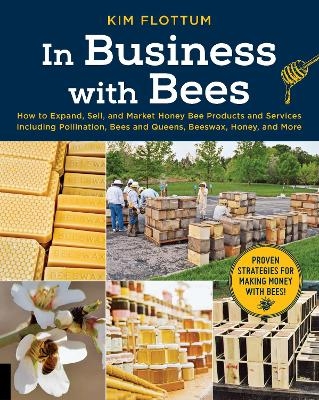
In Business with Bees
Quarry Books (Verlag)
978-1-63159-459-5 (ISBN)
- Titel ist leider vergriffen;
keine Neuauflage - Artikel merken
Ready to take your beekeeping skills to the next level? In Business with Bees provides the answers you need.
This book takes serious beekeepers past the beginning stages and learning curves and offers practical, useful advice to move your passion into a part-time or full-time career with measurable results. This beekeeping business how-to guide offers all of the in-depth advice you need, in one place.
Writing a business plan
Finding the best sources for funding
Determining what your facilities will be and how to acquire them
Getting and installing the right equipment
Cooperating with other local businesses
Stocking inventory and managing warehouse space
Finding customers
Raising and selling queens, packages, and nucs
Expanding pollination, including contracts to protect you
Making and selling peripheral products from wax, propolis, and honey
Organizing teaching, speaking, and planning events
Hiring and managing your growing team
Promoting your business
Measuring your success
This book provides solutions for all your beekeeping business questions, from start to finish. With this knowledge, you can become as knowledgeable, confident, and successful in running a business as you are in beekeeping.
Kim Flottum (d. 2023) brought a rich background of plant science, honey bee research, and basic farming to his 30 years as the editor of Bee Culture magazine, where his main occupation was finding the answers to the multitude of questions that beginning, intermediate, and even advanced and experienced beekeepers bring to the table. He taught beginning and advanced beekeeping courses, traveled extensively to educate and lecture, and contributed to a variety of other publications on the basics of honey bees and beekeeping biology, the business of bees and pollination, producing and using varietal honeys, and a host of other subjects. He was the author of The Backyard Beekeeper, First Time Beekeeping, In Business with Bees, and Common Sense Natural Beekeeping. His books, magazine articles, interviews, and blogs are widely read for both their fundamental and advanced contribution to beekeeping knowledge. He was beekeeping’s leading advocate for fundamental honey bee safety, including ensuring excellent honey bee health, providing extraordinary forage, and minimizing the use of agricultural pesticides.
Introduction
Chapter 1: Growing Your Operation—How Big Do You Want to Get?
More info on professional business planning, working with banks and USDA loan agencies, USDA programs for beginner agriculture
Trading Time for Money
Business Goals and Bigger Pictures
Buying Equipment
Breakthrough: Lease Land for Beeyards
Expanding Your Honey House
Chapter 2: A New Look at Honey Production
De-emphasis on honey production due to increased competition with foreign honey and smaller returns. Meanwhile focusing on how to grow margins on local honey when volume is lower.
What it Once Was and Why It Changed
Non-Agricultural Areas
Expanding Natural Bloom
Migratory Beekeeping for Nectar Crops
Planning a Honey Crop
Growing Your Own, with Help
How Much Land Is Required?
Working with Landowners with Lots of Land
Recommended Plantings for Honey Bees
This Land Is My Land
Chapter 3: Royalty—Finding the Best Queen
Royal Lineage
The Queens We Can Get
What Do You Want from Your Bees?
What Kind of Beekeeper Are You?
Buying Queens
Raising Your Own Queens
Raising Production Queens
Background Check for Drone Colonies
Chapter 4: The Working Class—The Bees that Beekeepers Keep
Enhanced chapter for better moneymaking. Far less basic beekeeping info, more focus on having the right bees, timing, and methods. Keeping bees is easier if you’re not making honey, so this is a new shift. Updating electronic monitoring equipment and cloud storage options, but more important is not the how but the why: economics, labor, speed.
Preventing Springtime Swarming
All About Honey Production
Pests and Other Problems
Chapter 5: Pollination
Writing contracts, equipment needed, understanding pesticides, partnering with other beekeepers and pollination brokers, moving to staging yards, protection/nutrition in staging yards, working with growers on providing forage, and how to calculate your fee.
Chapter 6: Wintering Your Bees
Wintering indoors has become more popular and efficient and may no longer require building a separate structure—rather than moving bees to southern climates. Traditional wintering outside is also covered.
Winter Rules
Take Care of the Bees
The Natural Question
How Much Honey?
When It’s Really Cold
Pollen
Summary
Glossary
Resources
Suppliers
Index
Credits
About the Author
Acknowledgments
| Erscheinungsdatum | 01.09.2018 |
|---|---|
| Zusatzinfo | 150 color photos |
| Sprache | englisch |
| Maße | 203 x 254 mm |
| Themenwelt | Wirtschaft ► Betriebswirtschaft / Management ► Planung / Organisation |
| Weitere Fachgebiete ► Land- / Forstwirtschaft / Fischerei | |
| ISBN-10 | 1-63159-459-1 / 1631594591 |
| ISBN-13 | 978-1-63159-459-5 / 9781631594595 |
| Zustand | Neuware |
| Informationen gemäß Produktsicherheitsverordnung (GPSR) | |
| Haben Sie eine Frage zum Produkt? |
aus dem Bereich