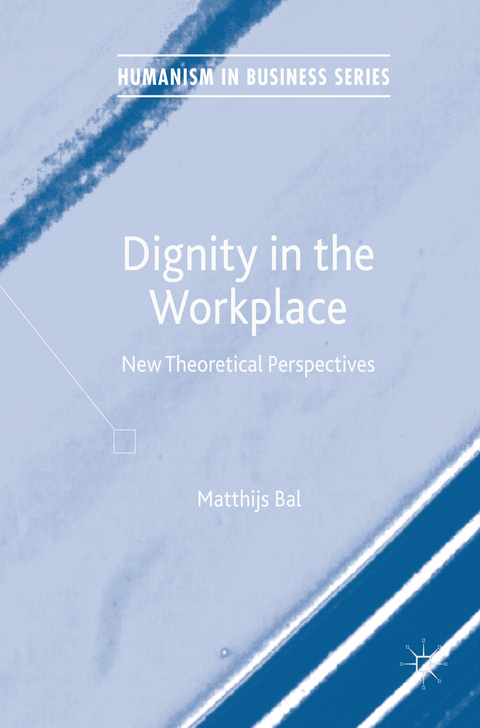
Dignity in the Workplace (eBook)
X, 312 Seiten
Springer International Publishing (Verlag)
978-3-319-55245-3 (ISBN)
Introducing a theory of workplace dignity into the field of management studies, this innovative new book presents an alternative paradigm based on principles of human dignity which is integrated into a theoretical approach to the topic. The author addresses and analyses the causes and consequences of the dominant political-economic paradigm within management studies. Further, it presents a theoretical alternative which can constitute a foundation for a new way of thinking about organisations, management, and leadership. Dignity in the Workplace offers scholars ideas for how research in the field of management studies may be enriched by a dignity-paradigm, and goes further to explore the role of a dignity-paradigm in the function of HR-managers and organisational leaders. Thus, the book aims to contribute to the need for alternative conceptualisations of how contemporary organisations can be managed.
P. Matthijs Bal is Professor of Responsible Management at the University of Lincoln, UK. Before joining Lincoln, he was a reader in the School of Management, University of Bath, UK, and has previously worked at VU University Amsterdam and Erasmus University Rotterdam, the Netherlands.
P. Matthijs Bal is Professor of Responsible Management at the University of Lincoln, UK. Before joining Lincoln, he was a reader in the School of Management, University of Bath, UK, and has previously worked at VU University Amsterdam and Erasmus University Rotterdam, the Netherlands.
Foreword 6
Contents 10
1 Introduction to Workplace Dignity 12
1.1Introduction 12
1.2Overview of a Malfunctioning Global Society 16
1.3Manifestations of the Crisis 19
1.3.1Neoliberalism 19
1.3.2Individualism 24
1.3.3Profit Maximization and Shareholder Value 26
1.3.4Climate Change 28
1.3.5Poverty 29
1.3.6Income Inequality 30
1.3.7Indifference and Populism in Politics and Democracy 35
1.3.8The Rise of Lobbycracy and Corpocracy 37
1.3.9The Rise of the Surveillance State 39
1.3.10Lack of Integrity in Leadership 41
1.3.11Corporate Greenwashing 43
1.4An Alternative Theory? 45
References 47
2 A Review of Human Dignity 52
2.1Introduction 52
2.1.1Uses of Dignity Across Languages 53
2.2Historical Uses of Dignity 54
2.2.1Kantian Dignity 57
2.2.2Human Dignity and Human Rights 60
2.2.3Other Conceptualizations of Human Dignity 63
2.3Critics of Human Dignity 66
2.4Dignity at Work 70
References 74
3 Towards a Theory of Workplace Dignity 78
3.1Towards a Theory of Workplace Dignity 79
3.1.1Who or What Has Dignity? 79
3.1.2Defining Workplace Dignity 83
3.1.3Human Beings in the Workplace 86
3.1.4A Relational Model of Workplace Dignity 88
3.1.5Stages of Workplace Dignity 92
3.2How Dignity is Different from Other Management Concepts 100
References 104
4 Introducing Workplace Dignity to Management Studies 107
4.1Introduction 107
4.2Workplace Dignity as an Alternative Paradigm in Organization Studies 108
4.3How Does Dignity Manifest in the Workplace? 115
4.3.1Experienced Workplace Dignity 115
4.3.2Objective and Subjective Dignity 119
4.3.3Violation as Lack of Respect? 123
4.4Values of Workplace Dignity 124
4.5Implementing Workplace Dignity in Organization Studies 131
References 134
5 Implementing Workplace Dignity in Organizations 139
5.1Theoretical Linkages of Dignity 140
5.1.1Dignity and 143
5.1.2Dignity, Meaning and Participation 146
5.1.3Short-Termism Vs. Long-Term Viability 152
5.1.4Dignity and Its Relationship to Organization Studies 156
5.2Dignity Implementation in Organizations 164
References 166
6 Dignity, Workplace Democracy, and HRM 171
6.1Workplace Democracy and Dignity 172
6.1.1What Is Democracy? 173
6.1.2Politics and Democracy 184
6.1.3The Employee and Democracy 186
6.1.4Outcomes and Challenges of Democracy 191
6.2HRM and Workplace Dignity 195
6.2.1Revising HRM into WDD 196
6.2.2Branding and Staffing 198
6.2.3Performance Management and Rewards 202
6.2.4Learning and Development 205
6.2.5Employment Relations 206
6.2.6Exit 207
References 209
7 Workplace Dignity and Individualization 215
7.1Exploring Individuality in Dignity 215
7.1.1Individualism, Individualization, and Individuality 216
7.2Individualization and Individuality at Work 224
7.2.1A Surface Level Analysis of Individualization 224
7.2.2A Deep Level Analysis of Individualization 230
7.3A Dignity Perspective on Individualization 234
7.3.1Dignity, Individuality and Management Studies 234
7.3.2Implementation of Dignity in Management Concepts 237
References 240
8 Dignity in Universities: An Example Case 244
8.1The Contemporary Corporate University 245
8.1.1The Neoliberal University 246
8.1.2Management and Administration in the Contemporary University 247
8.1.3Contemporary 250
8.1.4Research in Universities 253
8.1.5 in Universities 254
8.2A Dignity Perspective on Universities 256
8.2.1Dignified Universities 257
8.2.2Research in the Dignified University 261
8.2.3Teaching in the Dignified University 263
8.2.4Administration of the Dignified University 268
References 270
9 Moving Forward with Dignity 272
9.1Dignity Work in the Workplace 272
9.1.1Reversed Logic of Hypernormalization 278
9.2What Does Dignity Achieve? 283
9.2.1Dignity and Manifestations of the Crisis 283
9.3Practical Examples of Working with Workplace Dignity 291
References 295
10 Conclusions 298
10.1Overview of the Theory 298
10.1.1On Duties 303
10.1.2Working with Dignity 304
10.2New Terms 305
10.2.1A Stage Model of Workplace Dignity 306
10.2.2 307
10.2.3Reversed Logic of Hypernormalization 309
10.3Practical Recommendations for Academics 310
10.4Untouched Domains and Cautionary Words 312
References 314
Index 316
| Erscheint lt. Verlag | 1.8.2017 |
|---|---|
| Reihe/Serie | Humanism in Business Series | Humanism in Business Series |
| Zusatzinfo | X, 312 p. 1 illus. |
| Verlagsort | Cham |
| Sprache | englisch |
| Themenwelt | Wirtschaft ► Betriebswirtschaft / Management ► Personalwesen |
| Wirtschaft ► Betriebswirtschaft / Management ► Unternehmensführung / Management | |
| Schlagworte | Corporate Social Responsibility • Human Resources • Leadership • Management • political-economic • theory |
| ISBN-10 | 3-319-55245-7 / 3319552457 |
| ISBN-13 | 978-3-319-55245-3 / 9783319552453 |
| Informationen gemäß Produktsicherheitsverordnung (GPSR) | |
| Haben Sie eine Frage zum Produkt? |
 PDF (Wasserzeichen)
DRM: Digitales Wasserzeichen
Dieses eBook enthält ein digitales Wasserzeichen und ist damit für Sie personalisiert. Bei einer missbräuchlichen Weitergabe des eBooks an Dritte ist eine Rückverfolgung an die Quelle möglich.
Dateiformat: PDF (Portable Document Format)
Mit einem festen Seitenlayout eignet sich die PDF besonders für Fachbücher mit Spalten, Tabellen und Abbildungen. Eine PDF kann auf fast allen Geräten angezeigt werden, ist aber für kleine Displays (Smartphone, eReader) nur eingeschränkt geeignet.
Systemvoraussetzungen:
PC/Mac: Mit einem PC oder Mac können Sie dieses eBook lesen. Sie benötigen dafür einen PDF-Viewer - z.B. den Adobe Reader oder Adobe Digital Editions.
eReader: Dieses eBook kann mit (fast) allen eBook-Readern gelesen werden. Mit dem amazon-Kindle ist es aber nicht kompatibel.
Smartphone/Tablet: Egal ob Apple oder Android, dieses eBook können Sie lesen. Sie benötigen dafür einen PDF-Viewer - z.B. die kostenlose Adobe Digital Editions-App.
Buying eBooks from abroad
For tax law reasons we can sell eBooks just within Germany and Switzerland. Regrettably we cannot fulfill eBook-orders from other countries.
aus dem Bereich