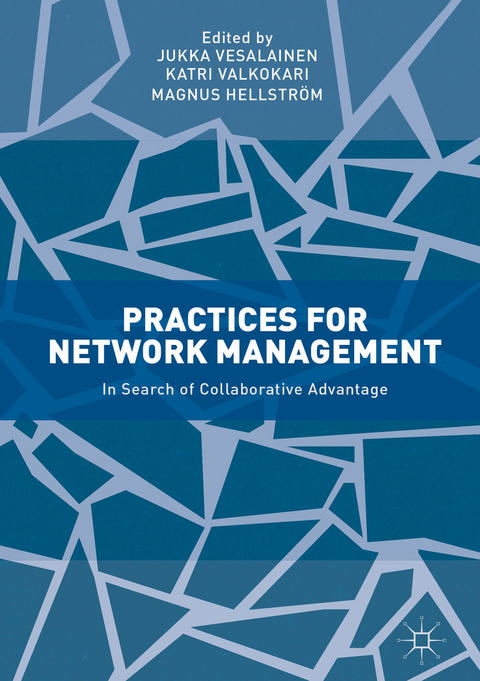
Practices for Network Management (eBook)
XXIII, 348 Seiten
Springer International Publishing (Verlag)
9783319496498 (ISBN)
Jukka Vesalainen is Professor of Management and Organization at University of Vaasa, Finland, where his current research addresses networking and business relationships. He has published research articles in top international journals including Industrial Marketing Management, Journal of Business & Industrial Marketing, Entrepreneurship and Regional Development, and International Small Business Journal.
Katri Valkokari is a principal scientist at VTT Technical Research Centre of Finland in the Business Ecosystems, Value Chains and Foresight research area. Over the past 15 years, she has carried out several business development projects concerning different SME networks. She has published several international and national articles on business networks, innovation management and sustainability.
Magnus Hellström is a Senior Lecturer and docent in industrial management at Åbo Akademi University, Finland. Magnus has over five years' experience working within the engineering works industry. His research interests include modularity, industrial services, and business ecosystems.
Jukka Vesalainen is Professor of Management and Organization at University of Vaasa, Finland, where his current research addresses networking and business relationships. He has published research articles in top international journals including Industrial Marketing Management, Journal of Business & Industrial Marketing, Entrepreneurship and Regional Development, and International Small Business Journal.Katri Valkokari is a principal scientist at VTT Technical Research Centre of Finland in the Business Ecosystems, Value Chains and Foresight research area. Over the past 15 years, she has carried out several business development projects concerning different SME networks. She has published several international and national articles on business networks, innovation management and sustainability.Magnus Hellström is a Senior Lecturer and docent in industrial management at Åbo Akademi University, Finland. Magnus has over five years’ experience working within the engineering works industry. His research interests include modularity, industrial services, and business ecosystems.
Foreword 5
Contents 8
Notes on Contributors 12
List of Figures 18
List of Tables 21
1: Introduction 22
Engaged Scholarship in Network Management Studies 22
The Purpose of the Book: Novel Tools for Better Networking Praxis 25
Network Dynamics: A Systemic and Comprehensive Framework 28
Design Approach to Maximize Practical Relevance 31
Managerial Tools for Spanning Inter-organizational Boundaries 34
The Organization of the Book 36
References 36
Part I: Networks-as-Coordinated Social Systems 39
2: Introduction to Part I—Viewing Networks as Social Systems 40
References 45
3: Stakeholder Identification, Salience, and Strategic Mindset Analysis 46
Introduction 46
Stakeholder Theory: Who or What Really Counts? 46
Strategy: Business Environment, Mindset, and Rationality 47
Theoretical Background 49
The Theory of Stakeholder Identification and Salience 49
Network-Level Strategizing 53
Environmental Assessment Method 56
Strategic Mindset Identification Method 56
Summarizing the Stakeholder Identification and Network Strategy Co-creation Methods 58
Case: Transforming from Transactional Business to Solution Business 59
Conclusions 63
References 64
4: Leading Human Values in Complex Environments 65
Going Beyond the Planning-Monitoring-Reporting Axis 65
Project Leadership 66
Moving from Transactional to Relational Practices 67
The Theoretical Foundation of the Project Leadership Tool 69
Description of the Tool 71
User Comments 76
Conclusions 77
References 78
5: Making Sense of Network Dynamics through Network Picturing 81
Introduction of the Problem 81
Background of Network Pictures as a Sense-Making Tool 82
Network-Picturing Tool 84
Network Picturing as a Tool to Envision Network Change by a Multinational Company 87
Network Picturing as a Tool to Drive Network Change by an SME 89
Conclusions 92
References 94
6: Functional Contracting for Network Creation and Governance 96
Contracts: The Missing Dimension in Inter-organizational Integration? 96
A Case Study of Functional Contracting 97
Theoretical Background of the Functional-Contracting Process 99
Outline of the Functional-Contracting Process 101
Conclusions and Managerial Implications 104
References 106
7: Boundary Spanning and the Art of Persuasion 108
The Challenge of Managing in Relationships 108
Theoretical Foundation for Boundary-Spanning Behavior 110
Rhetoric—The Art of Persuasion 110
Persuasion Tactics in Cross-Border Communication 111
Competitive Persuasion Tactics 112
Hierarchical Persuasion Tactics 113
Relational Persuasion Tactics 114
Monitoring Boundary-Spanning Behavior in Networks 115
Boundary-Spanning Behavior at the Network Level 115
Boundary-Spanning Behavior at the Supplier Category Level 116
Managerial Practices and Value Related to Boundary-Spanning Behavior Analysis 118
References 119
Part II: Networks-as-Knowledge-Creating Platforms 121
8: Introduction to Part II—Knowledge Integration in Networks 122
9: Expert Knowledge Integration—A Systematic Approach for Multi-stakeholder Innovation 128
Introduction 128
Characteristics of Knowledge Integration and Knowledge Integration Tools in Project Networks 130
Knowledge Integration System 133
Designed Artifact: A KIS Tool with Boundary Objects 133
Pilot Case Description 134
KIS Tool Description and Observations from the Pilot 135
Pilot Process Outcome: The Manifestation of the KIS Knowledge Integration Tool on a Practical Level 140
Conclusions 141
References 142
10: Third-Party-Supported Benchmarking for Reciprocal Learning 145
Introduction of the Problem 145
Benchmarking Theory 147
Third-Party-Supported Benchmarking 150
Case: Finding Solutions for Company-Specific Development Needs 151
Purpose 151
Starting Point and Objectives 152
Comparison Partner 155
Schedule and Activities in BM Process 155
Benchmarking Partners, Comparison Visit and Development Plans 156
Conclusions 157
References 158
11: Value Proposition Co-development 160
Introduction 160
Theoretical Basis for Joint Evaluation of Outsourcing Value Potential—The Relational View of Strategy and Value Co-creation 162
Evaluating Service Outsourcing Value Potential 164
Finding an Optimal Mix of Factory Maintenance Functions for Outsourcing 167
Conclusions 169
References 170
12: Relational Factors as Part of Network Relationship Evaluation 172
Introduction of the Problem 172
Theoretical Background of the Tool 174
Supplier Evaluation System with Relational Factors 175
Case: From Functional Project Management to Visualized Network Management 183
Benefits for the Case Company 185
Conclusions 185
References 186
13: A Tool for Increased Cognitive Ergonomics in Operative Supplier Selection in a Global Context 189
Introduction 189
Supplier Selection Tool as Increased Cognitive Ergonomics 195
The Stage 1 Supplier Selection Tool Described 197
Current Status and Envisioned Stage 2 Extensions 201
Discussion and Conclusions 204
References 205
Part III: Networks-as-Value-Generating Entities 209
14: Introduction to Part III—Moving Toward Mutual Benefits and Increased Total Value 210
References 214
15: Life Cycle Cost Calculations as the Means for Value Communication in Networks 215
Introduction 215
The LCC Calculation 217
Phases That Calculate LCC 218
Definition of a Calculation Case 218
The Cost Breakdown Structure 219
Estimation of the Calculation Parameters 219
Sensitivity Analysis 220
Presentation of Results 220
Barriers to LCC Calculations 221
A Practical Case for LCC Implementation 222
Summary of User Feedback 224
Conclusions 225
References 226
16: The Service Configurator—How to Optimally Split Project Scopes 228
Introduction of the Problem 228
Theoretical Background 230
Decision-Making 230
The Need to Support and Facilitate Decision-Making 231
Configurators 232
Method 233
Description of the Configurator 234
Practical Implementation of the Web-based Application 238
The Case of an Evolving Scope of Supply 240
Conclusions 241
References 243
17: The Value-based Sales Approach—Design Process, Tools and Needed Capabilities to Create a Solution 246
Introduction 246
Theoretical Background 249
Description of the Value-based Sales Process 251
Case Example 253
Presenting the Cash Flow Impact (Pre-sales) 253
Defining What Constitutes a Solution (Detail-Sales) 254
Reaching the Certainty (Final Sales) 256
Conclusions 256
References 259
18: Value Co-creation Analysis in Customer–Supplier Network Relationships 260
Introduction 260
Theoretical Background 261
Description of the Tool 263
Step 1: Supplier Value Creation Process 263
Measurement Objective: What Value Does the Company Receive from the Customer? 263
Step 2: The Customer Value Creation Process 264
Analysis Objective: What Kind of Value Can Be Created for the Customer? 264
Step 3: The Encounter Process 266
Objective: How to Develop Value Co-creation 266
Case Description 267
Conclusions 270
References 270
19: Value Curve as a Multipurpose Tool—From Self-assessment to Forming Collaborative Networks 272
Introduction 272
Theoretical Background 274
Description of the Tool 275
Case Study: Transformation from Performance and Value Perceptions of Asian Customers to Joint Value Propositions to End-Customers 278
Conclusions 281
References 282
20: A Framework for Ecosystemic Strategizing and Change 284
Introduction 284
Theoretical Foundation for the Framework 287
Value Creation and Capturing in Business Ecosystems 287
Strategic Management 288
Description of the Framework 290
Stage 1: Business Ecosystem Analysis 291
Analysis of the Current Business Ecosystem and Each Actor’s Position in It 293
Envisioning the Future Business Ecosystem and the Company’s Position in It 295
Stage 2: Strategic Position and Strategy Formulation 299
Stage 3: Strategy Implementation 304
Managerial Implications and Conclusions 305
References 307
21: Network Performance Management: Measurement, Scorecard, and Boundary Processes 311
The Challenge of Managing Network-Level Performance 311
Modeling Network Performance 313
Applying the RBV to Network Performance Analysis 313
Network Capital as the Key to Increase Network Performance 316
Multilevel Scorecard as an Effective Boundary Object 318
Network Delta’s Performance 319
Purposeful Use of Information: The Boundary Processes 323
Intra-organizational Use 323
Dyadic Interorganizational Use 324
Managerial Value Generated 325
References 326
Part IV: Concluding Remarks 328
22: Managerial Tools and the Network-as-Practice Perspective 329
Building a Combined Practice-Based Model for Collaborative Advantage 331
Tools as Practices of Network Management 335
Managerial Implications for Boundary Spanners 340
Limitations and Future Research 342
References 343
Index 346
| Erscheint lt. Verlag | 9.2.2017 |
|---|---|
| Zusatzinfo | XXIII, 348 p. 51 illus., 6 illus. in color. |
| Verlagsort | Cham |
| Sprache | englisch |
| Themenwelt | Wirtschaft ► Betriebswirtschaft / Management ► Unternehmensführung / Management |
| Schlagworte | Industrial Management • inter-organizational • Management • managerial tools • Marketing |
| ISBN-13 | 9783319496498 / 9783319496498 |
| Informationen gemäß Produktsicherheitsverordnung (GPSR) | |
| Haben Sie eine Frage zum Produkt? |
 PDF (Wasserzeichen)
DRM: Digitales Wasserzeichen
Dieses eBook enthält ein digitales Wasserzeichen und ist damit für Sie personalisiert. Bei einer missbräuchlichen Weitergabe des eBooks an Dritte ist eine Rückverfolgung an die Quelle möglich.
Dateiformat: PDF (Portable Document Format)
Mit einem festen Seitenlayout eignet sich die PDF besonders für Fachbücher mit Spalten, Tabellen und Abbildungen. Eine PDF kann auf fast allen Geräten angezeigt werden, ist aber für kleine Displays (Smartphone, eReader) nur eingeschränkt geeignet.
Systemvoraussetzungen:
PC/Mac: Mit einem PC oder Mac können Sie dieses eBook lesen. Sie benötigen dafür einen PDF-Viewer - z.B. den Adobe Reader oder Adobe Digital Editions.
eReader: Dieses eBook kann mit (fast) allen eBook-Readern gelesen werden. Mit dem amazon-Kindle ist es aber nicht kompatibel.
Smartphone/Tablet: Egal ob Apple oder Android, dieses eBook können Sie lesen. Sie benötigen dafür einen PDF-Viewer - z.B. die kostenlose Adobe Digital Editions-App.
Buying eBooks from abroad
For tax law reasons we can sell eBooks just within Germany and Switzerland. Regrettably we cannot fulfill eBook-orders from other countries.
aus dem Bereich