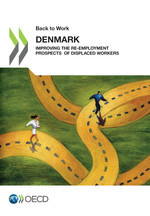
Back to Work: Denmark Improving the Re-employment Prospects of Displaced Workers (eBook)
156 Seiten
OECD Publishing (Verlag)
978-92-64-26750-3 (ISBN)
Job displacement (involuntary job loss due to firm closure or downsizing) affects many workers over the course of their working lives. Displaced workers may face long periods of unemployment and, even when they find new jobs, tend to be paid less than in the jobs they held prior to displacement. Helping displaced workers get back into good jobs quickly should be a key goal of labour market policy. This report is the sixth in a series of reports looking at how this challenge is being tackled in a number of OECD countries. It shows that Denmark has effective policies in place to quickly assist people who are losing their jobs, in terms of both providing good re-employment support and securing adequate income in periods of unemployment. Despite a positive institutional framework, a sound collaboration between social partners and a favourable policy set-up, there is room to improve policies targeted to displaced workers as not every worker in Denmark can benefit from the same amount of support. In particular, workers affected by collective dismissals in larger firms receive faster and better support than those in small firms or involved in small or individual dismissals. Blue-collar workers are also treated less favourably than white-collar workers. More generally, low-skilled and older displaced workers struggle most to re-enter the labour market.
Job displacement (involuntary job loss due to firm closure or downsizing) affects many workers over the course of their working lives. Displaced workers may face long periods of unemployment and, even when they find new jobs, tend to be paid less than in the jobs they held prior to displacement. Helping displaced workers get back into good jobs quickly should be a key goal of labour market policy. This report is the sixth in a series of reports looking at how this challenge is being tackled in a number of OECD countries. It shows that Denmark has effective policies in place to quickly assist people who are losing their jobs, in terms of both providing good re-employment support and securing adequate income in periods of unemployment. Despite a positive institutional framework, a sound collaboration between social partners and a favourable policy set-up, there is room to improve policies targeted to displaced workers as not every worker in Denmark can benefit from the same amount of support. In particular, workers affected by collective dismissals in larger firms receive faster and better support than those in small firms or involved in small or individual dismissals. Blue-collar workers are also treated less favourably than white-collar workers. More generally, low-skilled and older displaced workers struggle most to re-enter the labour market.
Foreword 5
Table of contents 7
Acronyms and abbreviations 11
Executive summary 13
Assessment and recommendations 15
Chapter 1. Job displacement in Denmark and its consequences 25
Incidence and characteristics of job displacement 26
Labour market outcomes following displacement 32
The aftermath of displacement: Changes in wages and job characteristics 36
Can skills switches explain post-displacement earning losses? 43
Conclusion 44
Notes 45
References 47
Annex 1.A1 - Supplementary figures 50
Chapter 2. The Danish flexicurity model and institutional setup 53
The Danish flexicurity model through the crisis 54
Key actors of the flexicurity model 57
The first flexicurity pillar: Flexibility for employers to adjust their workforce 62
The second flexicurity pillar: Security for individuals through a solid safety net 64
The third flexicurity pillar: A strong activation strategy 66
Conclusion 69
Notes 69
References 73
Chapter 3. Job displacement prevention and early intervention policies in Denmark 77
Early notification of potential displacements is crucial for an apt reaction 78
How to prevent job displacement in Denmark? 82
Early intervention services to foster return to work 87
Conclusion 94
Notes 95
References 97
Chapter 4. Income support as a safety net for displaced workers in Denmark 101
Displaced workers in Denmark are relatively well covered by income support 102
Income support in Denmark as a means to mitigate wage losses 106
Preserving the sustainability of the Danish income support system 112
Addressing the remaining challenges of the Danish income support system 115
Conclusion 121
Notes 122
References 124
Chapter 5. Effective re-employment support for displaced workers in Denmark 127
Activation with a dual management structure to strengthen job-search efforts 128
Making active labour market programmes accessible and effective for displaced workers 135
Maintaining and adapting a robust training system 142
Conclusion 148
Notes 150
References 151
| Erscheint lt. Verlag | 15.12.2016 |
|---|---|
| Sprache | englisch |
| Themenwelt | Wirtschaft ► Volkswirtschaftslehre ► Makroökonomie |
| ISBN-10 | 92-64-26750-6 / 9264267506 |
| ISBN-13 | 978-92-64-26750-3 / 9789264267503 |
| Informationen gemäß Produktsicherheitsverordnung (GPSR) | |
| Haben Sie eine Frage zum Produkt? |
 PDF (Adobe DRM)
Kopierschutz: Adobe-DRM
Adobe-DRM ist ein Kopierschutz, der das eBook vor Mißbrauch schützen soll. Dabei wird das eBook bereits beim Download auf Ihre persönliche Adobe-ID autorisiert. Lesen können Sie das eBook dann nur auf den Geräten, welche ebenfalls auf Ihre Adobe-ID registriert sind.
Details zum Adobe-DRM
Dateiformat: PDF (Portable Document Format)
Mit einem festen Seitenlayout eignet sich die PDF besonders für Fachbücher mit Spalten, Tabellen und Abbildungen. Eine PDF kann auf fast allen Geräten angezeigt werden, ist aber für kleine Displays (Smartphone, eReader) nur eingeschränkt geeignet.
Systemvoraussetzungen:
PC/Mac: Mit einem PC oder Mac können Sie dieses eBook lesen. Sie benötigen eine
eReader: Dieses eBook kann mit (fast) allen eBook-Readern gelesen werden. Mit dem amazon-Kindle ist es aber nicht kompatibel.
Smartphone/Tablet: Egal ob Apple oder Android, dieses eBook können Sie lesen. Sie benötigen eine
Geräteliste und zusätzliche Hinweise
Buying eBooks from abroad
For tax law reasons we can sell eBooks just within Germany and Switzerland. Regrettably we cannot fulfill eBook-orders from other countries.
aus dem Bereich