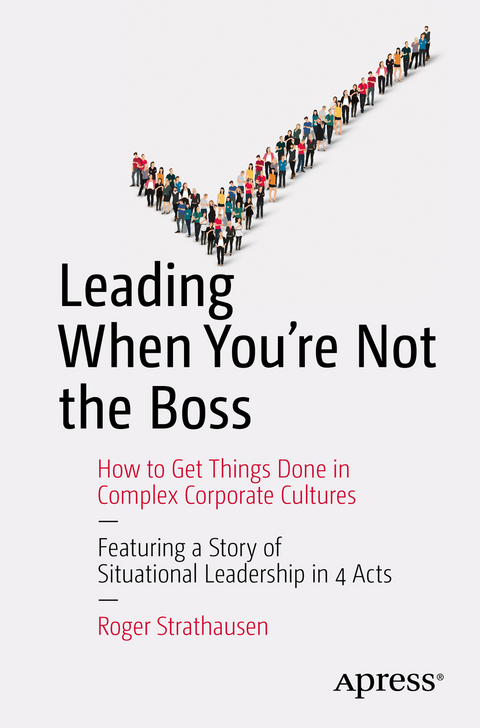
Leading When You're Not the Boss (eBook)
XV, 126 Seiten
Apress (Verlag)
978-1-4842-1748-1 (ISBN)
Answer the questions that arise when managers and workers need to adjust to unfamiliar leadership roles and rules in flattened organizational forms. Leading When You're Not the Boss provides a conceptual framework that you can apply when assessing your own organizations and work. The book discusses the underlying ideas necessary for a shift from a culture of hierarchies to one of relationships and the establishment of intrapreneurial and holistic work environments.
This book supports the trend in many corporations toward flattening parts of their traditional top-down hierarchical management systems into more egalitarian, democratized, and distributed organizational forms. It analyzes the weaknesses of 'management' culture at a time of ever more rapid change and complexity in the business world and illustrates how flattened organizational units increase agility, innovation, and efficacy. Moreover, it discusses how individuals can exercise effective leadership despite lacking the command-and-control authority of conventional bosses and ways for organizations to cultivate effective 'post-management' cultures.Especially in the technology sector, large projects have become too complex to be mastered by any single leader. Drawing on his experience as a senior manager and executive consultant for a number of Fortune Global 500 companies, Roger Strathausen analyzes the situations and benefits that motivate companies to adopt flattened organizational forms. He shows that empowering a multi-talented group to manage itself by horizontal cooperation can deliver products with more speed, efficiency, innovation, and nimbleness than a solo boss could, while yielding higher employee productivity and retention rates.
With an entertaining mix of real-world examples and an episodic HBR-style fictitious case study, the author illustrates throughout the book how his leadership lessons can be serviceable only when intelligently tailored to the dynamic complexities of specific situations, including the personalities and competencies of the people involved.What You'll Learn
- How to tailor the techniques of shared leadership to specific business situations rather than treating them as iron rules
- How to flourish in nonhierarchical and ambiguously-hierarchical organizational contexts that encourage individual initiative for the joint benefit of the enterprise and personal professional growth
- How success and fulfillment at work are enhanced by organizational forms in which participants assess the situational relevance of their respective talents and actively apply them to group objectives in lateral cooperation with peers, as opposed to passively receiving orders from appointed bosses
Who This Book Is For
The primary readerships for this book are business leaders and managers at all levels in corporations and non-managerial professionals who work in self-directed teams.
The secondary readerships are practitioners, consultants, and academics interested in the topics of human resources, organizational design, and the future of work.Roger Strathausen is a business consultant with expertise in organizational design, process modeling, corporate universities, talent strategy, coaching, functional team building, and post-management leadership whose clients are chiefly multinational companies. He was previously a senior manager at Accenture and an external consultant at SAP. Dr. Strathausen lectures on leadership, management, HR, and learning at the Technical University of Berlin, the University of Applied Sciences for Engineering and Economics (HTW Berlin), and the Berlin School of Economics and Law (HTW). He previously lectured at the University of Heidelberg and the University of Kaiserslautern. Strathausen took his PhD from Stanford University while on Fulbright and Stanford Dissertation Fellowships and his MA from the University of Tübingen.
Answer the questions that arise when managers and workersneed to adjust to unfamiliar leadership roles and rules in flattenedorganizational forms. Leading When You reNot the Boss provides a conceptual framework that you can apply whenassessing your own organizations and work. The book discusses the underlyingideas necessary for a shift from a culture of hierarchies to one ofrelationships and the establishment of intrapreneurial and holistic workenvironments. This book supports the trend in many corporations towardflattening parts of their traditional top down hierarchical management systemsinto more egalitarian, democratized, and distributed organizational forms. Itanalyzes the weaknesses of "e;management"e; culture at a time of evermore rapid change and complexity in the business world and illustrates howflattened organizational units increase agility, innovation, and efficacy. Moreover, it discusses how individuals can exercise effective leadershipdespite lacking the command-and-control authority of conventional bosses andways for organizations to cultivate effective "e;post-management"e;cultures. Especially in the technology sector, large projects havebecome too complex to be mastered by any single leader. Drawing on hisexperience as a senior manager and executive consultant for a number of FortuneGlobal 500 companies, Roger Strathausen analyzes the situations and benefitsthat motivate companies to adopt flattened organizational forms. He shows thatempowering a multi-talented group to manage itself by horizontal cooperationcan deliver products with more speed, efficiency, innovation, and nimblenessthan a solo boss could, while yielding higher employee productivity andretention rates.With an entertaining mix of real-world examples and anepisodic HBR-style fictitious case study, the author illustrates throughout thebook how his leadership lessons can be serviceable only when intelligentlytailored to the dynamic complexities of specific situations, including thepersonalities and competencies of the people involved. What You'll LearnHow to tailor the techniques of shared leadership to specificbusiness situations rather than treating them as iron rulesHow to flourish in nonhierarchical andambiguously-hierarchical organizational contexts that encourage individualinitiative for the joint benefit of the enterprise and personal professionalgrowthHow success and fulfillment at work are enhanced byorganizational forms in which participants assess the situational relevance oftheir respective talents and actively apply them to group objectives in lateralcooperation with peers, as opposed to passively receiving orders from appointedbosses Who This Book Is ForThe primary readerships for this book are businessleaders and managers at all levels in corporations and non-managerialprofessionals who work in self-directed teams.The secondary readerships are practitioners,consultants, and academics interested in the topics of human resources,organizational design, and the future of work.
Roger Strathausen is a business consultant with expertise in organizational design, process modeling, corporate universities, talent strategy, coaching, functional team building, and post-management leadership whose clients are chiefly multinational companies. He was previously a senior manager at Accenture and an external consultant at SAP. Dr. Strathausen lectures on leadership, management, HR, and learning at the Technical University of Berlin, the University of Applied Sciences for Engineering and Economics (HTW Berlin), and the Berlin School of Economics and Law (HTW). He previously lectured at the University of Heidelberg and the University of Kaiserslautern. Strathausen took his PhD from Stanford University while on Fulbright and Stanford Dissertation Fellowships and his MA from the University of Tübingen.
Contents 6
About the Author 7
Acknowledgments 8
Preface 9
IntroductionI: Zombies at the Workplace 12
Crises and Change 13
Innovation and Creativity 15
Holistic Thinking 17
Content and Structure of the Book 18
Chapter 1: Change, As Planned and As Happens: A Plea for Human Values 22
Economic Rationality 22
The Great Recession 24
Markets 28
Humanist Economics 30
Chapter2: Leader, Know Thyself 34
Chapter 3: Management Unplugged: Modulating to a Post-Management Key 41
Management Mania 42
More of the Same 45
The Management Paradigm 48
The Post-Management Paradigm 57
Chapter 4: Alpha Dogs 67
Chapter 5: Let Talent Lead! Promoting Self-Organizing Teams 77
Corporate Ownership and Governance 78
Four Roles of Leadership 81
A Culture of Lines 92
Chapter6: Lateral Leadership 95
Chapter 7: Guiding Lost Giants: A Post-Management Strategy for Adapting Jobs to Talents 102
HR Shared Service Centers 104
Talent Stories 108
Value through People 111
Platform versus Best-of-Breed—HR-IT Systems 111
Attracting, Developing, and Retaining Talents—HR Processes 113
Recruiting 114
Performance 114
Learning 116
Succession 119
Compensation 119
Guiding Lost Giants and Polishing Raw Diamonds—Two Corporate HR Strategies 120
Chapter8: Up and Down 122
Conclusion 127
Index 130
Other Apress Business Titles You Will Find Useful 134
| Erscheint lt. Verlag | 27.11.2015 |
|---|---|
| Zusatzinfo | XV, 126 p. 14 illus. |
| Verlagsort | Berkeley |
| Sprache | englisch |
| Themenwelt | Wirtschaft ► Betriebswirtschaft / Management ► Personalwesen |
| Wirtschaft ► Betriebswirtschaft / Management ► Unternehmensführung / Management | |
| Schlagworte | command-and-control hierarchies • Corporate Culture • holocracy • Human Resources • hybrid management systems • lateral leadership • Organizational Design • participatory management • post-management • self-organizing team • situational • talent strategy |
| ISBN-10 | 1-4842-1748-9 / 1484217489 |
| ISBN-13 | 978-1-4842-1748-1 / 9781484217481 |
| Informationen gemäß Produktsicherheitsverordnung (GPSR) | |
| Haben Sie eine Frage zum Produkt? |
 PDF (Wasserzeichen)
DRM: Digitales Wasserzeichen
Dieses eBook enthält ein digitales Wasserzeichen und ist damit für Sie personalisiert. Bei einer missbräuchlichen Weitergabe des eBooks an Dritte ist eine Rückverfolgung an die Quelle möglich.
Dateiformat: PDF (Portable Document Format)
Mit einem festen Seitenlayout eignet sich die PDF besonders für Fachbücher mit Spalten, Tabellen und Abbildungen. Eine PDF kann auf fast allen Geräten angezeigt werden, ist aber für kleine Displays (Smartphone, eReader) nur eingeschränkt geeignet.
Systemvoraussetzungen:
PC/Mac: Mit einem PC oder Mac können Sie dieses eBook lesen. Sie benötigen dafür einen PDF-Viewer - z.B. den Adobe Reader oder Adobe Digital Editions.
eReader: Dieses eBook kann mit (fast) allen eBook-Readern gelesen werden. Mit dem amazon-Kindle ist es aber nicht kompatibel.
Smartphone/Tablet: Egal ob Apple oder Android, dieses eBook können Sie lesen. Sie benötigen dafür einen PDF-Viewer - z.B. die kostenlose Adobe Digital Editions-App.
Buying eBooks from abroad
For tax law reasons we can sell eBooks just within Germany and Switzerland. Regrettably we cannot fulfill eBook-orders from other countries.
aus dem Bereich