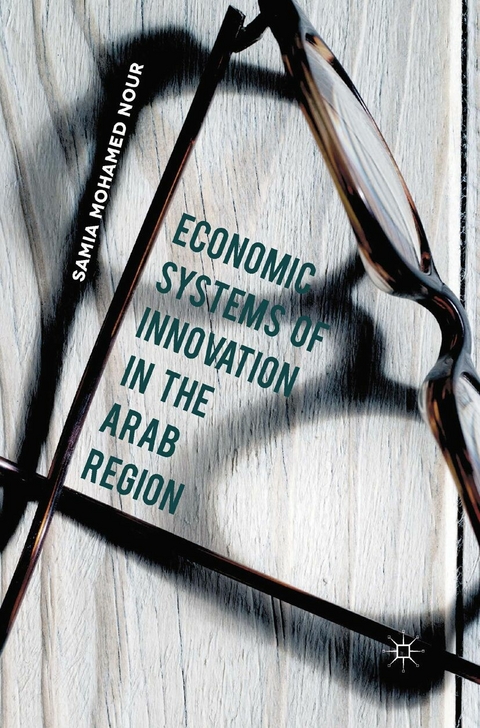
Economic Systems of Innovation in the Arab Region (eBook)
XXX, 309 Seiten
Palgrave Macmillan US (Verlag)
978-1-137-46221-3 (ISBN)
The Arab region has become a hotbed of economic growth in recent decades. While this growth has indisputably brought in wealth, there are still countless questions about the characteristics, constraints, and implications of the region's systems of innovation. Do these systems even exist in the Arab region? How does the current economic structure affect regional innovation? Is the presence of natural resources a help or a hindrance? Economic Systems of Innovation in the Arab Region discusses the causes, consequences, and implications of poor systems of innovation in the Middle East and North Africa. By examining the comparative weakness of innovation, the economic structure, and the diversity of the region, Nour shows that the development of Arab regional systems of innovation is contingent upon the development of adequate economic policies and incentives in the area. Her contribution is key for students and scholars of economics, innovation, and international relations.
Dr. Samia Satti Osman Mohamed Nour is Affiliated Researcher at United Nations University - Maastricht Economic and Social Research Institute on Innovation and Technology (UNU-MERIT), Netherlands, and Associate Professor of Economics at Khartoum University, Sudan. She received her PhD in Economics from Maastricht University (Netherlands) in 2005. She is the author of Technological Change and Skill Development in Sudan (2013), Technological Change and Skill Development in Arab Gulf Countries (2013), and Information and Communication Technology in Sudan (2015), and co-author of the Arab States Chapter of the UNESCO Science Report (2015). Dr. Nour has worked as Economic Consultant for international institutions such as the European Investment Bank (EIB), ILO, OECD, UNDP, UNFPA and UNECA. She was a member of the advisory committee for the UNDP Third Arab Knowledge Report 2014. She received the Arab Fund for Economic and Social Development Distinguished Scholar Award and Post Doctoral Fellowship (2010-2011) and the University of Khartoum Scientific Excellence Award Prize in Humanities and Educational Studies (in the field of Economics) (2013).
1. General Introduction 2. Economic Development Challenges in the Arab Region and the Need for Promoting the Systems of Innovation 3. Conceptual Framework and Literature Review 4. Overview of National Systems of Innovation in the Arab Countries 5. Overview of Regional Systems of Innovation in the Arab Region 6. Implications of poor systems of innovation in the Arab region 7. Summary and Conclusions
| Erscheint lt. Verlag | 30.4.2016 |
|---|---|
| Zusatzinfo | XXX, 309 p. |
| Verlagsort | New York |
| Sprache | englisch |
| Themenwelt | Technik |
| Wirtschaft ► Betriebswirtschaft / Management | |
| Wirtschaft ► Volkswirtschaftslehre ► Makroökonomie | |
| Schlagworte | Arab region • Development • Diversification • Economic Development • Economic Growth • Economic Structure • Education • growth • Innovation • International Relations • natural resources based-economies • R&D • rent-seeking economies • research & development (R&D) • S&T • sustainable development • Systems of Innovation |
| ISBN-10 | 1-137-46221-3 / 1137462213 |
| ISBN-13 | 978-1-137-46221-3 / 9781137462213 |
| Informationen gemäß Produktsicherheitsverordnung (GPSR) | |
| Haben Sie eine Frage zum Produkt? |
 PDF (Wasserzeichen)
DRM: Digitales Wasserzeichen
Dieses eBook enthält ein digitales Wasserzeichen und ist damit für Sie personalisiert. Bei einer missbräuchlichen Weitergabe des eBooks an Dritte ist eine Rückverfolgung an die Quelle möglich.
Dateiformat: PDF (Portable Document Format)
Mit einem festen Seitenlayout eignet sich die PDF besonders für Fachbücher mit Spalten, Tabellen und Abbildungen. Eine PDF kann auf fast allen Geräten angezeigt werden, ist aber für kleine Displays (Smartphone, eReader) nur eingeschränkt geeignet.
Systemvoraussetzungen:
PC/Mac: Mit einem PC oder Mac können Sie dieses eBook lesen. Sie benötigen dafür einen PDF-Viewer - z.B. den Adobe Reader oder Adobe Digital Editions.
eReader: Dieses eBook kann mit (fast) allen eBook-Readern gelesen werden. Mit dem amazon-Kindle ist es aber nicht kompatibel.
Smartphone/Tablet: Egal ob Apple oder Android, dieses eBook können Sie lesen. Sie benötigen dafür einen PDF-Viewer - z.B. die kostenlose Adobe Digital Editions-App.
Buying eBooks from abroad
For tax law reasons we can sell eBooks just within Germany and Switzerland. Regrettably we cannot fulfill eBook-orders from other countries.
aus dem Bereich