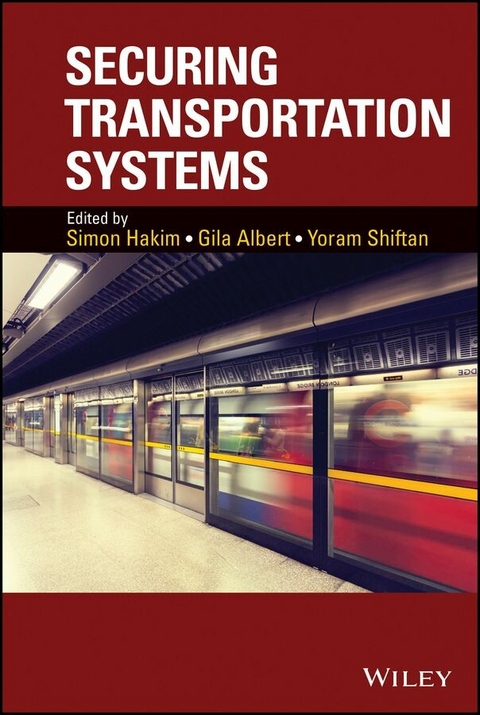
This book focuses on how to protect our transportation systems including airports and airlines, water ports, highways, tunnels and bridges, rail and mass transit, and how to better plan evacuation when severe disasters occur. These infrastructures may face various threats, namely biological, chemical, nuclear (dirty bombs), cyber, and natural disaster. The book presents the 'State of the Art' efforts to improve technological and managerial security measures against terrorism as well as during and after natural disasters. It contains insights and recommendations from a group of international recognized experts and provides guidelines for policy and public decision making including suggestions for IT companies for possible new products.
Addresses a variety of challenges and solutions within the transportation security sphere in order to protect our transportation systems Provides innovative solutions to improved communication and creating joint operations centers to manage response to threats Details technological measures to protect our transportation infrastructure, and explains their feasibility and economic costs Discusses changes in travel behavior as a response to terrorism and natural disaster Explains the role of transportation systems in supporting response operations in large disasters Written with a worldwide scope
SIMON HAKIM is professor of economics and the director of the Center for Competitive Government at Temple University in Philadelphia. His special research and consulting areas are privatization of government services, security, and economics of crime. He earned an M.A in City & Regional Planning from the Technion in Haifa, Israel, MA and Ph.D in Regional Science from the University of Pennsylvania in Philadelphia. GILA ALBERT is Senior Researcher in Or Yarok Association for Safer Driving in Israel and a faculty at HIT-Holon Institute of Technology, Faculty of Management of Technology, Israel. She has a Ph.D. in Transportation Sciences from the Technion, Israel. Dr. Albert collaborates on projects funded by the European Commission, Transportation Research Institute at the Technion, National Road Safety Authority, and the Israeli Ministry of Transport. YORAM SHIFTAN is Associate Professor of Civil and Environmental Engineering in the Technion, Israel. He is the Editor of Transport Policy and the Chair of the International Association of Travel Behavior Research (IATBR). Prof. Shiftan received his Ph.D. from MIT and since then has published dozens of papers and coedited the books Transportation Planning in the series of Classics in Planning and Transition towards Sustainable Mobility: The Role of Instruments, Individuals and Institutions.
Contributors List ix
Foreword xiii
Preface xv
1 Introduction 1
Gila Albert, Erwin A. Blackstone, Simon Hakim, and Yoram Shiftan
Section I Motivation and Challenges 23
2 Terrorist Targeting of Public Transportation: Ideology and Tactics 25
Shmuel Bar
3 On the Rationality and Optimality of Transportation Networks Defense: A Network Centrality Approach 35
Yaniv Altshuler, Rami Puzis, Yuval Elovici, Shlomo Bekhor, and Alex (Sandy) Pentland
4 Adaptive Resilience and Critical Infrastructure Security: Emergent Challenges for Transportation and Cyberphysical Infrastructure 65
Corri Zoli and Laura J. Steinberg
5 Travelers' Perceptions of Security for Long-Distance Travel: An Exploratory Italian Study 91
Eva Valeri, Amanda Stathopoulos, and Edoardo Marcucci
6 Securing Transportation Systems from Radiological Threats 109
Eric P. Rubenstein, Gordon A. Drukier, and Peter Zimmerman
7 Protecting Transportation Infrastructure against Radiological Threat 129
Ilan Yaar, Itzhak Halevy, Zvi Berenstein, and Avi Sharon
Section II Security Consideration for Modes of Transportation 149
8 Securing Public Transit Systems 151
Martin Wachs, Camille N.Y. Fink, Anastasia Loukaitou-Sideris, and Brian D. Taylor
9 Railroad Infrastructure: Protecting an Increasingly Vulnerable Asset 177
Jeremy F. Plant and Richard R. Young
10 Freight Railroad Security: A Case Study of Post-9/11 Effectiveness 189
Roland D. Pandolfi, Jr.
11 Cost-Effective Airport Security Policy 205
Robert W. Poole, Jr.
12 Seaport Operations and Security 233
Willard Price and Ali Hashemi
13 Pathologies of Privatization in the Transportation Worker Identification Credential Program 257
Benjamin Inman and John C. Morris
14 Traveler's Security Perceptions and Port Choices 271
Amalia Polydoropoulou and Athena Tsirimpa
15 Pipeline Security 281
Luca Talarico, Kenneth Sörensen, Genserik Reniers, and Johan Springael
Section III The Role of Transportation in Evacuation 313
16 Evacuation from Disaster Zones: Lessons from recent disasters in Australia and Japan 315
Daniel Baldwin Hess and Christina M. Farrell
17 Evacuation Planning and Preparedness in the Aftermath of Katrina, Rita, Irene, and Sandy: Lessons Learned 345
David S. Heller
18 Rural Evacuation and Public Transportation 363
Jaydeep Chaudhari, Zhirui Ye, and Dhrumil Patel
Index 377
1
INTRODUCTION
GILA ALBERT1,2, ERWIN A. BLACKSTONE3, SIMON HAKIM3, AND YORAM SHIFTAN4
1 The Ran Naor Foundation for the Advancement of Road Safety Research, Hod Hasharon, Israel
2 Faculty of Technology Management, HIT – Holon Institute of Technology, Holon, Israel
3 Center for Competitive Government, Fox School of Business & Management, Temple University, Philadelphia, PA, USA
4 Transportation Research Institute, Technion – Israel Institute of Technology, Haifa, Israel
1.1 OVERVIEW
Transportation systems are essential infrastructures for economic vitality, growth, and well-being throughout a country. These systems including airports, water ports, highways, tunnels and bridges, rail, and mass transit are inherently vulnerable to terrorist attacks, which dreadfully became an agonizing reality in the post-9/11 era. They might face various threats, namely, biological, chemical, nuclear (dirty bombs), cyber, and natural disaster. In fact, transportation systems continue to be a prime terrorist target (Carafano 2012).
Surface transportation is a soft target, offering terrorists relatively uncomplicated access and easily penetrable security measures. In addition, the large crowds at surface transportation facilities guarantee the attackers effectiveness and anonymity and facilitate their escape (Jenkins 2003; Potoglou et al. 2010). Therefore, terrorist attacks on various transportation systems are perceived an “efficient” means to hurt any civilization at its “soft belly.”
Transportation systems are also essential for evacuation when a natural disaster, a terrorist attack, or a man-made failure occurs. All types of emergency response depend on the availability of functional roads and transportation assets (Edwards and Goodrich 2014). Efficient and effective evacuation can significantly mitigate the catastrophe consequences and therefore serves as one of the most promising means for response and recovery from such destructive incidents.
Terrorist attacks could lead to immediate and long-term catastrophic consequences. Terror, like other forms of disaster, could trigger adaptive behavior that reduces the risk of being involved in such a tragedy (Elias et al. 2013; Floyd et al. 2004; Kirschenbaum 2006). However, the changes in travel behavior may have broad and short- and long-term effects. In the short run, travelers may adopt new behavior, including changes in travel mode, routes, and destinations and even canceling some activities and postponing others (Elias et al. 2013; Exel and Rietveld 2001; Floyd et al. 2004; Holguin-Veras et al. 2003; Kirschenbaum 2006; Potoglou et al. 2010). Long-term effects may include a decrease in the market share of specific travel modes that are perceived as less secure (e.g., public bus transportation) and thereby may indirectly affect land-use patterns (Exel and Rietveld 2001; Holguin-Veras et al. 2003; Polzin 2002). Such changes can also impact ancillary industries dependent upon the affected modes of travel.
Security considerations may result in a multitude of changes in the planning, design, implementation, and operation of transportation systems (Holguin-Veras et al. 2003; Polzin 2002; Potoglou et al. 2010). In addition, they may affect financing and investments in transportation system security, which are an important tool available to decision- and policy makers in response to terrorist incidents (Polzin 2002; Sandler and Enders 2004). In this regard, the aviation security model and its security procedure in the post-9/11 era are not applicable to surface transportation, which cannot be protected in the way commercial aviation is protected. Trains and buses must remain readily accessible, convenient, and inexpensive (Jenkins 2001; Potoglou et al. 2010).
The objective of security procedures is to reach the level of security that will maximize net social benefits from the use of each transportation mode. It is recognized that various security procedures that relate to surface transportation may affect travelers’ privacy and freedom (Potoglou et al. 2010). Therefore, transit agencies and security authorities have to consider the trade-off between security, mobility, and freedom and the expected negative effects of an attack. Policy-maker should evaluate the overall costs of security precautions, the decline in service, and the adverse privacy consequences in comparison to the expected damage of an attack. The latter may be evaluated by the cost of various potential attacks multiplied by their probability of occurrence. No doubt, planning for prevention, deterring, response, and recovery of transportation infrastructures as well as resource allocation and priority setting is a major consideration of professionals and decision makers.
This chapter provides a comprehensive assessment of timely and challenging issues in securing transportation systems against various types of terror attacks and deals with the role of transportation networks in evacuation. It presents “state-of-the-art” efforts to improve technological and managerial security during and after natural disasters and incorporates some insights from this book.
The chapter reviews recent terror incidents targeting transportation modes and infrastructure. It also incorporates research findings on terrorist motivation and response to terrorist attacks. Then, the chapter discusses the role of efficient transportation in large-scale evacuation. The following section presents potential solutions, mainly technological and managerial improvements of how to deter, prevent, and detect these attacks and recover from severe consequences. Then, we discuss the role of not-for-profit volunteers and the private sector in securing transportation systems. The chapter concludes with evaluation issues and policy implications.
1.2 MAJOR TERRORIST ATTACKS TARGETING TRANSPORTATION SYSTEMS
Terror threats to transport systems and related infrastructure have become an agonizing reality. Before 9/11, isolated incidents all over the world may have appeared to be random: major terrorist attacks between the years 1920 and 2000 targeted surface transportation, mainly trains and buses, with bombing being the most common tactic (Jenkins 2003 ). This trend significantly increased after 9/11.
Lethal terror attacks on public transportation facilities occurred in the post-9/11 era in various countries. The March 2004 Madrid train bombing, the July 2005 London Underground and double-decker bus bombing, the July 2006 Mumbai train bombing, and the Moscow Metro bombing in March 2010 are all examples of the vulnerability of public transportation system and the catastrophic consequences of these attacks. At the end of 2013, three bomb attacks targeting mass transportation occurred in the city of Volgograd in southern Russia. In October 2013, suicide bombing took place on a bus; on December 29, 2013, at a railway station; and a day later, on a trolley bus. Overall, at least 40 innocent people were killed in these three attacks on Russian transportation.
Fortunately, some terrorist plots targeting subways and trains were averted: London in 2002 and 2003, Sydney in 2005, Milan in 2006, and Barcelona in 2008. New York City prevented two alleged terror attempts in recent years. In July 2006, the FBI announced that it had foiled a plot by foreign militants that was in its “talking phase” to detonate explosives in tunnels connecting New Jersey and Manhattan; and on May 1, 2010, a car bomb was discovered in Times Square. Indeed, New York’s subway system, which is uniquely attractive to terrorists, has repeatedly been the focus of briefings by counterterrorism agencies.
Israel’s surface transportation has continuously been a main target of terror attacks since the establishment of the state in 1948. In the period 1994–2006, 17 severe terror attacks occurred on Israeli public buses and such related infrastructures as bus stations, with each attack resulting in 10 or more fatalities and dozens of injuries (Butterworth et al. 2012; Johnston 2010). In Jerusalem, the capital of Israel, 117 citizens were killed in transportation-related terror attacks, and more than 770 were injured between 2001 and 2003. However, the Israeli experience especially during the Second Uprising (Intifada), which started in September 2000 and lasted through the end of 2006, enabled training drivers and employees in preventing disasters and minimizing damages and caused changes in traveler behavior. Damages were also mitigated because the terrorists employed poor tactics and lacked professional bomb-making skills (Butterworth et al. 2012).
1.2.1 Terrorist Ideology and Tactics
Review of major terror attacks suggests that certain types of attacks are “preferred” by terrorists since they are considered “more fit” or “more legal.” Conventional wisdom asserts that terror acts stem from political, social, and economics causes. However, as Bar (2004 ) stated, it cannot be ignored that most devastating global terrorist attacks have been perpetrated in the name of Islam (Bar 2004). Moreover, as Bar further discusses in Chapter 2, the body of Islamic rulings relating to justification of modern mass killing of civilians serves as the guideline for many Islamic terror acts.
The Islamic terrorism takes into account its religious roots, the rulings of Islamic law...
| Erscheint lt. Verlag | 1.6.2015 |
|---|---|
| Sprache | englisch |
| Themenwelt | Naturwissenschaften ► Chemie |
| Naturwissenschaften ► Geowissenschaften ► Geografie / Kartografie | |
| Recht / Steuern ► Strafrecht ► Kriminologie | |
| Sozialwissenschaften ► Politik / Verwaltung | |
| Sozialwissenschaften ► Soziologie | |
| Technik ► Elektrotechnik / Energietechnik | |
| Wirtschaft ► Betriebswirtschaft / Management | |
| Schlagworte | Arbeitssicherheit u. Umweltschutz i. d. Chemie • Bauingenieur- u. Bauwesen • Chemical and Environmental Health and Safety • Chemie • Chemistry • Civil Engineering & Construction • emergency management • Infrastructure • Katastrophenschutz • Public transportation • security • security management • Sicherheitsmanagement • Terror threats,?Travel behavior • Transportation Engineering • Transportation Systems • Transport Security • Verkehrsbau |
| ISBN-10 | 1-119-07823-7 / 1119078237 |
| ISBN-13 | 978-1-119-07823-4 / 9781119078234 |
| Informationen gemäß Produktsicherheitsverordnung (GPSR) | |
| Haben Sie eine Frage zum Produkt? |
 EPUB (Adobe DRM)
Kopierschutz: Adobe-DRM
Adobe-DRM ist ein Kopierschutz, der das eBook vor Mißbrauch schützen soll. Dabei wird das eBook bereits beim Download auf Ihre persönliche Adobe-ID autorisiert. Lesen können Sie das eBook dann nur auf den Geräten, welche ebenfalls auf Ihre Adobe-ID registriert sind.
Details zum Adobe-DRM
Dateiformat: EPUB (Electronic Publication)
EPUB ist ein offener Standard für eBooks und eignet sich besonders zur Darstellung von Belletristik und Sachbüchern. Der Fließtext wird dynamisch an die Display- und Schriftgröße angepasst. Auch für mobile Lesegeräte ist EPUB daher gut geeignet.
Systemvoraussetzungen:
PC/Mac: Mit einem PC oder Mac können Sie dieses eBook lesen. Sie benötigen eine
eReader: Dieses eBook kann mit (fast) allen eBook-Readern gelesen werden. Mit dem amazon-Kindle ist es aber nicht kompatibel.
Smartphone/Tablet: Egal ob Apple oder Android, dieses eBook können Sie lesen. Sie benötigen eine
Geräteliste und zusätzliche Hinweise
Buying eBooks from abroad
For tax law reasons we can sell eBooks just within Germany and Switzerland. Regrettably we cannot fulfill eBook-orders from other countries.
aus dem Bereich