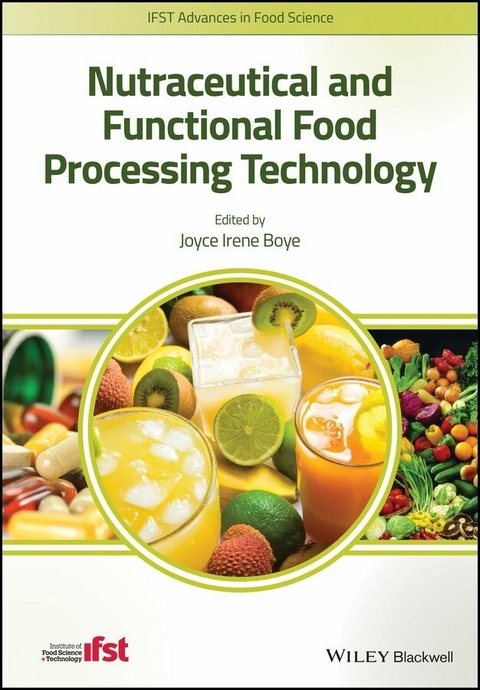
Nutraceutical and Functional Food Processing Technology (eBook)
John Wiley & Sons (Verlag)
978-1-118-50497-0 (ISBN)
For several years, the food industry has been interested in identifying components in foods which have health benefits to be used in the development of functional food and nutraceutical products. Examples of these ingredients include fibre, phytosterols, peptides, proteins, isoflavones, saponins, phytic acid, probiotics, prebiotics and functional enzymes. Although much progress has been made in the identification, extraction and characterisation of these ingredients, there remains a need for ready and near-market platform technologies for processing these ingredients into marketable value-added functional food and nutraceutical products. This book looks at how these ingredients can be effectively incorporated into food systems for market, and provides practical guidelines on how challenges in specific food sectors (such as health claims and marketing) can be addressed during processing.
Nutraceutical and Functional Food Processing Technology is a comprehensive overview of current and emerging trends in the formulation and manufacture of nutraceutical and functional food products. It highlights the distinctions between foods falling into the nutraceutical and functional food categories. Topics include sustainable and environmentally–friendly approaches to the production of health foods, guidelines and regulations, and methods for assessing safety and quality of nutraceutical and functional food products. Specific applications of nutraceuticals in emulsion and salad dressing food products, beverages and soft drinks, baked goods, cereals and extruded products, fermented food products are covered, as are novel food proteins and peptides, and methods for encapsulated nutraceutical ingredients and packaging. The impact of processing on the bioactivity of nutraceutical ingredients, allergen management and the processing of allergen-free foods, health claims and nutraceutical food product commercialization are also discussed.
Nutraceutical and Functional Food Processing Technology is a comprehensive source of practical approaches that can be used to innovate in the nutraceutical and health food sectors. Fully up-to-date and relevant across various food sectors, the book will benefit both academia and industry personnel working in the health food and food processing sectors.
Joyce Irene Boye is a Senior Research Scientist at the Food Research and Development Centre of Agriculture and Agri-Food Canada in St. Hyacinthe, Quebec and an Adjunct Professor at the Department of Bioresources Engineering, McGill University (Montreal, Canada) and the Department of Food Science and Nutrition, University of Laval, (Quebec, Canada).
For several years, the food industry has been interested in identifying components in foods which have health benefits to be used in the development of functional food and nutraceutical products. Examples of these ingredients include fibre, phytosterols, peptides, proteins, isoflavones, saponins, phytic acid, probiotics, prebiotics and functional enzymes. Although much progress has been made in the identification, extraction and characterisation of these ingredients, there remains a need for ready and near-market platform technologies for processing these ingredients into marketable value-added functional food and nutraceutical products. This book looks at how these ingredients can be effectively incorporated into food systems for market, and provides practical guidelines on how challenges in specific food sectors (such as health claims and marketing) can be addressed during processing. Nutraceutical and Functional Food Processing Technology is a comprehensive overview of current and emerging trends in the formulation and manufacture of nutraceutical and functional food products. It highlights the distinctions between foods falling into the nutraceutical and functional food categories. Topics include sustainable and environmentally friendly approaches to the production of health foods, guidelines and regulations, and methods for assessing safety and quality of nutraceutical and functional food products. Specific applications of nutraceuticals in emulsion and salad dressing food products, beverages and soft drinks, baked goods, cereals and extruded products, fermented food products are covered, as are novel food proteins and peptides, and methods for encapsulated nutraceutical ingredients and packaging. The impact of processing on the bioactivity of nutraceutical ingredients, allergen management and the processing of allergen-free foods, health claims and nutraceutical food product commercialization are also discussed. Nutraceutical and Functional Food Processing Technology is a comprehensive source of practical approaches that can be used to innovate in the nutraceutical and health food sectors. Fully up-to-date and relevant across various food sectors, the book will benefit both academia and industry personnel working in the health food and food processing sectors.
Joyce Irene Boye is a Senior Research Scientist at the Food Research and Development Centre of Agriculture and Agri-Food Canada in St. Hyacinthe, Quebec and an Adjunct Professor at the Department of Bioresources Engineering, McGill University (Montreal, Canada) and the Department of Food Science and Nutrition, University of Laval, (Quebec, Canada).
About the IFST Advances in Food Science Book Series xi
List of Contributors xiii
1 Current and Emerging Trends in the Formulation and Manufacture of Nutraceuticals and Functional Food Products 1
Alberta N. A. Aryee and Joyce Irene Boye
1.1 Introduction 1
1.2 Overview, Classification, and Benefits of Nutraceuticals and Functional Foods 2
1.3 Production of Nutraceuticals and Functional Foods 31
1.4 Current Formulation Trends and the Modern Marketplace 44
1.5 Conclusion 52
References 52
2 Functional and Sustainable Food - Biophysical Implications of a "Healthy" Food System 65
Meidad Kissinger
2.1 Introduction 65
2.2 Background 66
2.3 Functional Food Footprint - The Case of Tomatoes 69
2.4 Summary 74
References 76
3 Key Considerations in the Selection of Ingredients and Processing Technologies for Functional Foods and Nutraceutical Products 79
Ashutosh Singh and Valérie Orsat
3.1 Introduction 79
3.2 Processing Technologies for Functional Food Bioactive Components and Nutraceutical Products 81
3.3 Delivery of Nutraceuticals in Food and Its Limitations 98
3.4 Conclusion 101
References 101
4 Quality Evaluation and Safety of Commercially Available Nutraceutical and Formulated Products 113
George Brian Lockwood
4.1 Introduction 113
4.2 Contents of Single Components in Formulated Products 115
4.3 Contents of Active Constituents of Ranges of Nutraceuticals of Complex Composition 131
4.4 Bioavailability 135
4.5 Other Indicators of Quality 137
4.6 Possible Contaminants in Nutraceuticals 137
4.7 Safety 138
4.8 Adverse Effects 138
4.9 Drug Interactions 140
4.10 Conclusions 142
References 142
5 Novel Health Ingredients and Their Applications in Salad Dressings and Other Food Emulsions 151
Zhen Ma and Joyce Irene Boye
5.1 Current Developments and Emerging Trends in Food Emulsion Products 151
5.2 Emerging and Novel Ingredients in Food Emulsion Products 153
5.3 Factors Influencing Physical Characteristics of Salad Dressings and Other Food Emulsions 166
5.4 Novel Food Regulations of Salad Dressing and Mayonnaise Products 171
5.5 Processing of Salad Dressings and Other Food Emulsion Products 171
6 Processing of Beverages for the Health Food Market Consumer 189
Garima Goel Lal
6.1 Introduction 189
6.2 Consumer Trends in Beverage Consumption and Functional Beverages 190
6.3 Taste Is the Prime Factor in Choosing Food and Beverages 193
6.4 Regulatory Considerations with Respect to Ingredients and Claims 197
6.5 Desired Functional Benefits and Bioactive Ingredients 198
6.6 Health Issues Addressable through Functional Beverages 203
6.7 Beverage Processing Technology 205
6.8 Packaging 206
6.9 Other Marketing Considerations 207
6.10 Conclusion 208
References 208
7 Incorporation of Nutraceutical Ingredients in Baked Goods 211
Mehmet Hayta and Büsra Polat
7.1 Introduction 211
7.2 Bakery Products 212
7.3 Nutraceuticals and Nutraceutical-Incorporated Baked Goods 213
7.4 Conclusion 224
References 225
8 New Technologies in the Processing of Functional and Nutraceutical Cereals and Extruded Products 235
Yixiang Wang, Fatemeh Bamdad, and Lingyun Chen
8.1 Introduction 235
8.2 Cereals and Their Food Applications 236
8.3 Novel Technologies in the Processing of Cereal-Based Products 239
8.4 Future Prospects 258
References 259
9 Novel Approaches to Enhance the Functionality of Fermented Foods 269
Emmanuel Y. Anom and Chibuike C. Udenigwe
9.1 Introduction 269
9.2 Starter Culture for Fermented Food Production 270
9.3 Functionality of Fermented Foods 272
9.4 Novel Approaches to Enhancing the Functionality of Fermented Foods 280
9.5 Conclusion 286
References 286
10 Impact of Processing on the Bioactivity of Functional and Nutraceutical Ingredients in Foods 295
Alexandra Dauz and Chang Yong Lee
10.1 Introduction 295
10.2 Thermal Processing 296
10.3 Non-Thermal Processing 299
10.4 Conclusion 302
References 304
11 Encapsulation and Controlled Release Techniques for Administration and Delivery of Bioactive Components in the Health Food Sector 307
Kasipathy Kailasapathy
11.1 Introduction: Health Food Sector 307
11.2 Microencapsulation Technologies Applicable to Bioactive Functional Ingredients and Foods 309
11.3 Future Trends and Marketing Perspectives 335
References 336
12 Role and Importance of Health Claims in the Nutraceutical and Functional Food Markets 347
Alberta N. A. Aryee and Joyce Irene Boye
12.1 Introduction 347
12.2 Nutraceuticals and Functional Foods 348
12.3 Health claims 349
12.4 Conclusion 371
References 371
Index 375
Chapter 1
Current and Emerging Trends in the Formulation and Manufacture of Nutraceuticals and Functional Food Products
Alberta N. A. Aryee and Joyce Irene Boye
Agriculture & Agri-Food Canada, Saint-Hyacinthe, Canada
1.1 Introduction
In the last few decades, emphases on the role of foods have shifted from substances consumed merely to quell hunger or to provide needed nutrients for normal cellular function to substances that can potentially promote health and wellness and, particularly, reduce risk of disease. These foods are frequently referred to as nutraceuticals and/or functional foods with various reported bioactive functions (e.g., immunomodulators, antihypertensives, osteoprotectives, hypocholesterolemics, antioxidatives, and antimicrobials). Nutraceuticals and/or functional foods are a fast-growing, multi-billion-dollar global industry that has been expanding annually. Strong market growths of these foods confirm their perceived nutritional benefits and, in some cases, provide a surrogate substantiation of their health claims. It also provides evidence of increasing product innovations, consumer acceptance of healthy-living lifestyles through nutrition, and a growing shift from pharmaceutically derived supplements. Consumers are interested in preventing and/or slowing the progression of illness and disability before they become irreversible and costly to quality of life. In response to this demand, food companies are developing technologies for processing health and wellness products that will improve the efficacy of these products, maximize the potential benefits to consumers, and be cost-effective for the industry's survival in a competitive marketplace.
1.2 Overview, Classification, and Benefits of Nutraceuticals and Functional Foods
There is no universal definition of nutraceuticals and/or functional foods as it varies across countries and markets. All foods are generally functional because they provide nutrients and energy to sustain growth and support vital cellular processes. Functional foods, however, are generally considered to go beyond the provision of basic nutrients to potentially offer additional benefits such as reducing the risk of disease and/or promoting optimal health to the consumer (Hasler 2002). A study presented at the annual meeting of the American Institute for Cancer Research, in Bethesda (Maryland, United States) on November 7, 2013, showed a correlation between poor diets (high in sugar and saturated fats) and the risk of early death caused by inflammation-related health conditions (gastrointestinal [GI] tract cancers—i.e., cancers of the esophagus, stomach, colon, and rectum). The study sample included 10,500 people who were followed from 1987 through 2003 (The Weekly 2013). Of the 259 participants that had died at the end of the study period, 30 had died from GI tract cancers. The study showed that the participants who lived on poor diets were four times as likely to die from GI tract cancers as a result of poor diets that cause inflammation than those participants who consumed plant-based diets purported to be anti-inflammatory to GI tracts.
According to Health Canada (1998), the governmental authority that oversees the approval of food health claims in Canada, a functional food “is similar in appearance to, or may be, a conventional food that is consumed as part of a usual diet, and is demonstrated to have physiological benefits and/or reduce the risk of chronic disease beyond basic nutritional functions, i.e. they contain bioactive compounds.” The Institute of Medicine's Food and Nutrition Board defines functional foods as “any food or food ingredient that may provide a health benefit beyond the traditional nutrients it contains.” Other definitions of functional food are listed in Table 1.1. Health Canada (1998) further defines a nutraceutical as a “product isolated or purified from foods that is generally sold in medicinal forms not usually associated with foods. A nutraceutical is demonstrated to have a physiological benefit or provide protection against chronic disease.” Zeisel (1999) deduced the definition of nutraceuticals from the description of dietary supplements (“ingredients extracted from foods, herbs, and plants that are taken, without further modification outside of foods, for their presumed health-enhancing benefits intended to supplement the diet, that bears or contains one or more of the following dietary ingredients: a vitamin, mineral, amino acid, herb, or other botanical in the form of a capsule, powder, softgel, or gelcap, and not represented as a conventional food or as a sole item of a meal or the diet”) as a “diet supplement that delivers a concentrated form of a biologically active component of food in a non-food matrix in order to enhance health.”
Table 1.1 Some definitions of functional foods
| Organization | Definition |
| Academy of Nutrition and Dietetics | “Whole foods along with fortified, enriched, or enhanced foods that have a potentially beneficial effect on health when consumed as part of a varied diet on a regular basis at effective levels.” |
| International Food Information Council | “Foods or dietary components that may provide a health benefit beyond basic nutrition and may play a role in reducing or minimizing the risk of certain diseases and other health conditions.” |
| Institute of Food Technologists | “Foods and food components that provide a health benefit beyond basic nutrition (for the intended population).” |
| International Life Sciences Institute | “Foods that by virtue of the presence of physiologically active food components provide health benefits beyond basic nutrition.” |
| European Commission | “A food that beneficially affects one or more target functions in the body, beyond adequate nutritional effects, in a way that is relevant to either an improved state of health and well-being and/or reduction of risk of disease. It is part of a normal food pattern. It is not a pill, a capsule or any form of dietary supplement.” |
| Japanese Ministry of Health, Labour, and Welfare | “FOSHU [Food for specified health uses] refers to foods containing ingredient with functions for health and officially approved to claim its physiological effects on the human body. FOSHU is intended to be consumed for the maintenance/promotion of health or special health uses by people who wish to control health conditions, including blood pressure or blood cholesterol.” |
Source: Academy of Nutrition and Dietetics 2013. Reproduced with permission of Elsevier.
As Table 1.1 indicates, the definition of a functional food depends on the demography and the designated regulatory authority involved. The vast array of different ingredients used in the formulation of functional foods helps to explain the endless options and combinations available in the marketplace. A casual observation in any supermarket will confirm the multitude of different categories of products available in this sub-sector including solid foods, beverages, and supplements, which continue to expand on a daily basis. Over 5,500 new types of these products have been introduced to the Japanese market since 1990, the birthplace of functional foods (Siró et al. 2008), and 537 products valued at US$6.3 billion have been granted FOSHU (Foods for Specific Health Use) status since 2005 (Hartmann and Meisel 2007).
The American Dietetic Association expands the definition by categorizing functional foods into four groups. These are conventional, modified, medical, and foods for special dietary use. Conventional foods include whole foods such as garlic, nuts, whole grains, oily fish, and tomatoes, which contain bioactive chemicals and polyunsaturated fatty acids (PUFAs). For instance, oatmeal is considered a functional food because it naturally contains soluble fiber that can help lower cholesterol levels. Modified foods are those that have been enriched, enhanced, or fortified to have or increase health benefits by adding bioactive substances such as phytochemicals or other antioxidants. Such foods include omega-3 (or ω-3) enriched eggs, yoghurts with live beneficial bacterial cultures, calcium-fortified orange juice, folate-enriched bread, and energy bars. Medical foods are those that serve specific medical purposes and those for dietary use, including products such as lactose-free milk and gluten-free breads. Some of these distinctions provide another basis for classifying functional foods, as shown in Table 1.2.
Table 1.2 Categories of functional foods
| Categories | Definition | Examples |
| Basic/whole/ unaltered products | Foods naturally containing increased content of nutrients or components |
|
| Fortified products | Foods with higher contents of existing nutrients through the addition of extra quantities of those nutrients |
|
| Enriched or supplemented... |
| Erscheint lt. Verlag | 3.12.2014 |
|---|---|
| Reihe/Serie | IFST Advances in Food Science |
| IFST Advances in Food Science | IFST Advances in Food Science |
| Sprache | englisch |
| Themenwelt | Naturwissenschaften ► Biologie |
| Technik ► Lebensmitteltechnologie | |
| Wirtschaft ► Betriebswirtschaft / Management | |
| Weitere Fachgebiete ► Land- / Forstwirtschaft / Fischerei | |
| Schlagworte | Bioactivity • fibre, phytosterols, peptides, proteins, isoflavones, saponins, phytic acid, probiotics, prebiotics • Food Processing, Production & Manufacture • Food Science & Technology • Food Types • Functional Food • Functional Food, Nutraceuticals • Functional Foods & Nutraceuticals • Herstellung u. Verarbeitung von Lebensmitteln • Human health • Lebensmittel • Lebensmittelforschung u. -technologie • Lebensmittelverarbeitung • Nutraceuticals |
| ISBN-10 | 1-118-50497-6 / 1118504976 |
| ISBN-13 | 978-1-118-50497-0 / 9781118504970 |
| Informationen gemäß Produktsicherheitsverordnung (GPSR) | |
| Haben Sie eine Frage zum Produkt? |
 EPUB (Adobe DRM)
Kopierschutz: Adobe-DRM
Adobe-DRM ist ein Kopierschutz, der das eBook vor Mißbrauch schützen soll. Dabei wird das eBook bereits beim Download auf Ihre persönliche Adobe-ID autorisiert. Lesen können Sie das eBook dann nur auf den Geräten, welche ebenfalls auf Ihre Adobe-ID registriert sind.
Details zum Adobe-DRM
Dateiformat: EPUB (Electronic Publication)
EPUB ist ein offener Standard für eBooks und eignet sich besonders zur Darstellung von Belletristik und Sachbüchern. Der Fließtext wird dynamisch an die Display- und Schriftgröße angepasst. Auch für mobile Lesegeräte ist EPUB daher gut geeignet.
Systemvoraussetzungen:
PC/Mac: Mit einem PC oder Mac können Sie dieses eBook lesen. Sie benötigen eine
eReader: Dieses eBook kann mit (fast) allen eBook-Readern gelesen werden. Mit dem amazon-Kindle ist es aber nicht kompatibel.
Smartphone/Tablet: Egal ob Apple oder Android, dieses eBook können Sie lesen. Sie benötigen eine
Geräteliste und zusätzliche Hinweise
Buying eBooks from abroad
For tax law reasons we can sell eBooks just within Germany and Switzerland. Regrettably we cannot fulfill eBook-orders from other countries.
aus dem Bereich