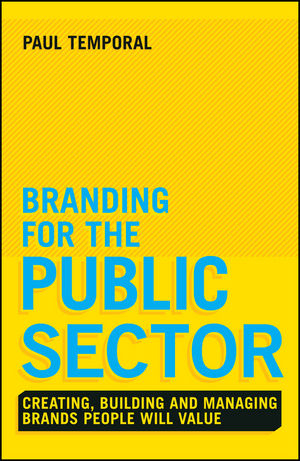
Branding for the Public Sector (eBook)
John Wiley & Sons (Verlag)
978-1-118-75627-0 (ISBN)
How to apply for-profit marketing strategies to non-profit organizations
Branding for the Public Sector presents powerful and effective branding strategies for the public sector illustrated through case studies and examples. The book covers branding architecture, brand vision, market research, brand perception, engagement, communication, managing brand change and much more. Additionally, the book highlights the future of public sector branding and how organizations in the public sector may be a key driver of economic growth and prosperity through the twenty-first century. Branding for the Public Sector offers expert guidance for managers and leaders who want to build powerful, influential brands in the public sector.
• Presents strategies and actions for building a powerful, memorable public sector brand
• Explains why the public sector will be the next huge growth sector in branding
• Explores the competencies needed to successfully manage a public sector brand
How to apply for-profit marketing strategies to non-profit organizations Branding for the Public Sector presents powerful and effective branding strategies for the public sector illustrated through case studies and examples. The book covers branding architecture, brand vision, market research, brand perception, engagement, communication, managing brand change and much more. Additionally, the book highlights the future of public sector branding and how organizations in the public sector may be a key driver of economic growth and prosperity through the twenty-first century. Branding for the Public Sector offers expert guidance for managers and leaders who want to build powerful, influential brands in the public sector. Presents strategies and actions for building a powerful, memorable public sector brand Explains why the public sector will be the next huge growth sector in branding Explores the competencies needed to successfully manage a public sector brand
DR PAUL TEMPORAL is a leading global expert on brand strategy and management. He has over 25 years of experience in brand consulting and training and is a much sought-after speaker. He has consulted for many governments and top corporations across the world, and is well known for his practical and results-oriented approach. He is an Associate Fellow at both Saïd Business School and Green Templeton College in the University of Oxford, and a Visiting Professor in Marketing at Shanghai Jiao Tong University, China. He has been a regular contributor at major international conferences and round-table events, such as those organized by The Economist Group, Business Week and World Islamic Economic Forum. Paul has also published widely in many journals and media and has featured in mainstream global media such as The New York Times, The Wall Street Journal, the Sunday Times of India, and CNBC. He has written numerous bestselling books, including Branding in Asia, Romancing the Customer, Asia's Star Brands, Advanced Brand Management (second edition), and Islamic Branding and Marketing. His main interests lie in the fields of national and corporate branding.
Preface vii
Part One: The Importance of Branding and Building Brand Strategy 1
1 The Public Sector and Branding 5
2 Public Sector Brand Categories 19
3 The Nation Brand Effect and Brand Architecture 47
4 Building a Power Public Sector Brand: Visions, Values, Emotions and Personalities 67
5 Brand Positioning 99
Part Two: Implementing and Managing Public Sector Brands 141
6 Public Sector Brand Management 145
7 Brand Communications Strategy 173
8 Brand Engagement 203
9 Tracking Brand Success 221
10 The Future of Public Sector Branding 243
Author biography 267
Acknowledgements 269
Index 271
Chapter 2
Public Sector Brand Categories
The previous chapter introduced the concept of branding in the public sector, looked at the overall trend in this area, and examined some of the benefits that can be gained as a direct result of brand development and management. Now it is time to look in more depth at the types of public sector brands that exist and why the interest in branding is increasing.
Main categories of public sector brands
There are several categories of public sector brands including the following:
- multi-nation or multi-country groups
- countries or nations
- industries or sectors
- public service and civil service
- ministry and government department brands
- government-linked corporations (GLCs)
- places, destinations and cities
- non-governmental organizations (NGOs) and non-profit organizations
- personalities and leaders
Multi-national or multi-country brands
Over the past few decades there has been a trend towards countries grouping together under an “umbrella” identity or name mainly for economic purposes, and this has resulted in megabrands that include several individual country brands – brands within brands. A good example here is the European Union (EU). The EU has 28 member states or countries, but it acts as one block with respect to many legal and trade matters. When it started out as the European Economic Community (EEC) following the Treaty of Rome in the 1960s, the idea was to create a common market for the economic benefit of all European countries. As time went by, politicians cleverly expanded its role to include social issues and now the EU is getting close to managing many aspects affecting people’s lives. While it does not readily admit to this intentionally, it certainly appears that it is increasingly removing individual national culture in favour of a European society. It has become a powerful brand in its own right and at one stage in the recent past, the re-naming of the EU to the “United States of Europe” was considered. The head of Europe’s Constitutional Convention at the time, Valéry Giscard d’Estaing, commented on the fact that the prospective change of name was in line with a re-branding of the enlarged and revamped EU. This issue remains the subject of heated debate from time to time and as an example, Viviane Reding, vice president of the European Commission and the longest-serving Brussels commissioner, called for “a true political union” to be put on the agenda for EU elections in 2014. “We need to build a United States of Europe with the Commission as government and two chambers – the European Parliament and a ‘Senate’ of Member States,” she said.1 Whether name changes occur, the EU has nevertheless assumed the stance of global brand, often imposing policies such as those on human rights and immigration on its sub-brands (member countries) that are a part of it.
Prestige comes with brand power and those that are not in “the EU club” are desperate to find ways of entry. It is so prestigious and offers so many benefits that nations will alter policies, change laws, conform to social and economic conditions and even “pay” to gain entry. Individual member countries still retain their sovereignty of course, sometimes under difficult circumstances, but the EU insists on team players. Britain’s obstinacy to change in certain areas, such as giving up the pound for the common euro currency, means that it is viewed as a bit of a rebel and not playing by the rules. The policy disputes between the EU and Britain are now increasing, with Britain’s current government looking at a possible “stay-in/move-out” referendum to be held in 2017 (after the 2015 election), if treaty change negotiations are unsuccessful. Britain has a strong brand with its own agenda and likes to manage it in its own way and is a good example of where there can be inter-brand friction between master and sub-brands.
Other megabrands have been created through the joining of nations in pursuit of common causes, as is the case with AFTA (ASEAN Free Trade Area), the UN (United Nations), NATO (North Atlantic Treaty Organization), APEC (Asia Pacific Economic Cooperation) and ASEAN (Association of Southeast Asian Nations). ASEAN has 10 member states and it too has undergone some branding activity, with advertising campaigns promoting the ASEAN for tourism and trade in just the same way as private sector commercial brands do. It is also looking to strengthen ASEAN brand power by signing more agreements on trade between members and negotiating as one entity with other parts of the world.
By forming membership blocks like these, multi-country or multi-nation brands can gain not just economic and social benefits, but also the benefits associated with their brand images. At the time of writing, the EU brand image is somewhat tarnished with several member countries under severe financial pressure and receiving EU bailout funds in return for austerity policy changes, while the ASEAN brand is on the ascendency with member countries enjoying comparatively high growth. Economic and social factors impact on these brands just as they do with any other kind of brand.
Nation or country brands
At the next level down from multi-nation brands are the nations or countries themselves. Nation (or country) branding has been in vogue and on the increase for the last two decades, although there is some debate as to whether it is possible given its complexity. However, most people would agree that countries are trying to maximize the strong elements of their identity and image in order to be more competitive.
Several countries have acknowledged that they are undertaking some form of nation branding activities in the sense that they are not confining their activities to one industry or sector, but instead are addressing many sectors in an attempt to raise their profiles and build their images in a holistic way. Some are developed nations such as South Korea, Canada, Switzerland and Australia, and some are developing countries classified as NICs (Newly Industrialized Countries) such as South Africa, India, China, Turkey, Malaysia, Mexico and Brazil. In different ways, they are all trying to ensure that their national brands are stronger than their competitor brands. There has been considerable discussion in academic circles as to whether it is possible for a country to brand itself. The answer I give when asked this question is “Yes and No!”
Taking the “no” part of the answer first, unless a country has not existed before and is totally unknown, which is impossible, it cannot create a totally new brand, it can only attempt to influence the one it has got. Every existing country already has a brand in the form of an identity and image or images made up of various perceptions held by different people, organizations or other governments that know or have had experience of it. It is the identity (what the country wants to be seen as) and the image (how it is actually seen) that governments try to influence through branding. For example, Singapore, like many other countries I have worked in, has not systematically created a country brand image, but it does have one, undoubtedly because it possesses many images and associations held by various groups of people at home and abroad. It has a brand, but one that was not deliberately created, and there are aspects of its brand image that it would no doubt like to change. For example, although it has many brand strengths, such as efficiency, safety, reliability, confidence, good organization, cosmopolitan and more, in the past, other parts of the world have had the perception that it is also unfriendly and a little bit arrogant. It is an image that government policies are trying to change.
Sometimes, a country’s image that arises from collective perceptions, can be very favourable and one that has been earned over long periods of time based on national characteristics or reputational skills; for example, Japan with consumer electronics, Germany with automotive engineering, and Switzerland with precision watchmaking. These positive images transfer on to the country image as a whole in the form of the country-of-origin effect. “Made in Germany” and “Made in Japan” bring to mind associations of high quality and innovative products.
Alternatively a country’s brand images may not be desirable. Only professional market research will give a valid answer as to whether they are or are not, but if the country brand images do not match the brand identity that the country would like to project, then there will be perception gaps. For example, for many years, Canada has wanted to be seen as a high-tech player in Asia, but the reality is that it is not, despite having many strong technology companies such as Bombardier. Research shows that its image is largely confined to education and holidays. More mention will be made of what is sometimes called the Nation Brand Effect in the section discussing brand architecture in the following chapter.
To sum up so far then, the “no” answer to the original question of “Can a country brand itself?” is that a country cannot create a new brand; it can only influence what brand it has already and...
| Erscheint lt. Verlag | 20.11.2014 |
|---|---|
| Sprache | englisch |
| Themenwelt | Wirtschaft ► Betriebswirtschaft / Management ► Marketing / Vertrieb |
| Schlagworte | Brand development • branding best practices • branding for nonprofits • branding for the public sector • branding strategies • Business & Management • Gemeinnützige Organisation • Gemeinnützige Organisationen / Marketing u. Kommunikation • Gemeinnützige Organisation • Gemeinnützige Organisationen / Marketing u. Kommunikation • marketing for the public sector • non profit branding • Nonprofit branding • Non Profit Marketing • Non-Profit Organizations / Marketing & Communications • Paul Temporal • Paul Temporal book • public sector branding • Temporal book • Wirtschaft u. Management |
| ISBN-10 | 1-118-75627-4 / 1118756274 |
| ISBN-13 | 978-1-118-75627-0 / 9781118756270 |
| Informationen gemäß Produktsicherheitsverordnung (GPSR) | |
| Haben Sie eine Frage zum Produkt? |
 EPUB (Adobe DRM)
Kopierschutz: Adobe-DRM
Adobe-DRM ist ein Kopierschutz, der das eBook vor Mißbrauch schützen soll. Dabei wird das eBook bereits beim Download auf Ihre persönliche Adobe-ID autorisiert. Lesen können Sie das eBook dann nur auf den Geräten, welche ebenfalls auf Ihre Adobe-ID registriert sind.
Details zum Adobe-DRM
Dateiformat: EPUB (Electronic Publication)
EPUB ist ein offener Standard für eBooks und eignet sich besonders zur Darstellung von Belletristik und Sachbüchern. Der Fließtext wird dynamisch an die Display- und Schriftgröße angepasst. Auch für mobile Lesegeräte ist EPUB daher gut geeignet.
Systemvoraussetzungen:
PC/Mac: Mit einem PC oder Mac können Sie dieses eBook lesen. Sie benötigen eine
eReader: Dieses eBook kann mit (fast) allen eBook-Readern gelesen werden. Mit dem amazon-Kindle ist es aber nicht kompatibel.
Smartphone/Tablet: Egal ob Apple oder Android, dieses eBook können Sie lesen. Sie benötigen eine
Geräteliste und zusätzliche Hinweise
Buying eBooks from abroad
For tax law reasons we can sell eBooks just within Germany and Switzerland. Regrettably we cannot fulfill eBook-orders from other countries.
aus dem Bereich