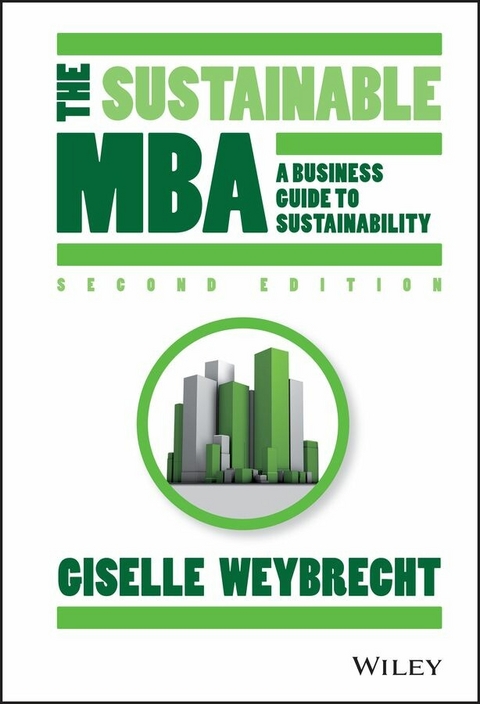
The Sustainable MBA (eBook)
John Wiley & Sons (Verlag)
978-1-118-76060-4 (ISBN)
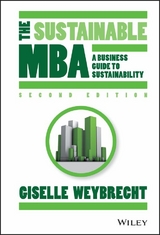
Whether you are an employee, a manager, an entrepreneur or a CEO, The Sustainable MBA Second Edition provides the knowledge and tools to help you 'green' your job and organization, to turn sustainability talk into action for the benefit of your bottom line and society as a whole.
Based on more than 150 interviews with experts in business, international organizations, NGOs and universities from around the world, this book brings together all the pieces of the business and sustainability puzzle including:
- What sustainability is, why you should be interested, how to get started, and what a sustainable organization looks like.
- A wide range of tools, guidelines, techniques and concepts that you can use to implement sustainability practices.
- Information on how to be a sustainability champion or intrapraneur in your organization including how to sell these ideas to your team and how to incorporate them into any job.
- A survey of the exciting trends in sustainable business happening around the world.
- A wealth of links to interesting resources for more information.
The Sustainable MBA Second Edition is organized like a business school course, allowing you easy access to the relevant information you need about sustainability as it relates to Accounting, Economics, Entrepreneurship, Ethics, Finance, Marketing, Organizational Behavior and HR, Operations and Strategy.
The Sustainable MBA Second Edition has been updated to reflect global developments in this evolving field to remain the definitive guide to sustainable business. Additional resources to accompany the book are available at www.thesustainablemba.com.
Giselle Weybrecht is determined to make sustainability everybody's business. Her work is focused on how to inspire and engage the next generation of business leaders to not only understand sustainability, but to put it into practice in ways that make sense for the environment, society and business. She has 15 years of experience working in sustainability in particular with the United Nations but also with governments, universities, NGOs, businesses and entrepreneurs. Giselle has a MBA from London Business School and is a frequent lecturer at universities around the world.
Whether you are an employee, a manager, an entrepreneur or a CEO, The Sustainable MBA Second Edition provides the knowledge and tools to help you green your job and organization, to turn sustainability talk into action for the benefit of your bottom line and society as a whole. Based on more than 150 interviews with experts in business, international organizations, NGOs and universities from around the world, this book brings together all the pieces of the business and sustainability puzzle including: What sustainability is, why you should be interested, how to get started, and what a sustainable organization looks like. A wide range of tools, guidelines, techniques and concepts that you can use to implement sustainability practices. Information on how to be a sustainability champion or intrapraneur in your organization including how to sell these ideas to your team and how to incorporate them into any job. A survey of the exciting trends in sustainable business happening around the world. A wealth of links to interesting resources for more information. The Sustainable MBA Second Edition is organized like a business school course, allowing you easy access to the relevant information you need about sustainability as it relates to Accounting, Economics, Entrepreneurship, Ethics, Finance, Marketing, Organizational Behavior and HR, Operations and Strategy. The Sustainable MBA Second Edition has been updated to reflect global developments in this evolving field to remain the definitive guide to sustainable business. Additional resources to accompany the book are available at www.thesustainablemba.com.
Giselle Weybrecht is determined to make sustainability everybody's business. Her work is focused on how to inspire and engage the next generation of business leaders to not only understand sustainability, but to put it into practice in ways that make sense for the environment, society and business. She has 15 years of experience working in sustainability in particular with the United Nations but also with governments, universities, NGOs, businesses and entrepreneurs. Giselle has an MBA from London Business School and is a frequent lecturer at universities around the world.
The Sustainable MBA: A Business Guide to Sustainability 5
Copyright 6
Contents 9
Preface 17
Acknowledgments 21
Part 1: Setting the Scene 25
Chapter 1: About this Book 27
Who is The Sustainable MBA for and why should I read it? 29
What you will find in The Sustainable MBA 31
How The Sustainable MBA is organized 33
Ideas on how to use this book 33
Planet Earth fact sheet 34
Chapter 2: What is Sustainability? 37
The basics 38
Other definitions 40
Sustainable development: A global effort 43
Working together: Stakeholders in sustainability 45
Chapter 3: What does this Mean for Business? 47
The business case 48
The sustainability sales pitch 54
Chapter 4: The Sustainability Journey 57
The journey 58
What does a leading company look like? 61
Chapter 5: Getting Started 65
Step by step 66
Getting past internal excuses 72
Part 2: The Core Topics 75
Chapter 6: Accounting 79
Why is it important? 80
The key concepts 82
Full or true cost accounting 82
Materiality 85
Key performance indicators 88
Measuring social impact 91
Sustainability in financial statements 92
Integrated reporting 94
Assurance 96
Challenges? 99
Trends and new ideas 100
Bringing it all together 100
Increased disclosure 101
Recognizing unrecognized assets 102
Different forms of reporting 102
Shadow reporting 103
Sustainability reporting 105
Chapter 7: Economics 109
Why is it important? 110
The key concepts 111
Sustainable consumption 112
The commons 114
Externalities 116
Market-based incentives 117
Re-evaluating GDP 121
Emerging markets 123
Challenges? 127
Trends and new ideas 128
Alternative trading systems 128
A new economic model 129
Estimating the cost of inaction 131
From free to fee 132
Valuing future generations 132
Regulatory instruments 133
Environmental valuation 135
Business and the world's poor 141
Chapter 8: Entrepreneurship 147
Why is it important? 148
The key concepts 149
Social/environmental entrepreneurs 150
Exploring new business models 153
Making changes from within 154
Generating ideas 157
Funding 160
Challenges? 163
Trends and new ideas 164
Merging and selling 164
Microbusinesses 164
Social stock exchange 165
Working with big business 166
Marketing on a shoestring 167
Some advice for entrepreneurs 170
Cooperatives 172
Chapter 9: Ethics and Corporate Governance 177
Why is it important? 178
The key concepts 179
Business and human rights 180
Labor and working conditions 183
Ethics and the individual manager 186
Corporate governance 189
Corruption 191
Bribery 193
The power of media 195
Challenges? 197
Trends and new ideas 198
Transparency and honesty 198
The company of the future 199
Fair trade 200
Crowdsourcing the truth 200
Whistleblowing 201
The role of the CEO 204
Chapter 10: Finance 207
Why is it important? 208
The key concepts 210
Sustainable investment 210
Integrating ESG 213
Fiduciary responsibilities 217
Shareholder engagement 219
Ratings and indexes 222
Project finance 225
Challenges? 227
Trends and new ideas 229
Cross-disciplinary collaboration 229
New landscape for corporate ownership 230
Long-term value 231
The role of the CFO 232
Insurance sector 233
A new kind of bank 233
Microfinance 236
Chapter 11: Marketing 241
Why is it important? 242
The key concepts 243
People 244
Products 248
Price 250
Place 253
Packaging 256
Eco-labels 260
Social marketing 263
Cause-related marketing 266
Challenges? 268
Trends and new ideas 269
Green = inexpensive 270
Eco-iconic to eco-embedded 270
Understanding how people think 271
Communicating with the customer virtually 272
Popups 272
Buycotts 273
The barcode reinvented 273
Advertising dos and don'ts 274
Chapter 12: Operations 279
Why is it important? 280
The key concepts 282
Eco-design 283
'Green' chemistry 285
Doing more with less 288
Sustainable technology 289
Suppliers and contractors 292
Transportation 295
Waste management 298
Challenges? 304
Trends and new ideas 304
Inspiration from nature 305
Products that do more 305
Traceability 306
Manufacturing differently 307
Instant feedback 307
Exploring new materials 308
Co-creation 308
Lifecycle assessment 310
Information technology/information systems 314
Chapter 13: HR and Organizational Behavior 319
Why is it important? 320
The key concepts 321
Creating a culture of sustainability 322
Communication 324
Recruiting 326
Employee engagement 328
Motivation and rewards 331
Talent development and training 332
Challenges? 335
Trends and new ideas 336
Linking pay and sustainability 336
Diversity 337
Skills for sustainability 338
Creating great workplaces 339
Changing the way we talk 340
Rise of the CSO 341
Managing change 343
Chapter 14: Strategy 347
Why is it important? 348
The key concepts 349
The wider business environment 350
Understanding where you stand 352
Understanding risks 355
Sustainability strategies 358
Goals and targets 361
Working with others 363
Influencing change 367
Challenges? 370
Trends and new ideas 371
Zero and 100% 371
Getting your customers involved 371
Instant information 372
Strategic philanthropy 373
Transformation of partners 373
Why do initiatives fail? 374
Stakeholder engagement 376
Part 3: Tools 385
Chapter 15: Tools for Monitoring, Managing, and Improving Performance 387
Assessments 388
Audits 392
Environmental and social management systems 394
Standards 397
Chapter 16: Tools for Greening Offices and Buildings 401
Steps for setting up office greening programs 403
Buildings 404
Energy 406
Water 407
Waste and recycling 409
Paper 410
Electronics 411
All those other little things 413
Commuting to work 414
Organizing green events and meetings 416
Putting together a green team 418
Performance contracting 421
Part 4: Wrapping It All Up 423
Chapter 17: What Can I Do? 425
As an employee – leading by example 426
How to turn any job into a green job 428
As a consumer – putting your money where your mouth is 429
A simple guide to making choices as a consumer 431
As a citizen – be active in your community 431
Chapter 18: What Will the Future Bring? 433
Twenty-one wise words of advice 436
Additional Resources: Who, What, Where, and How 439
Who: Different groups involved in sustainability 439
What: Sustainability issues 443
Where: Sustainability around the world 449
How: Keeping up to date 454
Endnotes 459
Index 463
| Erscheint lt. Verlag | 13.11.2013 |
|---|---|
| Sprache | englisch |
| Themenwelt | Wirtschaft ► Betriebswirtschaft / Management ► Unternehmensführung / Management |
| Schlagworte | Business & Management • Corporate Sustainability • Environmental Management, Policy & Planning • Environmental Studies • Giselle Weybrecht • Going Green • green businesses • green business practices • Green Companies • how to run a green business • how to run a sustainable business • manager’s guide to green business • Strategic Management • Strategisches Management • Sustainability in Business • sustainable business • Sustainable businesses • Sustainable Business Practices • sustainable MBA • Umweltforschung • Umweltmanagement, Politik u. -Planung • Wirtschaft u. Management |
| ISBN-10 | 1-118-76060-3 / 1118760603 |
| ISBN-13 | 978-1-118-76060-4 / 9781118760604 |
| Informationen gemäß Produktsicherheitsverordnung (GPSR) | |
| Haben Sie eine Frage zum Produkt? |
 PDF (Adobe DRM)
Kopierschutz: Adobe-DRM
Adobe-DRM ist ein Kopierschutz, der das eBook vor Mißbrauch schützen soll. Dabei wird das eBook bereits beim Download auf Ihre persönliche Adobe-ID autorisiert. Lesen können Sie das eBook dann nur auf den Geräten, welche ebenfalls auf Ihre Adobe-ID registriert sind.
Details zum Adobe-DRM
Dateiformat: PDF (Portable Document Format)
Mit einem festen Seitenlayout eignet sich die PDF besonders für Fachbücher mit Spalten, Tabellen und Abbildungen. Eine PDF kann auf fast allen Geräten angezeigt werden, ist aber für kleine Displays (Smartphone, eReader) nur eingeschränkt geeignet.
Systemvoraussetzungen:
PC/Mac: Mit einem PC oder Mac können Sie dieses eBook lesen. Sie benötigen eine
eReader: Dieses eBook kann mit (fast) allen eBook-Readern gelesen werden. Mit dem amazon-Kindle ist es aber nicht kompatibel.
Smartphone/Tablet: Egal ob Apple oder Android, dieses eBook können Sie lesen. Sie benötigen eine
Geräteliste und zusätzliche Hinweise
Buying eBooks from abroad
For tax law reasons we can sell eBooks just within Germany and Switzerland. Regrettably we cannot fulfill eBook-orders from other countries.
aus dem Bereich