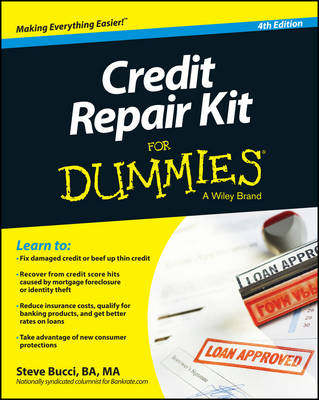
Credit Repair Kit For Dummies
For Dummies (Verlag)
978-1-118-82151-0 (ISBN)
- Titel erscheint in neuer Auflage
- Artikel merken
Manage and repair your credit Credit card debt is the third largest source of household indebtedness. Credit Repair Kit For Dummies gives you the tools you need to repair your credit.
This new edition covers: major changes with the Consumer Financial Protection Bureau's (CFPB) inquiry into overdraft practices and their effect on consumers; dealing with the effect of tightened credit markets on those with good, marginal, or bad credit; best ways to recover from mortgage related score hits or minimize damage after walking away from a home; updated Vantage Score information; updated coverage on reporting programs like FICO Score watch, etc.; what makes a good FICO score today; a new section on significant others (boyfriend/girlfriend/spouse) and credit/debt sharing; Debt Relief Act in a mortgage meltdown situation; the latest tips and advice on dealing with identity theft and annoying collection calls; and more. Online you'll find sample credit reports, forms, templates, and other helpful tools to help whip your credit into shape.
Updated credit score examples with new ranges
New information about IRS exceptions to the Mortgage Forgiveness
Advice and tips about adding information to a credit report, and beefing-up thin credit
Useful, downloadable, forms and tools on Dummies.com
If you have mediocre credit and want or need to better manage it in order to get a job, reduce insurance costs, qualify for banking products, and more, Credit Repair Kit For Dummies has it covered.
Steve Bucci, BA, MA, is a personal finance expert and a nationally syndicated columnist whose column is carried by the financial megasite Bankrate.com and the Scripps Howard News Service.
Introduction 1
About This Book 2
Foolish Assumptions 3
Icons Used in This Book 4
Beyond the Book 5
Where to Go from Here 5
Part I: Getting Started with Credit Repair 7
Chapter 1: Introducing Credit Repair, Credit Scores, and Your Life on Credit 9
Repairing Bad Credit 10
Settling debts 10
Resetting your goals 10
Rebuilding your credit by using it 11
Using a cosigner or becoming an authorized user 11
Finding sources of free help 12
Dealing with collectors 12
Weathering a Mortgage Crisis 13
Opting for help 13
Doing it on your own 14
Strategic mortgage default 14
Filing Bankruptcy 15
Protecting Your Credit and Your Identity 16
Getting familiar with credit laws 16
Receiving free reports and filing disputes 16
Signing up for credit monitoring 17
Setting alarms, alerts, and freezes 17
Identifying identity theft 18
Maintaining Good Credit Throughout Life 18
Establishing credit for the first time 18
Making credit changes at life’s stages 19
Avoiding pitfalls 19
Managing Credit in Today’s Unforgiving Economy 20
Planning for success 21
Reviewing your credit report 21
Knowing your credit score 22
Considering credit a renewable resource 23
Chapter 2: Turning Your Credit Around 25
Understanding How Your Actions Impact Your Credit Score 26
Using a Cosigner to Raise Your Score 27
Turning Small Purchases into Big Credit 28
Maximizing Your Credit Score with Major Expenditures 30
Leveraging your mortgage 31
Financing your car 33
Paying back student loans 34
Understanding How Good Debt Builds Good Credit 35
Achieving goals with the help of credit 35
Sending a message to potential lenders 36
Giving nonlenders a sense of how you handle responsibility 36
Selecting the Best Tools for Building Your Credit 37
Spending your way to better credit with a spending plan 37
Tracking your progress: Paying attention to your credit report and score 39
Chapter 3: Cleaning Up Your Credit Reports 41
Understanding the True Value of Good Credit 42
Reviewing Your Reports for Problems 44
Using the Law to Get Your Credit Record Clean and Keep It That Way 46
Identifying and Disputing Inaccurate Information 48
Understanding the dispute process 48
Correcting all your credit reports 49
Contacting the creditor 52
Adding Positive Information to Your Credit Report 53
Opening new credit accounts 53
Adding a 100-word statement 54
Chapter 4: Getting the Best Help for Bad Credit for Free 57
Knowing Whether You Need Help 58
Gauging your need for outside assistance 58
Handling situations on your own 59
Identifying Help You Can Get for Free 61
Getting help with your mortgage 62
Considering credit counseling 62
Working with an attorney 67
Chapter 5: Coping with Debt Collection 69
Handling Those Collection Phone Calls 70
Knowing what collectors can do 70
Knowing what collectors can’t do 71
Deciding whether to answer the phone 72
Preparing to answer collection calls 72
Knowing what not to say 73
Taking Charge of the Collection Process 74
Asking for proof that the debt is yours 74
Knowing when debts fade away: Statutes of limitations 75
Negotiating a payback arrangement 76
Keeping your promise 78
Identifying Escalation Options That Help 79
Asking to speak to a manager 79
Approaching the creditor 80
Fighting harassment 80
Communicating with Customer Service Before Being Placed for Collection 81
Contacting your creditor promptly 82
Explaining your situation 83
Offering a solution 83
Covering all the bases 84
Keeping Collectors in Check 85
Calling in a credit counselor 85
Referring the matter to your lawyer 85
Freeing Up Money to Pay a Collector 86
Utilizing a spending plan 86
Cutting the fat from your monthly spending 87
Avoiding Collectors Altogether 87
Getting organized 87
Stopping the paycheck-to-paycheck cycle 88
Chapter 6: Working with Collectors, Lawyers, and the Courts to Manage Debt Obligations 91
Getting a Handle on Charge-Offs 92
So what is a charge-off? 92
Making sense of unpaid charge-offs 93
Making charge-off payments 93
Coming to a Debt Settlement Agreement 95
Considering a debt settlement offer 95
Hiring a debt settlement firm 95
Reaching expiration dates on debts 96
Finding Out about Judgments and What They Mean to You 96
Understanding Wage Garnishments 99
Dodging wage garnishments 99
Figuring out how much can be garnished 101
Stating Your Case in Court 101
Managing IRS Debts, Student Loans, and Unpaid Child Support 103
Handling IRS debts 103
Educating yourself about student loans 105
Putting your kids first: Child support 107
Part II: Reducing Credit Damage from Major Setbacks 109
Chapter 7: Reducing Credit Damage in a Mortgage Crisis 111
Assessing the Damage from a Mortgage Meltdown 112
Understanding How Mortgages Differ from Other Loans 114
Spotting a foreclosure on the horizon 114
Counting to 90 115
Knowing Where to Turn for Help 116
Finding good help for free 116
Working with your mortgage servicer 116
Avoiding help that hurts 117
Alternatives to Going Down with the Ship 118
What to do first 119
What to do for more serious problems 119
What to do to end matters 120
Managing a foreclosure 121
Strategic default: Stopping payments 121
Dealing with Deficiencies 123
Preparing for “Credit Winter” 124
Chapter 8: Starting Over Again with Bankruptcy 127
Deciding Whether Bankruptcy Makes Sense for You 128
Deliberating the bankruptcy decision 128
Adding up the pluses and minuses 132
Considering a debt management plan first 134
Understanding Bankruptcy, Chapter and Verse 135
Qualifying for and Filing for Bankruptcy 136
Qualifying for Chapter 7 136
Qualifying for Chapter 13 138
Managing Your Credit After a Bankruptcy 139
Telling your side of the story 140
Reaffirming some debt 141
Repairing your credit score 142
Establishing new credit 143
Moving forward with a game plan 144
Chapter 9: Repairing Credit Damage in the Wake of Identity Theft 145
Taking Fast Action When Identity Theft Occurs 145
Communicating with the right people 146
Protecting your identity through the FACT Act 149
Sending out a fraud alert 150
Blocking fraudulent credit lines 151
Getting and Using Credit After Identity Theft 151
Closing and reopening your accounts 152
Altering your PINs, passwords, and radio transmissions 152
Changing your Social Security number and driver’s license number 153
Part III: Rebuilding Credit, No Matter Where or When You Begin 155
Chapter 10: Starting (or Restarting) Your Credit in Real Life 157
Debunking Misinformation about Banking and Credit 158
Why you need credit 158
Why credit is safe 159
Obtaining Credit: Starting Out on the Right Foot 161
Establishing a credit file without a Social Security number 161
Setting goals before you set out 162
Establishing a relationship with a financial institution 163
Using prepaid and reloadable cards 165
Fattening up your credit file 166
Avoiding high interest, fees, and scams 168
Overcoming Credit Fears and Mistakes 169
Qualifying for First-Time Cards and Lending 170
Getting a credit card 171
Using savings for credit 172
Considering Credit for Students and Military Members 173
Giving credit to students 173
Following military credit rules 175
Chapter 11: Ending Life’s Negative Credit Surprises 177
Keeping Your Credit from Hurting Your Job Prospects 178
Dealing with Rental Application Checks 179
Knowing what’s on your reports 180
Taking action 181
Qualifying for a Mortgage 181
Ordering your credit report and score 182
Looking at your credit file like a lender 183
Preparing to Purchase a Car 183
Arming yourself with information 184
Reviewing what to consider when you’re at the dealership 185
Unveiling the Relationship between Your Credit and Your Insurance Premiums 186
Understanding insurance scores 186
Getting a copy of your insurance score and insurance claim report 187
Figuring out what to do with your newfound knowledge 188
Taking other factors into account 188
Chapter 12: Protecting Your Credit During Major Life Challenges 189
Tying the Knot in Life and in Credit: A Couples’ Guide to Building Good Credit 190
Engaging in prenuptial financial discussions 190
Considering joint accounts 192
Managing joint debt 194
Avoiding money conflicts 195
Protecting Your Finances in a Divorce 196
Taking precautions when a split-up looms 196
Preparing your credit before heading to court 197
Protecting your credit in a divorce decree and beyond 198
Keeping Credit Strong While Unemployed 201
Preparing your credit for the worst-case scenario 202
Using credit when you don’t have a job 202
Protecting your credit lines 204
Curing Medical Debt 205
Reviewing your options for paying medical bills 205
Discovering how insurers get your medical information 209
Monitoring insurance claims for errors 210
Dealing with denied medical claims 211
Resolving Credit Issues After the Death of a Spouse or Partner 212
Understanding what happens to joint credit when you’re single again 213
Knowing exactly what your liability is 213
Building your credit record on your own 214
Fitting Credit into Retirement 215
Budgeting on a fixed income 215
Using credit for convenience 216
Part IV: Big Brother Credit is Watching You: Credit Reporting and Scoring 219
Chapter 13: Discovering How Credit Reporting Works 221
Grasping the Importance of Your Credit Report 222
What is a Credit Report, Exactly? 223
Revealing the facts about your financial transactions 223
Providing insight into your character 225
The Negatives and Positives of Credit Reporting 226
The negatives 226
The positives 228
Your Credit Report’s Numerical Offspring: The Credit Score 228
Cracking credit score components 229
The reasoning behind reason codes 232
Chapter 14: Understanding Credit Reports and Scores 235
Getting Copies of Your Credit Reports 236
Where to get your reports 237
What you need to provide 238
When to get copies of your credit reports 238
Tracking Down Specialty Reports: From Apartments to Casinos to Prescriptions 240
Perusing Your Credit Reports 243
Personal profile: It’s all about your details 244
Accounts summary: An overview of your financial history 244
Public records: Tallying up your legal losses 245
Credit inquiries: Tracking who has been accessing your file 245
Account history: Think of it as a payment CSI 246
Your optional 100-word statements: Getting the last word 251
Correcting Any Errors You Find 252
Contacting the credit bureau 252
Contacting the creditor 253
Getting and Understanding Your Credit Scores 254
Ordering your score 255
Telling a good score from a bad one 256
Connecting pricing to your credit score 258
Knowing the reason for reason statements 260
Chapter 15: Monitoring Your Credit Reports and Scores 261
How Credit Monitoring Really Works 262
Understanding the Types of Monitoring Services Available 262
Making a Case for and against Third-Party Credit Monitoring 264
Monitoring on your own 265
When paid monitoring may be worth the time and money 266
Recognizing the protection you have already 267
Getting Your Money’s Worth from Monitoring Services 268
Setting Alarms, Alerts, and Freezes 269
Alarms 269
Fraud alerts 269
Credit freezes 270
Part V: Never Have Bad Credit Again! Successful Credit Management for Life 271
Chapter 16: Putting Yourself in Control of Your Credit 273
Determining Your Credit Style 274
Balancing Spending, Savings, and Credit Use 275
Spending on your terms 276
Saving for financial emergencies 276
Using credit to enhance your life 277
Remembering the Importance of Planning When It
Comes to Your Credit 277
Zeroing in on the plans others have for your money 278
Developing your own plans for your future 278
Chapter 17: Taking a Sustainable Approach to Your Credit 281
Going Green: Treating Credit as a Renewable Resource 282
Recognizing your credit environment 282
Taking a closer look at the parts that make up your credit ecosystem 283
Sustaining Your Credit Ecosystem for Life 285
Funding college 285
Home sweet home 286
Credit on wheels 286
Steering Clear of Credit Pollution 286
Endangering your payment history 287
Clear-cutting your credit in bankruptcy 287
Outlasting a long, cold credit winter 288
Surviving and Reviving After a Credit Catastrophe 289
Understanding what happened 289
Rebuilding your credit ecosystem 290
Chapter 18: Safeguarding Your Credit with a Spending Plan 293
Appreciating the Benefits of a Solid Spending Plan 294
Deciding on Goals: Imagining Your Future as You Want It to Be 296
Setting the stage for planning 296
Categorizing your goals 297
Putting your goals in order 298
Building Your Vision of Your Future 298
Step 1: Counting up your income 298
Step 2: Tallying what you spend 300
Step 3: Making savings part of your spending plan 305
Step 4: Managing your credit to improve your spending plan 308
Step 5: Looking at your insurance options 310
Step 6: Planning for the IRS 311
Step 7: Planning for retirement 313
Using Cool Tools to Help You Build and Stick to a Spending Plan 315
Web-based financial calculators 315
Budgeting websites 316
Smart-phone apps 316
Spending plan assistance 317
Adjusting Your Priorities and Your Plan 317
Chapter 19: Knowing Your Rights to Protect Your Credit 319
Why You Have the Right to Credit Protections 320
The CARD Act: Shielding You from Credit Card Abuse 321
The Consumer Financial Protection Bureau: Your BFF (Best Financial Friend) 323
Safeguarding Your Credit Data through the FACT Act 324
The FDCPA: Providing Protection Against Debt Collectors 326
Controlling the contacts 326
Finding out about the debt 327
Stopping a collector from contacting you 327
Spotting prohibited behavior 328
Suing a collector 328
Exploring Other Protections 329
The ins and outs of payday loans 329
The details of debt settlement 331
The scoop on the statute of limitations 333
Chapter 20: Protecting Your Identity 335
Keeping Thieves at Bay 336
Getting on the technology train 336
Looking out for phishing scams 337
Safeguarding your computer data 338
Keeping passwords secret 339
Protecting your mail 340
Storing financial data in your home 340
Putting your credit information on ice 341
Shielding your credit card number 342
Catching Identity Thieves in the Act 344
Watching for early-warning notices 345
Early warnings from the IRS 345
Handling a collections call 346
Detecting unauthorized charges 346
Being denied credit or account access 347
Noticing missing account statements 347
Part VI: The Part of Tens 349
Chapter 21: Ten Consumer Protections Everyone Needs to Know 351
The Fair Debt Collection Practices Act 351
The Bankruptcy Abuse Prevention and Consumer Protection Act 352
Your Lawyer 353
Consumer Credit Counseling 354
Statute of Limitations Laws 354
Your State Attorney General 354
The Consumer Financial Protection Bureau 355
The Credit Card Accountability, Responsibility, and Disclosure Act 356
The Fair and Accurate Credit Transactions Act 357
The Federal Trade Commission 358
Chapter 22: Ten Strategies for Dealing with Student Loans 359
Knowing How Student Loans Are Reported Differently Than Other Loans 359
Dealing with the Collection Process 360
Identifying the Best Repayment Option for Your Situation 361
Taking Your Loans to Bankruptcy 362
Dealing with the Prospect of Default 362
Gaining Student Loan Forgiveness 363
Lowering Your Bill While You’re in School 364
Keeping Up with Your Loans After You’re Out 365
Setting Limits During the Planning and Application Process 366
Getting Help if You’re in the Military 367
Chapter 23: Ten Ways to Deal with a Mortgage Meltdown 369
Knowing When You’re in Trouble 369
Knowing How Your State’s Laws Treat Foreclosures 370
Nonrecourse or recourse 370
Judicial or nonjudicial 371
Deciding Whether to Stay or Go 371
Walking away 372
Working with the lender to exit 372
Staying the course 373
Tightening Your Spending to Stay in Your Home 373
Prioritizing Your Spending to Build Cash 374
Lessening the Damage to Your Credit 374
Knowing Who to Call 375
Beware of Scams 375
Beefing Up Your Credit with Lines of Credit 376
Consulting an Attorney 376
Index 377
| Erscheint lt. Verlag | 29.4.2014 |
|---|---|
| Sprache | englisch |
| Maße | 188 x 234 mm |
| Gewicht | 544 g |
| Themenwelt | Betriebswirtschaft / Management ► Spezielle Betriebswirtschaftslehre ► Bankbetriebslehre |
| ISBN-10 | 1-118-82151-3 / 1118821513 |
| ISBN-13 | 978-1-118-82151-0 / 9781118821510 |
| Zustand | Neuware |
| Informationen gemäß Produktsicherheitsverordnung (GPSR) | |
| Haben Sie eine Frage zum Produkt? |
aus dem Bereich