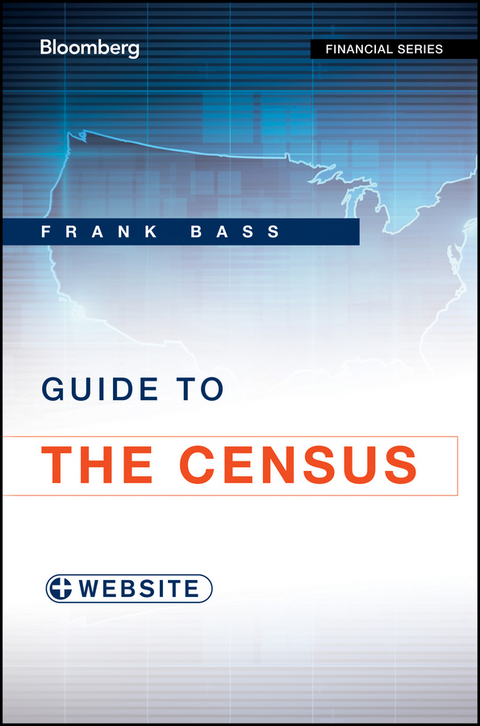
Guide to the Census (eBook)
272 Seiten
John Wiley & Sons (Verlag)
978-1-118-41989-2 (ISBN)
This handy resource offers a reference guide for anyone interested in tailoring specific Census data to their needs. It includes computer coding (SAS v9.x) software for extracting targeted data from thousands of Census files, as well as primers on using online tools and mapping software for analyzing data. The book offers thorough coverage of all aspects of census data including its historical significance, suggestions for parsing housing, occupation, transportation, economic, health, and other data from the census, and much more.
* Offers an guide to analyzing Census data that can have an impact on financial markets as well as housing and economic data boding ill or well for the future of the economy
* It includes computer coding (SAS v9.x) scripts for extracting specific data from Census files
* Offers guidance on using thousands of variables from Census results released every year and American Community Survey data now released every year
* The only one-stop guide to analyzing and using annual and decennial Census data
Bass offers a practical guide for leveraging information compiled by the Census to further research as well as business interests.
Frank Bass is an award-winning journalist who has usedCensus data for more than three decades. He is the author ofThe Associated Press Guide to Internet Research andReporting, and he has lectured extensively about demographicresearch throughout the United States. Bass was the lead newsmanager for the AP's coverage of the 2000 Census. He joinedBloomberg in 2010 and is a data editor for Bloomberg News in NewYork. He was also the data editor for coverage of the 2010 Censusfor the State and Municipality team as well as a consultant for theProjects and Investigations team. Bass has worked at the WallStreet Journal, the Houston Post (where he was the 1994Texas Headliners Foundation Reporter of the Year) and theAlabama Journal, where he shared the 1988 Pulitzer Prize forGeneral News Reporting.
Acknowledgments xi
Introduction xiii
PART I: GUIDE TO THE DECENNIAL CENSUS
CHAPTER 1 The Evolution of the Census 3
Who Relies on the Census? 5
Understanding the Current Census 11
Following Census Results 13
Conclusion 14
Notes 15
CHAPTER 2 Understanding Census Geography 17
Narrowing Geographical Scope 18
Working with Standard Geographies 20
Avoiding Geographic Confusion 22
Working with Very Small Geographies 25
Conclusion 28
Notes 28
CHAPTER 3 Understanding Basic Census Counts 29
Determining Political Representation 30
Creating Political Boundaries 31
Understanding the Fundamentals of Redistricting Files 33
Analyzing Age, Gender, and Detailed Race Data 35
Conclusion 37
Notes 38
CHAPTER 4 Analyzing Critical Relationships 41
Understanding Household Relationships 42
Digging Deeper into Household Relationships 45
Making Sense of Summary File 2 46
Notes 48
CHAPTER 5 Working with Housing Data 49
Grasping the Basics of Housing 50
Understanding Populations within Households 52
Conclusion 54
Notes 55
CHAPTER 6 Analyzing Race and Ethnicity 57
Understanding Emerging Groups 58
Analyzing Tribal Affiliations 62
Conclusion 63
Notes 68
PART II: THE AMERICAN COMMUNITY SURVEY
CHAPTER 7 Using the American Community Survey 71
Resolving Expensive Data Collection 72
Understanding Potential Weaknesses 74
Modifying Future Surveys 74
Conclusion 76
Notes 77
CHAPTER 8 Making Sense of Housing 79
Comparing ACS Housing Data with Decennial Census 80
Assessing Populations with Housing Data 81
Using Ancillary Figures for Insight 84
Conclusion 85
Notes 87
CHAPTER 9 Learning about Education 89
Correlating Education and Economic Achievement 90
Discovering Geographic Patterns in Educational Attainment 92
Assessing Strengths and Shortcomings of ACS Education Data 97
Conclusion 99
Notes 102
CHAPTER 10 Speaking the Languages 103
Speaking the Language 104
Conclusion 110
Notes 110
CHAPTER 11 Working with Occupations 111
Understanding Types of Jobs 112
Analyzing Specific Occupations 113
Analyzing Military Service 117
Conclusion 120
Notes 120
CHAPTER 12 Analyzing Transportation Trends 123
Establishing Vehicle Use 124
Determining Commuting Patterns 124
Gauging the Importance of Commuting Patterns 128
Conclusion 131
Notes 131
CHAPTER 13 Assessing Income 133
Understanding Income Variability 134
Measuring Poverty 135
Assessing Income Distribution 139
Conclusion 143
Notes 144
CHAPTER 14 Analyzing Health Data 145
Understanding Types of Health Insurance 146
Parsing Disability Data 146
Understanding Nutrition Data 148
Overlooking an Obvious Health Data Point 150
Conclusion 152
Notes 152
PART III: RESOURCES
APPENDIX A Using American FactFinder 157
APPENDIX B Using Raw Data Files 171
APPENDIX C Glossary of Census Terms 197
APPENDIX D Online Resources 221
APPENDIX E Mapping Census Data 225
APPENDIX F Comparing Census and American Community Survey Characteristics 231
About the Website 235
About the Author 237
Index 239
| Erscheint lt. Verlag | 14.3.2013 |
|---|---|
| Reihe/Serie | Bloomberg Professional |
| Sprache | englisch |
| Themenwelt | Wirtschaft ► Betriebswirtschaft / Management ► Finanzierung |
| Schlagworte | Finance & Investments • Finance & Investments Special Topics • Finanz- u. Anlagewesen • Finanzwesen • Spezialthemen Finanz- u. Anlagewesen |
| ISBN-10 | 1-118-41989-8 / 1118419898 |
| ISBN-13 | 978-1-118-41989-2 / 9781118419892 |
| Informationen gemäß Produktsicherheitsverordnung (GPSR) | |
| Haben Sie eine Frage zum Produkt? |
 PDF (Adobe DRM)
Kopierschutz: Adobe-DRM
Adobe-DRM ist ein Kopierschutz, der das eBook vor Mißbrauch schützen soll. Dabei wird das eBook bereits beim Download auf Ihre persönliche Adobe-ID autorisiert. Lesen können Sie das eBook dann nur auf den Geräten, welche ebenfalls auf Ihre Adobe-ID registriert sind.
Details zum Adobe-DRM
Dateiformat: PDF (Portable Document Format)
Mit einem festen Seitenlayout eignet sich die PDF besonders für Fachbücher mit Spalten, Tabellen und Abbildungen. Eine PDF kann auf fast allen Geräten angezeigt werden, ist aber für kleine Displays (Smartphone, eReader) nur eingeschränkt geeignet.
Systemvoraussetzungen:
PC/Mac: Mit einem PC oder Mac können Sie dieses eBook lesen. Sie benötigen eine
eReader: Dieses eBook kann mit (fast) allen eBook-Readern gelesen werden. Mit dem amazon-Kindle ist es aber nicht kompatibel.
Smartphone/Tablet: Egal ob Apple oder Android, dieses eBook können Sie lesen. Sie benötigen eine
Geräteliste und zusätzliche Hinweise
Buying eBooks from abroad
For tax law reasons we can sell eBooks just within Germany and Switzerland. Regrettably we cannot fulfill eBook-orders from other countries.
aus dem Bereich