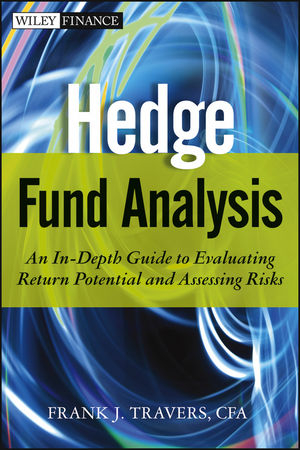
Hedge Fund Analysis (eBook)
416 Seiten
John Wiley & Sons (Verlag)
978-1-118-23756-4 (ISBN)
evaluation process
Investing in hedge funds is different from investing in other
asset classes. There is much less publicly available information
about hedge funds performance than there is about mutual funds or
individual stocks. Consequently, investing in this class requires
more sophisticated investment knowledge, greater due diligence,
and, in many cases, a better-developed ability to evaluate
investment managers.
Hedge Fund Analysis provides a broad framework of how to
approach this endeavor, from initial screening to analytical
techniques, interviewing skills, and legal and contract
negotiations. Along the way, it demonstrates a variety of
mechanisms for monitoring and tracking hedge funds and the
underlying hedge fund portfolios--explaining each stage of the
process in minute detail and providing specific examples which
fully explain the opportunities and challenges you'll face each
step of the way.
* Provides a detailed look at how to source hedge funds, screen
through them, and rank their strengths and weaknesses
* Lays out a thorough process for evaluating funds, from initial
interviews to performance analysis to onsite meetings
* Reveals what questions to ask by strategy in order to
understand the underlying risk factors associated with each
* Highlights non-investment analysis, including operational due
diligence and risk management, as integral elements in the
process
Written by a financial professional with over twenty years of
experience conducting investment manager due diligence, this book
will put you in a position to make more informed decisions when
investing in hedge funds.
FRANK J. TRAVERS, CFA, is a portfolio manager at Larch Lane Advisors. He has over two decades of experience analyzing traditional long-only, private equity, and hedge fund strategies. Previously, he was the director of research at First Peninsula Capital and a portfolio manager at Pine Street Advisors and CIC Group. Additionally, he held positions as the director of due diligence at CIBC World Markets, associate director of international equity research at Evaluation Associates, and senior analyst positions at Morgan Stanley Asset Management and RCB Trust. Travers is the author of Investment Manager Analysis: A Comprehensive Guide to Portfolio Selection, Monitoring, and Optimization, also published by Wiley. He received his BS in finance from St. John's University and his MBA from Fordham University.
Introduction xi
PART ONE Background
CHAPTER 1 Hedge Fund History 3
So Who Invented the Hedge Fund? 4
The Samurai 4
The Academic 5
The Legend 14
The Innovator 17
CHAPTER 2 Hedge Fund Asset Class 29
Definition 29
Hedge Fund Structure 31
Hedge Fund Strategies 32
Advantages of Allocating to Hedge Funds 43
Hedge Fund Size and Age Impacts Performance 52
PART TWO Hedge Fund Due Diligence
CHAPTER 3 Due Diligence Process 57
Key Areas of Focus within Each Component of Due Diligence 57
The Due Diligence Process Highlighted in This Book 60
Putting It All Together 67
Some Initial Thoughts 70
CHAPTER 4 Initial Data Collection 77
Data Collection 78
Due Diligence Questionnaire (DDQ) 80
Fictional Capital Management 80
Other Materials 106
Further Analysis 108
13F Analysis 116
Hedge Fund Journal 119
CHAPTER 5 Initial Interview 121
Initial Call or Meeting 121
Phone Interviews 122
Meeting Notes 139
CHAPTER 6 Quantitative Analysis 145
Performance Measures 146
Absolute Return Measures 146
Absolute Risk Measures 154
Regression-Based Statistics 164
Peer Group Analysis 168
CHAPTER 7 Portfolio Analysis 173
Attribution Analysis 174
Fundamental Analysis 189
Evaluating Portfolio Data 193
CHAPTER 8 Onsite Interviews 217
Onsite Meeting Strategies 219
One-on-One Meetings 219
Meeting with More Than One Person 222
Different Perspectives 223
Meeting Notes 224
Onsite Interviews at Fictional Capital Management (FCM) 228
CHAPTER 9 Operational Due Diligence 259
Case Study: Bayou Fund 259
Definition 261
Importance of Operational Due Diligence 263
Categorization of Operational Due Diligence 267
Interview with FCM Operational Staff 301
CHAPTER 10 Risk Due Diligence 309
Graphical Depiction of Hedge Fund Risks 312
Risk Due Diligence 314
Factor Decomposition Analysis 330
Interview with FCM Risk Manager 333
CHAPTER 11 Reference and Background Checks 339
Onlist and Offlist References 340
Internet and Social Media 341
Contacting References 343
Problematic References 346
Whose References Should You Check? 349
How Many Reference Calls Are Enough? 350
Background Checks 352
Summary of Reference Calls for FCM 353
CHAPTER 12 Hedge Fund Scoring Model and Decision Making 357
Hedge Fund Scoring Model 358
Putting It All Together 374
About the Author 379
Index 381
"Starting from hedge funds's roots in Shogunate Japan, Frank
Travers has written a truly comprehensive book on hedge fund
analysis. Pulling from his years of experience as a hedge
fund allocator, Travers offers insights that heretofore could only
be learned on the job. With a colorful writing style and a
robust sense of history, Hedge Fund Analysis is as
interesting for the experience hedge fund professional as it
is compelling for the novice. This book is a must read for
anyone interested in hedge fund research."--Bruce
MacDonald, Chief Investment Officer, Simple
Alternatives
"As the title suggests, it is a no non-sense guide to the
exercise of selecting hedge funds, that uses a sober and methodical
language - among the few whimsical items are the fictional
hedge fund organisation (FCM) and some dry
quips."--Opalesque
| Erscheint lt. Verlag | 25.9.2015 |
|---|---|
| Reihe/Serie | Wiley Finance Editions | Wiley Finance Editions |
| Sprache | englisch |
| Themenwelt | Recht / Steuern ► Wirtschaftsrecht |
| Wirtschaft ► Betriebswirtschaft / Management ► Finanzierung | |
| Schlagworte | Finance & Investments • Finanz- u. Anlagewesen • Institutional & Corporate Finance • Institutionelle Finanzplanung |
| ISBN-10 | 1-118-23756-0 / 1118237560 |
| ISBN-13 | 978-1-118-23756-4 / 9781118237564 |
| Informationen gemäß Produktsicherheitsverordnung (GPSR) | |
| Haben Sie eine Frage zum Produkt? |
 EPUB (Adobe DRM)
Kopierschutz: Adobe-DRM
Adobe-DRM ist ein Kopierschutz, der das eBook vor Mißbrauch schützen soll. Dabei wird das eBook bereits beim Download auf Ihre persönliche Adobe-ID autorisiert. Lesen können Sie das eBook dann nur auf den Geräten, welche ebenfalls auf Ihre Adobe-ID registriert sind.
Details zum Adobe-DRM
Dateiformat: EPUB (Electronic Publication)
EPUB ist ein offener Standard für eBooks und eignet sich besonders zur Darstellung von Belletristik und Sachbüchern. Der Fließtext wird dynamisch an die Display- und Schriftgröße angepasst. Auch für mobile Lesegeräte ist EPUB daher gut geeignet.
Systemvoraussetzungen:
PC/Mac: Mit einem PC oder Mac können Sie dieses eBook lesen. Sie benötigen eine
eReader: Dieses eBook kann mit (fast) allen eBook-Readern gelesen werden. Mit dem amazon-Kindle ist es aber nicht kompatibel.
Smartphone/Tablet: Egal ob Apple oder Android, dieses eBook können Sie lesen. Sie benötigen eine
Geräteliste und zusätzliche Hinweise
Buying eBooks from abroad
For tax law reasons we can sell eBooks just within Germany and Switzerland. Regrettably we cannot fulfill eBook-orders from other countries.
aus dem Bereich