Zum Hauptinhalt springen
Nicht aus der Schweiz? Besuchen Sie lehmanns.de

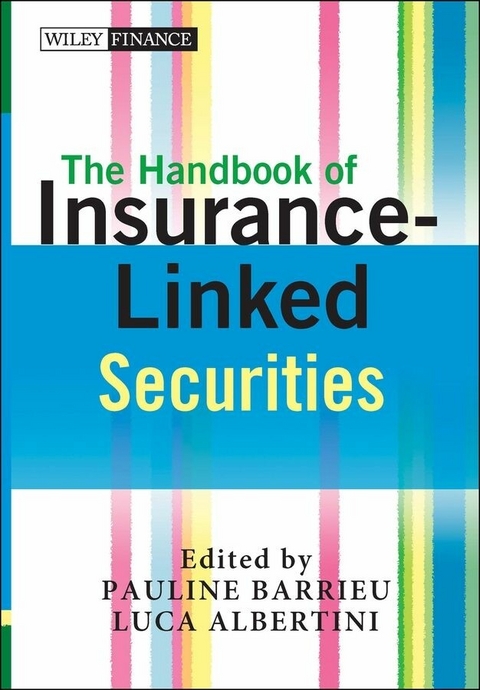
The Handbook of Insurance-Linked Securities (eBook)

eBook Download: EPUB
2010
John Wiley & Sons (Verlag)
978-0-470-68508-2 (ISBN)
Lese- und Medienproben

The Handbook of Insurance-Linked Securities -
Systemvoraussetzungen
91,99 inkl. MwSt
(CHF 89,85)
Der eBook-Verkauf erfolgt durch die Lehmanns Media GmbH (Berlin) zum Preis in Euro inkl. MwSt.
  • Download sofort lieferbar
  • Zahlungsarten anzeigen
'Luca Albertini and Pauline Barrieu are to be congratulated on this volume. Written in a period where structured projects in finance are having a difficult time, it is worthwhile to return to the cradle of securitisation: insurance. Spread out over three parts (life, non- life, and tax and regulatory issues) the 26 chapters, written mainly by practitioners, give an excellent overview of this challenging field of modern insurance. Methodology and examples nicely go hand in hand. The overall slant being towards actual analyses of concrete products. No doubt this book will become a milestone going forward for actuarial students, researchers, regulators and practitioners alike.'
Paul Embrechts, Professor of Mathematics and Director of RiskLab, ETH Zurich

The convergence of insurance with the capital markets has opened up an alternative channel for insurers to transfer risk, raise capital and optimize their regulatory reserves as well as offering institutions a source of relatively liquid investment with limited correlation with other exposures. One of the financial instruments allowing for the cession of insurance-related risks to the capital markets is Insurance-Linked Securities (ILS).

This book provides hands-on information essential for market participants, drawing on the insights and expertise of an impressive team of international market players, representing the various aspects and perspectives of this growing sector.

The book presents the state of the art in Insurance-Linked Securitization, by exploring the various roles for the different parties involved in the transactions, the motivation for the transaction sponsors, the potential inherent pitfalls, the latest developments and transaction structures and the key challenges faced by the market.

The book is organized into parts, each covering a specific topic or sector of the market. After a general overview of the ILS market, the Insurance-Linked Securitization process is studied in detail. A distinction is made between non-life and life securitization, due to the specificities of each sector. The process and all the actors involved are identified and considered in a comprehensive and systematic way. The concepts are first looked at in a general way, before the analysis of relevant case studies where the ILS technology is applied.

Particular focus is given to:

  • the key stages in both non-life and life securitizations, including the general features of the transactions, the cedant's perspectives, the legal issues, the rating methodologies, the choice of an appropriate trigger and the risk modeling,
  • the particular challenges related to longevity securitization,
  • the investor's perspective and the question of the management of a portfolio of ILS, the general issues related to insurance-linked securitization, such as accounting and tax issues, regulatory issues and solvency capital requirements.

The book is accompanied by a website www.wiley.com/go/albertini_barrieu_ILS which will feature updates and additions to the various contributions to follow market developments.

Dr PAULINE BARRIEU is a Reader (associate professor) at the London School of Economics. She has two PhDs in Mathematics and in Finance. Her research interests are mainly on the study of problems at the interface between finance and insurance, in particular ILS. She also works on quantitative methods for risk measurement and robust decision taking, with applications in finance and environmental economics.

LUCA ALBERTINI is Chief Executive Officer of Leadenhall Capital Partners, an asset management company dedicated to insurance linked investments strategies. Luca has over 16 year’s securitisation experience, having worked at Citibank, GE Capital, Credit Suisse First Boston and at Swiss Re, where he became responsible for the European Insurance Linked Securities team.


"e;Luca Albertini and Pauline Barrieu are to be congratulated on this volume. Written in a period where structured projects in finance are having a difficult time, it is worthwhile to return to the cradle of securitisation: insurance. Spread out over three parts (life, non- life, and tax and regulatory issues) the 26 chapters, written mainly by practitioners, give an excellent overview of this challenging field of modern insurance. Methodology and examples nicely go hand in hand. The overall slant being towards actual analyses of concrete products. No doubt this book will become a milestone going forward for actuarial students, researchers, regulators and practitioners alike."e; Paul Embrechts, Professor of Mathematics and Director of RiskLab, ETH Zurich The convergence of insurance with the capital markets has opened up an alternative channel for insurers to transfer risk, raise capital and optimize their regulatory reserves as well as offering institutions a source of relatively liquid investment with limited correlation with other exposures. One of the financial instruments allowing for the cession of insurance-related risks to the capital markets is Insurance-Linked Securities (ILS). This book provides hands-on information essential for market participants, drawing on the insights and expertise of an impressive team of international market players, representing the various aspects and perspectives of this growing sector. The book presents the state of the art in Insurance-Linked Securitization, by exploring the various roles for the different parties involved in the transactions, the motivation for the transaction sponsors, the potential inherent pitfalls, the latest developments and transaction structures and the key challenges faced by the market. The book is organized into parts, each covering a specific topic or sector of the market. After a general overview of the ILS market, the Insurance-Linked Securitization process is studied in detail. A distinction is made between non-life and life securitization, due to the specificities of each sector. The process and all the actors involved are identified and considered in a comprehensive and systematic way. The concepts are first looked at in a general way, before the analysis of relevant case studies where the ILS technology is applied. Particular focus is given to: the key stages in both non-life and life securitizations, including the general features of the transactions, the cedant's perspectives, the legal issues, the rating methodologies, the choice of an appropriate trigger and the risk modeling, the particular challenges related to longevity securitization, the investor's perspective and the question of the management of a portfolio of ILS, the general issues related to insurance-linked securitization, such as accounting and tax issues, regulatory issues and solvency capital requirements. The book is accompanied by a website www.wiley.com/go/albertini_barrieu_ILS which will feature updates and additions to the various contributions to follow market developments.

About the editors DR PAULINE BARRIEU is a Reader (Associate Professor) at the London School of Economics. She has two PhDs in Mathematics and in Finance. Her research interests are mainly on the study of problems at the interface between finance and insurance, in particular ILS. She also works on quantitative methods for risk measurement and robust decision making, with applications in finance and environmental economics. LUCA ALBERTINI is Chief Executive Officer of Leadenhall Capital Partners, an asset management company dedicated to insurance linked investments strategies. Luca has over 16 year's securitisation experience, having worked at Citibank, GE Capital, Credit Suisse First Boston and at Swiss Re, where he became responsible for the European Insurance Linked Securities team.

1
Introduction
Pauline Barrieu1 and Luca Albertini2
 
 
There has been much said about the convergence of the insurance industry with the capital markets. Such convergence has taken many forms, and of the many attempts, some have been more successful than others. Insurance-linked securities, often referred to as ILS, have proven to be one of the most successful manifestations of this convergence, of how capital market technologies can find applications within the insurance industry, and how insurance-related risk can be transferred to capital market investors. As outlined in later contributions, there were approximately $13 billion of tradable non-life insurance-linked securities and $24 billion in tradable life insurance-linked securities as of the end of 2008. In addition, whilst traded insurance-linked securities are the most visible and headline-catching forms of risk transfer to the capital markets, there are a number of other forms of placement of insurance risk into the capital markets, including:
• Private placements of insurance-linked securities (also called ‘club deals’) which involve a small number of skilled investors, and which are estimated to be of significant size.
• Sidecars on non-life insurance risk, which reached an estimated $6 billion of capacity after Hurricane Katrina, and found new interest in 2008 with reduced retrocession capacity being available in the market.
• Insurance-linked derivatives, which are mostly over-the-counter contracts in life and non-life risk, transacted by financial institutions, brokers and regulated exchanges.
• Weather derivatives, also available via financial institutions, brokers and regulated exchanges.
• Traded life insurance policies - life settlements - which have been warehoused in significant size by financial institutions and are being distributed to capital markets as well as private investors.
• Collateralised reinsurance and industry loss warranties (ILW), which are typically reinsurance contracts but frequently backed by capital market investors (such as dedicated insurance-linked securities investors and hedge funds) which fund the collateral posting and assume the ultimate risk of the relevant insurance events.
The outstanding capacity deployed by capital market investors on the above mix of instruments was estimated to be well above $50 billion in 2008.
The Handbook of Insurance-Linked Securities Edited by P. Barrieu and L. Albertini © 2009 John Wiley & Sons, Ltd
Moreover, the market has been enriched by a wider and deeper range of market participants over the last decade:
• Each year, new originators have approached the insurance-linked securitisation market, including a number of insurance and reinsurance companies, corporations and government institutions.
• Some of these originators who have tapped the insurance-linked securities market with a transaction have then sponsored new transactions covering new risks or repeat transactions on the same perils, thus capitalising on their positive experience with the technology, and in some cases have established risk trading units with the task of constantly monitoring opportunities for purchasing or ceding risk to the capital markets.
• A number of modelling and actuarial firms have the ability to perform risk analysis on different life and non-life risks with the rigour and methodology needed to describe them to capital market investors.
• A growing number of risks have been modelled for capital market transactions, thus enriching the potential for diversified exposures for investors.
• Diverse range investors have approached life and non-life insurance-linked securities across the risk spectrum. Investor types have ranged from money market managers, pension funds, banks, other institutional investors, insurance and reinsurance companies to a growing number of asset management companies dedicated to investing only in insurance-linked securities risk.
• There is a larger community of arrangers, financial institutions and brokers who have equipped themselves for origination and structuring of transactions, secondary trading of insurance-linked securities and in some cases providing secondary market pricing indications (although not yet at the level of market making).
After a decade of continuous growth, the insurance-linked securities market is now at a stage of consolidation of its past successes and further expansion, despite the recent turmoil in the capital markets, as discussed later in various chapters of the book. However, one could argue that the actual size of the market is still very small compared to its full potential. Supporting market participants with a transparent discussion on various aspects of this market and introducing insurance-linked securities to a wider class of originators and investors are essential in making this niche market more understandable, more transparent and more accessible. This is really what has motivated us in undertaking this project and what we would like to achieve with this handbook.
The main objective of this handbook is to present the state of the art in insurance-linked securitisation, by exploring the various roles for the different parties involved in the transactions, the motivation for the transaction sponsors, the potential inherent pitfalls, the latest developments and transaction structures and also the key challenges faced by the market.
To do so, we have decided to gather specialists with different backgrounds and experts with many years of experience in this field, representing the various perspectives and aspects of this market. Each chapter is therefore a contribution by one or several experts in insurance-linked securitisation. As a result, this book presents an independent view on the sector, with contributions from some of the key market players who have agreed to support our initiative. On the other hand, due to the healthy growth of the market and to the number of credible market players, it has not been possible to include all of those institutions that would have been able to provide valuable contributions within the targeted size of this handbook.
The handbook is organised into three parts, covering the various perspectives in insurance-linked securitisation, non-life and life.
The first part focuses on non-life insurance securitisation, and has been organised so as to focus on some key aspects of this market.
We start in Chapter 2 by offering an overview of the non-life insurance-linked securitisation market, its evolution and the key general structural features.
We have then asked three key originators, each of whom has sponsored a number of transactions, to offer, in Chapter 3, the cedant’s perspective on this market and outline their motivations in approaching insurance-linked securities and the latter’s impact on their overall risk transfer strategy.
Insurance-linked securities can be structured in a number of different ways. One of the most noticeable differences is the type of trigger which can be used to claim a payment from the securitisation structure. The various types of trigger are outlined in Chapter 4, and Chapter 5 guides you through an analysis for cedants in assessing the basis risk impact of the choice of a specific trigger for the transaction.
As rating agencies and modelling firms have been instrumental in supporting the development of the insurance-linked securities market, and have established and enriched their rating and modelling methodology to allow the placement of new types of transaction, we have then asked a leading rating agency to outline, in Chapter 6, its approach to rating non-life risk, and a leading modelling firm to outline its risk modelling methodology as well as the structure and the benefits of its newly established indexes related to catastrophic risk in Chapter 7.
Legal considerations are at the heart of the structuring of insurance-linked securities, and a number of transactions are affected by several legal aspects of federal and state legislation in the United States. Chapter 8 offers a perspective on such legal aspects, and on how structures have been affected.
Chapter 9 then offers the perspective of investors in non-life insurance-linked securities, including the key elements that drive investors’ underwriting and pricing considerations and the key issues which are currently the focus of investors’ attention. In addition, given the complexities related to the management and the monitoring of an investor exposure to the different risks in a portfolio of non-life insurance-linked securities, Chapter 10 outlines the characteristic of one of the leading tools available to investors to perform such analysis.
Having reviewed some of the key aspects of non-life insurance-linked securities, in Chapter 11 we offer an outline of sidecars, their role in cedants’ risk management strategies and a comparison with insurance-linked securities.
To conclude the non-life insurance-linked securities section we offer two case studies with two different types of structures: a multi-peril first event excess of loss transaction (Atlas by SCOR) and a transaction triggered by a frequency of events (Vega by Swiss Re).
The second part focuses on life insurance-linked securitisation, which requires specific focus points due to its specific characteristics.
Chapter 14 offers an overview of the background of the general...

Erscheint lt. Verlag 15.6.2010
Reihe/Serie The Wiley Finance Series
Wiley Finance Series
Sprache englisch
Themenwelt Recht / Steuern Wirtschaftsrecht
Wirtschaft Betriebswirtschaft / Management Finanzierung
Schlagworte barrieu • challenging field • Chapters • congratulated • cradle • difficult • Excellent • Finance • Finance & Investments • Financial Engineering • Finanztechnik • Finanz- u. Anlagewesen • Hand • insurance • Life • Luca • Modern • overall • Overview • Period • Projects • Return • Securitisation • Structured • Three • Time • towards • worthwhile
ISBN-10 0-470-68508-5 / 0470685085
ISBN-13 978-0-470-68508-2 / 9780470685082
Informationen gemäß Produktsicherheitsverordnung (GPSR)
Haben Sie eine Frage zum Produkt?
EPUBEPUB (Adobe DRM)

Kopierschutz: Adobe-DRM
Adobe-DRM ist ein Kopierschutz, der das eBook vor Mißbrauch schützen soll. Dabei wird das eBook bereits beim Download auf Ihre persönliche Adobe-ID autorisiert. Lesen können Sie das eBook dann nur auf den Geräten, welche ebenfalls auf Ihre Adobe-ID registriert sind.
Details zum Adobe-DRM

Dateiformat: EPUB (Electronic Publication)
EPUB ist ein offener Standard für eBooks und eignet sich besonders zur Darstellung von Belle­tristik und Sach­büchern. Der Fließ­text wird dynamisch an die Display- und Schrift­größe ange­passt. Auch für mobile Lese­geräte ist EPUB daher gut geeignet.

Systemvoraussetzungen:
PC/Mac: Mit einem PC oder Mac können Sie dieses eBook lesen. Sie benötigen eine Adobe-ID und die Software Adobe Digital Editions (kostenlos). Von der Benutzung der OverDrive Media Console raten wir Ihnen ab. Erfahrungsgemäß treten hier gehäuft Probleme mit dem Adobe DRM auf.
eReader: Dieses eBook kann mit (fast) allen eBook-Readern gelesen werden. Mit dem amazon-Kindle ist es aber nicht kompatibel.
Smartphone/Tablet: Egal ob Apple oder Android, dieses eBook können Sie lesen. Sie benötigen eine Adobe-ID sowie eine kostenlose App.
Geräteliste und zusätzliche Hinweise

Buying eBooks from abroad
For tax law reasons we can sell eBooks just within Germany and Switzerland. Regrettably we cannot fulfill eBook-orders from other countries.

Mehr entdecken
aus dem Bereich
Mit den Besonderheiten beim Auto- und Dienstradleasing sowie beim …

von Wolfgang Grundmann

eBook Download (2025)
Springer Gabler (Verlag)
CHF 53,70
Wohlstand steigern – Ungleichheit verringern – Demokratie stärken

von Hans-Jörg Naumer

eBook Download (2024)
Springer Fachmedien Wiesbaden (Verlag)
CHF 38,95