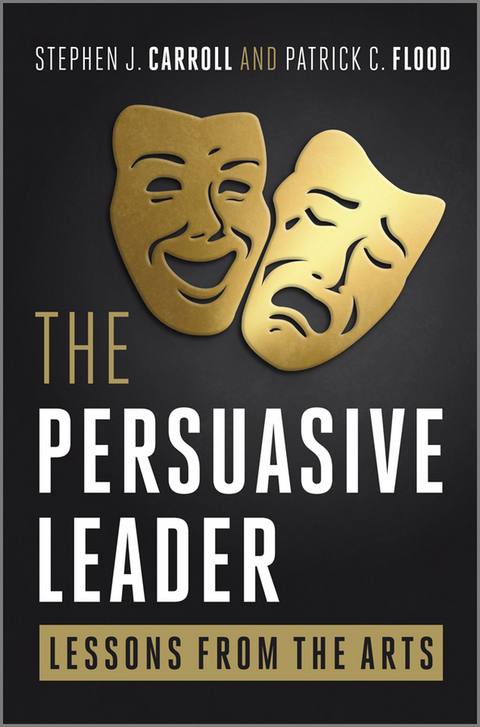
The Persuasive Leader (eBook)
John Wiley & Sons (Verlag)
978-0-470-97335-6 (ISBN)
This book provides insights and principles about persuasive leadership from a broad range of human experiences. It draws on examples of persuasive leaders and persuasive leadership principles from the performing arts, the fine arts, literature, philosophical writings, and biography. The authors use their unconventional material to explore themes such as moral leadership, toxic leadership, learning from failures, 'distributed' leadership, leading for results and the leader as a mentor and counsellor.
Leaders described in The Persuasive Leader:
Abraham Lincoln, Jack Welch, Cleopatra, Teddy Roosevelt, Alexander the Great, Rachel Carson, Joshua Chamberlain, Governor John Winthrop, Barack Obamma, Steve Jobs, Henry V, Julius Caesar, John Quincy Adams, Dwight Eisenhower, Susan B. Anthony, Elizabeth Cady Stanton, Huey Long, Napoleon, Ghandi, Sam Walton, Archbishop Sean O'Malley, Benjamin Franklin, Franklin Roosevelt, Jim Sinegal, Dolly Madison, James Jones, Clarence Darrow, William Harvey, Ronald Reagan, Fletcher Christian, Thomas Jefferson, Nelson Mandela, Charles McCormick, George Washington, Oprah Winfrey, Joan of Arc, John Kennedy, Herbert Hoover, Christopher Columbus, Anita Roddick, John DeLorean, Ronald Reagan, Margaret Thatcher, and others less well known persuasive leaders such as Anne Sullivan, TS Lin, Maria Galantry, Dorothy Collins, Scott Nash, Jane Hughes, William Barnes.
Stephen J. Carroll is a retired professor emeritus at the University of Maryland, who now works as a private consultant. During his career he has authored twelve books on psychology and organizational behaviour. He has served as a consultant to more than 30 industrial and government organizations and is a regular speaker at the University of Maryland and Syracuse University executive courses. He is best known for his books on performance assessment and leadership. He first developed the idea for this book in his courses for company executives where he found they responded particularly well to the case examples from the arts and from day to day life.
Patrick C Flood is an Academic Fellow at Cambridge University. He has worked at the London Business School, University of Maryland, University of Limerick, Dublin City University and the London School of Economics. He is known primarily for his work on leadership teams and firm performance. His books include Effective Top Management Teams (2001, Blackwelll; Managing Strategy Implementation (with S.J.Carroll, Blackwell, 2000) (5000 copies sold over life) and Managing without Traditional Methods (Addison Wesley, 1996). He is currently external examiner at SAID business school and consults for the following companies: Pernod Ricard-Irish Distillers; Nypro-Clinton(US); Hewlett Packard (UK), Wang, Paul Partnership and VEC, Novartis, Nortel, ICL (UK), NHS(UK).
The communication aspect of leadership to actively engage your followers and achieve understanding and motivation whilst making the message memorable has never been more important. Using vivid lessons and examples from spheres outside business organization, The Persuasive Leader explores the leader's role as a communicator and teaches the fundamental principles of successful leadership. This book provides insights and principles about persuasive leadership from a broad range of human experiences. It draws on examples of persuasive leaders and persuasive leadership principles from the performing arts, the fine arts, literature, philosophical writings, and biography. The authors use their unconventional material to explore themes such as moral leadership, toxic leadership, learning from failures, 'distributed' leadership, leading for results and the leader as a mentor and counsellor. Leaders described in The Persuasive Leader: Abraham Lincoln, Jack Welch, Cleopatra, Teddy Roosevelt, Alexander the Great, Rachel Carson, Joshua Chamberlain, Governor John Winthrop, Barack Obamma, Steve Jobs, Henry V, Julius Caesar, John Quincy Adams, Dwight Eisenhower, Susan B. Anthony, Elizabeth Cady Stanton, Huey Long, Napoleon, Ghandi, Sam Walton, Archbishop Sean O'Malley, Benjamin Franklin, Franklin Roosevelt, Jim Sinegal, Dolly Madison, James Jones, Clarence Darrow, William Harvey, Ronald Reagan, Fletcher Christian, Thomas Jefferson, Nelson Mandela, Charles McCormick, George Washington, Oprah Winfrey, Joan of Arc, John Kennedy, Herbert Hoover, Christopher Columbus, Anita Roddick, John DeLorean, Ronald Reagan, Margaret Thatcher, and others less well known persuasive leaders such as Anne Sullivan, TS Lin, Maria Galantry, Dorothy Collins, Scott Nash, Jane Hughes, William Barnes.
Stephen J. Carroll is a retired professor emeritus at the University of Maryland, who now works as a private consultant. During his career he has authored twelve books on psychology and organizational behaviour. He has served as a consultant to more than 30 industrial and government organizations and is a regular speaker at the University of Maryland and Syracuse University executive courses. He is best known for his books on performance assessment and leadership. He first developed the idea for this book in his courses for company executives where he found they responded particularly well to the case examples from the arts and from day to day life. Patrick C Flood is an Academic Fellow at Cambridge University. He has worked at the London Business School, University of Maryland, University of Limerick, Dublin City University and the London School of Economics. He is known primarily for his work on leadership teams and firm performance. His books include Effective Top Management Teams (2001, Blackwelll; Managing Strategy Implementation (with S.J.Carroll, Blackwell, 2000) (5000 copies sold over life) and Managing without Traditional Methods (Addison Wesley, 1996). He is currently external examiner at SAID business school and consults for the following companies: Pernod Ricard-Irish Distillers; Nypro-Clinton(US); Hewlett Packard (UK), Wang, Paul Partnership and VEC, Novartis, Nortel, ICL (UK), NHS(UK).
| Erscheint lt. Verlag | 13.9.2011 |
|---|---|
| Sprache | englisch |
| Themenwelt | Wirtschaft ► Betriebswirtschaft / Management ► Unternehmensführung / Management |
| Schlagworte | Business & Management • Führung • Führung • Management f. Führungskräfte • Management f. Führungskräfte • Management / Leadership • persuasive leadership, persuasive leadership in life and work, using aesthetics and the arts in persuasive leadership, using words effectively in persuasive speech and writing, persuasive leadership and rhetoric principles, persuasive leadership-planning considerations, leader-follower emotional tie, leading sub-leaders and followers, persuasive Leadership and change, the realities of persuasion failures, harmful persuasion, self-leadership, achieving trust and cooperation, the noble persuasive leader, lea • Wirtschaft u. Management |
| ISBN-10 | 0-470-97335-8 / 0470973358 |
| ISBN-13 | 978-0-470-97335-6 / 9780470973356 |
| Informationen gemäß Produktsicherheitsverordnung (GPSR) | |
| Haben Sie eine Frage zum Produkt? |
 PDF (Adobe DRM)
Kopierschutz: Adobe-DRM
Adobe-DRM ist ein Kopierschutz, der das eBook vor Mißbrauch schützen soll. Dabei wird das eBook bereits beim Download auf Ihre persönliche Adobe-ID autorisiert. Lesen können Sie das eBook dann nur auf den Geräten, welche ebenfalls auf Ihre Adobe-ID registriert sind.
Details zum Adobe-DRM
Dateiformat: PDF (Portable Document Format)
Mit einem festen Seitenlayout eignet sich die PDF besonders für Fachbücher mit Spalten, Tabellen und Abbildungen. Eine PDF kann auf fast allen Geräten angezeigt werden, ist aber für kleine Displays (Smartphone, eReader) nur eingeschränkt geeignet.
Systemvoraussetzungen:
PC/Mac: Mit einem PC oder Mac können Sie dieses eBook lesen. Sie benötigen eine
eReader: Dieses eBook kann mit (fast) allen eBook-Readern gelesen werden. Mit dem amazon-Kindle ist es aber nicht kompatibel.
Smartphone/Tablet: Egal ob Apple oder Android, dieses eBook können Sie lesen. Sie benötigen eine
Geräteliste und zusätzliche Hinweise
Buying eBooks from abroad
For tax law reasons we can sell eBooks just within Germany and Switzerland. Regrettably we cannot fulfill eBook-orders from other countries.
aus dem Bereich