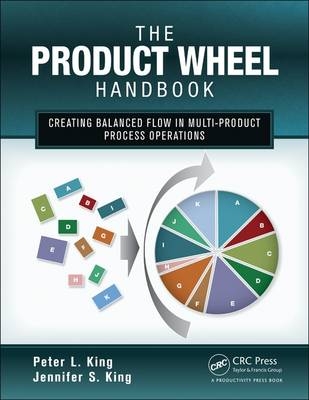
The Product Wheel Handbook
Crc Press Inc (Verlag)
978-1-4665-5418-4 (ISBN)

Breaking down a fairly complex design process into manageable steps, The Product Wheel Handbook: Creating Balanced Flow in High-Mix Process Operations walks readers through the process for designing and implementing the PW technique. It includes a case study taken from actual practice that illustrates the design process and its benefits. Describing how to apply the product wheel technique to any manufacturing operation, the book:
Details the steps required to implement product wheels
Explains why certain traditional manufacturing metrics should be reevaluated so they don’t inhibit product wheel performance
Defines the cultural foundation necessary for smooth product wheel design and implementation
Includes a real-world case study and several examples of product wheels being used by successful manufacturing companies—including BG Products, Inc., the DuPont™ Company, the Dow Chemical Company, and Appleton
Many of the steps in wheel design described in this book are not new. What’s new is their application to production planning and scheduling problems, and more importantly, a clear roadmap explaining how and when they should be used in product wheel design.
Supplying you with the tools to reduce the chaos often found in production scheduling, the book outlines a disciplined structure that will allow you to spend less of your time resolving schedule problems. Most importantly, it provides your organization with a stable platform to deal with abnormal events in a less stressful and more logical manner.
Peter L. King Lean Dynamics LLC, Newark, Delaware, USA, Jennifer S. King
Introduction: Why Product Wheels? Process Industry Challenges; Product Wheel Basics; The Problem: Production Sequencing, Campaign Sizing, Production Leveling; The Solution-Product Wheels; The Product Wheel Design and Implementation Process; Step 1: Begin with an Up-to-Date, Reasonably Accurate VSM; Step 2: Decide Where to Use Wheels to Schedule Production; Step 3: Analyze Products for a Make-to-Order Strategy; Step 4: Determine the Optimum Sequence; Step 5: Analyze the Factors Influencing Overall Wheel Time; Step 6: Put It All Together-Determine Overall Wheel Time and Wheel Frequency for Each Product; Step 7: Arranging Products-Balancing the Wheel; Step 8: Plotting the Wheel Cycles; Step 9: Calculate Inventory Requirements; Step 10: Review with Stakeholders; Step 11: Assign Responsibility for Allocating PIT Time; Step 12: Revise the Scheduling Process; Step 13: Develop an Implementation Plan; Step 14: Develop a Contingency Plan; Step 15: Get All Inventories in Balance; Step 16: Confirm Wheel Performance-Put an Auditing Process in Place; Step 17: Put a Plan in Place to Rebalance the Wheel Periodically; Case Studies and Examples
| Erscheint lt. Verlag | 7.6.2013 |
|---|---|
| Zusatzinfo | 88 Illustrations, black and white |
| Verlagsort | Bosa Roca |
| Sprache | englisch |
| Maße | 210 x 280 mm |
| Gewicht | 1150 g |
| Themenwelt | Technik |
| Wirtschaft ► Betriebswirtschaft / Management ► Logistik / Produktion | |
| ISBN-10 | 1-4665-5418-5 / 1466554185 |
| ISBN-13 | 978-1-4665-5418-4 / 9781466554184 |
| Zustand | Neuware |
| Informationen gemäß Produktsicherheitsverordnung (GPSR) | |
| Haben Sie eine Frage zum Produkt? |
aus dem Bereich