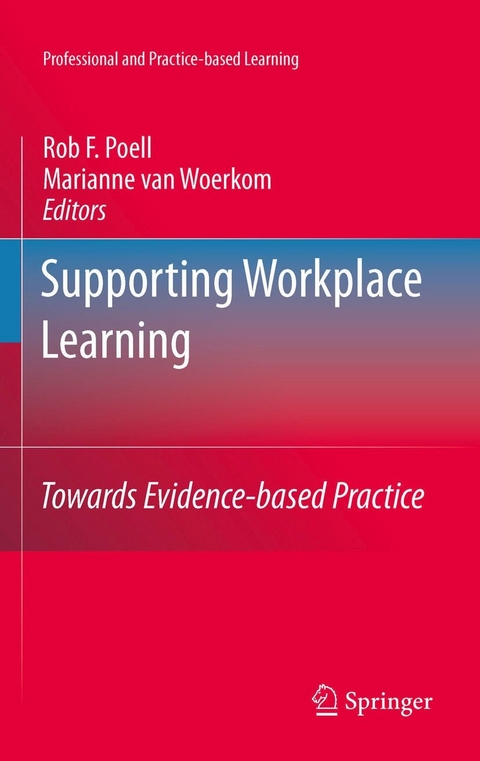
Supporting Workplace Learning (eBook)
X, 234 Seiten
Springer Netherland (Verlag)
978-90-481-9109-3 (ISBN)

During the 1990s, the workplace was rediscovered as a rich source of learning. The issue of workplace learning has since received increasing attention from academics and practitioners alike but is still under-researched empirically. This book brings together a range of state-of-the-art research papers addressing interventions to support learning in the workplace. The authors are experienced international scholars who have an interest in making HRD and workplace learning practices more evidence-based through practical relevant research.
Although workplace learning is largely an autonomous process, many organizations want to manage it as part of their broader HRD strategy. There are limits, however, to the extent to which the complex dynamics of learning in the workplace can be guided in pre-determined desirable directions. This tension between the possible strengths of workplace learning and the limits of managing it is at the heart of this volume.
The book is broken into three sections. The first section deals with workplace learning interventions, including HRD practitioners' strategies, training and development activities, and e-learning programs. The second section investigates the impact of social support, or lack thereof, in workplace learning, such as mentoring, coaching, and socialization practices. The third section addresses collective learning in the workplace, looking at teams, knowledge productivity, and collaborative capability building.
During the 1990s, the workplace was rediscovered as a rich source of learning. The issue of workplace learning has since received increasing attention from academics and practitioners alike but is still under-researched empirically. This book brings together a range of state-of-the-art research papers addressing interventions to support learning in the workplace. The authors are experienced international scholars who have an interest in making HRD and workplace learning practices more evidence-based through practical relevant research. Although workplace learning is largely an autonomous process, many organizations want to manage it as part of their broader HRD strategy. There are limits, however, to the extent to which the complex dynamics of learning in the workplace can be guided in pre-determined desirable directions. This tension between the possible strengths of workplace learning and the limits of managing it is at the heart of this volume. The book is broken into three sections. The first section deals with workplace learning interventions, including HRD practitioners' strategies, training and development activities, and e-learning programs. The second section investigates the impact of social support, or lack thereof, in workplace learning, such as mentoring, coaching, and socialization practices. The third section addresses collective learning in the workplace, looking at teams, knowledge productivity, and collaborative capability building.
Series Editors Foreword 5
Contents 7
Contributors 9
1 Introduction: Supporting Workplace Learning 11
Structure and Contents of the Book 13
References 16
Part I Workplace Learning Interventions 18
2 Strategies of HRD Practitioners in Different Types of Organization: A Qualitative Study Among 18 South Australian HRD Practitioners 19
Theoretical Framework 20
Action Domains of HRD Practitioners 20
The Learning-Network Theory 20
Method 22
Design 22
Sample 22
Instrument 23
Data Analysis 23
Results 24
Strategies Employed by HRD Practitioners 26
Strategies in the Action Domain 'Material' 26
Strategies in the Action Domain 'Participants' 27
Strategies in the Action Domain 'Informal Style' 27
Strategies in the Action Domain 'Learning Culture' 27
Strategies Categorized According to the Learning-Network Theory 28
Strategies of Respondents Related to Type of Work in the Organization 28
Conclusions and Implications 30
References 32
3 Conceptualising Participation in Formal Training and Development Activities: A Planned Behaviour Approach 34
The Theoretical Context 35
The Role of General-Person Characteristics 36
Age 36
Gender 36
Educational Achievements 36
Hierarchical Position 37
Past Career Experience 37
Skills, Competencies and Abilities 38
Personality Characteristics 38
Cultural Value Orientations 38
Participation Attitudes 39
Personal and Career Growth Expectancies 39
Work-Related Expectancies 39
Achievement Expectancies 40
Training System Expectancies 40
Subjective Norms About Participation in Training and Development 41
Development Norms 41
Perceptions of the Transfer Environment 42
Contribution Expectations of the Organisation Culture 43
Achievement Norms 43
Norms Related to Staffing 43
Perceived Behavioural Control 44
Self-Directedness for Learning 44
Self-Efficacy 44
Confidence to Use Personal Learning Strategies 45
Task/Organisational Constraints 45
Intention to Participate and Training Participation Behaviour 47
Conclusions and Implications for Research and Practice 47
References 48
4 Experiences of E-Learning and Its Delivery Among Learners Who Work: A Systematic Review 53
Theoretical Background 53
Method 54
Results 56
Peer Communication 62
Flexibility 63
Support 63
Knowledge Validation 64
Presentation and Course Design 64
Discussion 65
Implications and Recommendations for Practice 68
Recommendations for Future Research 69
Conclusion 69
References 70
Part II The Role of Social Support 74
5 Managerial Coaching as a Workplace Learning Strategy 75
Differentiating Between Mentoring and Coaching 76
The Emergence of Coaching and Managerial Coaching in Business and Management Contexts 78
Defining Coaching and Managerial Coaching 79
Considering Catalysts for Managerial Coaching 80
Managerial Coaching Skills and Behaviors 81
The Mindset of the Managerial Coach 83
Creating the Context for Managerial Coaching 84
Benefits of Managerial Coaching 85
Conclusion 86
References 86
6 Direct and Indirect Effects of Supervisor Support on Transfer of Training 92
Theoretical Background and Problem Statement 92
Conceptual Model and Hypotheses 94
Classifying Social Support 94
Factors Mediating the Relationship Between Supervisor Support and Transfer of Training: Transfer Climate and Motivation to Transfer 96
Transfer Climate 96
Motivation to Transfer 97
Method 98
Design and Instrumentation 98
Sample 100
Analyses 101
Results 101
Descriptive Statistics 101
Results of SEM Analyses 102
Conclusions and Implications 104
Conclusions and Discussion 104
Practical Implications 106
Limitations 107
References 107
7 Understanding the Relational Characteristics of Effective Mentoring andINTtie Developmental Relationships at Work
Theoretical Context 111
Defining Mentoring and Other Developmental Relationships 111
Theoretical Perspectives on Relationships at Work 115
Characteristics of Effective Mentoring and Other Developmental Relationships 119
Trust 120
Compatibility of Relationship Members 121
Authenticity 122
Dialogue, Reflection, and Feedback 123
Relationship Proximity 125
Conclusions and Implications for Research 125
References 127
8 Learning How Things Work Here: The Socialization ofINTtie Newcomers in Organizations
Aim of This Chapter 131
Literature Review and Theoretical Context 132
Social Exchange Theory 132
Learning in Social Settings 134
Method 135
Sample 136
Data Collection and Analysis 136
Findings 137
Learning from Coworkers 137
Learning from the Manager 139
Learning from Self-Knowledge and Past Experiences 140
Differences Between New Grads and Experienced Hires 141
Managers0 Views of the Socialization Proces s 141
Conclusions and Discussion 142
Implications for Human Resource Development and Socialization Practices 144
References 146
9 Learning Vocational Practice in Relative Social Isolation: The Epistemological and Pedagogic Practices of Small-Business Operators 149
Learning Vocational Practice in Relative Social Isolation 149
Learning and Engagements with the Social and Physical Environment 152
Small-Business Operators Personal Epistemologies 156
Supporting Learning in Situations of Limited Social Guidance 161
References 163
Part III Encouraging Collective Learning 165
10 Team Coaching in Teacher Teams 166
Theoretical Framework and Hypotheses 167
Coaching Leadership 167
Team Cohesion 168
The Relationship Between Team Coaching and Team Cohesion 168
Team Learning 169
The Relationship Between Team Cohesion and Team Learning 169
The Relationship Between Team Coaching and Team Learning 170
The Mediating Effect of Team Cohesion 171
Method 171
Instruments 172
Analysis 173
Results 173
Regression Analyses 173
Discussion 176
Practical Implications 177
Implications for Further Research 178
References 178
11 Learning with the Intention of Innovating: Eleven Design Principles for Knowledge Productivity 183
Problem Statement 184
Relevance 185
Theoretical Basis 185
Knowledge Productivity 185
Learning Processes Related to Knowledge Productivity 186
Breakthroughs as Critical Learning Moments in Innovation Processes 187
Method 187
Context of the Parallel Study 187
Selection of Pilot Projects 188
Search for Breakthroughs 188
Data Gathering 188
Data Analysis 189
Design Principles for Knowledge Productivity 190
Typical Questions That Form the Starting Point for Innovation 190
Design Principle 1: Formulate an Urgent and Intriguing Question 191
New Ways of Working That Deviate from the Traditional Approach 191
Example from the Polder Case 191
Design Principle 2: Create a New Approach 192
Individual Motivation as the Basis for Creativity 192
Example from the Industrial Area Case 192
Design Principle 3: Work from Individual Motivation 193
Novel Combinations as a Trigger for Innovation 193
Example from the Post-war District Case 193
Design Principle 4: Make Unusual Combinations of Subject Matter Expertise 194
Connecting Different Interests by Working from Mutual Attractiveness 194
Design Principle 5: Work from Mutual Attractiveness 194
A Positive Approach 195
Design Principle 6: Build on Strengths 195
Beyond a Polite Conversation by Creating Something 195
Design Principle 7: Create Something Together 196
Sensitivity for Weak Signals 196
Example from the Rhombus Case 196
Design Principle 8: Entice to See New Signals and to Give Them New Meaning 197
The Pilot Project Versus the Unit of Adoption 197
Design Principle 9: Connect the World Inside the Pilot Project to the World Outside 198
The Innovation Process as a Social Process 198
Design Principle 10: Pay Attention to the Social and Communicative Process 198
The Innovation Process as a Learning Process 198
Example from the Hinge Case 199
Design Principle 11: Actively Support the Development of Competences 199
Conclusion and Discussion 199
Practical Implications 200
Generalisability of the Findings 200
References 201
12 From Function-Based Development Practices toINTtie Collaborative Capability Building: An Intervention toINTtie
Contradiction Between the Systemic Nature of Organizational Capabilities and the Functional Organization of Development Activities 204
The Concept of Organizational Capability 205
Organizational Capabilities: An Alternative View 206
History of HRD and Capability Building at Destia 208
Theoretical Background of the Developer Workshop 209
Warm-Up Session: Two Aspects of Capability Building 210
Second and Third Session: The Organizational Learning System 211
Two Cases: ''Groundwork Construction'' and ''Managing of Data Flows'' 212
Fourth Session: The Life Cycle of a Capability and the Development Forum 213
Structure of the Analysis 215
Analysis of Qualitative Changes in the Discussions 218
Development Forum and Planning of Concrete Pilot Projects 220
Conclusions and Practical Implications 221
References 223
13 Implications for Research and Practice 224
What Is Workplace Learning? 224
Interventions for Workplace Learning 226
Measures for Collective Learning in the Workplace 227
References 229
Index 230
| Erscheint lt. Verlag | 19.1.2011 |
|---|---|
| Reihe/Serie | Professional and Practice-based Learning | Professional and Practice-based Learning |
| Zusatzinfo | X, 234 p. |
| Verlagsort | Dordrecht |
| Sprache | englisch |
| Themenwelt | Geisteswissenschaften ► Psychologie ► Pädagogische Psychologie |
| Sozialwissenschaften ► Pädagogik ► Berufspädagogik | |
| Sozialwissenschaften ► Pädagogik ► Erwachsenenbildung | |
| Sozialwissenschaften ► Politik / Verwaltung | |
| Wirtschaft ► Betriebswirtschaft / Management ► Personalwesen | |
| Wirtschaft ► Betriebswirtschaft / Management ► Unternehmensführung / Management | |
| Schlagworte | Collective learning • HRD • Human resource development • Learning and Instruction • learning interventions • Management development • social support • workplace learning |
| ISBN-10 | 90-481-9109-2 / 9048191092 |
| ISBN-13 | 978-90-481-9109-3 / 9789048191093 |
| Informationen gemäß Produktsicherheitsverordnung (GPSR) | |
| Haben Sie eine Frage zum Produkt? |
 PDF (Wasserzeichen)
DRM: Digitales Wasserzeichen
Dieses eBook enthält ein digitales Wasserzeichen und ist damit für Sie personalisiert. Bei einer missbräuchlichen Weitergabe des eBooks an Dritte ist eine Rückverfolgung an die Quelle möglich.
Dateiformat: PDF (Portable Document Format)
Mit einem festen Seitenlayout eignet sich die PDF besonders für Fachbücher mit Spalten, Tabellen und Abbildungen. Eine PDF kann auf fast allen Geräten angezeigt werden, ist aber für kleine Displays (Smartphone, eReader) nur eingeschränkt geeignet.
Systemvoraussetzungen:
PC/Mac: Mit einem PC oder Mac können Sie dieses eBook lesen. Sie benötigen dafür einen PDF-Viewer - z.B. den Adobe Reader oder Adobe Digital Editions.
eReader: Dieses eBook kann mit (fast) allen eBook-Readern gelesen werden. Mit dem amazon-Kindle ist es aber nicht kompatibel.
Smartphone/Tablet: Egal ob Apple oder Android, dieses eBook können Sie lesen. Sie benötigen dafür einen PDF-Viewer - z.B. die kostenlose Adobe Digital Editions-App.
Buying eBooks from abroad
For tax law reasons we can sell eBooks just within Germany and Switzerland. Regrettably we cannot fulfill eBook-orders from other countries.
aus dem Bereich