


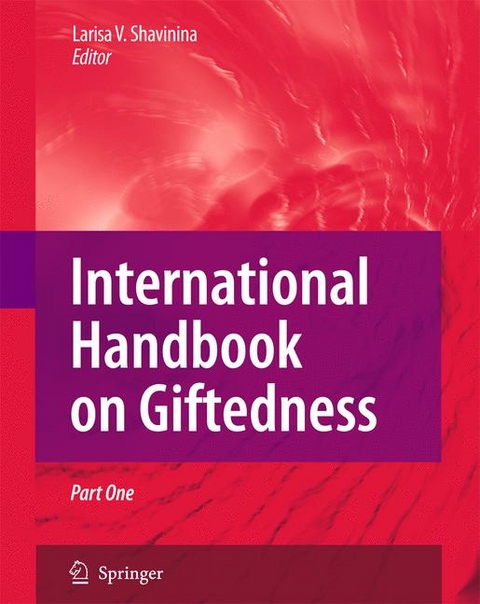
International Handbook on Giftedness (eBook)
LXIV, 1544 Seiten
Springer Netherland (Verlag)
978-1-4020-6162-2 (ISBN)
This handbook presents a panoramic view of the field of giftedness. It offers a comprehensive and authoritative account on what giftedness is, how it is measured, how it is developed, and how it affects individuals, societies, and the world as a whole. It examines in detail recent advances in gifted education. The handbook also presents the latest advances in the fast-developing areas of giftedness research and practice, such as gifted education and policy implications. In addition, coverage provides fresh ideas, from entrepreneurial giftedness to business talent, which will help galvanize and guide the study of giftedness for the next decade.
If you publish... you are trying to create something thatisoriginal,thatstandsoutfromthecrowd...Above all, you want to create something you are proud of... Richard Branson (2002, p. 57). After the publication of my bestselling International Handbook on Innovation, p- lishers from around the world began to invite me to work on new books with them. When Springer invited me to prepare the International Handbook on Giftedness,I was on a maternity leave with my 3-months-old and my 5-year-old was just starting school. I, however, had wanted to prepare such a Handbook for a long time and was waiting for just the right moment to dive right into such an endeavor. The time had come and I agreed to prepare a Handbook that would expose readers to new views, great discoveries, and signi?cant advancements of scienti?c knowledge, exactly as Richard Feynman advised (see his opening quote at the beginning of the introductory chapter). I have always been convinced of the paramount signi?cance of the topic of gi- edness and gifted education to the world as a whole. There is no doubt that gifted individuals were, are, and will be extremely important to society. One way to und- stand the history of human civilization is via inventions and discoveries of the gifted. All human cultural development builds on the amazing technological, scienti?c, e- cational, and moral achievements of the human mind. Today, people increasingly realize that gifted and talented individuals are even more important than in the past.
Preface 6
Contents 10
About the Authors 17
Part I Introduction 46
Chapter 1 Understanding Giftedness: Introduction or on the Importance of Seeing Differently 47
References 57
Part II The Nature of Giftedness 58
Chapter 2 The History of Giftedness Research 59
Introduction 59
The Progression from a Theological, Through a Metaphysical, to an Empirical Approach to Giftedness 59
Intelligence Research and its Significance for Giftedness Research 60
Theories of Intelligence 62
Empirical Investigations on the Stability and Malleability of Intelligence 63
Multidimensional Models – An Expanded Perspective 64
A Change in Perspectives – Away from Traits, Toward Domain-Specific Training: The Expertise Approach 65
Investigations Into Interactions Between Genetics and Environmental Factors, Educational Measures and Individual Differences 66
Factors Which Have Influenced Giftedness Research over the Course of History 68
Cultural Differences 71
Conclusion 72
References 73
Chapter 3 Essential Tensions Surrounding the Concept of Giftedness 81
Introduction 81
Construction, Deconstruction, and Reconstruction of Giftedness: A Dialectical Evolution of a Concept 83
Giftedness Constructed: Lewis Terman’s Legacy of Essentialism 83
Giftedness Deconstructed: Social and Scientific Disenchantment 84
Giftedness Reconstructed: From Essentialism to Developmentalism 87
Essential Tensions 90
Aptitude Versus Achievement 93
Being Versus Doing/Becoming 96
Domain-General Versus Domain-Specific 99
Quantitative Versus Qualitative Differences 102
Expertise Versus Creativity 105
Nomothetic Versus Idiographic Approaches 107
Reductionism Versus Emergentism 109
Excellence Versus Equity 112
Conclusion 114
References 114
Chapter 4 Contemporary Models of Giftedness 123
Introduction 123
Foundations: Multidimensional Views of Intelligence 124
The Three-Stratum Theory 125
The Theory of Multiple Intelligences 125
The Triarchic Theory of Successful Intelligence 126
Sources of Giftedness 127
The Role of Natural Abilities 127
The Role of Expertise 129
Critique of Models Including Sources 130
The Role of Social Responsibility in Models of Giftedness 130
The Three-Ring Conception and its Co-cognitive Factors 131
The WICS Model of Intelligence 131
Critique of Models that Include Social Responsibility 132
The Role of Creativity in Models of Giftedness 132
Required Productive Creativity 132
Personal Creativity 133
Creativity as a Natural Ability 133
Critique of Models that Include Creativity 133
Gender and Giftedness 134
Critique of the Gender Views 135
The Role of the Environment 135
The Person Acting on the Environment 135
The Environment Acting on the Person 135
Action, Interaction, and Reaction 136
Critique of the Environmental Views 136
Conclusions and Consequences 137
References 137
Chapter 5 A Feminine Perspective of Giftedness 140
Introduction 140
How Fathers and Mothers Perceive Giftedness 140
Giftedness as Eminence 142
Dismantling the Variability Hypothesis 143
Eminent Women 144
Masculine Conceptions of Giftedness 146
The Benefits of IQ Testing for Gifted Females 146
The War Against IQ Testing 147
Current Models of Giftedness 148
Feminine Conceptions of Giftedness 149
Identification of Gifted Girls 152
The Development of Gifted Girls 154
Issues of Cultural Diversity 157
Sexism and Racism 158
Social Class Bias 159
Case Study: A Personal Interview 160
What Represents Success to Gifted Women? 162
Implications and Recommendations 163
Supporting Cultural and Economic Diversity 164
Conclusion 165
References 166
Chapter 6 An Expert Performance Approach to the Study of Giftedness 170
Introduction 170
Galton’s Traditional Account of Giftedness and Natural Ability 171
Anecdotal Accounts for Early Talent 172
The Expert Performance Approach to Capturing Superior, Reproducible Performance 173
Recent Evidence Questioning Galton’s Assumptions of Immutable Limits 174
Improvements in Performance Long After Physical Maturity 174
Heritable Achievement and Historical Improvements in Performance 175
Evidence of Innate Limits: Distinguishing the Automatization of Everyday Skills from the Acquisition of Expert Performance 176
The Expert Performance Approach: The Acquired Mechanisms and Their Development 177
Identifying the Mechanisms That Mediate Expert Levels of Performance 177
The Development of Expert Performance 179
Scientific Accounts of the Acquisition of Expert Performance and Its Mediating Mechanisms 180
Toward Detailed Causal Accounts of the Development of Expert Performance in Sports 181
Improving the Physiological and Anatomical Mechanisms That Mediate Performance 182
Induced Changes in Elite Performers’ Physiological and Anatomical Characteristics 183
General Reasons for Individual Differences 183
The Effects of Perceived Talent 184
The Relative Age Effect 184
How Early Training Can Cause Adaptations That Are Perceived as Innate Talents and Gifts 185
Conclusions 185
Postscript 186
Gagné’s Opinions Are Not Representative of Those of Researchers of High Ability 186
Gagné’s Allegations of Failure to Discuss Embarrassing Findings—The Advantage of African Athletes 187
Gagn´e’s Major Misunderstandings: What Constitutes a Domain of Expertise 187
Mischaracterizing Baltes and Kliegl’s (1992) Testing-the-Limit Study 189
Citing Beliefs and Opinions Rather than Reproducible Evidence 189
If We Had Three Wishes from the Guardian Genie of the Science of High Ability 190
References 191
Chapter 7 Debating Giftedness: Pronat vs. Antinat 195
Introduction 195
The Case for Giftedness 196
The Differentiated Model of Giftedness and Talent (DMGT) 196
About Natural Abilities and Giftedness 200
Evidence from the Intellectual Domain 206
Evidence from the Physical Domain 213
The Case for Antinat Deliberate (Mal)practice 222
Selective Choice of Debating Arenas 223
Biased Analysis and Interpretation of Data 227
Conclusion 233
References 234
Rejoinder to Ericsson et al.’s Postscript 239
My “Unique” Reactions 239
Avoiding Embarrassing Findings 239
My Alleged Misunderstandings 240
Baltes and Kliegl’s Study 243
My Lack of Reproducible Evidence 243
The Guardian Genie’s Three Wishes 244
“My” Postscript 244
Additional References 244
Chapter 8 The Arbitrary Nature of Giftedness 245
Introduction 245
Definition of Arbitrary 245
Decision-Making 246
Finding the “Right” Combination and Criteria 246
The Relativity of an IQ Score 247
Usefulness of Labeling and Classifying 248
Repercussions of Arbitrary Decisions: Unfair Access to Learning Opportunities 249
From Gifted Programs to Addressing Diversity 250
References 253
Chapter 9 Gifted and Thriving: A Deeper Understanding of Meaning of GT 255
Introduction 255
A Life Span Model of Gifted Thriving 256
Intrapersonal Catalysts Affecting Thriving 259
Dispositions, Virtues, Character, and Integrity 259
Environmental Aspects or Catalysts 261
Spirituality, Religion, and Faith 263
Thriving Continuum 263
Flourishing vs. Wasting 263
Conclusion 266
References 266
Chapter 10 A Unique Type of Representation Is the Essence of Giftedness: Towards a Cognitive-Developmental Theory 271
Introduction 271
Neuropsychological Foundation of Giftedness 272
Developmental Foundation of Giftedness 273
What Do We Know About Child Prodigies Today? 273
Explanations of the Nature of the Prodigy Phenomenon 274
Feldman’s Co-incidence Theory 275
The Socio-cultural and Multidimensional Approaches 276
A New Approach to Understanding the Specific Development of Prodigies: Sensitive Periods 277
Age Sensitivity and the Prodigy Phenomenon 277
Paradigm Change in Addressing the Issue of the Nature of Giftedness 283
Cognitive Basis of Giftedness 284
Cognitive Experience and the Gifted’s Unique Representations: The Essence of Giftedness 285
Explaining the Prodigy Phenomenon and the Nature of Giftedness 286
Manifestations of Giftedness 287
The Extracognitive Abilities in the Cases of Fulfilled and Developing Giftedness 289
Was Einstein Gifted as a Child? 292
Summary 293
References 294
Part III The Neuropsychology of Giftedness 298
Chapter 11 Neuropsychological Characteristics of Academic and Creative Giftedness 299
Introduction 299
Neuroanatomy and IQ 302
Neural Interconnectivity and Talent 304
Creative Intelligence and Working Memory 307
Conclusion 309
References 309
Chapter 12 The Neural Plasticity of Giftedness 312
Introduction 312
Intelligence, Domain General Ability, and Giftedness 314
Fluid Intelligence, State of Mind, and Giftedness 316
Creative Giftedness 320
Domain-Specific Ability, Twice Exceptionality, and Giftedness 321
Conclusion 323
References 324
Chapter 13 Working Memory, the Cognitive Functions of the Cerebellum and the Child Prodigy 331
Introduction 331
Purpose 332
Working Memory: The Ongoing Stream of Cognitive Consciousness 333
Working Memory Consists of Repetitive Mental Processes 334
The Cognitive Functions of the Cerebellum 335
The Traditional Role of the Cerebellum 335
The Newer Conception of the Cerebellum Includes Cognitive Functions 335
The Evolution of Cognitive Functions in the Cerebellum 336
For the Cerebellum, Movement and Thought Are Identical Control “Objects” 337
The Enormous Computing Capacity of the Cerebellum 337
How Cerebellar Control Models Influence Working Memory Processes Toward Higher Levels of Abstraction 337
The Role of the Cerebellum in the Manipulation of Thought via Mental Models: Conscious and Unconscious (Automatic) Control in Working Memory 338
Multiple Pairs of Predictor and Controller Cerebellar Models: The Basis of Synthesis in Thought 339
The Theoretical Bases for Working Memory/Cerebellar Accounts of the Child Prodigy’s “Forward-Modeling,” Unique Experiential World 340
Evolutionary Context 341
The Evolutionary Premise for the Collaborative Forward Modeling of Working Memory and the Cerebellum 341
The Cerebellum Is Critical in the Composition, Rate of Acquisition, and Forward Drive of the Developing Child’s Working Memory Store of Mental Models 342
The Developmental Floor of HMOSAIC as an Unconscious “Driver” of Attentional Control in Working Memory 342
The Birth of the Central Executive of Working Memory 343
Working Memory/Cerebellar Child Prodigy Hypothesis 344
The Child Prodigy Hypothesis 345
The Forward-Modeling, Anticipatory “Triggering” of the Child Prodigy’s Exceptional Performance 345
Around What Modules Are the Early Infant’s First Attentional Sensitivities Organized? 346
Working Memory Phenomenology and Cerebellar HMOSAIC Development During Spontaneous Deliberate Practice 347
What Drives the Cognitive Picture Series Toward the Solution of Problems? 348
Does Heightened Attentional Control Trigger Exceptional Intellectual Performance? Attention Capacity and Fluid Intelligence 348
Conclusion 349
References 350
Part IV Developmental and Cognitive Foundations of Giftedness 353
Chapter 14 Developmental Trajectories of Giftedness in Children 354
Introduction 354
A Comprehensive Model for the Development of Giftedness and Achievement 355
Demands for Such a Model 355
The Munich Dynamic Ability-Achievement Model (MDAAM) as an Integrating Framework for Giftedness Research 357
Influences on the Development of Giftedness 358
Genetic Psychology Approach 358
Cognitive Psychology 359
Expertise Research 360
Interest and Motivational Characteristics 362
Family Environment 363
School Environment 364
Gender Differences 364
Conclusions 366
References 367
Chapter 15 Highly Gifted Young People: Development from Childhood to Adulthood 371
Cognitive Characteristics of Highly Gifted Students 372
Cognitive Style and Strategies 372
Affective Characteristics of Highly Gifted Students 374
Motivational Orientation 374
Study Preferences 374
The Onset of Norm-Referencing and the Awareness of Difference 375
Studies of Friendship 376
Moral Reasoning and Altruism 379
Highly Gifted Children Growing Up 380
The Terman Study 380
The Study of Mathematically Precocious Youth (SMPY) 381
An Australian Longitudinal Study 382
Group A: Radical Accelerands 382
Group B: Two-Year Accelerands 383
Group C: One-Year Accelerands 383
Group D: Students Not Permitted Acceleration 383
Conclusion 384
References 384
Chapter 16 Talent Development Across the Lifespan 386
Introduction 386
Changes in Notions of Giftedness 387
Studying Talent Development 388
Explaining Outstanding Achievement 390
Biological Explanations 390
Sociobiological Explanations 392
Learning Explanations 392
Cognitive Explanations 393
Darwinian Explanations 395
Attitudes, Beliefs and the Influence of Culture 396
Zeitgeist 398
Symbolic Interactionism 399
Realising Talent: What Seems to Count 399
Birth Order 400
The Gifted Personality 402
Nurturing Talent in the Family 405
Nurturing Talent at School 406
Marginalisation and the Development of Talent 408
Conclusion 408
References 409
Chapter 17 Creative Cognition in Gifted Youth 413
Introduction 413
Creative Cognition in the Gifted 414
Generating Divergent, Original Candidate Ideas 415
Problem Finding 417
Retrieval of Specific Versus Abstract Information: A Closer Look 419
Implicit Theories, Creative Self-Image and Creative Behavior 423
Conclusions 426
References 426
Chapter 18 A Metacognitive Portrait of Gifted Learners 429
Introduction 429
Links Between Metacognition and Giftedness 429
How Gifted Children Think Differently 431
The Need for Sustained Research on this Topic 433
Theoretical and Methodological Considerations 434
A Brief History of Research Approaches 434
1970s to Early 2000s 434
1960–1970s 434
Current Approaches 435
Theoretical Perspectives 439
Suggestions for Research Questions and Design 441
Implications for Home, Classroom, and School 442
Implications for Parenting and the Home 442
Implications for Teachers and the Classroom 443
Implications for Curriculum and Schools 446
Conclusion 446
References 446
Part V Personality of the Gifted, Individual Differences,and Gender-Related Issues 450
Chapter 19 Personality Qualities That Help or Hinder Gifted and Talented Individuals 451
Background: Why Focus on Personality? 451
Images of Self: Self-Concept and Self-Esteem 452
Motivation: Who Drives the “Bus” on the Road to Actualizing High Potential? 454
Resiliency: How Does Giftedness Contribute to or Reduce the Likelihood of Positive Outcomes? 458
Frameworks for Conceptualizing, Understanding, and Studying the “Gifted” Personality 461
References 462
Chapter 20 Emotional Life and Psychotherapy of the Gifted in Light of Dabrowski’s Theory 466
Two Core Concepts: Developmental Potential and Multilevelness 466
Funneling of Emotional Tension 468
Giftedness from Inside Out 468
Intellectual Energy 469
Imaginal Experience 469
Emotional Life 471
Psychological Types and Types of Emotional Growth 473
Research on Overexcitability 474
Emotional Giftedness 474
Spiritual Giftedness 475
Fostering Emotional Growth 476
Multilevel Development 476
Counseling and Psychotherapy for the Gifted 477
Insufficiency of Existing Psychotherapeutic Paradigms 478
Emotional and Social Implications of Dabrowski’s Theory 479
Emotional Sensitivity and Moral Valuation 479
Counseling Using an Integral Approach 479
Dabrowski’s Theory Is Non-ontogenetic and Value Based 480
Supporting the Developmental Inner Truth of the Child with High Developmental Potential 480
Social and Emotional Development from a Multilevel Multiple Perspective 481
Mental Health from a Multidimensional View of Personality Development: The Case of Lael, an Exceptionally Gifted 17-Year-Old 481
Initial Impression and First Meeting. First Person Narrative 483
Background 483
Differential Diagnoses According to the Theory of Positive Disintegration 484
On the Development of the Personality Through Multilevel Disintegration 486
The Role of the Counselor in Global Multilevel Disintegration in the Case of Lael 488
Case Study Number Two: Kieran 489
Initial Impression and First Meeting: First Person Narrative 489
Background and Developmental Profile 490
Counseling Intervention 490
Conclusions 491
References 491
Chapter 21 On Individual Differences in Giftedness 495
Positioning the Issue of Giftedness in the Psychology of Individual Differences Domain 495
Theories and Research Methods 496
Levels of Individual Differences 496
Physiological Mechanisms of Individual Differences 497
Cognitive Processes and the Phenomenon of Individual Differences 498
Individual Differences at the Level of Traits and Types 499
Intelligence 499
Creativity 501
Temperament 502
Individual Psychological Differences and Identification of the Gifted 504
Selection 505
Education 507
Conclusions 508
References 509
Chapter 22 A Theory of Talent Development in Women of Accomplishment 514
Introduction 514
Traditional Theories of Talent Development 515
Gifted Producers and Gifted Performers 515
Successful Intelligence 515
Theories of Female Talent Development 516
Remarkable Women 516
Smart Girls and Women 517
The Challenges of Talented Women 517
Research Methods 518
Instrumentation and Data Collection 518
Data Analysis 518
Participants 519
Limitations of the Study 519
Case Studies of Eminent Women 519
Congresswoman Nancy L. Johnson (1935–) 519
Mary Sherwood, Forester, Conservationist, and Ecologist (1906–2001) 521
A Theory of Female Talent Development 522
Spheres of Influence: Where Do Gifted Women Exercise Their Talents? 523
The Trajectory of Female Talent Development 523
Factors That Facilitate Talent Development 524
Personality Attributes 525
Barriers That Impede the Development of Female Talents 526
Differences in Male and Female Talent Development 528
Conclusion 528
References 529
Part VI Twice-Exceptional Gifted Individualsand Suicide-Related Issues 532
Chapter 23 Twice Exceptional: Multiple Pathways to Success 533
Introduction 533
Gifted Students with Disabilities 534
Primary Subgroups of Gifted Students with Disabilities 535
Gifted Students with Learning Disabilities 535
Gifted Students with Autism and Intellectual Disabilities 537
Gifted Students with Asperger’s Syndrome 538
Gifted Students with Attention-Deficit Hyperactivity Disorder 538
Gifted Students with Sensory Disabilities 540
Accommodating the Learning Needs of Twice Exceptional Students in School 541
Identification 541
Curriculum and Instruction 543
Teacher Education 546
Conclusion 547
References 547
Chapter 24 Gifted Learners Who Drop Out: Prevalence and Prevention 552
Introduction 552
Completing Secondary School in the United States 553
Descriptive Considerations 553
Dropouts 553
The Gifted 554
Diversity and Dropping Out 554
Why Would a Gifted Student Leave School? 555
Estimating Dropout Rates Among the Gifted 556
Misinterpreting Marland 556
The Ubiquitous Twenty Percent 556
Recent Empirical Findings 556
Current Research 558
Conclusions 558
Measuring Gifted Dropouts 558
Further Questions 559
References 560
Chapter 25 Understanding Suicidal Behavior of Gifted Students: Theory, Factors, and Cultural Expectations 562
Introduction 562
Suicide in the General Population 563
Demographic and Statistical Data 563
Literature on the Causes and Warning Signs of Suicide 564
Two Recent Theories of Suicide 565
Proneness to Suicide Among Gifted Youth 568
Social and Emotional Issues and Challenges of Gifted Adolescents 568
Social and Emotional Issues Common to Both Genders 569
Being Adolescent, Gifted, and Male 573
Being Adolescent, Gifted, and Female 574
Are Gifted Adolescents Especially Vulnerable to Suicide? 576
Summary 578
References 578
Part VII Types of Giftedness 582
Chapter 26 In Search of Emotional–Social Giftedness: A Potentially Viable and Valuable Concept 583
Introduction 583
The Need for a More Comprehensive Definition of Giftedness 584
Characteristics of Giftedness 585
Defining Giftedness 586
Defining Emotional Intelligence 586
Examining the Relationship Between Emotional Intelligence (EI) and Giftedness 587
Results that Surface from Examining the Relationship Between EI and Giftedness 587
A Summary of the Major Findings Related to Emotional–Social Giftedness 590
Conclusion and Recommendations 591
References 592
Appendix: The EQ-i Scales and What They Assess 594
Chapter 27 The Two Pioneers of Research on Creative Giftedness: Calvin W. Taylor and E. Paul Torrance 595
Introduction 595
Calvin W. Taylor 595
Taylor’s Early Years 596
The Utah Conferences 596
Biographical Inventories: Development of Form U and Multiple Talents 597
Multiple Talent Teaching Program 598
Influences on Taylor: Toynbee and NASA—the Big C 598
E. Paul Torrance 599
The Torrance Tests of Creative Thinking (TTCT) 599
Thinking Creatively in Action and Movement (TCAM) 601
The Incubation Model of Teaching 603
The Manifesto for Children 603
The Torrance Center for Creativity and Talent Development 603
References 604
Chapter 28 Creative Giftedness: Beginnings, Developments, and Future Promises 608
Creative Giftedness: An Introduction 608
A Brief Historical Overview 609
Creativity Measures and Culture Fairness 609
Creativity and Modern Conceptions of Giftedness 611
The Three-Ring Model and Creativity 611
The DMGT Model and Creativity 612
Creativity and Feldman’s Developmentalist Perspective 613
The WICS Model of Giftedness and Creativity 613
Gardner’s Theory of Multiple Intelligences 614
Creativity and Selected Giftedness Models in Sum 615
New Conceptions of Creativity and New Directions for Giftedness 615
Future Creativity Testing: The Promise of Dynamic Assessment 617
Conclusion 618
References 618
Chapter 29 Imaginary Worldplay as an Indicator of Creative Giftedness 622
Introduction 622
Giftedness in Play 623
Worldplay 623
Worldplay as Creative Play 624
A History of Worldplay 625
The First Study of Contemporary Worldplay 626
Worldplay in a Population of Creative Adults 627
Worldplay as a Sign of Creative Giftedness in Childhood 631
Recognizing and Nurturing Worldplay 634
Conclusion 636
References 637
Appendix: Translation of Inscription on the Cave Painting, by M. (personal papers) 638
Chapter 30 Development of Gifted Motivation: Longitudinal Research and Applications 640
Introduction 640
Conceptual Foundation of Gifted Motivation 641
A Study of the Development of Intellectual Giftedness and the Early Proposal of Gifted Motivation: The Fullerton Longitudinal Study 641
Conceptualizing the Gifted Motivation Construct 642
Empirical Validation of the Gifted Motivation Construct 645
The Role of Home and Family Environment in Gifted Motivation 647
Anecdotal Evidence for a Gifted Motivation Construct 648
Theoretical and Applied Significance of the Gifted Motivation Construct 648
Directions for Future Research 650
Conclusions 651
References 651
Chapter 31 Leadership Giftedness: Is It Innate or Can It Be Developed? 655
Review of Research and Literature on Giftedness in Leadership 655
Development of Leadership Expertise 661
Method 661
Sample 661
Instrumentation 661
Procedure 662
Results 662
Perceived Leadership Strengths and Weaknesses: The First Ten Descriptors (Ellis) 662
Ellis’ Leadership Strengths Indicator 662
Goldberg Leadership Strengths Indicator 662
Sisk Leadership Strengths Indicator 663
O’Leary Development of Personal Strengths Questionnaire 663
Summary and Conclusions 664
Implications 665
Final “Answers” 666
References 667
Part VIII Domain-Specific and Multiple Giftedness 668
Chapter 32 Scientific Talent: The Case of Nobel Laureates 669
Introduction or Why Is It So Important? 669
Theoretical Premises: Nobel Laureates’ Unique Point of View 671
Extracognitive Abilities of Nobel Laureates in Science 676
Specific Intellectually Creative Feelings 676
Specific Intellectually Creative Beliefs and Intentions 680
Specific Intellectually Creative Preferences 680
Highly Developed Intuitive Processes 681
The Relationship Between the Components of Extracognitive Abilities 683
The Extracognitive Abilities and Metacognition 683
The Roles of the Extracognitive Abilities in the Intellectual Functioning of Nobel Laureates 684
Summary and Conclusions 686
References 687
Chapter 33 Understanding Mathematical Giftedness: Integrating Self, Action Repertoires and the Environment 690
Introduction 690
The Study of Mathematical Excellence 691
The Critical State View of Giftedness 692
The Actiotope Model of Giftedness 694
Framework for This Chapter 695
The Domain Problem – What Is Mathematical Excellence? 695
The Societal Perspective of Mathematics 696
The Educator’s View of Mathematics 696
The Mathematician’s Perspective of Mathematics 697
Aspects of Self in the Achievement of Mathematical Excellence 698
Antecedents of Action Repertoires 698
Action Repertoires for Talented Mathematics Students 703
Action Repertoires and MathPract 705
Subjective Action Space 706
Environmental Aspects in the Achievement of Mathematical Excellence 707
Learning Environment 707
Social Support 709
Technology 709
Discussion 709
Provision for the Mathematically Gifted 711
References 712
Chapter 34 Cinema Talent: Individual and Collective 718
Introduction 718
Units, Sampling, and Assessment 719
Cinematic Collaborations 720
Film as Art Versus Film as Business 721
Production Costs and Cinematic Success 723
Individual and Collective Talents 724
Individual Talent 724
Collective Talent 727
Conclusions 729
References 729
Chapter 35 Reading,Writing, and Raising the Bar: Exploring Gifts and Talents in Literacy 732
Introduction 732
Characteristics of Gifted and Talented Readers and Writers 732
Notable Gifted Readers and Writers 733
Critical Reading 734
Critical Writing 734
Critical Listening 735
Critical Discussion 735
The Interrelationship of Reading, Writing, Listening, and Speaking 736
Choosing Quality Literature 736
The Need for Excellence in Writing Skills 737
Common Frustrations of Gifted Readers and Writers 737
External Difficulties Facing Gifted Readers and Writers 737
Internal Difficulties Facing Gifted Readers and Writers 738
Age of Accountability 739
Gifted Education and Literacy: Whispers of Change 739
Multiculturalism 739
Technology 740
Teacher Preparation 740
Assessment 741
Suggestions and Implications 742
Well-Defined Gifted Literacy Expectations 742
Updating the Schools 742
Raising the Bar 743
References 743
Chapter 36 The Elusive Muse: Understanding Musical Giftedness 745
Making Sense of Nomenclature 745
Genotype Labels 745
Phenotype Labels 746
The Difficulties in Defining Musical Giftedness 747
Musical Giftedness as a Sub-cultural Attribute 748
The Ambiguity of Social Consensus 749
The Multi-dimensionality of Musical Giftedness 750
The Core Skills of Musical Giftedness 751
The Key Skills of Musical Giftedness 752
Musical Giftedness and Heredity 756
The Nature of Stimulation and Development Differs Between Domains 756
Everyone Has Musical Capacity 757
Practice Makes Perfect 757
Identifying Musical Giftedness 758
Concluding Remarks 761
References 762
Chapter 37 Giftedness and Talent in Sport 768
Introduction 768
A Classical Study 770
Parents and Peers 772
Males and Females: Individual and Team Sports 773
Four or Five Stages? 773
Talented and/or Gifted 774
A Control or Reference Group 775
Concluding Remarks 775
Characteristics of Top-Level Athletes 776
An Early German Study 777
Further Studies: Top-Level Athletes 778
Toward a Preliminary Conclusion 779
Psychological Traits of Elite Athletes 780
Concluding Remarks 781
Factors Influencing the Process of Talent Development 781
Talent Development Facilitators in Athletics 782
Concluding Remarks 784
Talent Development Inhibitors in Athletics 789
The Driving or Pushing Parent 791
Conclusions 795
Concluding Remarks 802
References 803
Chapter 38 On Entrepreneurial Giftedness 809
Introduction: Where Did All Great Entrepreneurs Come From? 809
Early Signs of Entrepreneurial Giftedness 811
The Impact of Micro-social Environment on Developing High Ability: Literature Review 815
The Case Study of Entrepreneurial Giftedness: The Impact of the Micro-social Factors on the Development of Richard Branson’s Talents 816
Discussion 820
Conclusions 821
References 822
Chapter 39 Ilk Hunting: Newbies, Cyberpunks, Coders and the Search for Elusive, Ego-Twisted, Talented Computer Hackers 824
Introduction 824
Social Psychology as a Framework for Understanding Talented Computer Hackers 825
Hacker Ilk: A Taxonomy 826
Take Three Theories: A Social Psychological Model of Creativity, Social Identity Theory, and a Motivational Hierarchy of Needs 827
A Social Psychological Model of Creativity 828
Social Identity Theory 828
A Motivational Hierarchy of Needs 829
Alternative Developmental Contexts 830
Participant Observations of Intrinsic Motivation Among Computer Hackers 831
Hackers Versus Hacks 831
The Joy of Hacking: A Seduction 832
From MIT to Microsoft: Nourishing the Role of the Rebel 833
A Short History of Hacking: An Evolving Ethos 834
The Future of Computer Hacking 835
Hacking Is Non-moral 836
Conclusions 836
References 837
Chapter 40 What Makes a Gifted Educator? A Design for Development 839
Introduction 839
The Gifted Educator as Interpersonally Intelligent 842
Wisdom: A Characteristic of the Gifted Educator 842
Understanding Learners’ Perspectives 842
What Makes an Educator Wise? 843
The Gifted Educator as Intrapersonally Intelligent 843
Understanding One’s Own Perspectives 843
Interobjectivity 844
Smart Contexts 844
The Environment as the “Third Teacher” 844
A Model of Social Expertise Relevant to Teaching 844
Educational Implications: A Design for Development of Gifted Educators 847
Rethinking Foundations 847
Gifted Educators: Multiple Ways of Being 847
Gifted Educators and Gifted Children 848
Directions for Research 849
Studies of Exemplary Practice 849
Teacher Involvement 849
Gifted Educators or Gifted Contexts? 849
References 849
Chapter 41 Understanding Managerial Talent 852
Introduction 852
Breaking all the Rules of Conventional Management Wisdom: The Study of Great Managers 853
Richard Branson as a Great Manager: A Case Study 857
Theory of Managerial Talent 859
Summary 863
References 863
Chapter 42 Multiple Giftedness in Adults: The Case of Polymaths 865
Introduction 865
Einstein as a Polymathic Exemplar 867
Does Polymathy Denote General Creativity? 869
The Ubiquity of Polymathy Among Gifted Scientists 870
The Ubiquity of Polymathy Among Gifted Artists 872
Polymathy in New Synthetic Disciplines 874
Polymathy and Creative Giftedness Reconsidered 877
Conclusions 878
References 879
Preface 887
Contents 891
Part IX Giftedness, Society, and Economy 898
Chapter 43 Families of Gifted Children 899
Introduction 899
Identification of Giftedness 900
The Cognitive Development of the Child 900
Enriched Language 900
Learning Experience 901
The Family Culture 902
Gender Differences 902
The Siblings of Gifted Children 905
Gifted Children as They Grow Up 905
Emotional Development 906
Outlines for Future Studies of Long-Term Outcome of Gifted Children 907
Summary and Conclusions 907
References 907
Chapter 44 Large-Scale Socioeconomic, Political, and Cultural Influences on Giftedness and Talent 910
Introduction 910
Aspiration Development and Self-Fulfillment: Barriers from Large-Scale Contexts 911
Large-Scale Contextual Influences on Aspiration Development and Self-Fulfillment 913
Changing Global Value Systems 914
Religious Perspectives on the Ideal Society 915
Democratic Advancement or Erosion 917
Globalization and Distant Proximities 918
The Dominance of Neoclassical Economic Theory and Neoliberal Ideology 919
Mirage Meritocracies 921
Dogmatic Leaders and Followers 923
Conclusion 925
References 925
Chapter 45 Gifts, Talents, and Their Societal Repercussions 929
Introduction 929
Distribution 929
Creative Productivity 930
Other Accomplishments 931
Interpretation 931
Emulation 932
Implication 935
References 935
Chapter 46 The Unwanted Gifted and Talented: A Sociobiological Perspective of the Societal Functions of Giftedness 937
Introduction: Four Marginalized Gifted Individuals 937
James, the Canadian Potential Nobel Laureate 937
Andrew, the Athlete and Formidable Problem-Solver 938
Peter, the Polymath with Street Smarts Beyond Comparison 938
Bjorn, the Caring Intellectual Persuader 939
Involuntary Stigmatization and Voluntary Marginalization 940
History Provides Interesting Examples 940
Giftedness and Sociobiology 942
Proposing a Taxonomy of Gifted Social Functions 942
Societal Maintenance 943
Societal Entertainment 943
Societal Change 944
Answering the Posed Questions 945
Ten Hypotheses on Gifted Individuals in Different Social Contexts 946
References 947
Chapter 47 On Giftedness and Economy: The Impact of Talented Individuals on the Global Economy 949
Introduction to the Talent-Based Economy 949
The “Secret” of California’s Silicon Valley: Hidden Mechanisms of the Talent-Based Economy 952
Definitions 952
Manifestations of the Silicon Valley Excellence 953
Compensatory Mechanisms 962
Why Silicon Valley Cannot Be Easily Replicated Around the World 963
Policy-Related Implications for the Advancement of the Talent-Based Economy 965
Conclusions 966
References 967
Part X Assessment and Identificationof Giftedness 969
Chapter 48 The Measurement of Giftedness 970
Origins of the Measurement of Intelligence 970
Spearman’s Unsinkable g and Raven’s Progressive Matrices 971
Raven’s Progressive Matrices 971
Multifactor Theories 973
The Binet–Simon Scales 974
The Stanford-Binet Scales 974
The Stanford-Binet Intelligence Scale (Form L-M) 975
The Stanford-Binet Intelligence Scale, Fourth Edition (SB-IV) 976
The Stanford-Binet Intelligence Scale, Fifth Edition (SB5) 977
The Wechsler Intelligence Scales 979
Wechsler Intelligence Scale for Children, Third Edition (WISC-III) 981
Wechsler Intelligence Scale for Children, Fourth Edition (WISC-IV) 983
Assessing Higher Ranges of Giftedness 986
Assessing Gifted Children with Learning Disabilities 989
Conclusion 990
References 991
Chapter 49 Identifying Academically Talented Students: Some General Principles, Two Specific Procedures 994
Introduction 994
Defining Giftedness 996
Giftedness as Relative to the Norm Group 996
Flynn Effect 997
Demographic Changes in the Population 997
The Importance of Local Norms 997
Age Norms 998
Subgroup Norms 998
Assessments in Other Languages 999
Scaling Effects 999
Summary 999
Is Giftedness Developed? 999
Giftedness as a Category Label 1000
An Aptitude Theory of Academic Talent 1001
A Definition of Aptitude 1001
Effects of Context 1002
Inferring Aptitudes 1002
Scholastic Aptitudes 1003
Measures of Domain Knowledge and Skills 1003
Measures of Fluid Reasoning Abilities 1004
Measures of Motivation, Interest, and Creativity 1006
Common Pitfalls 1006
The Non-exchangeability of Measures 1006
“And,” “Or,” or “Average”? 1008
Combining Scores from Different Tests 1009
Identifying Academically Talented Minority Students 1010
Prediction of Achievement for Minority Students 1010
Judging Test Bias by Mean Differences Rather Than by Predictive Validity 1011
The Need for Within-Group Comparisons 1012
Two Identification Procedures 1013
Procedure 1. Multiple Norm Groups, Multiple Perspectives 1013
Procedure 2. Using Ability Test Scores and Teacher Ratings 1014
Suggestions for Policy 1016
References 1018
Chapter 50 The Johns Hopkins Talent Search Model for Identifying and Developing Exceptional Mathematical and Verbal Abilities 1021
The Study of Mathematically Precocious Youth 1021
The MVT:D4 Model 1023
Discovery 1023
Description 1023
Development 1024
Dissemination 1024
The Center for Talented Youth (CTY) 1024
Expansion of the Model Nationally 1025
Expansion of the Model Internationally 1026
Julian C. Stanley Study of Exceptional Talent (SET) 1027
Research on the Talent Search Model 1028
Predictive Validity of Talent Search Scores 1028
Acceleration as a Strategy for Serving Gifted Students 1029
Characteristics of Gifted Students 1030
Performance of Talent Search Students over Time 1033
Conclusion 1034
References 1034
Chapter 51 A New Approach to the Identification of Intellectually Gifted Individuals 1039
Introduction: Intelligence Testing as Psychology’s Important Technological Innovation 1039
Theoretical Foundations: Cognitive-Developmental Theory of Giftedness 1040
A Type of Representation as a Proto-phenomenon of Cognitive Experience 1041
Shortcomings of Conventional Intelligence Tests 1042
Psychological Assessment of Intellectual Abilities: A New Perspective 1043
Psychological Mental Context 1044
“Open Character” 1045
Basis of Giftedness 1046
Does Not Test Psychological Functions 1047
No Emphasis on Mental Speed 1047
Both Retrospective and Prospective Assessments 1048
Cognitive Styles as an Important Part of Intelligence Testing 1049
Metacognitive and Extracognitive Abilities as Integral Part of Intelligence Testing 1050
Tests Should Not Be Very Long 1050
Conclusions 1051
References 1051
Part XI Recent Advances in Gifted Education 1054
Chapter 52 New Developments in Gifted Education 1055
Introduction 1055
Related New Developments 1056
Definitions of Giftedness 1056
Study of Mathematically Precocious Youth 1057
Minority Identification and Participation 1058
Teachers and Teaching 1059
Strategic Thinking 1060
Identification 1061
Instructional Models 1061
Gifted Education and the Law 1062
Summary 1062
References 1063
Chapter 53 The English Model of Gifted Education 1065
Introduction 1065
Gifted Education and the Mainstream Education System 1067
The English Model: Rationale and Values 1068
Reflections on Existing Approaches to Gifted and Talented Education 1068
The English Model: A New Paradigm 1070
The English Model Summary 1071
Beliefs Underpinning the Model 1071
Provision 1071
The English Model: Key Elements 1072
The Opportunity Pyramid 1072
The High-Quality Basic Education System 1072
Every Teacher a Teacher of the Gifted 1073
A Key Role for Out-of-Hours Programmes 1074
Pupil Voice and Pupil Engagement 1075
Leadership, Coordination and Management 1076
The Role of Identification Within the English Model 1076
Developing Good Citizens 1077
Exemplars of the English Model in Practice 1077
Conclusions 1078
References 1078
Chapter 54 Enhancing Creativity in Curriculum 1080
Introduction 1080
Definitions 1080
Trait Views 1081
Process Views 1081
Developmental Perspectives 1083
The Role of Play 1083
Time for Creativity 1084
Instruction for Teaching Creativity 1084
The Demographics of Creativity 1085
Intrinsic Motivation and Creativity 1086
Insight and Creativity 1086
Adversity and Creativity: The Lives of Eminent People 1086
Teaching Creativity in the Arts 1087
Teacher Understanding of Creativity 1088
Models of Instruction for Enhancing Creativity 1088
Creative Problem Solving 1089
Problem-Based Learning 1089
Synectics 1090
Lateral and Vertical Thinking 1090
Metaphor Development 1091
Talents Unlimited 1091
The Role of Mentors in Nurturing Creativity 1091
The Role of Work 1092
School-Based Applications of Creativity 1092
Creative Expression 1092
Aptitude and Interest Matches 1092
Links to the Professions 1093
Reading of Biographies 1093
Academic Counseling 1093
Multiple Options and Outlets for Creativity 1093
Emphasis on Metacognition 1093
Open-Ended Activities and Approaches 1093
Emphasis on Targeted Extracurricular Options 1094
The Teaching of Creativity Skills 1094
Issues in Teaching Creativity 1096
Assessing and Measuring Creativity 1097
Alternative Assessments for Creativity 1097
Conclusions 1098
Implications for Research 1098
References 1099
Chapter 55 Acceleration: Meeting the Academic and Social Needs of Students 1103
Introduction 1103
Academic Effects of Acceleration 1104
Types of Acceleration 1104
Growth in Academic Achievement 1105
Long-Term Academic Effects 1106
The Decision-Making Process 1107
Social Effects of Acceleration 1107
General Social Effects 1107
Social Effects of Early Entrance to School 1108
Social Effects of Grade Skipping 1109
Social Effects and Early Entrance to College 1109
Long-Term Social Effects 1110
Special Issues 1110
Radical Acceleration 1110
Twice-Exceptional Students 1111
Acceleration, Diverse Populations, and Gender 1111
Summary 1111
Conclusion 1111
Conduct a Comprehensive Psychological and Educational Evaluation 1113
High Achievement, Aptitude, and Ability Are Not Enough 1114
Outside Activities Are an Indication of Maturity 1114
If Either Whole-Grade or Single-Subject Acceleration Is Recommended, It Is Important to Consider the Timing of the New Placement 1114
When It Comes to Acceleration, Size Is Not an Issue 1114
What If There Is No Change in the Student’s Program 1114
The Future: The Institute for Research and Policy on Acceleration 1115
References 1115
Chapter 56 Teaching for Wisdom in Public Schools to Promote Personal Giftedness 1117
Introduction 1117
Promoting Personal Giftedness by Teaching for Wisdom 1117
Conceptions of Wisdom: Historical and Scientific 1117
Relations Between Wisdom and Giftedness 1119
Teaching for Wisdom 1119
Wisdom as Gifted Moral Character 1120
Sternberg’s Balanced Curriculum for Wisdom 1122
Fostering Personal Wisdom 1124
References 1128
Chapter 57 DISCOVER/TASC : An Approach to Teaching and Learning That Is Inclusive Yet Maximises Opportunities for Differentiation According to Pupils' Needs 1131
Introduction 1131
A Consideration of Common Issues Regarding Pedagogy 1132
Theoretical Background to the Framework of TASC: Thinking Actively in a Social Context 1133
The Living Values Research Process 1133
The Major Tenets of TASC 1133
Understanding the Theory That Informs the Base of TASC: Thinking Actively in a Social Context 1134
Vytgotsky’s Development of Higher Psychological Processes 1134
Sternberg’s Triarchic Theory of Intellectual Development 1135
Considering the Broad Principles of the Teaching Methodology That Underpins TASC 1135
The TASC Problem-Solving Framework 1136
Gather and Organise: What Do I Know Already? 1136
Identify: What Am I Going to Do? 1137
Generate: How Many Ways Can I Do It? 1137
Decide: Which Are the Best Ideas? 1137
Implement: Let’s Do It! 1138
Evaluate: How Well Did I Do? 1138
Communicate: Let’s Share What We Have Learned! 1138
Learn from Experience: What Have We Learned? 1138
Developing Tools for Effective Thinking Which Feed into the TASC Problem-Solving Wheel 1139
Clarifying Goals – Are We on Track? What are we trying to do? 1139
Creating a “Think Tank” – How Many Ideas Can We Think of? 1139
Looking at Both Sides of an Idea –What Is the Opposite View? 1140
Exploring the Consequences –What Will Happen If? 1140
Looking in All Directions –What Are All the Factors to Consider? 1140
Prioritising –Which Is the Most Important? 1140
Consulting Others –What Do Other People Think? 1140
Making Connections – How Do the Ideas Link? 1140
Extending the TASC Problem-Solving Framework Through Increasing Complexity of the Tools for Effective Thinking 1140
Evaluation of TASC in Schools 1142
General Comments from the Teachers 1143
General Comments from the Children Reported by the Teachers 1144
Theoretical Background for the Framework of DISCOVER: Discovering Intellectual Strengths and Capabilities While Observing Varied Ethnic Strengths 1144
Need for Changes in Beliefs 1144
A New Framework: From Theory to Practice 1144
Grounded Research 1145
Essential Elements of the Framework 1147
The Problem Continuum 1147
Inventory of Teaching and Learning Experiences 1149
Students Are Presented with and Led Through Solving a Real-World, Semi-structured Problem 1149
Using the Continuum and Matrix to Design Student Options and Choices 1150
Other Uses of the Problem Continuum 1151
Problem Type I, Then II, III, IV, V and VI 1151
The Ten Human Abilities 1151
Evaluation of DISCOVER in Schools 1155
Conclusion 1157
References 1157
Chapter 58 Future Problem Solving in Gifted Education 1160
The Birth of FPSP 1160
The Process and Examples 1161
Overview 1161
The Process 1162
Identify Challenges Related to the Topic or Future Scene 1162
Select an Underlying Problem 1162
Produce Solution Ideas to the Underlying Problem 1163
Generate and Select Criteria to Evaluate Solution Ideas 1163
Evaluate Solution Ideas to Determine the Better Action Plan 1164
Develop the Action Plan 1164
Organization and Components 1165
Team and Individual Problem Solving 1165
Team Problem Solving 1165
Action-Based Problem Solving 1165
Community Problem Solving 1165
Scenario Writing 1166
Rationale and Benefits 1166
Discussion 1166
References 1167
Appendix: Example Future Problem Solving Activity 1168
Topic and Content Specific Standards 1172
Science 1172
History 1172
Civics 1172
Geography 1173
Economics 1173
The Arts 1173
Chapter 59 Practical Intelligence and Wisdom in Gifted Education 1174
Introduction 1174
Practical Intelligence 1175
Early Work 1175
Relationship Between Academic and Practical Intelligence 1176
Validity Studies of Practical Intelligence 1177
Practical Intelligence and Tacit Knowledge for School 1178
The Nature of Tacit Knowledge 1179
Tacit Knowledge for School 1179
Wisdom 1180
The Evolving Self Model: Seeking Self and Serving Communities 1181
A Case in China 1183
Wisdom and Democracy 1184
Teaching Wisdom 1186
The Promise of Service Learning 1186
Concluding Thoughts 1187
References 1187
Chapter 60 Recent Developments in Technology: Implications for Gifted Education 1190
Introduction 1190
Pace 1191
Process 1192
Passion 1193
Products 1193
Peers 1194
The Dark Side of Technology 1194
Other Pitfalls Along the Way 1195
Summary 1195
References 1196
Chapter 61 High Intellectual and Creative Educational Multimedia Technologies for the Gifted 1198
Introduction 1198
Psychological View of an Information-Based Society 1199
Instructional Technology Innovations 1201
The First Generation of Educational Multimedia Technologies 1206
The Significance of HICEMTs 1207
When the Medium Is “Mental” 1209
General Characteristics of HICEMTs 1209
General Psychological Basis 1210
Fundamental Cognitive Mechanisms 1210
New Targets of Educational and Developmental Influences 1211
Better Adaptation to Individuals’ Psychological Organization 1211
Psycho-edutainment 1212
Specific Characteristics of HICEMTs 1212
How Many HICEMTs: One, Two, or More? 1213
General and Specific HICEMTs 1213
Examples of HICEMTs 1214
Summing Up 1215
References 1216
Chapter 62 A Technology-Based Application of the Schoolwide Enrichment Model and High-End Learning Theory 1220
Introduction 1220
A Brief History of the SEM 1221
Theories Underlying Schoolwide Enrichment: The Renzulli Learning System 1221
The Three-Ring Conception of Giftedness 1221
The Enrichment Triad Model 1223
The Deductive Model of Learning 1223
The Inductive Model of Learning 1224
High-End Learning Theory 1225
“Real-World Problem” Defined 1227
The Renzulli Learning System: A Four-Step Procedure 1227
The Renzulli Learning System and High-End Learning 1230
The Value-Added Benefits of Learning with Technology 1238
Summary: The Renzulli Learning System 1239
References 1240
Chapter 63 The Iowa Online Advanced Placement Academy: Creating Access to Excellence for Gifted and Talented Rural Students 1241
The Virtual Reality of Being a Rural and Small School 1241
Excellence and Access 1242
Opportunities for Overcoming Geographic Barriers 1242
Technology as Access to Excellence 1243
Iowa Communications Network (ICN) 1243
Online Learning 1243
Program Support: Collaboration with Schools 1244
A Comprehensive Approach to Advanced Academic Challenge 1244
The Iowa Excellence Program: Academic Enrichment as a Foundation for Academic Acceleration 1244
Talent Search 1245
Interactive Professional Development: A Critical Aspect to the Successful Implementation of Iowa Excellence 1246
Belin-Blank Center Dynamic Model for Professional Development 1246
Early Commitment to Professional Development 1246
Systematic Professional Development 1246
The Dynamic Model of Professional Development 1247
Professional Development as Talent Development for Teachers 1247
Cultivating a Culture for Academic Challenge 1248
Systemic Improvement and Change in Academic Culture 1248
References 1249
Chapter 64 On Bringing Interdisciplinary Ideas to Gifted Education 1251
Introduction: Why Interdisciplinarity? 1251
History of Connections in the Renaissance 1254
The Intrinsic Connection Between Theology–Art–Science and Mathematics 1254
Revisiting the Renaissance 1254
The Scientists-Mathematicians Theologians of the Renaissance–Post-Renaissance 1255
Modeling the Universe: Copernicus–Galileo–Kepler 1257
The Modern Day Renaissance: Shifts in Perspective 1259
Polymathy 1261
Thinking Traits of Polymaths 1261
A Model of Interdisciplinarity 1262
The Gestalt Principle 1262
The Aesthetic Principle 1264
The Free Market Principle 1264
The Scholarly Principle 1264
The Uncertainty Principle 1265
Can Paradigm Shifts Be Didactically Engineered? 1266
The Value of Unsolved Classical Problems 1266
Mathematics and Literature 1266
Conveying the Applied Nature of the Field of Mathematics 1267
The Use of Paradoxes in Teacher Training 1268
Concluding Thoughts 1269
References 1270
Chapter 65 Innovation Education for the Gifted: A New Direction in Gifted Education 1273
Introduction: How Giftedness Is Related to Innovation 1273
The Components of Innovation Education for the Gifted 1274
Entrepreneurial Giftedness 1274
Managerial Talent: Lessons from Great Managers 1276
Applied Wisdom 1277
Deadline Management 1277
Scientific Talent: Learning from Nobel Laureates 1278
Polymathy: Multiple Giftedness Among Adults 1279
Development of the Gifted’s Abilities to Implement Things: Metacognition in Action 1279
A General “Know-What” and “Know-How” About Innovation 1280
Courage: Much Needed and Untrained Ability 1281
High Intellectual and Creative Educational Multimedia Technologies 1281
Innovation Education for Society at Large: The Case of INNOCREX 1281
Summing-Up 1282
References 1282
Chapter 66 Dual-Language Gifted Education and Its Evaluation 1284
Introduction 1284
The Nature of Dual-Language Programs 1285
Conducting an Evaluation in the Field 1287
In General 1287
Effect Size 1288
Selecting the Unit of Analysis 1288
Particulars 1289
Staff Development 1289
Evaluating Referral and Assessment Procedures for Dual-Language Gifted Programs 1290
When an Evaluator Is Asked to Write or Design Part of a Grant Proposal 1292
Other Disaggregations and Special Studies 1292
Achievement Tests Used to Measure Progress 1293
Advanced-Level Products 1294
Control and Comparison Groups 1295
Followup Studies 1296
Concluding Remarks 1296
References 1296
Chapter 67 Observed Trends and Needed Trends in Gifted Education 1299
Introduction 1299
The Changing World of Gifted Education 1299
The Increasing Significance of Neurology 1300
Focusing Enrichment 1301
Enrichment and Information Technology 1301
Enrichment and Writing Skills 1302
Creativity Revisited 1302
Mentoring and Counseling 1302
The Internet: Increasing Use of The World Wide Web 1303
Forgotten Issues? Trends that Need Developing 1303
Summary and Conclusions 1304
References 1305
Part XII Policy Implications and Legal Issuesin Gifted Education 1306
Chapter 68 United States Policy Development in Gifted Education: A Patchwork Quilt 1307
Introduction 1307
Federal Policy in Gifted Education 1308
The Policy Engine of No Child Left Behind 1308
Special Education as a Model for Policy 1308
Definition of Policy 1309
Rationale for Its Importance in Gifted Education 1309
Policy Tools 1309
Lack of Policy Coherence in Gifted Education 1310
State Law in Gifted Education 1311
State-Level Responsibilities 1311
Local Responsibilities 1312
Policy Development in Gifted Education 1312
State of the States Report: A Snapshot of State Policy 1314
Five-State Policy Analysis 1314
Self-Assessment of State Policies 1317
The Role of Standards in Policy Development 1317
Components of a High-Quality State Policy 1318
Identification 1318
Program and Service Provisions 1318
Supplemental Policies Linked to Program and Service Provisions 1319
Personnel Preparation 1319
Program Management 1320
Evaluation of State Policy 1320
Attributes that Define High-Quality Gifted Education State Policy 1320
Clarity 1320
Comprehensiveness 1320
Connectedness 1320
Feasibility for Implementation 1321
Research Based 1321
The Stages of Policy Development 1321
Formulation of Policy Options 1321
Assessment of Administrative Implementation 1321
Assessment of Consequences of Implementation 1321
Assessment of the Political Implications of Each Policy Option 1321
Conclusion 1322
References 1322
Chapter 69 Identifying and Developing Talent in Science, Technology, Engineering, and Mathematics (STEM): An Agenda for Research, Policy, and Practice 1325
Introduction 1325
Follow-Up from the Forum 1331
A Research and Policy/Practice Agenda 1333
Information Gathering/Dissemination 1333
New Knowledge Generation 1334
New Policies and Program Models 1336
Conclusion 1337
References 1337
Chapter 70 Gifted Education and Legal Issues 1339
Introduction 1339
Status of Gifted Education Around the World 1339
United States 1339
Europe 1340
East Asia 1340
Canada 1340
Australia and New Zealand 1340
Resolving Legal Issues 1341
Negotiation 1341
Mediation 1341
Due Process 1341
Litigation 1342
Selected Court Decisions 1342
Federal Court Decisions 1342
State High Court Decisions 1346
Tuition Reimbursement 1346
Reimbursement for Independent Educational Evaluation 1346
Early Entrance 1347
Admissions/Program Eligibility 1347
Grades 1348
Transportation 1348
Compensatory Education 1348
Twice Exceptional 1349
Appropriate Programs 1349
Personnel Issues 1350
Summary 1350
The Office for Civil Rights 1350
Implications for Future Policy Development 1351
Conclusion 1352
References 1352
Court Cases 1353
Part XIII Giftedness Research and Gifted EducationAround the World: Institutional and Regional Examples 1354
Chapter 71 Swimming in Deep Waters: 20 Years of Research About Early University Entrance at the University of Washington 1355
Introduction 1355
The Early Entrance Program 1356
The UW Academy for Young Scholars 1358
Research About Early Entrance at the UW 1360
Early EEP (1977–1989) 1360
Mature EEP (1989–Present) 1362
Longitudinal, Follow-Up Studies 1364
The Academy (2001–Present) 1366
Summary of Research Findings 1371
Students 1371
Parents 1372
Institution 1372
Future Directions 1372
Conclusions 1373
References 1373
Chapter 72 How Do You Get to Carnegie Hall? Gifted Education in New York City 1375
Introduction 1375
A Shifting Paradigm: Mystery to Mastery 1375
Study Design 1377
The Context 1377
Background 1377
Gifted Education in the News: Political Responses and Media Reports 1379
Legislated Structures and Standards 1381
Teacher Development Opportunities 1384
Collaborative Networks 1385
Programming Essentials 1385
A Flexible Range of Options 1385
Ongoing Teacher Development and Collaboration 1386
Evolving Perspectives on Identification 1388
Equity and Excellence: Mutually Exclusive? 1389
Conclusion: What Works and Why? 1389
Making Gifted Education Work: Next Steps 1390
References 1391
Chapter 73 London Gifted and Talented: A Case Study in High Challenge Urban Education 1395
The National and London Student Picture 1395
Student School Choice 1396
Ethnicity 1396
First Language 1397
The Improving Urban Educational Environment 1397
Recent Urban Initiatives 1398
The London Context 1399
Overview of the London Educational System 1399
London Challenge 1400
What Is London Challenge? 1400
Targeted 1400
Pan-London 1400
Partnership Between London Challenge and London Gifted and Talented 1401
Disadvantage and Gifted and Talented 1401
London Gifted and Talented 1402
Our Remit 1402
Our Principles and Goals 1403
Regional Structure 1403
Effective Pan London Delivery Mechanisms 1404
Learning Networks 1404
A) London Gifted and Talented: Practitioner Networks 1404
What 1406
Aims 1406
Method 1406
Needs Analysis 1407
B) London Gifted and Talented: Student Programmes 1407
What 1407
Aims 1408
Method 1408
Outcome Objectives 1408
C) London Gifted and Talented: e-Resources 1408
e-Resources for Students 1408
What 1409
Aims 1409
Method 1409
Outcome Objectives 1409
E-Resources: For Educators 1410
What 1410
Aims 1410
Method 1410
Outcome Objectives 1410
New Technologies 1411
What 1411
Aims 1411
Method 1411
Outcome 1411
Podcasting 1411
Impact Across London 1412
Key Stage 3–4 Results 1412
GCSE (Key Stage 4) Results 1412
Contextual Value Added 1413
Local Authorities 1413
Schools 1414
Our Performance to Date 1415
Moving Forwards 1415
What 1416
Aims 1417
Objectives 1417
Method 1417
Outcome Objectives 1417
The Future 1417
References 1417
Chapter 74 Giftedness and Diversity: Research and Education in Africa 1419
Introduction 1419
Gifted Education in North America 1420
Gifted Education in Europe 1420
Gifted Education in Sub-Saharan Africa 1421
Education 1421
Gifted Education 1421
Culture and Conceptions of Giftedness 1423
Identification of Giftedness 1424
Elitism, Equity and Gifted Education 1425
Special Needs of Gifted Adolescents 1425
Career Construction Theory Applied in Gifted Education 1426
Contextualising Our Discussion on Gifted Education 1427
Exemplifying the Career Construction Approach in Gifted Education 1429
The Case Study 1429
1. Identification data 1429
2. General historicity 1430
3. Assessment instruments administered 1430
4. Discussion of the results 1430
5. Recommendations for tertiary training 1432
Conclusions 1432
References 1433
Chapter 75 Recent Developments in Gifted Education in East Asia 1436
Introduction 1436
People’s Republic of China 1436
Creativity Research 1437
Speed of Information Processing 1437
Metamemory of Supernormal Children 1438
Non-intellecual Factors and Supernormal Children 1438
The Neuropsychology of Supernormal Children 1438
The Education of Supernormal Children 1439
Future Directions in Gifted Education in Mainland China 1439
Recent Development of Gifted Education in Taiwan 1439
The Stage of Experimentation 1440
The Stage of Special Education Law 1441
Services Provided for Gifted Students 1441
Problems and Challenges Facing Taiwan 1443
The Development of Gifted Education in Hong Kong 1444
A Four-Component Model of Gifted Education 1446
Being Gifted in Hong Kong: Toward a National Policy 1447
Some Definitions 1448
Advocacy Groups 1448
Universities, Giftedness Research, and Teacher Education 1449
Conceptions of Giftedness, Intelligence, and Creativity 1449
School Implementation 1451
Gifted Education in Hong Kong: Future Directions 1452
Singapore 1452
Identification 1453
Enrichment Model 1454
GEP Teachers 1454
Recent Developments 1454
Secondary GEP 1455
Primary GEP 1455
Developing Talents of the Exceptionally Gifted 1456
Research on Gifted Education 1456
Conclusion 1458
Japan 1458
Uniform Curriculum 1458
Policy Change to Individualized Education 1459
Change of Emphasis on Improvement of Achievements 1459
Arguments for the Gakuryoku to Be Developed 1460
The Virtual Existence of Gifted Education in Japan 1460
Hierarchies of Middle and High Schools According to Achievement 1460
Education-Related Industry 1460
Early Admission to University 1461
Various Plans to Improve Gakuryoku 1462
Problems and Perspectives 1463
South Korea 1463
References 1465
Chapter 76 Gifted Education in the Arabian Gulf and the Middle Eastern Regions: History, Current Practices, New Directions, and Future Trends 1471
Introduction 1471
History of Education in the Arabic Islamic Countries 1472
Ancient Terminology and Conception of Exceptionality 1472
The Educational Process: Aims and Philosophy 1475
The Characteristics of the Educational Process 1476
Change, Innovation, and Development 1476
Gifted Education 1477
The Multiple Criteria Identification Processes 1478
Alternative Models of Provision 1478
Thinking Skills Projects: A Critical Priority for Talent Development 1479
Problem Solving (hal mushkilat) 1480
Future Problem Solving 1481
de Bono Thinking Skills Programme 1481
Differentiated Instruction 1482
The Middle East 1482
Egypt: Mentorship (talmatha) 1482
Kingdom of Jordan 1483
Lebanon 1483
Syria 1484
Sudan 1484
Arabian Gulf 1484
Kingdom of Bahrain 1484
State of Kuwait 1485
Sultanate of Oman 1485
State of Qatar 1486
Kingdom of Saudi Arabia 1486
UAE: A Strategy for Excellence in Education 1486
Future Planning in the Arabian Gulf 1488
The Gifted and Talented in the Digital World 1488
Renzulli Learning System 1490
London Gifted and Talented 1490
Stratis e-Suite 1490
Organizations 1490
The Arab Council for the Gifted and Talented 1490
The Arabian Gulf University (AGU) 1491
Giftedness and Creativity Forum (GCF) 1491
New Directions in Gifted Education 1492
(1) Gifts and Talents as Entities 1492
(2) Philosophy of Gifted Education 1493
(3) Definitions and Identification 1493
In Sum, What About the Past, Present, and Future of the Identification Process? 1493
(4) Gifted Programmes 1494
In Summary, What About the Past, Present, and Future of Gifted Programmes? 1494
(5) Educational Technology and the “DigitalWorld” 1495
(6) Future Research 1495
(7) Challenges That Lie Ahead 1496
Conclusion and Recommendations 1496
References 1497
Chapter 77 Gifted Education and Research on Giftedness in South America 1499
Introduction 1499
Gifted Education and Research in Spanish-Speaking South American Countries 1500
Argentina 1500
Chile 1501
Colombia 1502
Ecuador 1503
Peru 1503
Venezuela 1504
Issues in Gifted Education in the Spanish-Language Countries of South America 1505
Gifted Education and Research in Brazil 1506
Programs for the Gifted 1506
Trends in the Identification Process 1508
Services for Parents of Gifted Children 1509
Brazilian Research on Giftedness 1509
Issues in Gifted Education in Brazil 1511
The Future of Gifted Education and Research on Giftedness in South America 1512
References 1512
Part XIV Conclusions 1515
Chapter 78 Research on Giftedness in the 21st Century 1516
Introduction 1516
What Is Giftedness Research? 1516
Justification for Giftedness Research: Individual and Social Perspectives 1517
Giftedness Research and Its Most Important Rivals 1519
Giftedness Research and Expertise Research 1519
Giftedness Research and Innovation Research 1520
The Challenge of the 21st Century 1522
A Limited Perception of Creativity 1522
A New Take on the Innovation Problem in the 21st Century 1523
Floor 1: Darwinian Creatures 1523
Floor 2: Skinnerian Creatures 1525
Floor 3: Popperian Creatures 1525
Floor 4: Spencerian Creatures 1526
Floor 5: Gregorian Creatures 1527
Floor 6: Blue Brain Creatures 1528
Of What Service Is the Allegory of the Tower of Creativity? 1528
Conclusions 1529
References 1530
Author Index 1532
Subject Index 1536
| Erscheint lt. Verlag | 12.8.2009 |
|---|---|
| Zusatzinfo | LXIV, 1544 p. |
| Verlagsort | Dordrecht |
| Sprache | englisch |
| Themenwelt | Geisteswissenschaften ► Psychologie ► Entwicklungspsychologie |
| Sozialwissenschaften ► Pädagogik ► Bildungstheorie | |
| Sozialwissenschaften ► Pädagogik ► Sonder-, Heil- und Förderpädagogik | |
| Wirtschaft ► Betriebswirtschaft / Management | |
| Schlagworte | business • Childhood Education • Creativity • Development • Developmental Psychology • Education • Gender • Gifted education • Giftedness • High Ability • Intelligence • Leadership • Motivation • Neuropsychology • Social Science • Society • Talent |
| ISBN-10 | 1-4020-6162-5 / 1402061625 |
| ISBN-13 | 978-1-4020-6162-2 / 9781402061622 |
| Informationen gemäß Produktsicherheitsverordnung (GPSR) | |
| Haben Sie eine Frage zum Produkt? |
 PDF (Wasserzeichen)
DRM: Digitales Wasserzeichen
Dieses eBook enthält ein digitales Wasserzeichen und ist damit für Sie personalisiert. Bei einer missbräuchlichen Weitergabe des eBooks an Dritte ist eine Rückverfolgung an die Quelle möglich.
Dateiformat: PDF (Portable Document Format)
Mit einem festen Seitenlayout eignet sich die PDF besonders für Fachbücher mit Spalten, Tabellen und Abbildungen. Eine PDF kann auf fast allen Geräten angezeigt werden, ist aber für kleine Displays (Smartphone, eReader) nur eingeschränkt geeignet.
Systemvoraussetzungen:
PC/Mac: Mit einem PC oder Mac können Sie dieses eBook lesen. Sie benötigen dafür einen PDF-Viewer - z.B. den Adobe Reader oder Adobe Digital Editions.
eReader: Dieses eBook kann mit (fast) allen eBook-Readern gelesen werden. Mit dem amazon-Kindle ist es aber nicht kompatibel.
Smartphone/Tablet: Egal ob Apple oder Android, dieses eBook können Sie lesen. Sie benötigen dafür einen PDF-Viewer - z.B. die kostenlose Adobe Digital Editions-App.
Buying eBooks from abroad
For tax law reasons we can sell eBooks just within Germany and Switzerland. Regrettably we cannot fulfill eBook-orders from other countries.
aus dem Bereich


