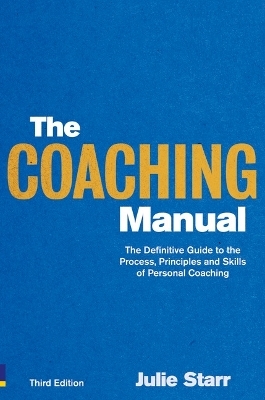
The Coaching Manual
Pearson Education Limited (Verlag)
978-0-273-74058-2 (ISBN)
- Titel erscheint in neuer Auflage
- Artikel merken
Widely recognised as a leading practical handbook on coaching, The Coaching Manual combines an understanding of coaching principles, skills, attitudes and behaviours, along with practical guidance and a comprehensive tool kit for coaches.
The Coaching Manual demystifies the full coaching process, from first step to final meeting. This is the complete guide to coaching and includes: models, perspectives, skills, case studies, tips and advice.
Julie Starr is a highly respected coach and management consultant who works with both organisations and individuals. She has over 20 years experience within business and change management focusing on the opportunity presented by people. She combines many years of coaching experience with a constant study related to human success and fulfilment, to develop coaching practices and principles that really work.
Contents
Acknowledgements
1 Introduction
The purpose of this book
What is personal coaching?
Coaching in business
Personal coaching: life/lifestyle
A comparison of coaching and therapy
Chapter summary: Introduction
2 Collaborative coaching
What does collaborative coaching mean?
Non-directive versus directive language
Attributes of a good coach
Chapter summary: Collaborative coaching
3 Coaching principles or beliefs
Operating principles for coaches
Maintain a commitment to support the individual
Build the coaching relationship on truth, openness and trust
The coachee is responsible for the results they are generating
The coachee is capable of much better results than they are currently generating
Focus on what the coachee thinks and experiences
Coachees can generate perfect solutions
The conversation is based on equality
Chapter summary: Coaching principles or beliefs
4 Fundamental skills of coaching
Can anyone coach?
Skill one building rapport or relationship
Skill two different levels of listening
Skill three using intuition
Skill four asking questions
Skill five giving supportive feedback
Chapter summary: Fundamental skills of coaching
5 Barriers to coaching
Physical and environmental barriers
Behavioural barriers: what not to do
Chapter summary: Barriers to coaching
6 Coaching conversations: the coaching path
The coaching path: guiding principles
Stage one establish conversation
Stage two identify topic and goal
Stage three surface understanding and insight
Stage four shape agreements and conclusions
Stage five completion/close
The coaching path: make the process your own
Chapter summary: Barriers to coaching
7 Coaching assignment: structure and process
Four stages of a coaching assignment
Stage one establish the context for coaching
Stage two create understanding and direction
Stage three review/confirm learning
Stage four completion
A framework for coaching
Chapter summary: Coaching assignment: structure and process
8 Emotional maturity and coaching
What is emotional maturity?
Emotional maturity four competences
Chapter summary: Emotional maturity and coaching
9 Becoming a coach
What do we mean become a coach?
So you want to be a coach?
Paid coach or unpaid coach?
Professional coaching just coach or coach and also
?
What kind of coach are you?
How do you equip yourself to be a great coach?
Chapter summary: Becoming a coach
10 Summary and close
Key points of learning
The future of coaching
Taking your learning forward
Chapter summary: Summary and close
Toolkit: Practising Coaching Behaviours and Building Assignments
Part 1 Strengthen your skills
Activity 1.1 Help someone else find their answer
Activity 1.2 Meditation for non-judgement
Activity 1.3 Developing deep listening
Activity 1.4 Get some feedback
Activity 1.5 Building a clear goal
Part 2 Building blocks
Building block 2.1 Coaching overview document
Building block 2.2 Getting a first session started
Building block 2.3 Summary of a first session
Building block 2.4 Feedback interview document
Index
| Erscheint lt. Verlag | 10.12.2010 |
|---|---|
| Verlagsort | Harlow |
| Sprache | englisch |
| Maße | 158 x 233 mm |
| Gewicht | 510 g |
| Themenwelt | Wirtschaft ► Betriebswirtschaft / Management ► Personalwesen |
| ISBN-10 | 0-273-74058-X / 027374058X |
| ISBN-13 | 978-0-273-74058-2 / 9780273740582 |
| Zustand | Neuware |
| Informationen gemäß Produktsicherheitsverordnung (GPSR) | |
| Haben Sie eine Frage zum Produkt? |
aus dem Bereich